Category: Lifestyle

  • ‘Don’t Look Up’: An A-List Apocalyptic Mess or a Misunderstood Masterpiece?

    ‘Don’t Look Up’: An A-List Apocalyptic Mess or a Misunderstood Masterpiece?

    Harry Daisley, Year 1

    Five Academy Award winners, two nominees and two Grammy winners—this is the cast of Adam McKay’s polarising, new sci-fi/satire ‘Don’t Look Up’. Featuring a remarkable proportion of Hollywood’s most loved alumni, including Meryl Streep, Leonardo DiCaprio and even Ariana Grande, one would expect this alone to evoke standing ovations from film critics across the board. But this comedy has proven hard to swallow for many industry experts, having numerous scathingly-hot reviews to its name. In fact, to some it has become an example of the most disastrous disaster movie of recent years. However, for every sceptic, there is a believer that McKay has struck gold with this apocalyptic tale, making this one of the most memorable motion pictures of the year. But where does The Worsley Times stand amongst the confusion? Is this movie a mere A-list apocalyptic mess or a misunderstood masterpiece? Most importantly, is it worth the watch?

    Written, co-produced and directed by Adam McKay, ‘Don’t Look Up’ follows astronomers Dr Randall Mindy and Kate Dibiasky from Michigan State University, played by Leonardo DiCaprio and Jennifer Lawrence, as they attempt to alert humanity of their discovery of an extinction level asteroid heading towards earth through a manic media tour. They face one single problem: no one believes them, not even apathetic U.S. President Orlean, played by Meryl Streep. With the world in denial, the pair of scientists are forced to plead for humanity to ‘just look up’ and see the science at face value, away from the convolution of politics, media and money that consumes the developing situation. Once the threat is identified as imminent the survival of the human race is put in the cold, incompetent hands of politicians and tycoons, provoking the pertinent question:

    Can we trust those in power to manage our impending crises?

    Such a plot seems timely amid a pandemic and climate crisis. However, the execution of certain messages can easily be accused of being patronising, heavy handed and downright clumsy. McKay’s screenplay is highly engaging and audience members from across the world will find deep pockets of dry humour littered throughout the plot. But when it comes to educating audiences, McKay falls short. The plot explicitly and cynically sheds light upon corruption, the pitfalls of a capitalist society and the blind ignorance of humanity in the face of crises, but in a way that is difficult to digest. This is partly due to the way McKay depicts humanity as a pack of blundering fools that refuse science, leaving audiences feeling bitter and resentful towards the blatant calls for change. Yet, it is the film’s star-studded cast, originally believed to be the film’s greatest asset, that becomes one of its greatest difficulties. McKay’s directorial style in ‘Don’t Look Up’ is very much grounded in the present day. He references common societal features such as meme culture and social media in the effort of making the perilous situation appear just a stone’s throw away from the lives of audiences. But when you mix this style with beloved Hollywood stars such as Jennifer Lawrence, Jonah Hill and Timothée Chalamet, the relatability of the storytelling wavers. Just when you begin to become absorbed by the potential reality of what is unfolding onscreen, a familiar face pops up from ‘Mamma Mia’ or ‘Call Me by Your Name’, distracting from McKay’s artistic intentions. Because of this, there are several moments that appear messy onscreen, amounting to a film that is far from perfect.

    Nevertheless, the film’s messy nature is both charming and quirky, prompting the theory that McKay never set out to craft a ‘perfect’ film in the first place. Instead, he aspired to produce a provocative, engaging comedy that would get the world talking. If this was the case, McKay achieved what he set out to do. The film is highly entertaining both with witty writing and stellar performances from the cast. The serious moments are wrapped up in bizarre comedy which only aids their delivery, amounting to a plot that meanders like a body of water—beginning as a small spring, picking up pace and volume until it climaxes into a treacherous river. 

    ‘Don’t look Up’ holds many golden moments. DiCaprio’s portrayal of a socially anxious astronomer is highly convincing, despite the string of heartthrobs he has played in the past. Through his character, Dr Randall Mindy, DiCaprio accurately transmits the frustrations of ignored intellectuals, which closely mirror (or better yet, imitate) the struggles of scientists and activists who regularly have their data pushed aside by politicians. Throughout the pandemic, it has been observed that a spectrum of scientific logic is not always considered by national leaders when making decisions, making McKay’s perspectives only more pertinent to us as healthcare students. 

    This leads to the all-important question, ‘Is It Worth The Watch?’. If you are in the mood for a seamlessly stylised, Oscar-worthy motion picture, I suggest you look elsewhere. However, if you are in search of a few laughs whilst watching your favourite A-listers unravel a bizarre plot of profound relevance, you are in for a treat. While ‘Don’t Look Up’ is not a perfect film, it has heart, it has an original perspective, and it has Ariana Grande in it for goodness’ sake! So, in answer to the big question—yes, I say look up and take a chance on this refreshing, discussion-generator of a movie.

  • To Intercalate or Not To Intercalate?

    To Intercalate or Not To Intercalate?

    Alice Barber, Intercalating 

    Deciding whether to intercalate or not is a decision many medical students face at some point during their medical school journey. It is a decision which, when it comes to it, can be quite daunting and a lot more complicated than when people first start talking about it as a faraway concept at the beginning of medical school. Whilst it is an individual decision, and the right call is different for everyone, it is important to consider both the pros and cons of intercalation to make sure that you make the best decision for you.

    What are the Pros of Intercalating?

    I think that the pros of intercalating can be split into 3 different categories: time, new experiences, and career development. Looking at time first: intercalation can be extremely valuable in terms of the time it gives you, both within and outside of study. It gives you the time and opportunity to dedicate a whole year to studying something that you are very interested in, without having clinical medicine as your focus. Furthermore, most intercalation courses have a lot less contact time than medicine does. This allows you the time to pursue other interests and hobbies outside of study and gave me the chance to get involved in societies and projects that I had not previously been able to fit in alongside medical school. There is also the fact that you will have more time to be able to have a part-time job alongside studying. For me, this was extremely valuable as it meant I was able to save up funds to get me through my final two years of medical school.

    The next set of advantages is the new experiences that intercalation can give you. On the surface, it may seem like the only new experience is learning something new, but I’ve found there is so much more than that. For example, studying a humanities subject, which is based heavily around debate, has given me the chance to learn in a way I never have before, and I have met new people I probably would not have come across had I not intercalated. Also, though it may sound menial, I have loved going into different university buildings other than the medical school! Although I chose to stay in Leeds to intercalate, there is also the option to intercalate at a different medical school, which would give you the chance to see a new city for a year.

    Intercalation can also be valuable for your future career. Whilst it does help for specialty applications, I think the most career development comes from the new skills that you are able to learn throughout an intercalated year. It has given me the chance to develop skills in writing, debating and analysing that I think will benefit me immensely in my future career, and help me to be a better doctor in the long run. Intercalation also often leads to opportunities to publish work which, again, can be very useful in specialty applications. 

    What are the Cons of Intercalating?

    Although there are many pros to intercalating, before deciding it is still key to consider the potential disadvantages. The disadvantages also largely depend on each individual, which can add more complexity to the decision-making process. I think the disadvantages can be split into 2 categories: finances and adjusting back to medicine.

    Intercalation can be challenging financially. It not only means that you will have an extra year before qualifying as a doctor and being able to receive a salary, but also that you will have two years at medical school without a student loan, rather than one. There are also differences between bachelors and masters degrees: if you choose to intercalate in a masters degree programme, you will not be able to apply for a maintenance loan. Despite this, I think there are many ways that you can reduce the financial impact of intercalation. Firstly, as I have mentioned previously, intercalation allows for more time to work alongside your studies. There are also grants and scholarships available which can help you to finance your intercalation year, and I have linked some resources below. Some students also choose to move home for a year and intercalate at a university nearby to save money on rent, and whilst I am aware this is not an option for everyone, it can be useful for some. 

    One concern that I particularly had was how hard it would be to adjust back to medicine after a year intercalating. I have worried about forgetting ‘medicine’, and not adjusting back to placement quickly enough after a year out. Whilst I think it is important to consider how a year out may affect you academically, I still think that it is possible to adjust quite quickly back into medicine. There are also many ways that you can keep up your medical knowledge whilst intercalating, for example, I volunteer as a community first responder which has helped me to maintain my clinical skills. 

    Additionally, there is one point which, although not a specific disadvantage, its loss has led to a lot of medical students deciding not to intercalate. Previously, intercalation has counted for points on foundation programme applications – this is no longer the case. Whilst many have concluded from this that intercalating is no longer valuable, I think I have shown that despite this, intercalation is still valuable both personally and in terms of career development! 

    How Have I Found Intercalating So Far?

    I chose to intercalate in medical ethics at my current medical school, in between my third and fourth years, and have found it both challenging and extremely rewarding. I have learnt so much already even though I have only completed one term so far! Finally, although choosing to intercalate is a very individual decision, I cannot recommend it enough.

    Resources

    A Guide to all Intercalated Courses: https://www.intercalate.co.uk

    British Medical Association: Advice on Intercalated Degrees. https://www.bma.org.uk/advice-and-support/studying-medicine/becoming-a-doctor/intercalated-degrees

    Funding for Intercalation: https://rmbf.org/get-help/help-for-medical-students/medical-student-advice-hub/competitions-and-awards/
    Royal Medical Benevolent Fund: Intercalated Degrees in Medicine.https://rmbf.org/get-help/help-for-medical-students/medical-student-advice-hub/intercalated-degrees/

  • This Is Going to Hurt – but must it?

    This Is Going to Hurt – but must it?

    Austin Keane, Year 2

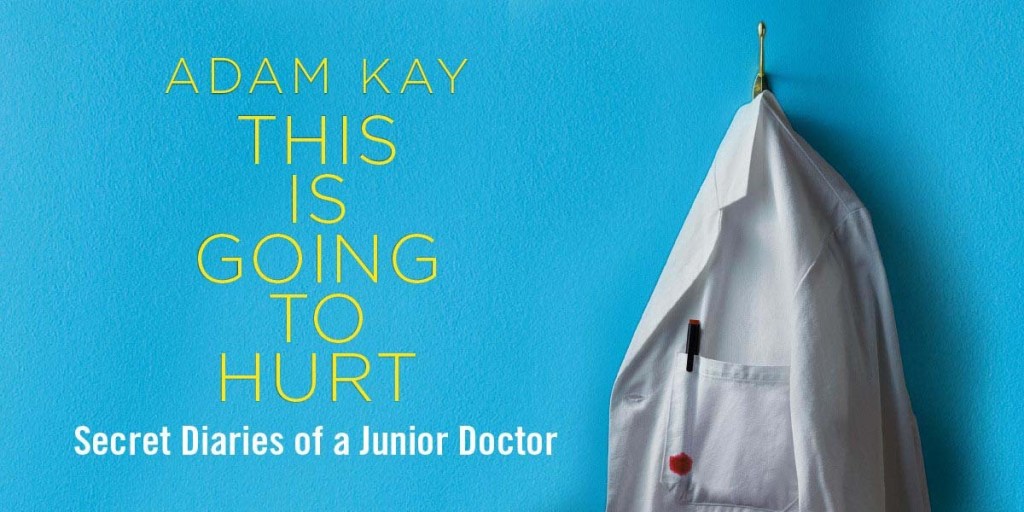
    Reading This is Going to Hurt by Adam Kay was, for me, an experience of consolidation, reasserting the ideas I thought I understood in contexts that don’t relate to me immediately but my future, and the self that exists there, waiting, expectant. 

    There’s something amorphous about the way it feels truly alive—it’s messy and vivid like the life it details; and graphic too but there’s nothing gratuitous about it, just honesty. In between the laughter you’re still aware of the grief, those unbearable moments of lightness like a blade held close in the dark: when you stop focusing on the way it shines you notice there’s the cold bite of steel, its edge against your skin, and you wonder how you ever forgot it.

    I found it sobering, especially as a medical student and someone who wants to work for the NHS as a doctor in the future. There wasn’t anything I hadn’t heard before—from the nurses I know and the doctors I’d spoken to (generally clinical with respect to their interactions in both senses of the word, to both our disappointment)—but it was still moving. The raw clarity, the lack of restraint. It’s tempting to think of the book’s structure as being one of decline, one great movement to detail a man ‘giving up.’ But I’d disagree—it says very little about him and much more about the system, that composite machine that protects us, and its faults, shown best through the reactions the medical professionals I know had to this book—a mixture of embarrassment and excitement. There was a sense that yes, of course these things are happening and yes, we just get on with it and yes, it’s about time someone put it down on paper so we can talk. 

    This demonstrates how easily he carries their voices, acting as a point of reference to facilitate authentic and necessary conversations. NHS workers are proud of the work they do and the system they’re apart of; they continue to do it without any sense of entitlement and without glamourising the work they do. They just do; they just are; and I know I forget that within a culture that rewards labour over personhood, encouraging burnout as the vehicle for success, indeed as a prerequisite for it. Having the opportunity to read a first-hand account that deals with this relationship—that indeterminate struggle between the title (earned) and the surname (given), about which it is thought ‘Dr’ will always inevitably predominate—is one of the most memorable aspects of the book for me. It has helped me to realise the value of continually exploring the narratives we construct around our professional identities: who does this serve?—what has led me to believe this is acceptable?—why is this the standard? These questions are essential not only in relation to ourselves, but to others, and all aspects of our identity, not solely the professional.

    Ultimately, I’m left with a sense of joy, of pride held in a fist tight enough to break itself; the blade is startling, yes, is uncomfortable and a reminder of something we’d sooner forget. But it casts light, will continue to, and not knowing the pressure of it, it’s weight against your chest, won’t make it shine any brighter—you will just drop it and cut yourself scrabbling around in the dark. 

    There is nothing romantic here, just the truth. I think that’s what makes all the difference to this story and will do for those to follow.

  • ‘House of Gucci’ Review: A Kaleidoscopic Tale of Love, Hate and Fashion

    ‘House of Gucci’ Review: A Kaleidoscopic Tale of Love, Hate and Fashion

    Harry Daisley, Year 1

    Patrizia Reggiani famously said, “I would rather weep in a Rolls Royce than be happy on a bicycle”. Ridley Scott’s extravagant new film, ‘House of Gucci’, warns of this destructive ethos of hers.

    The picture takes the form of a stylised, explosive and outrageously over-the-top docudrama that tells the story of the rise and fall of one of fashion’s most wealthy dynasties. It is well-crafted in all departments from costume to screenplay and skilfully executes the telling of a potentially difficult true story, amounting to a robust and enjoyable production. 

    If you are yet to see the thrill that is ‘House of Gucci’, imagine a bitter family fallout, amp up the drama and smother the disagreement with some lawsuits, tax evasion, a dash of incarceration and, of course, a sprinkle of murder—then you have the unbelievable tale of Patrizia Reggiani’s time with the Gucci fashion house. 

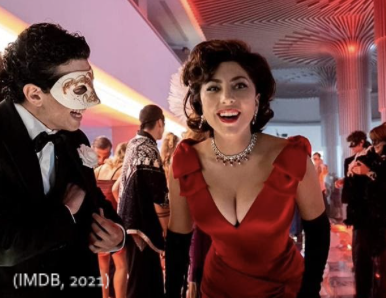
    Based on real events detailed in Sara Gay Forden’s book of the same name, this rollercoaster tale begins with the blossoming romance between Lady Gaga’s Reggiani, a newcomer from a humble background, and Adam Driver’s Maurizio Gucci, heir to the Gucci fashion house. Their controversial marriage introduces Reggiani to the Gucci world, a sphere of opulence and rivalry that ignites a spark of ambition: to take control over the family business through her husband. The film follows this dangerous spark as it is kindled into a forest fire by greed and paranoia throughout the 1970s and 80s, culminating in a murderous end. 

    The movie’s plot is thick with scandals told to us in a delightfully melodramatic style. Director Ridley Scott’s artistic choices can be described in three words: bold, heightened and operatic. This allows for the unfolding tragedy to appear truly shocking onscreen. Not one moment of the film is downplayed and every opportunity to be larger than life is seized by cast and crew alike. 

    Take the costuming, vivid yet pleasing, with Lady Gaga sporting garments that reflect turning points in the plot. Subtlety is not a word in costume designer Janty Yates’ vocabulary, who did meticulous research into Italian and American fashion in the 70s and 80s (de Teliga and Foss, 2021). The soundtrack also seamlessly adds to the amplified style of the film, using a range of Italian opera to build high drama and 70s and 80s hits, contributing to the theatricality of the plot. 

    However, it is the talent of the actors that holds this movie together. When the cast list was revealed to contain Lady Gaga, Al Pacino, Adam Driver and Jared Leto, fans and critics alike were vocal with high expectations for their performances, and they certainly did not disappoint. All actors took on kitschy yet believable Italian accents, which deepened Scott’s execution of an operatic picture and successfully incorporated Italian tropes well. While the screenplay was strong, the actors spun their lines into gold, clearly understanding Scott’s vision as well as their own. Gaga continues to impress as an allrounder, but best in show has to go to Leto with his performance as Paolo Gucci, the effervescent and idiotic cousin of the Gucci family. Leto’s skilled timing and delivery provides the much-needed comic relief that lights up the predominantly straight-faced plot and deepens audiences’ understanding of the true madness that takes place behind Gucci’s golden gates. 

    This said, having a story sprawled in madness, with larger than life performances and bold directorial choices certainly has its drawbacks. At points, needed moments of humanity and subtlety are squashed by louder instants. This makes it difficult for audiences to appreciate the characters as human beings rather than the sociopathic business people they are depicted to be for the majority of the film. While Scott captures maximalism effortlessly, minimalsim as a tool for storytelling was forgotten in the production process, amounting to a cold distancing between characters and audiences. Because of this, ‘House of Gucci’ is not going to leave you reaching for a box of tissues. Perhaps this was an intentional move of Scott’s, relating to the coldness of the tycoons. But in actuality, it results in some pacing issues throughout the film as audiences struggle to care for the characters.

    In essence, ‘House of Gucci’ embodies everything that Gucci is as a brand: loud, extravagant and attractive. It is a visual feast from beginning to end, supported by remarkable performances which raise speculation for success at the Academy Awards. It is sure to make waves during this year’s award season, making this a movie you absolutely do not want to miss, even with its flaws.

    References

    de Teliga, L. and Foss, G. 2021. Janty Yates: House of Gucci – Costume Designers Guild, I.A.T.S.E. Local 892. Costume Designers Guild. [Online]. [Accessed 11 January 2022]. Available from: https://www.costumedesignersguild.com/janty-yates-house-of-gucci/.IMDB, 2021. House of Gucci Photo Gallery. [Online] [Accessed 11 January 2022] Available from https://www.imdb.com/title/tt11214590/mediaviewer/rm649587713/

  • Overwhelmed and Gruesome: Dear Diary…

    Overwhelmed and Gruesome: Dear Diary…

    Zak Muggleton-Gellas, Year 2

    Taking after our dear friend Bridget Jones, in all her expertise, I decided to begin accounting my experiences while on placement. To look back, to laugh, or most likely cry, at what rancid-smelling adventure I might encounter. On a frightful Tuesday afternoon, as a naive, know-nothing-at-all second year, I spent a night shift in obstetrics and gynaecology. I have swapped out names for the confidentiality of those involved. 

    13:36 Hello, future reader. I am currently absorbing the laughter and stressed aura of the medical students accumulating in the APL. Diana and Bob have reminded me that I want to document this monumental event. I will try to update as much as I can.

    20:07 Just arrived, and was met by three nurses looking confusedly upon me. My heart stopped. But they soon warmed up to me, I can only assume because I looked like a deer stunned by headlights, and unlocked the door so I could enter. Everyone looked incredibly tired and overworked. I am now waiting in the room for the consultant. I didn’t realise that not knowing her last name, or where I’m going, at all, is a large problem. I’ve been showed the main social room, and am now waiting. Feeling nervous but happy to be here; at least if the consultant never comes to meet me here then I’ll bumble to reception in due course and ask. I also have a mask on to mask any bad breath after my twiglets. Win.

    20:17 What a delightful woman. Met with lovely smiles as always on O&G. Just a few delightful phrases that the consultant Holly said: ‘this is going to be carnage,’ and ‘we will either be running around or sitting on our arses.’ I luv et.

    21:31 Just finished ward round. Going to ask to be lead through a patients notes to learn a thing or too. Everyone is lovely; one of the patients remind me of every person from home. She is 36+6 (36 weeks and 6 days) currently, with covid and can’t seem to escape the hospital after weeks and weeks. Risk factors rocket with c-section early, but she’s trying her best to manipulate the doctor. Let’s see if I manage to see a birth.

    23:05 Just saw my first birth. What a whirlwind. The birth was a suction cup (called a ventouse) with an episiotomy. There were a lot of fluids, everywhere, being mopped up by towels, unsuccessfully. Upon examination you can just see the hymen, with a tube being inserted into the urethra to empty the bladder into a bag.

    After the head was delivered, and after an episiotomy with a lot of blood, the baby rotated beautifully (called restitution) so that the amniotic fluid could escape and also so that the shoulders can be delivered. No pulling occurred so no brachial plexus (nerves of the upper limb) injury. The baby’s feet were blue (which is normal) but the head was pink and perfused. The doctor put her hand underneath the neck and held the baby as it came out.

    The umbilical cord was blue (a bit like the colour I’d imagine an ice dragon to be) and the placenta was like a big veiny balloon. I felt quite emotional when the baby was delivered; very broody. The mother looked relieved, and her first words to her child were ‘wow, she’s ugly.’

    Also in practice, what you might expect a lot of blood to look like is not a lot of blood. It’s frightening. Additionally, I was told that men find it easier to get a job due to the fact there are less in the speciality, article pending. I don’t have time to dwell on this right now, though I get the sense it’s not exactly a complement. It seems too big. Self-deprecating medical student is more my style, anyway. 

    Pizza now. I even got a present from the mother! (my own mother is suspiciously silent). Wow.

    00:23 An unfortunate woman has a baby in the transverse position, with pubic symphysis pain (stretched or torn ligament) due to falling in the road, going into the splits, and landing in the most unfortunate position. I wonder if this is the moment I get to see a c-section.

    01:44 Woah. Just saw a caesarean section of a woman with a BMI of 58. The subcutaneous fat layer required two doctors to hold it back. It was much faster than I expected. The baby was covered in a nature-made Vaseline. The layers cut through were skin, subcutaneous, rectus sheath and then uterus; all with a spinal block (the lady was awake). Then came suturing and a lot of bleeding, because the tissues were not of good quality due to diabetes. We were then whisked to a room with a woman that had a baby that was becoming bradycardic (heartbeat slowing) with each contraction. I have never felt so out of place in a room; she kept screaming ‘why is there so many people in this room?’ whilst looking directly at me. This was accompanied by screams and gas refills. The cannula used was comprised of a large grey needle. So I stealthily moved over to the side of the room out of view and then snuck out as soon as I could. So up and down. Will leave at 2:30 I’m deciding.

    02:30 Waiting for my expensive Uber in the dark. Decided not to go into that delivery room again; from outside, I could still hear every step of the way. Then had a delightful gentleman asking me for a cig and then telling me ‘urine for a treat.’ I was just hoping there would be no urine coming my way. What a night. Ready for whatever comes next.

    I sincerely hope that this has been interesting.

    Here’s some abbreviations I encountered:

    • Multip → more babies
    • 37+2 → 37 weeks and 2 days
    • Not in labour → not labour until contractions or 4cm
    • Singleton → only one child
    • Cephalic → head near the birth canal
    • OBS chole → obstetric cholestasis causes a build-up of bile acids in your body, causing itching of the skin but no rash.
    • CxDil   (dilation)
    • Syntotoxin → womb muscle stimulating drug (OXYTOCIN)
    • Liq→ amniotic fluid type (clear is desired)
    • Epidural → anaesthetic
  • How Unbearable Can This Philosophical Classic Really Be?

    How Unbearable Can This Philosophical Classic Really Be?

    Zak Muggleton-Gellas, Year 2

    The Unbearable Lightness of Being is a philosophical classic, centering around the idea of weights attached to the decisions we make every day. I am not, as much as I may have proclaimed to be when I finished the last ten pages of this novel, a world-class philosopher—nor a frequent reader, as a matter of fact. Regrettably, those last ten pages were read in a state of exhaustion, scrunched up on a sweaty coach back to Leeds from London, while my eyes strained in the blue light; I felt my backside begin to stick to the leather chair. I have to suppose that this wasn’t the atmosphere Kundera imagined upon publication, almost 40 years ago!

    Set in Prague, the book centres around four main characters. There’s Tomas—a bachelor surgeon who can’t give up his life of flirting with mistresses, even as the commitment of marriage attempts to weigh him down. Then, there’s Tereza—a waitress with mummy issues who falls hopelessly in love with, and marries, Tomas (before finding unconditional love reciprocated from a puppy). Next, Subina—a mistress, commitment-phobe and artist that finds her own naked body arousing with the help of a top-hat; and finally Franz—a professor and divorcee who is promised a life of love with the rose-tinted Subina (but ends up marrying a student in over-sized glasses). These four narratives, intertwined by jealousy and infidelity, lead to a thrilling modern classic.

    If I were to use one word to describe this novel, it would have to be: turbulent. Kundera’s narrative decisions are decisive, and key events that happen to our most (or rather, least) beloved characters reflect directly the mortality of our nature. Although the characters all lead extremely dramatic lives, full of betrayal and devastation, they all end up dying in their respective environments with one key likeness: their lack of meaning, of purpose. All are childless and end up having nothing more than small bouts of passion in their lives, followed by drawn out unhappy marriages or isolation. When their times come to die, each one has nothing to show for their time on earth, apart from the occasional occupational merit. Kundera presents to us four individuals who all end up without meaning; there is no ‘weight’ to remember.

    Not only this, but there really is no character to root for. It could be argued that Tereza is the character most worthy of respect, but she spends half the book crying and smelling the sweat of other women on her husband (whom she stays with because childhood trauma has obliterated her self-esteem) and the other half of the book trying to justify his behaviour. She becomes miserable and drags her erotic adventurer (Tomas) to the countryside, after convincing herself that she is being manipulated by a secret agent trying to destroy her reputation. She even tries to convince herself that she is important enough to be the subject of a spy investigation, before her untimely end in a car accident with Tomas makes all of that panic redundant.

    As annoying as she was, at least she was a dog person (I’ve got to throw her a bone!)

    As the book ended, I was left in an existential spiral regarding my own life. I began to wonder: none of the decisions I make or emotional turmoil I face will matter in years to come, so is my main objective in life just to be as happy as possible? As Tomas flirted his way around Prague, having relations with many different women, it could have been said that he was happy, bringing that insouciance and lightness to his adventures. Maybe that’s the key: maturity is just a learnt acceptance of the inconsequentiality of our actions, and happiness is bound to levity. It is human nature to strive for meaning, and therefore we manufacture heaviness, requiring hard-work and selflessness… but does this lead to meaning, or would we all be lighter if we just became intrinsically selfish? A whole world dictated by impulsive decisions would lead to chaos, and the world would cease to function. Or, maybe, that is the world we already live in.

    Given my reasoning here may make little to no sense, I’d like to remind you I still am not a world-class philosopher and do not entirely understand what philosophical theory this book is based upon. In all honesty, the ‘philosophy of eternal return’ sounds more like a marvel Loki timeline to me. Irrespective, this book is well worth a read. Even though it may not be necessarily a page-turner, I can guarantee that you will walk away afterwards questioning your life, existence, relationships and meaning. So effectively, what a student does on a regular basis.

  • Dr Dennis and Dr Lewis’ General Practice Case Reports

    Dr Dennis and Dr Lewis’ General Practice Case Reports

    Dr Dennis and Dr Lewis have compiled a selection of case reports from their experiences as GPs. The reports also include revision tips for a variety of topics. Download via the links below: