Category: Lifestyle

  • To ICE or Not to ICE?

    To ICE or Not to ICE?

    Shruti Chawla, Year 3

    For everyone who is currently practising for OSCEs, you may have realised that ICE forms are an integral part of the mark scheme here at Leeds. 

    The concept of ICE (ideas, concerns, and expectations) was first articulated in The Consultation, the 1984 text, and is a consulting tool implemented within the Calgary-Cambridge Model (the gold-standard for consulting). This tool was created with the aim of emphasising a collaborative consulting model, actively involving the patient within the process of diagnosis, whilst also taking the all-important holistic approach—therefore, allowing a clinician to understand what the patient in front of them is truly thinking about the issue at hand. 

    Through the curriculum, ICE is usually taught through the form of three short questions: 

    1. What do you think may be causing this “issue”? 
    2. Is there anything you’re particularly concerned about regarding this? 
    3. What can I help you with today? 

    Through these three questions, the desired take-away is a greater understanding of patient-affecting factors. A prime example of this is a mother with three children who may be concerned about her long-standing cough being cancer; perhaps due to her having dependents. The beauty of this model is that patients are given the space to express the background behind the presenting complaint, alongside the opportunity to communicate questions they previously may have disregarded as “minor”. 

    It is often said that a quick ICE at the start of the consultation can guide the whole process, tailoring your examinations, prescriptions and general advice towards what the patient is looking for. But what is what is the genuine patient opinion of ICE? Does it come across as helpful as we presume it to be? 

    Recently, I came across a BMJ article entitled “I never asked to be ICE’d” (Snow, 2016) which piqued my interest. To summarise the article, ICE can come across rather negatively—in being asked what “you” think is wrong it may place pressure on the patient, leaving them feeling as though they’re being tested. Worryingly, some patients may even see this as a sign of the doctor’s training falling short since they expect clear answers, rather than counter-questioning. 

    What is the gold standard of communication, if not ICE? 

    A suggestion made would be to make an effort to create genuine rapport. Instead of using a set standard, the focus should be on answering the patient’s questions, giving them plenty of time throughout the consultation to ask these. 

    Forming a clear line of questioning, with explanations as to why questions are relevant, does a better job of creating open communication pathways which are essential to a collaborative consultation style. 

    One way to think about ICE is more as a template to help when you’re unsure of how to start a consultation. If you’re comfortable with spontaneous conversation then it might be better to develop your own set of phrases that cover the ICE topics, but are less likely to recieve a confused response from the patients. 

    Now this all sounds rather negative, but there must be a reason why ICE is such an integral part of the OSCE. 

    The cross-sectional study by Matthys et al. (2009) looked at the impact of ICE on prescribing in general practice. Thirty-six GP practices in Belgium showed a mean of 1.54 of the ICE components being used per consultation, from a baseline of 0. They concluded that the presence of ICE (albeit a few components) led to less medication prescribing. 

    Whilst this relationship hasn’t yet proved to be “causal”, it may suggest that exploring the patient’s views more thoroughly could lead to less prescription use. A prevalent example would be assessing why a patient is worried if they have a viral respiratory infection; providing them with the reassurance they seek, rather than the unnecessary antibiotic prescription. 

    It’s clear that the NHS is moving from a model of continuity to accessibility. In this scenario, ICE may be the quickest and most effective way to ascertain the basic concerns of the patient, and a few more social points about their lives. It serves as a good reminder throughout the consultation to ensure that we treat the patient, not just the condition. 

    However, whilst I will definitely be using ICE for those all-important OSCE marks—perhaps more through my own choice of phrasing—reading around the subject has left me with a few points to ponder: 

    1. Has ICE become a paradox?
      1. By turning this into a box-ticking exercise, have we lost the true idea of the holistic approach?
    2. Has ICE made us lose our interest for genuine connection through it being the component of an 8-minute exam station? 

    To conclude, theoretically, ICE is a fantastic, easy consulting tool that allows a clinician to access the wider picture. However, with freedom of information, and patient’s understanding this system, it may soon lose that charm. It is important to assess as future doctors whether this textbook method may require some personalisation—as I think we can all agree that medicine is far from a transactional or impersonal discipline. 

    References

    Matthys, J., Elwyn, G., Van Nuland, M., Van Maele, G., De Sutter, A., De Meyere, M. and Deveugele, M. 2009. Patients’ ideas, concerns, and expectations (ICE) in general practice: impact on prescribing. Br J Gen Pract. 59(558), pp.29-36.Snow, R. 2016. I never asked to be ICE’d. BMJ.354, pi3729.

  • Leeds University Medics and Dentists Theatre Society’s The Lightning Thief: A Review

    Leeds University Medics and Dentists Theatre Society’s The Lightning Thief: A Review

    Holly Dobbing, Year 2

    This month was the Leeds Amateur Medics Musical and Performance Society (LAMMPS) production of ‘The Lightning Thief – The Percy Jackson Musical’. If you haven’t already heard of the books or movies—what else were you doing as a child?—the story follows a teenage boy, Percy, who discovers he is the son of a Greek god and is given a quest to find Zeus’ missing lightning bolt. Along the way, he makes friends and encounters various mythological monsters. I was a bit sceptical at first—I mean Percy Jackson? Forgive me, but I did not think Greek gods and fighting teenagers would make a particularly good musical. But I was completely proved wrong. 

    Firstly, the cast were so very impressive. Cameron Mullin (Percy), Nathalie Hall (Annabeth) and Mya Lane (Grover) made a terrific trio. Not only were their voices incredible, but their comic timing and interactions made their scenes hilarious. At Camp Half-Blood, Percy also meets Luke, played by Zak Muggleton-Gellas, one of our very own Worsley Times writers. I already knew Zak had an incredible voice, but he really shined as the trickster villain. Percy also hears a story about Thalia (Kate Gerrard), Zeus’ daughter who died at Camp Half-blood when Annabeth and Luke were children. Showing the cast could do more than just comedy, this moment felt genuinely sincere and I loved the symbolism of Thalia as the tree rather than an obvious leaf-and-bark costume. 

    Whilst at Camp Half-Blood, Percy meets Silena (Maisie Wilson), daughter of Aphrodite, and Katie (Nell Halls), daughter of Demeter, who were both hilarious. He later encounters Oracle (Lucy Hanson-Wilcock), who gives him the prophecy for his quest. He also meets Clarisse (CJ Proctor). CJ has such an incredible voice—her performance was utterly unforgettable and gave me chills! The fight scene between Clarisse and Annabeth in ‘Put You in Your Place’ was so entertaining, combining a big combat choreography and both of their powerful voices. The tension between the two groups was highly believable. 

    A group of people on a stage

Description automatically generated

    Another interesting dynamic was that between Percy, his mother Sally (Leah Greenman), and his stepfather Gabe (Josh Phillips). Although I know that the actors were the same age and not related, I was completely convinced that Sally was Percy’s mother—as Sally, Leah was so maternal, even in subtle ways like how she simply looked at Percy. And as for the hilarious Josh, all I’m going to say is bean… dip. 

    I have a special appreciation for the actors who played the teachers. Henry Marshall as Mr Brunner was hysterical—his total commitment to being a centaur saw him galloping around the stage at any given opportunity. When chatting about the show with my friends after, we all agreed Cara Staniforth was a total scene-stealer as Mr D, stepping into the role of a fed-up exiled god in a way that was simply incredibly. And not forgetting Katherine Stanton who played Mrs Dodds and really threw herself into the role of creepy, monstrous teacher. 

    Later in the show, Percy encounters Charon—the entity tasked with transporting souls across the River Styx into the Underworld. Charon was played by Adele Kirby, who sang possibly my favourite song of the entire show ‘Dead on Arrival’. Not only was her voice amazing, but choreographer Niamh Robinson pulled all the stops out to create a huge dance number featuring the entire cast.

    There were also a variety of big names from Greek mythology throughout the play including Medusa (Sewa Sangowawa), Hades (Kayleigh Corbin), Kronos (Amy Wilson), Ares (Ciara Devlin) on a motorbike and Poseidon (Abraham Sondhi) in a Hawaiian shirt and flipflops.

    A group of people dancing on a stage

Description automatically generated


    Also not forgetting the all-important ensemble made up of Sevval Akkaya, Imogen Blacklidge, Niamh Rose, Eleanor McDevitt, Esther Mekako and Lauren Simmonds. All of them were great throughout the show, although I particularly liked them as fish that bobbed around Poseidon—so funny!

    And the music was simply incredible. Not just the cast’s singing, but the entire band and musical directors Alex Boulton and Zara Harris were outstanding. I also felt the lighting really reflected the mood of what was going on onstage. This isn’t something I normally notice when I’m watching shows, but in this performance, it really did stand out. The set itself was relatively simple but brought to life using a projector screen which showed clouds, forests and even Las Vegas. I thought this was a creative way to illustrate such a variety of scenes on one small stage. The production team behind this included Jay Sunley as Production Manager, Olivia Tinker and Shelley Smith as Co-Stage Managers with Beth Warriner as Deputy Stage Manager, Ben Nuttall as Lighting Director, Marta Fiorini as Set Designer, Nick Caddy and Daniel Stelmach as Sound Designer and Assistant Sound Designer respectively, James Bushby as AV Designer and finally Asher Lei as House Manager.

    Overall, I was super impressed. I want to offer a huge congratulations to all of the cast, musicians, production team and backstage team for such a fun show, and especially to director Ruth Rusnak and producer Martha Dawson for bringing it all to life! 

    Photos by @aswainphotography on Instagram

  • Thumbs Up to Air Up?: Water Bottle Review

    Thumbs Up to Air Up?: Water Bottle Review

    Zak Muggleton-Gellas, Year 2

    Even after being met by a flurry of negativity from my trusted peers, my deluded hope for science to be revolutionary bested my doubts. I was on my way to buying a brand new water bottle: the Air Up. After having it recommended by a friend, I decided to cough up a monstrous £35. Two weeks later, I was – to what can only be compared as a child on Christmas morning – ripping apart the box to get to my new water bottle. 

    For those that have managed to avoid the copious amounts of adverts released by this company – I may classify it as bombardment – the air up bottle uses olfactory (smell) receptors (since a large majority of taste is from smell) to allow the consumer to experience a variety of flavours, compared to when just drinking plain water. I am a sucker for science that I would deem to be ‘pretty damn cool.’ I dashed upstairs when the doorbell rang and quickly rinsed the bottle (admittedly could have been more thoroughly, but then the water bottle tastes like soap for days and, if we are honest, that would ruin just about anyone’s day) and filled it to the brim with cold, refreshing water. 

    The pack comes with a sturdy water bottle, a thick straw, an insert that gets attached to the straw, a lid and a few sample flavours (lime and passionfruit). After constructing the bottle, I inserted a lime disc and got ready to try it out. I took my first sip and was conflicted. 

    It is scientifically wondrous that pure water with nothing added turned out to taste even reminiscent of the projected flavour. They have invented what is effectively a glorified perfume mechanism and it does work! Additionally, it has to be said that I drank significantly more water than usual for the coming weeks, maybe just motivated by the novelty? The million dollar question: Does it work well enough?

    Each disc is claimed to last for 5 litres, which is definitely less economically viable than a £1 bottle of squash. A human should drink up to around four litres a day, and at a staggering £2.30 (6.95) per pod, it is an expensive hobby. Upon purchase, I was under the impression that it lasted for 60 litres, but that was entirely due to my lack of common sense. 

    Even if someone were to have blindfolded me and tested if I could correctly identify the taste, I probably would have got it correct, but that’s not the crux of the issue. It tasted almost like drinking water with squash but only a few drops of it in a cup. In order for it to be fully worth the money, the flavour would have to be more pungent. If you are expecting a substitute to alternatives (such as squash) then airup is not what you’re looking for, but if you are simply just intrigued, then why not? Personally as a student, I’d recommend saving your money. 

    Almost four months later, the bottle is broken (it leaked almost every time I tried to use it) and the tag at which you can hold the bottle by has ripped off. This could be an individualised experience which is why I’ve decided not to include it as a negative above. But nevertheless, I wouldn’t say my care was particularly haphazard, so maybe I deserve a replacement. But as I’m sure many can relate, the effort that would require is just a little too great – unlike this water bottle.

  • COVID Self-Isolation: A Review

    COVID Self-Isolation: A Review

    Elizabeth Ratcliffe, Year 2

    Day 5, Covid-19 self-isolation. Safe in the knowledge that my covid-y brain fog would prevent the creation of an insightful article on current medical affairs, I am going to review the simple trivial pleasures that have gotten me through the past five days. The idea for this piece was forged somewhere between my latest dose of painkillers and the next Netflix episode that I will certainly doze off during, and is partially for both my own entertainment/distraction and because I should contribute to the paper that I sit on the committee for. I cannot promise nuance or complexity, but I hope this is vaguely engaging and possibly funny. 

    Spoiler alert – read at your own risk!

    Entertainment

    The Hating Game – Sally Thorne

    4/5 stars

    A trashy novel – PERFECT for enjoyably mindless reading!

    The Hating Game follows colleagues/archnemeses Lucy Hutton and Joshua Templeman navigate the world of publishing and balance the fine line between love and hate.

    A simple and unrealistically romantic novel, with an enemies to lovers plotline—what more could a girl want? It would be an ideal holiday read and with the constant breeze from my window that can’t close properly and the brief rays of sunshine that Leeds managed this week, I could almost imagine I was reading on a beach in the south of France. 

    Almost, but not quite.

    I would recommend this book – it was a brilliant distraction from covid that I devoured!

    And if reading isn’t your thing Amazon have just adapted it into a film…

    Jake Wesley Rogers | Spotify

    Jacob Wesley Rogers’ Music

    5/5 stars

    A beautiful distraction – give his music a listen I promise you won’t regret it!

    With fewer than twenty songs on Spotify, Rogers is not yet a household name and I’m borderline embarrassed to admit that I found his music on TikTok (insert eye roll here). The 25-year-old singer/songwriter’s aesthetic is eclectic, eccentric and objectively cool, evoking the glam-rock fashions of David Bowie and Elton John, which let’s face it promises good music. Although his repertoire is limited to a mixture of singles and EPs and he ‘only’ has 279,359 monthly listeners (for context Drake has 53,662,363) his varied and emotive music alludes to the beginning of a very successful career. 

    His songs chronologically transform from paired back covers of The Pretenders’ ‘I’ll stand by you’ and Yazoo’s ‘Only You’ to his brilliant indie/rock and indie/pop originals. Rogers’ has the skill of all great songwriters to create songs that every listener can identify with and he effortlessly pairs them with big melodies.  ‘The Pretender’ tells the story of an inappropriate first love that is equally depressing and beautiful; and with lyrics like “And we embraced like the sand and the sea, I handed over contraband parts of me”, it tugs at the heartstrings. My personal favourite ‘Jacob from the Bible’ addresses the complexity of forgiveness, identity and religious guilt through a soaring melody and lyrics that are tangibly passionate. Whereas ‘Dark Bird’, his latest release, is like a 70s pop/rock song with a disco-y chorus that reminded me of long car journeys listening to my parent’s music – fun & nostalgic. It is blindingly clear from the 250 words I have just written that I am a big fan but if my ramblings can’t convince you to give his music a chance, Elton John thinks he is a ‘future superstar!” and I don’t think higher praise really exists. So don’t listen to me, listen to Elton!

    مشاهده وتحميل فيلم The Choice مجانا فشار | Fushaar

    The Choice

    3.5/5 stars

    Nicholas Sparks at his best -> my emotions at their worst

    A classic Nicholas Sparks film: boy meets girl, they’re an unlikely match, they’re both played by gorgeous actors, they fall in love and just as you’re getting comfortable, drifting off into a covid-y nap. BAMM!! Suddenly you’re in the middle of the husband’s tortuous decision about whether to turn his wife’s life support off and suddenly I’m applying the four pillars of medical ethics like it’s nobody’s business. It was acutely emotional and I was right there with them – truly immersed in the story.

    The film made me laugh and made me cry which is what I consented to when I put on something by Nicholas Sparks. My only objection is that the film focused more on the husband’s career as a vet rather than the wife’s blossoming medical career, this didn’t really detract from the plot but I’m deducting half a star because I can. 

    If you like a soppy romantic film it’s ideal (just maybe bring a Kleenex).

    Bridgerton

    4/5 stars

    Takes Jane Austen & makes it sexy…

    I promise I’m not that late to the party, COVID just gave me the perfect opportunity to rewatch Season 1 of Netflix/Shondaland’s Bridgerton, just in time for the release of Season 2 in late March. However, just in case you’ve been burying your head in the sand, Bridgerton glamorously captures the intrigue and suffocating etiquette of Regency London in a heady wash of pastels and florals. Romantic, funny and actually surprising, this series kept me thoroughly engaged the first time I watched it and mostly engaged (between naps) the second time; and I’m really looking forward to the next series coming out. 

    If you have ever watched Pride and Prejudice and thought ‘this is too prudish for my taste’, Bridgerton is the perfect series for you!

    Food

    PRINGLES SALT & VINEGAR 53G (12)

    Salt and Vinegar Pringles

    4.5/5 stars

    I am a salt & vinegar girl so I have (almost) no complaints…

    I bought them for a reason and I will always love them. That vinegary-ness that is so sour it burns a little is perfection, although not ideal for a very sore throat (but I soldiered through). 

    HOWEVER, I have deducted half a star because Julius Pringles (yes that is his name – I googled it!) has had some sort of minimalist makeover that I do not approve of. 

    Although I am not deterred and will obviously buy them again – they are a classic!

    My Breakfast Wraps

    5/5 stars

    Created pre-isolation these wraps have truly come into their own – cheese, avocado, egg, tomatoes – they’re an ideal filling breakfast with all the food groups. What’s not to like? 

    Perhaps it’s a little self-indulgent to award these wraps five stars as I created them but I am reviewing them so… 

    Morrisons Kitchen Aromatic Shredded Duck

    3.5/5 stars

    Better than expected!!

    For £2.75 I didn’t have high expectations for my little “treat yourself you have covid” fake-away but it was surprisingly tasty and almost as good as my local Chinese. I decided to go rogue, ignore the instructions and crisp up the duck under the grill with the sauce on it (which I would thoroughly recommend). All in all, a very good dinner which made me feel a tiny bit fancier than pesto pasta would have done.

    Other

    Amazon Prime Day 2020: When Will The Sale Start This Year ...

    Amazon

    0.5/5 stars

    Please don’t judge me too hard…

    It’s ruining the planet, it’s morally beyond dubious and one has to sell their soul to Jeff Bezos BUT it’s just so damn convenient! From where else in the confines of my self-isolation could I order a book, Morrisons groceries, a moisturiser and a fob watch for placement? They just make it so easy to sell out to capitalist overconsumption!! 

    So, in order to regain some of my self-indulgent moral superiority, I’ll only rate Amazon half a star (the products were good) and I’ll reflect upon my actions/spending choices and do better next time. (Maybe). 

    Leeds TV | NEWS ROUNDUP: Enhanced COVID-19 testing - Leeds TV

    Woodhouse Moor PCR Testing Centre

    2.5/5 stars

    Could have had a better outcome!

    As getting my PCR test was my last venture into the real world, I want to give the experience 5/5 stars. The staff were lovely, the centre was quiet, I didn’t have to queue and I got to walk through Woodhouse Moor which was looking exceptionally springlike with crocuses emerging through the chaos Storm Eunice left in her wake. Would have been a perfect trip out had it not been for the dreaded NHS automated ‘you’ve got covid’ message which put a dampener on the experience.

    COVID-19

    0/5 stars

    I would like to speak to a manager about a refund!!

    I am very grateful that my experience with covid has been comparatively mild and inconsequential thus far, but I am also SOOO over having covid. Firstly, it’s really boring, secondly, I have no desire to cough up my own lungs and thirdly I’d like to be able to do literally anything and not require a nap! I am DEEPLY regretting the number of immunity/’built different jokes’ I have made in the past. True I got to do a lot of nothing, but I cannot emphasise enough: I do NOT recommend Covid!

    Lizzie’s Self-Isolation Breakfast Wraps

    Ingredients:

    • Tortilla wrap(s) – I go wholegrain it feels healthier 
    • Nando’s Medium Peri-Peri Sauce – other brands and levels of spice are available 
    • ½ Avocado 
    • Polish gyros seasoning – trust me it works 
    • Lemon juice 
    • Egg(s)
    • Cheese – I’d recommend a selection for some variety – e.g. cheddar, feta and grated mozzarella
    • Sliced tomatoes 
    • Salad leaves – I like spinach and rocket  
    • Salt & pepper
    • Cumin seeds – these go sooo well with eggs 
    • Butter

    Method:

    1. Melt the butter in a frying pan, scramble your egg(s) into it and season with salt, pepper and cumin seeds.
    2. Meanwhile, mash the avocado with some lemon juice and gyros seasoning.
    3. Assemble the wrap: a smear of peri-peri sauce, then avocado, egg, salad, tomato and finally crumble on the cheese. Fill it as much as your heart allows then try to roll it up. 
    4. Quickly wash up the frying pan and get it back on the heat. 
    5. Toast the wraps until the outside is golden brown, slice in half and serve (with a cup of tea). 

    Have one wrap, have two. Go wild and add crispy bacon, black beans, some pickled jalapenos, fresh coriander, roasted peppers – the world is truly your oyster.

  • Week In the Life: First-Year Medical Student at Sheffield

    Week In the Life: First-Year Medical Student at Sheffield

    Elora Graham, Year 1

    Hello all! I am a first-year medic at the University of Sheffield and have been commissioned to write about my average week as a student here. Hopefully it is of some interest to the lovely medics of Leeds to get a snapshot of how an MBChB runs at a nearby university. If not, you are indulging my delusion of being the main character—and for that I thank you. 

    Our first year consists of seven main modules, similar to those at Leeds. We start with IMS and finish the year with body systems: Cardiovascular, Respiratory, GI/liver, Neuro, Musculoskeletal and the awkwardly named ‘SUGER’ (Skin, UroGenital, Endocrine, Reproductive). Within each block we cover anatomy, physiology, histology and some pathology. Alongside the lectures we have cadaveric dissection, GP teaching, small group tutorials and research projects. 

    The standard format is 9:00am – 12:00pm lectures,  but fortunately it’s quite easy to sneak in slightly later. All of our lectures happen in Medical Lecture Theatre 1 in the Royal Hallamshire Hospital. I daren’t count up the hours already spent there, or more concerningly their impact on my spine due to the seating’s notable lack of lumbar support. 

    A picture containing text, outdoor

Description automatically generated

    The week kicked off with a glorious late start: a 10am lecture in MLT1. Then, we headed down to the dissection room on campus for our anatomy session. Typically, four hours per week is timetabled for dissection.

    I admit I didn’t particularly consider anatomy teaching styles when applying for medicine, however dissection has become one of my favourite parts of the course here. Each group of around eight students gets one cadaver to work with throughout the year, dissecting everything while supervised by a demonstrator. It is such a great privilege to be able to see a whole human body in front of you and quite literally unpick the puzzle that makes up our anatomy. 

    I remember my first ever incision—it was a shallow, long cut along the S-shape of the left clavicle. The utter newness was startling to begin with and it can be nerve-wracking to pick up a scalpel week 1.  Having spent a fair few hours in the DR now, the stench of formaldehyde is oddly familiar (although ladling out formaldehyde from the lung cavity today was particularly pungent).

    I am endlessly grateful to those who have donated their bodies in support of our medical education. As much as it’s a cliché, I genuinely believe it’s an incredibly humbling experience. It is completely unique and truly valuable.

    For anyone considering Sheffield as an option for application, I would say that the full body dissection is one of its biggest selling points and is part of the course that has been developed extremely well. 

    In the evening, I went with some friends to the Notty House pub quiz—the #1 go-to for students (free nachos). No victories to write of, unfortunately.

    A picture containing text

Description automatically generated

    We start as usual in our favourite place, MLT1, from 9-12 with some cranial nerve anatomy and pathology lectures.
     Afterwards, we commence our odyssey to GP Early Years. These fortnightly afternoon placements can be anywhere in the South

    Yorkshire area: for me, this means trekking 35 miles to Retford. On the weeks without GP, there are group tutorials covering physiological topics relevant to the module currently being studied. 

    In GP this week we discussed a hypothetical stroke patient, exploring the condition and its treatment. Then, a real life patient came in to chat about their own patient journey; this particular patient had an ischemic stroke that left him with homonymous hemianopia. I find being able to relate content from lectures to real clinical scenarios is very helpful. 

    The same can’t be said for the 35 mile journey home. 

    A picture containing text

Description automatically generated

    Lectures again 9-12: a mix of public health and psychiatry. Though I am very grateful to have in-person teaching, one major drawback is the inability to pause or rewind real time. Some lectures could easily be understood in half the

    time whereas others you are in a constant state of panic, getting further and further behind. 

    I then went to my French class, which forced me to venture onto the actual uni campus and interact with the (saner) humanities students.

    That evening, I went to the Medics Revue – a comedy sketch show by students. It was a gloriously amateur performance; think gaudy lights, DIY costumes and lots of heckling. It mostly consisted of painfully accurate inside jokes and subtle digs. Some of my favourites were the musical parodies: Lizzo’s Good as Hell was adapted to “I’m feeling overwhelmed”…obviously could never be me. We finished the night at Roar, the student union’s Wednesday club night, which is the go-to for many uni sport societies and thus displays some of the absolute best/worst of student fancy dress. 

    A picture containing text, sky, outdoor, city

Description automatically generated

    I just had one lecture this morning and so had the opportunity to get on with some of the ever-growing pile of work I need to finish off. 

    Sheffield is riddled with hills and the walk home is no different. It would not surprise me at all if a cross-sectional study found Sheffield students to have glutes of steel. 

    A picture containing text, grass, rock, megalith

Description automatically generated

    Yet more lectures this morning, followed by our first neuro formative assessment. These assessments are an open-book, informal way of gauging your understanding. Talking of assessments, our end of year exams have 3 components: single best answer, multiple

    choice and an anatomy spotter. As a baby medic who hasn’t done any of them yet, I reserve any comment. 

    Then onto my second French class of the week, before heading to the train station to meet up with my gorgeous boyfriend for the weekend.


    Congratulations for reaching the end of my ramblings—I hope they were even slightly interesting! If you know anyone thinking of applying to Sheffield, I’m more than happy to answer any questions about applying or studying here. Just send me an email on egraham4@sheffield.ac.uk 🙂 

  • Diary of a Work Experience Student

    Diary of a Work Experience Student

    Zak Muggleton-Gellas, Year 2

    TRIGGER WARNING: GRAPHIC DESCRIPTIONS AHEAD

    Following my obs and gynae diary from earlier this year, I thought I would include a diary of my Year 10 work experience that I wrote in the same style. Sometimes I look back and cringe at some of the things I wrote, but it is definitely (most probably) charming in its naivety. 

    Wednesday 10/07/19 General Surgery Work Experience Diary: 

    My naïve, optimistic mindset wondered into the hospital at 9am, unaware of the day filled with bodily fluids, organ screening and tool handling ahead. Considering I wasn’t entirely clear on what urology consisted of at the start of the day, walking into a theatre with a man  on the table (with a clear absence of clothing beneath the waist) with his legs at his sides and a tube stuck up a hole, you can say I was pretty stunned. If you’re thinking of that hole, that would be wrong. It is a smaller one, connected to the bladder. Ouch. 

    My morning was filled with fluids, both red and clear, flowing into plastic containers on the floor whilst watching a screen with a HD video showing the inside of the man’s bladder. On the first one, tubes were inserted into the kidneys (through holes in the bladder) to take samples, whilst x-ray shots were being taken. This should have been my primary concern, but it was rather the lead-filled body cover that was weighing me down like a paperweight. Don’t come at me, it was heavy…. I promise. 

    The student surgeon did ask me questions, but my common response was ‘errrrrr’ before she explained it to me, especially when it was anything to do with physics. Specifically with the dipolar and monopolar circuits and energies whist she burnt away at a man’s prostate with a tiny crescent-shaped loop. But physics aside, I could explain that the smell of burning flesh is a specific one. A bit like marmite. Except marmite is bearable and doesn’t make you want to gag. 

    The most traumatising experience was watching a patient gag as his anaesthetic wore off and the tube was being extracted from his throat. The catching of eye contact is really not advised; he looked like a new-born that could only see blurry shapes and images. 

    The afternoon was different: there were less fluids but my squeamishness was definitely still being tested. Fortunately, I am apparently not as bad as I thought, as it is common to have fainted, but I was still anxious to see what could test me. Throughout the day a consistent stream of doctors told me not to go into medicine (“you pay to do the job… it’s less than minimum wage”) which was thrilling when I had already made my decision at sixteen. Regardless, a lovely surgeon told me that she is fulfilled and happy what she does, and that compared to her non-medic friends, she feels like she is the most confident in her pathway of life. How reassuring. 

    In the afternoon I saw a hernia removal, (not keyhole but burning to create an opening in the stomach), gall bladder removal (keyhole where they jabbed in ‘high tech litter pickers’) and a right temporal artery biopsy. The biopsy was the most intense because I stood next to him and held the clamps whilst the patients face was literally open, and they were still conscious. More of a doctor asking me questions and the responses being ‘errrr’ and ‘ahhhh, wow.’

    I learnt about which stitches dissolve in what environments and how to sew the stitching. I think we can all agree to be grateful I didn’t give it a go. 

  • Seven Yoga Positions For You To Try Over Seven Days

    Seven Yoga Positions For You To Try Over Seven Days

    Zak Muggleton-Gellas, Year 2

    To compensate for the busy and stressful student lifestyle, a relaxing outlet is vital to upkeep mental and physical health. In fairness, eating ice cream and watching Netflix is a well-known and successful way to unwind, but I have found practicing yoga to be invaluable, especially a more own-body weight strength style.. 

    But is there only one type of yoga? Where all members sit cross-legged and hum? I, too, initially believed this to be true, but in reality there are 11 ‘strands’ of yoga practice, and all have their respective benefits. 

    The 11 Strands of Yoga Practice

    1. Vinyasa – Most athletic yoga style that coordinates a series of poses in combination with specific breathing.

    2. Hatha – All other strands of yoga that involve a main physical component that is not vinyasa.

    3. Iyengar – Focuses on detailed and precise movements that involve perfecting specific poses down to every minute detail.

    4. Kundalini – Spiritual and physical duality that releases energy said to be trapped, with chanting, mantra and meditation .

    5. Ashtanga – translates to ‘eight limb path,’ and is a specific series of movements that each member completes at their own pace.

    6. Bikram – Sequence of set poses in a room set to 40.5 degrees and 40% humidity, also known as ‘hot’ yoga.

    7. Yin – Slow-paced yoga with seated poses for long periods of time, known to help find inner peace.

    8. Restorative – Focused on relaxing the body and cleansing the mind after a long day. 

    9. Prenatal – For pregnant women to include pelvic floor work, breathing and bonding with the baby. 

    10. Anusara – A more modern form of hatha, focusing on the mind-body-heart connection to let one’s heart open to the world. 

    11. Jivamukti – Vinyasa-flow-style yoga that includes Hinduism as a core influence, and looking after the planet.

    So, now onto the seven yoga positions for you to try, and I truly wanted to make sure I found awkward and weird poses. Put on some meditative music and maybe a candle and try these out! : 

    1. Happy Baby Pose (Ananda Balasana)

    Babies Do Yoga: Yo Re Mi for Child Development — Yo Re Mi

    2. One Arm Leg Pose (Phalakasana Eka Pada Eka Hastra)

    Plank with opposite arm and leg lift • Bodybuilding Wizard

    3. King Dancer Pose (Natarajasana)

    Dancer's Pose - Ekhart Yoga

    4. Bow Pose (Dhanurasana)

    Bow Pose - Dhanurasana - The Yoga Collective How To Do Bow Pose

    5. Tree Pose (Vrikshasana) 

    Vrksasana - Tree Pose — Yoga Alignment Guide

    6. Bridge Pose (Chakrasana) 

    Bridge Pose – Benefits, Procedure and Contraindications - The Indian Med

    7. Shoulder Stand Pose (Savangasana) 

    Unsupported Shoulder Stand Pose (Niralamba Sarvangasana) - Yoga Pose

    References

    10 Weird-Looking Yoga Poses

    https://www.mindbodygreen.com/articles/the-11-major-types-of-yoga-explained-simply

  • Pandemic Diaries: Surviving One Year of Medical School in a Different Country

    Pandemic Diaries: Surviving One Year of Medical School in a Different Country

    Several Akkaya, Year 2

    Last year, after an unexpected series of events which we are all familiar with, I had to stay home during the whole academic year. The only problem was that my home is 4089 kilometres from the university. 

    I was born and raised in Samsun, a city at the Black Sea region of Turkey. Samsun is famous for its historic role in the Turkish War of Independence and its beautiful coast that is frequently used by freighters, ships and fishing boats. For me, the main beauty of the city comes from the fact that my whole family lives there. 

    I moved to Istanbul in 2015 for high school at Robert College of Istanbul, one of the best in Turkey, and I was a residential student for three years. I was only fourteen and my parents counted down the days to each holiday to see me when I came back to visit them. From then till today, I’ve been flying and spending lots of time in airports. 

    An even more exciting adventure began when I was accepted by the medical school at the University of Leeds. I knew I was going to travel even more and be away from my parents for even longer. What I didn’t know, like everyone else on this planet, was that we were going to be hit by this pandemic hard enough that we wouldn’t be able to leave our houses, let alone move to university. Consequently, my travel plans were postponed when the university told all of us that lectures and tutorials were going to be online. This was when I started my journey of studying medical school online alone at home while my doctor parents were trying save people’s lives from the virus. 

    There is definitely something unique about starting medical school during a pandemic. Before the pandemic, I had to do my medical school interview online while the doctors interviewing me were at their offices, working at the hospital that same day.  My interviewer was a paediatric neurologist who wore a facemask all throughout the interview. It was hard to see his reactions. Meanwhile, I was home in a warm and sunny Samsun. I was sweating hard from excitement while thinking how fortunate it was that they wouldn’t realize because I was miles away from them. Thankfully, the interview went well and I am here today. However, I didn’t know at the time that the whole academic year was going to be online just like my interview. 

    In Turkey, my mother is a GP and my father is a neurologist, but during the pandemic both of them were given extra duties which put even more pressure on them. My mother worked with Turkey’s Ministry of Health, directing healthcare staff to visit Covid-19 patients at their homes, checking their symptoms and providing medication when needed during their quarantine period. My father worked as a deputy chief physician at their hospital, maintaining good quality health services despite the staff absences. Because of the great amount of responsibility they both had, they worked on their phones or went to the hospital after their shifts. Basically, there was a lot of stress inside the house and I spent all day doing our online lectures on my computer alone in my room. In Turkey, from March to June 2020 there was a curfew for people under 20 due to the increased number of cases, which meant that I wasn’t allowed to leave the house except one Friday morning in every few weeks. Luckily, because my parents were healthcare workers and were exempt from the curfew rules, they would take me out for a walk or a drive around the city after they come home from work. 

    In our IDEALS sessions; my tutor would ask me about how things were going in Turkey. We would discuss curfews and compare the number of cases in Turkey against those in England. But, regardless of what country we spent those hard months in, my classmates and I have been through a challenging time and we can’t even say that those times are over yet. Although it’s February 2022, the number of cases haven’t dropped to a negligible level yet. Unlike some other courses or universities, most of our lectures are still going online except for few group work tutorials, anatomy practical sessions, and of course the primary and secondary care placements. This style of teaching leaves us to do most of the learning by ourselves. Hopefully everything will be back to normal again someday. Regardless of when that is, we have a long and adventurous story to tell our children and patients when we become doctors. 

  • Huberman Lab Podcast Review

    Huberman Lab Podcast Review

    Paula Szlendak, Year 2

    How much does an average person know about the physiology of the human brain? Probably very little. What if we asked an ‘ordinary Joe’ if they possess tools to positively shift their cognitive and emotional abilities (without the use of psychoactive substances, that is)? Except for some meditation and mindfulness fanatics, there would probably be few such persons among the public. Dr. Andrew Huberman’s mission is to change that status quo.

    This professor of neurobiology and ophthalmology from Stanford University School of Medicine is the creator of Huberman Lab podcast – one of the wittiest, most fascinating and fact-dense podcasts I’ve ever come across. The show discusses neuroscience in relation to human behaviours, perception and health, with a focus on understanding an underlying mechanism and what can be done to optimise that function. Huberman is like a combination of a cool uncle and badass scientist, whose passion for all things brain-related is truly infectious. In each of his solo-episodes he tackles a neurobiological mystery (emotions, stress, motivation, creativity) and explains the physiological basis of it in a simple and accessible way. Huberman Lab also hosts other scientists keen to share their expertise. 

    Providing a bit more background about the author himself, Andrew Huberman is a respected researcher who for more than 20 years has consistently published in prestigious peer-reviewed journals, such as Nature, Current Biology and Neuron. He has particular interests in neural regeneration, neuroplasticity and optimal performance in states of stress, fear and focus. Being a member of several National Institutes of Health review panels, he regularly consults for health policies.

    What is remarkable about the Huberman Lab podcast is that it aims to not only educate its listeners, but more importantly equip them with real tools to actively change the way they think and feel. Of course, you probably won’t gain superhuman abilities of brain-control after listening to one episode. However, Huberman’s podcast can provide you with basic understanding of the most complex creation in the universe – the brain, and even (to some extent) help you control the way your brain works. Pretty cool, right?

    To give an idea of what to expect from the podcast, here’s a summary of one of the recent episodes ‘The Science of Making and Breaking Habits’, which might be just the advice we need to stick to those New Year’s resolutions for longer than a month. This episode discusses the science of habit formation/elimination and in particular the neuroplasticity that underlies it.  Habit formation relies very much so on the brain states at specific times of day and our ability to overcome a ‘friction’ associated with certain tasks. There is also a link between habit consolidation and how long we implement an action for – hence, the famous 21-day habit challenge. Huberman introduces an interesting take on strengthening existing habits called “task bracketing”, which is meant to rewire neural circuits in the basal ganglia. Understanding these processes could prove useful for building better habits for work, school, fitness and even relationships.

    We often feel like our mental states are out of our control, like we can’t really do much about the motivation levels, attention span or emotional states we experience daily.  I personally find that educating myself about neuroscience and easy behavioural tools helps me feel more in-tune with myself and in-control of my ‘monkey brain’. We can all benefit from getting to know our brains – and as a result, ourselves – a little bit better.  

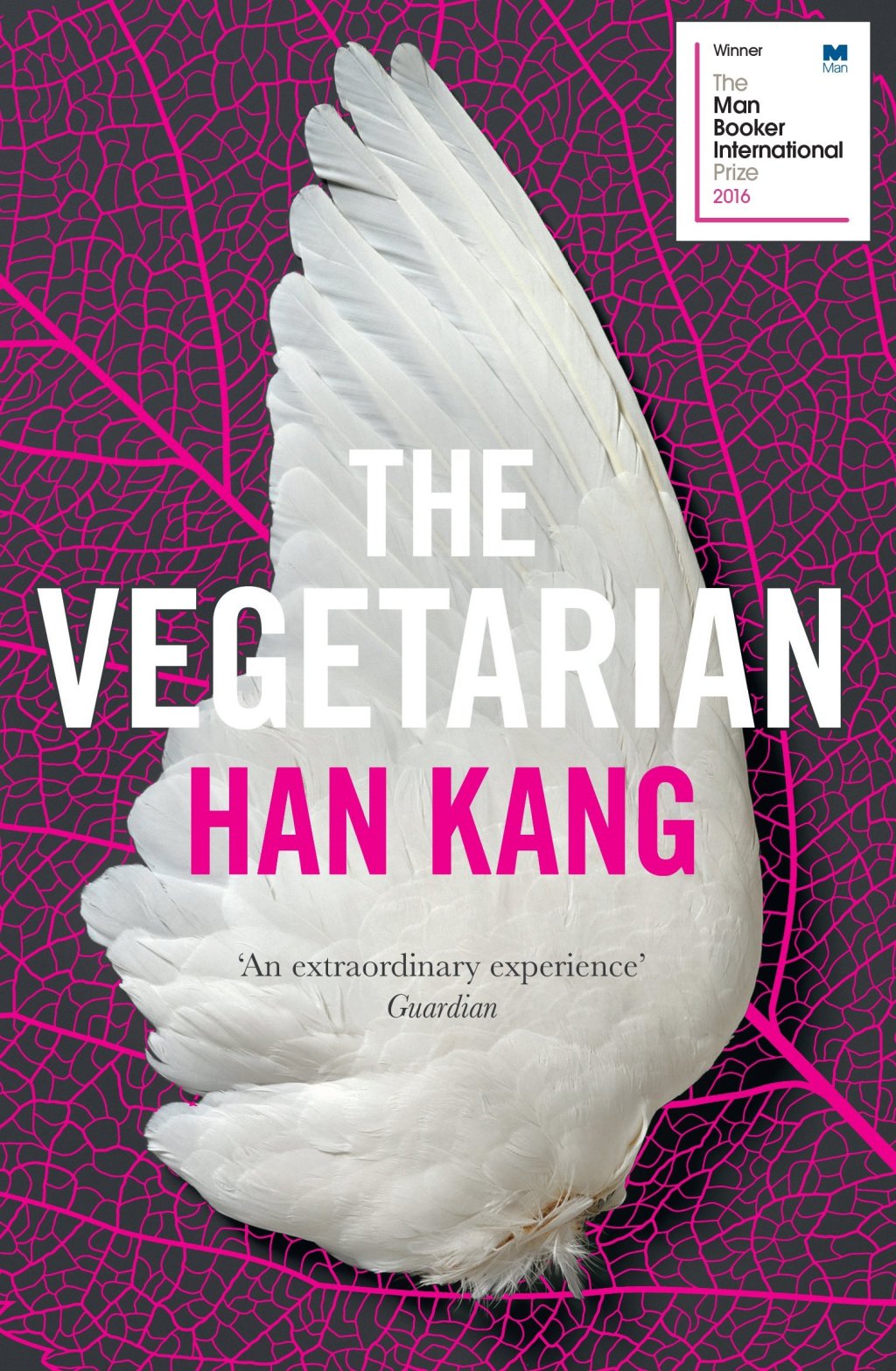
  • Book Review: The Vegetarian by Han King

    Book Review: The Vegetarian by Han King

    Austin Keane, Year 2

    This book is practically indescribable; I read it in a single sitting and was left exhausted—the images sifted hot and wet beneath my skin. To write this then becomes an act of replication, or transposition, turning feeling from vision to verb, unwritten and hidden and written again; as if I were producing upon the table before me a mouthful of forgotten copper, piece by piece.

    The narrative perspective shifts three times, examining the thoughts and actions of three individuals, but remains fixed on Yeong-hye—our Vegetarian in question—and her actions. This is Kang’s intention, allowing us to see exactly what it is she wishes to escape: the scrutiny of these individuals, their failure to see her beyond the flesh she inhabits; the image of the person she used to be, formed from their own interpretations—a wife, an object of lust, a wounded younger sister—which had until now consumed her.

    But then it happens—the dream: a pair of eyes, blood in her mouth, crimson everywhere. She stops eating meat to evade this vision and thus begins the decline. This vegetarianism is not solely her rejection of meat but one of the boundaries enforced upon her, including—so we are told—those of her mind. Familial abuse, self-mutilation and a frequent impulse to nakedness can be seen as initial markers of this being more than just a picky eater. Her lack of self-consciousness surrounding her nakedness can be construed in several ways—a return to the innocence of Adam and Eve, a time before the weight of self-actualisation, or perhaps a re-articulation of the self in its redundancy—she shows us how being physically exposed is no more telling of her true nature.

    And then towards the end, her outrageous claim: that she is a tree, or at least is becoming one. It’s no accident that at this stage—obsessed with the image of her roots extending into the earth, refusing to eat, only drinking water and taking in sunlight—that those around her plead her insanity. She is convinced of her becoming something ancient, beautiful, and they have finally disassembled their previous notions of her—as someone who is ordinary and controlled—and the disconnect between who she is and the woman they have known is finally exposed, always there but now undeniable in its specificity.

    It comes back to the idea of her dream, what is real here and what is false? Her sister acknowledges the redundancy of this question, so perhaps then it’s only how far we’re willing to go to escape human experience, in all its subjectivity? —or indeed whether we feel we must?

     It’s a book about desire and shame, about removing the understanding of herself as a sexual object—something immutably formed by the men in her life—to become something terrifying, unknowable. She extends herself into the earth, is captured in bloom, and for the first time is at peace with this new identity she forms, one free from the tainting of others’ perspectives—they believe her to be damaged beyond repair, insane—and she can finally exist, for the first time really, uninhibited. Only the liminal space is the truly unobserved.

    It’s stunning in the apparent ease of its beauty, and to quote Donna Tartt, ‘Beauty is terror’ after all; and that is what we get here, a frightening depiction of the means by which one woman escapes the entrapment of her life. It’s a haunting evocation of what it is to be free, and the cost of this truth—that to exist unexamined is an imprisonment in of itself. Again I’m reminded of those eyes—in the dream which starts this madness—and I think they may be my own, the reader’s, willing her to see her own indignity, and to be liberated no matter the price. So finally, I wonder if this is Kang’s vision: if you could, if you wanted to, had to, even, would you dare to see? —your own eyes a searing warning, cast in crimson, beautiful, but terrible too.