Category: Lifestyle

  • Open Theatre’s ‘Solomon and Atlanta’: Love as a Living Ghost

    Open Theatre’s ‘Solomon and Atlanta’: Love as a Living Ghost

    Austin Keane, Year 3

    Photo Credit: Saffy Wehren & Abby Swain

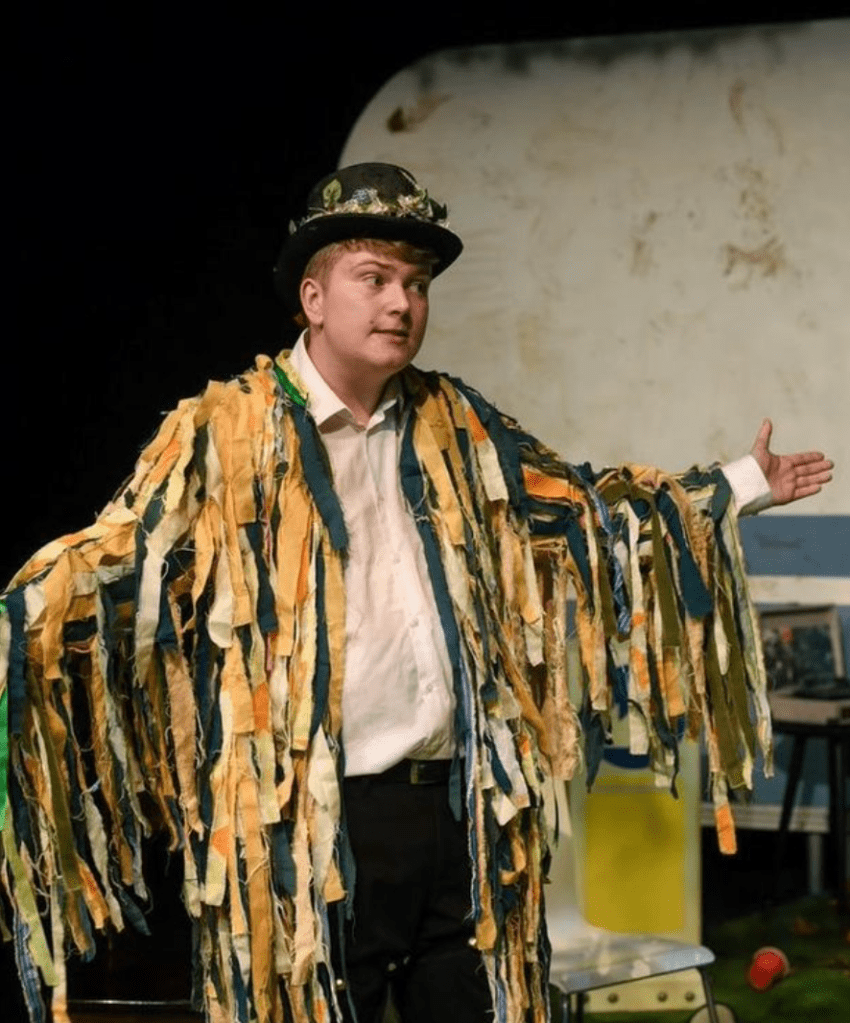
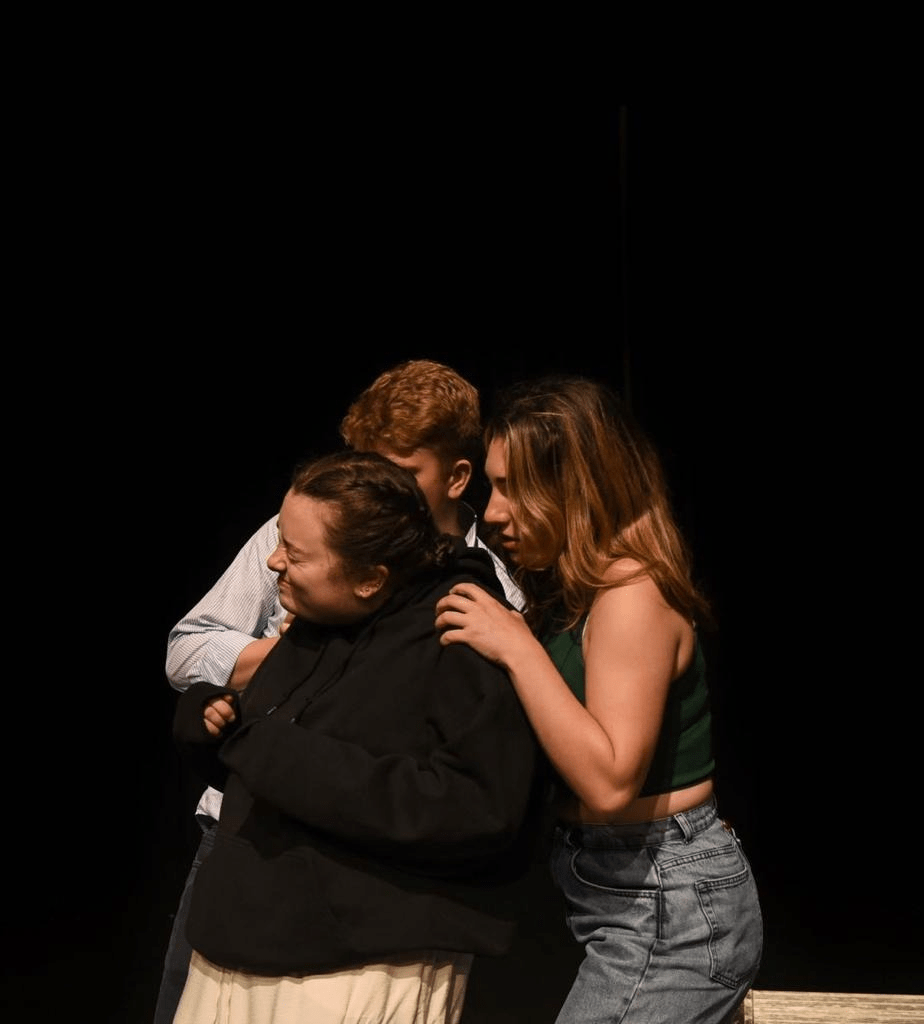
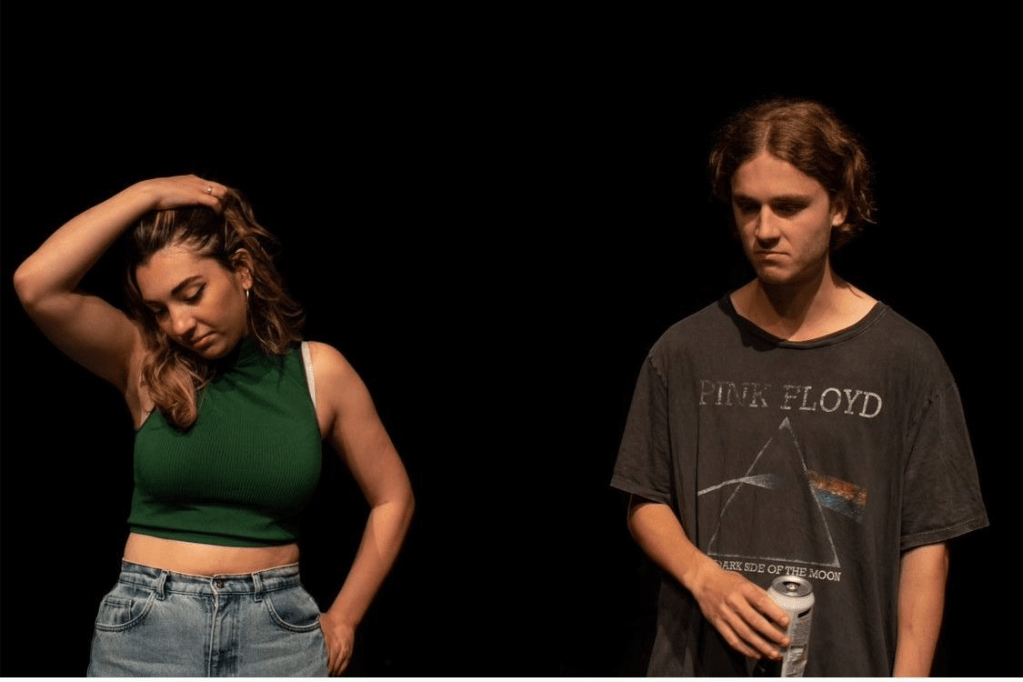
    In 1987, Fran Lebowitz wrote about the impact of AIDS on the artistic community and her most affecting and oft forgotten point was this—if an audience doesn’t understand the impact of removing queer people from culture then we must consider the fact that soon everyone who does understand what that means will be dead. What remains then is double fold in its creative demand—both legacy and resurrection. With the ‘Open Theatre’s’ Solomon and Atlanta I might argue both have been achieved.

    Written by Harry Daisley and directed alongside Izzy Bates, ‘Solomon and Atlanta’ is a carefully crafted story of love set during the AIDS crisis, and told across a decade. Not so much an anatomy of desire as the anatomy of memory, conjuring itself again and again, demanding to be told. The set marks itself as one of quality thanks to Saffy Wehren and Phoebe Sanders, charming the audience before a single word is spoken onstage. Red letters hang from the ceiling, prickling the skylight. Already, for the men in this story, their words watch them—calling to mind Chris Kraus’s maxim: every letter is a love letter—they twist as we breathe. The picture frames are empty, the letters pressed neatly shut; histories lie unrecorded or just unobserved. We, the viewer, have the sense that that is about to change. In the background there is an audio track looping the humming of voices—I’ll be your mirror made of light… This must be the endless summer—lyrics reminiscent of The Velvet Underground and Sufjan Stevens. It is a bold way to set the tone, an unembarrassed commitment to self-seriousness, and one this production proves itself equal to.

    The cast were uniformly brilliant. Matt Dangerfield as Atlanta balanced perfectly a sort of lightness conscious of its own overgrown size, becoming heavy in the altered body. In his brilliant laughter we soon begin to understand a fear of time, and memory’s error. Even still, the core of Dangerfield’s skill as a lead lies in his restraint. I could feel his energy, at once crackling in the air—then sublimate to sift vividly beneath his skin, giving a powerful sense of inertia to the quieter scenes. Sharing in this dance is Maddy Swindells, her obvious comfort as Atlanta’s confidante so convincing that it’s painful to witness. She shows a clear versatility between her two roles as Tracy and Betty, switching from the anticipation of tenderness to disillusionment with glittering ease; that her face can conform so easily to a quiet rictus of marital despair without seeming ridiculous is the best and most obvious example of this.

    Leading us through this memory is Evan Harris, the storyteller. Their gleeful narration buoys us comfortably across time, managing to convey a dignity earned by that same journey. As a narrative vehicle this is useful; as a character on stage they are singularly powerful. To have the discordant voices of Harris and Dangerfield ring out together is deeply moving: words are spoken over and over; love is re-enacted. (There are always two voices in us, after all.) In a memory, Daisley reminds us, everything begins and ends with the same breath. 

    The play is well over half gone before Morgan King makes their appearance as the eponymous Solomon. They are slow and awkward, nodding as if by reflex but also in disbelief at Atlanta’s presence. King manages to play a conflicted man without giving an uneven performance—Solomon is altered, made foreign by time, but is not completely without that fragment of beauty that Atlanta remembers. He has nursed it all these years. I was worried that Solomon would appear to us as perfect, a paradigm of male beauty and achillean desire—and therefore bloodless, unlovely—but King circumvents this with tenderness. 

    A picture containing person, person

Description automatically generated

    At this point Solomon is insufficient and necessarily so: we are allowed to see the single remaining shard that Atlanta can—and mourn it. Their love has already been well characterised. This depiction is helped by an incredibly effective use of staging with a screen and projector-lighting. Here intimacy does not surrender itself to the screen but is emboldened by it. Their desire, the action of it, is definite, obvious, yet obscured. The audience cannot look behind the screen any more than the lovers could have chosen to exist beyond it. It’s a clever trick to offer us further perspective that’s visually stunning as well.

    I did note that as the play progresses, the pacing becomes less even. Initially, scenes are brimming with feeling, exploring characters in a domesticity that is both convincing and engaging. But this fades as Atlanta makes his journey to see Solomon, setting their encounter as the single moment of tension. That this meeting is in actuality so brief, having been made so necessary, causes there to be a slight disconnect between the character’s experiences and the audience’s emotional perception of them. The other difficulty was with the use of Evan’s onstage presence. What is a cunning tool is at times over utilised. Atlanta’s feeling is translated so instantaneously that we barely have time to perceive it: Dangerfield is so immediately understood by the audience through this communication that at times we cannot read him at all, only form our impressions over him, rather than let him conduct them to us. 

    For me going in, the main challenge this production had was that if the audience is expected to believe that Solomon and Atlanta have lost something, we need to be convinced of them having found it in the first place—and this was done undeniably well, especially considering the play’s running time. Still, as I’ve mentioned, you never really touch Solomon—though neither can Atlanta. Thankfully we are not patronised—or worse, bored—with an exploration of Solomon’s religious guilt. Avoiding the pedagogy that too often creeps into narratives that speak to injustice firmly establishes the plays consciousness as a commitment to story and to character, as opposed to being a longform educational leaflet. It’s this, as with many things, that Daisley gets right. (I will ignore the fact that green remains my favourite colour.) 

    *

    Lebovitz understood that if artists disappear, so does their art, and the spirit in which that art can be created and celebrated. Here then is a group of people who have summoned that same spirit back into existence—you can feel their dedication to the story, evident in every colour and sequence—and so demand that it is once again witnessed. It was a pleasure to watch, and to consider. 

    We cannot rectify a history such as this–that would be to overwrite it. We should not. But when a group of people call us to remember its passing, and make us witness once more its form in decline—this story of the death of a culture—we are left with more than a funeral rite. The audience stir in the final sequence with a clear directive: to fill a frame with its picture; to remember the hidden screen, and where it still stands today, and why; to rend open the scarlet letter…

    and even to write one.

    Yorkshire MESMAC is advertised alongside this production. They are one of the oldest and largest sexual health organisations in the country, offering services to various communities across Yorkshire, including men who have sex with men, people of colour and other marginalised races, people misusing drugs, sex workers and LGBT+ young people and adults. You can find out more from them or access their services here: https://www.mesmac.co.uk/about-us/who-we-are

    References

    Lebowitz, F. 1987. THE IMPACT OF AIDS ON THE ARTISTIC COMMUNITY. The New York Times [Online]. [27/11/22]. Available from: https://www.nytimes.com/1987/09/13/arts/the-impact-of-aids-on-the-artistic-community.html
  • Should Doctors Prescribe Yoga?

    Should Doctors Prescribe Yoga?

    Paula Szlendak, Year 3

    Yoga originates from India and has existed for over 5,000 years. When it was established in modern Western society, it became an incredibly popular wellness activity, and has continued to increase in popularity over the recent years. Many devoted practitioners (including myself) believe in its great benefits for both physical and mental well-being. It’s something you feel intuitively when you’re immersed in the world of yoga, meditation and mindfulness—that you’re doing something good for both your body and your spirit. 

    However, as a medical student, I’ve developed a habit of seeking evidence. So I asked myself a question: Is there any science behind those claims that yoga is “healthy”? Should we recommend yoga to patients? Is it just another commercially-successful trend that western medicine should steer clear of?

    Here’s a list of potential health benefits, which are commonly associated with yoga practice, and the science behind them:

    1. Stress relief 

    Many studies suggest that yoga practice has a positive effect on stress. This is especially relevant, as the modern lifestyle puts more and more pressure on people’s health, both physical and mental. According to the American Psychological Association, 84% of American adults report feeling the adverse effects of prolonged stress, which can lead to chronic diseases and reduced quality of life. It has been proven in numerous studies that yoga has an effective role in reducing stress and improving overall mood. Participants reported increased feelings of relaxation, especially when yoga was combined with meditation and breath work techniques.

    1. Reduced anxiety and depression symptoms

    There is extensive evidence suggesting that yoga may improve symptoms of anxiety and depression. The Anxiety & Depression Association of America lists yoga as one of the four complementary and integrative health practices (alongside meditation, relaxation techniques and acupuncture), which may be used in treatment of these conditions. Most of the reviewed literature found yoga interventions to be effective in treatment of depression symptoms, however the results of studies vary based on sample characteristics, styles of yoga used and duration of intervention. One specific type of yoga, “Yoga nidra”, which is a guided “body scan” meditation, has been linked with especially strong evidence in reduction of anxiety symptoms. 

    1. Improved flexibility, balance and physical fitness

    As we age, our overall mobility and flexibility decreases, due to loss of collagen and elastin. There is evidence, that yoga as a health intervention improves both physical mobility and flexibility, as well as health related quality of life in older adults (mean age of 60 years). Yoga proved more effective than walking or chair aerobics in increasing physical function, especially in those aged 65 or older. It has been recommended in national and global physical activity guidelines. Research suggests that yoga can also help improve balance, which could be beneficial, especially for the age group mentioned above, which is at biggest risk of falls. There is even some papers describing positive effect of yoga on balance in patients following brain injuries, however more studies with larger sample sizes are needed before a definite conclusion can be drawn.

    1. Improved sleep

    As already discussed, yoga can help relieve stress and improve mood. This has proved beneficial for people who struggle with insomnia—problems with falling and/or staying asleep. A national survey conducted in the United States in 2012 found that more than 85% of people who practice yoga reported reduced stress before bedtime, and 55% of these people reported improved quality of sleep. The benefits for sleep are mostly linked to the meditative properties of the practice, which allows to calm the mind in preparation for sleep.

    Looking at the above evidence, it seems like prescribing yoga as a supporting tool for managing stress, poor mental health, mobility or sleep could be beneficial. Lifestyle practices, such as yoga, can be a great tool, not only for treating, but also preventing adverse conditions. That being said, it really comes down to personal experience and preference whether we find something helpful or not. I personally see yoga as incredibly beneficial, and would encourage everyone to give it a try—even if your doctor has never mentioned it!

    References

    Ferreira-Vorkapic C, Borba-Pinheiro CJ, Marchioro M, Santana D. The Impact of Yoga Nidra and Seated Meditation on the Mental Health of College Professors. Int J Yoga. 2018 Sep-Dec;11(3):215-223. doi: 10.4103/ijoy.IJOY_57_17. PMID: 30233115; PMCID: PMC6134749.

    Goldsby TL, Goldsby ME, McWalters M, Mills PJ. Effects of Singing Bowl Sound Meditation on Mood, Tension, and Well-being: An Observational Study. J Evid Based Complementary Altern Med. 2017 Jul;22(3):401-406. doi: 10.1177/2156587216668109. Epub 2016 Sep 30. PMID: 27694559; PMCID: PMC5871151.

    Jeter PE, Nkodo AF, Moonaz SH, Dagnelie G. A systematic review of yoga for balance in a healthy population. J Altern Complement Med. 2014 Apr;20(4):221-32. doi: 10.1089/acm.2013.0378. Epub 2014 Feb 11. PMID: 24517304; PMCID: PMC3995122.

    Miller, K. K., Burris, R., Nuest, H., Mason, A., Schmid, A. A., Hanna, C., & Barringer, M. (2020). Post-Rehabilitation Adapted-Yoga at the YMCA for Adults with Acquired Brain Injury: A Feasibility and Pilot Study. Journal of Yoga and Physiotherapy, 7.

    Shohani M, Badfar G, Nasirkandy MP, Kaikhavani S, Rahmati S, Modmeli Y, Soleymani A, Azami M. The Effect of Yoga on Stress, Anxiety, and Depression in Women. Int J Prev Med. 2018 Feb 21;9:21. doi: 10.4103/ijpvm.IJPVM_242_16. PMID: 29541436; PMCID: PMC5843960.

    Sivaramakrishnan D, Fitzsimons C, Kelly P, Ludwig K, Mutrie N, Saunders DH, Baker G. The effects of yoga compared to active and inactive controls on physical function and health related quality of life in older adults- systematic review and meta-analysis of randomised controlled trials. Int J Behav Nutr Phys Act. 2019 Apr 5;16(1):33. doi: 10.1186/s12966-019-0789-2. PMID: 30953508; PMCID: PMC6451238.

    Stussman BJ, Black LI, Barnes PM, Clarke TC, Nahin RL. Wellness-related use of common complementary health approaches among adults: United States, 2012. National health statistics reports; no 85. Hyattsville, MD: National Center for Health Statistics. 2015. [402KB PDF]

    Youkhana S, Dean CM, Wolff M, Sherrington C, Tiedemann A. Yoga-based exercise improves balance and mobility in people aged 60 and over: a systematic review and meta-analysis. Age Ageing. 2016 Jan;45(1):21-9. doi: 10.1093/ageing/afv175. Epub 2015 Dec 25. PMID: 26707903.

  • Jerusalem by Theatre Group Review

    Jerusalem by Theatre Group Review

    Imogen Jones and Zak Muggleton

    On 4th November 2022, the ‘Theatre Group Society’ performed ‘Jerusalem’ in the proscenium arch theatre, ‘stage@leeds.’ We walked into a smoke-filled room—not one for the asthmatics we would say—into a dimly lit, minimalistic set. The opening scenery put forth a site that most students would recognise on a Sunday morning, after the night before, representing the chaos of the play to follow. Butterworth’s play transports the audience into ‘Rooster’s Wood,’ in Wiltshire; the play centres around a dingy caravan site, separated from the regular hustle and bustle of Flintock, the local village. Butterworth’s lead character ‘Johnny “Rooster” Byron’ is said to be based, by locals in Wilshire, on a retired builder named Micky Lay, who lived in a caravan in Pewsley. Upon opening in the West End, Mark Rylance (the actor playing Rooster in the original cast) met Lay, basing his character on him. Eventually, Rylance gifted his Tony to Lay before Lay died from a heart attack, waiting for his local pub to open. Tom Grice’s interpretation of Rooster Byron would also, in our opinion, have risked his life waiting for his local pub to open!

    The play begins on St. George’s Day, on the morning of the local village fair, suggested to contain the infamous ‘Donkey Drop’ game (research at your own will), ‘Coconut Shy’ and more. The play centres around Johnny “Rooster” Byron, whose entire character is an analogy for the Pied Piper, luring teenagers away from the village with alcohol and drugs rather than a magical instrument. It is almost glorified for this older man to be looking after them. It is clear that Rooster thinks he is protecting them from the rest of the world. The almost 3-hour long play blurs the line between moral and immoral, and it is at times hard to understand where the playwright’s morals lie, but this is a common feature of naturalistic theatre. The council, throughout the play, want to evict him from his site, whilst he receives threats from Troy Whitworth (played by Rory O’Dwyer) about the disappearance of his daughter (played by Hannah Whiteway) – this storyline seemed to be inconclusive for the most part. On top of this, his son Marky (played by Lauren Robinson) wants to be taken to the fair, but his son is not his priority, as a group of teenagers badger him for their share of his drink and alcohol. 

    For the most part, the play was easy to follow. The first act was light-hearted, extremely comedic and had an underlying tension that the cast did so well to portray. However, In the second act, the pace seemed to drag a little and the storylines became a little harder to follow, especially since there were such a large number of characters. This was not down to the actors or the directing, and the shift in tone from the first to the second act (comedic to serious) was negotiated wonderfully by the talented cast. What is so brilliant about the characters in the play, is the way in which the arcs seem to reflect the naivety of the characters. In the first act, only the adult characters, except for the Professor (played by Ben Greenwood) who reflected the more child-like nature of an elderly person, had any sort of bite. All of the younger characters radiated positive energy, and seemed to have almost no character progression, staying young and naïve until the end. Bridging the gap between adult and child was Ginger (played by Jess Payne) who had the energy of a younger person, but it was made clear that he was quite a lot older than the rest of the teenagers. It seemed as though he was a reflection of a young Johnny Byron, and the frustration that Rooster displays towards Ginger reflected that one cannot stay young and reckless forever, and that Rooster did not want Ginger to make the same mistakes he did. 

    What is there to say about these actors other than singing their praises? Every single member of the cast hit the mark, with no one looking out of place when put up against the rest. This is a testament to their abundance of talent, and the skill of the production team to cast everyone into the roles they knew they would excel. In a 14-person cast, it would have been very easy for some to be overshadowed, but everyone seemed to shine at different moments throughout the play, with not one member seeming out of their depth. Due to the absence of mics, they ran the risk of actors not being able to be heard, but the projection was more than enough to be heard from the back row. 

    The first honourable mention must go to Tom Grice, whose take on Rooster Byron was mesmerising, from his accent to his walk, with not a single detail missed. Not only did he reflect the immaturity of the character at the start of the play, but he also transitioned perfectly into the angrier, sadder version of Byron we see towards the end. This range of emotions is a lot to demand from one actor, and he did a tremendous job. The play began with Phaedra, the lost daughter, singing to the audience before we transitioned into the dance. Hannah Whiteway’s portrayal of Phaedra was wonderful, with her movements entirely convincing the audience of her youth, as she tugged on her dress and tiptoed around the stage. We thought this was an impressive detail, and her singing was beautiful. The village dance in the first act, choreographed to reflect the culture of the countryside village, was a joy to watch and incredibly clean, so well done to the directors. By far, Lee and Davey (played by Angus Bell and Malachy O’Callaghan) were the most successful in getting their jokes to land, but by no means saying the rest of the cast were not funny also. Their accents were on point, and it was a joy every time they had a line. O’Callaghan had us in stitches before he even finished his lines, and there were a few lines that couldn’t be heard over the premature laughter! Furthermore, it must be mentioned that Bell’s reactions to the other characters, whilst they were speaking, were exquisite. Also, to Jess Payne for her betrayal of Ginger, who managed to sustain a high level of energy throughout, being in character 24/7, with her animated reactions matching the character’s exuberance. Other honourable mentions go to Lexi Prosser and Siobhan Ward playing the council workers, who brought refreshing light-hearted comedy to the play and Tamsyn Rodliffe playing Pea, having the best Wilshire accent we have heard outside of Avon itself! 

    Yellow, Matthews and Vaughn directed the play well and there were a few exemplary moments that we noticed, and many more besides! The rhythmic movements at the beginning, in time with the music, seemed so polished and grabbed the audience’s attention from the get-go, so bravo to the choreographer! Another moment we noticed was the final sequence, in which Byron and the play faced their conclusion. Testament to the wonderful actor also, the scene felt well-paced, and it was clever how earlier moments of the play contributed to this scene, for example with the Byron drum. We can only imagine the directors being instrumental in helping him achieve the emotion he needed to perform this segment. Moreover, a random screenshot of the play sees the characters sitting in a chevron, with a moment of stillness whilst they listened to Byron. We just liked the spacing in this moment, and it reflected the methodical instruction the directors must have had, about where the actors should be sitting throughout the play. 

    Although the play reflected no specific time period, Walsh and Burge’s (the producers) costuming remained consistent between the characters. The clothing was mainly blocked colours, with little additions (such as ripped tights) to bring in some individualism. We were also incredibly impressed by Wesley’s (played by Charlie Crozier) outfit throughout—must not have been easy to find! Also, the blood involved looked so real, it could have had us fooled! The set and lights remained mainly static throughout the show, but this was not necessarily a downside, as most of the play was set in one place. However, the tree was incredibly well constructed and really emphasised to the audience that they were in the woods. Also, the strobe lighting during the fight scene made the audience feel incredibly tense. 

    Overall, the play was a joy to watch, and brought Wilshire into the north! Massive congratulations to all the cast and crew, and we cannot wait to see what TGLeeds have in store next. 

    References

    Wikipedia., 2022., Jerusalem (Play)., [Online]., [Accessible at:https://en.wikipedia.org/wiki/Jerusalem_(play) ],. [Accessed on 6/11/22].

  • Calm Down, It’s All in Your Head

    Calm Down, It’s All in Your Head

    Holly Dobbing, Year 3

    Anxiety. We’ve all felt it. Or I’m sure we all have, unless you’re a cold-hearted, no-feeling, psychopathic Patrick Bateman. In that case, good for you. I envy you. Anxiety is such an awful feeling: your heart is pounding, your skin is tingling, you’re sweaty and jittery and you just can’t get your breath. It’s all-consuming. It’s not like a broken arm where the pain is confined to one limb because it’s everywhere – your heart, your lungs. Even your brain feels scrambled. It feels overwhelming and inescapable, but it’s just a feeling, right? It’s all in our heads… right?

    In some ways—yes—anxiety is all in your head. But not in the way you think. Anxiety actually changes the biochemistry of your brain (Stoneridge, 2021). When you feel anxious, your body is in ‘fight or flight’ mode – your body is preparing to cope with whatever is making you anxious – so your central nervous system is flooded with adrenaline and cortisol (NIMH, 2022). In a scary situation, these hormones are really helpful. Adrenaline boosts your heart rate, blood pressure and energy supplies (2021), and cortisol is responsible for increasing the supply of glucose to the brain (2021). This ensures the body can deal with the scary situation and subsequently return to its resting, calm state. However, in anxiety, this ‘calm’ state seems infeasible. It’s impossible to grasp, like trying to grab onto a cloud. This means the stress hormones continue to precipitate a cycle of stress hormone release until the brain is swimming in cortisol and adrenaline and you just feel completely overwhelmed (Stoneridge, 2021). 

    Anxiety can also change the proportions of the structures in your brain – your amygdala may grow larger if you regularly experience anxiety (Stoneridge, 2021). The amygdala is the part of the brain that copes with emotion and mood (Swanson and Petrovich, 1998). It sends signals to the hypothalamus when it senses a threat which triggers our fight or flight response and starts the stress hormone cycle I mentioned earlier (Swanson and Petrovich, 1998). When you’re anxious, your amygdala is larger and hypersensitive, making it easier to trigger the high stress state we associate with anxiety (Stoneridge, 2021) – this means people with anxiety may ‘overreact’ to situations or become triggered when others don’t. 

    The connections between the amygdala and prefrontal cortex are also weaker in those with anxiety so when the amygdala reacts to a threat, the logical, rational prefrontal cortex doesn’t respond the way it does in non-anxious brains (Stoneridge, 2021). Normally the prefrontal cortex rationalises threats, but when we’re anxious and the connection is weaker, we lose our problem-solving brain and become more erratic (Stoneridge, 2021).

    Anxiety can also cause your hippocampus to shrink (2021). This makes it more difficult to store and remember memories – especially happy ones (Stoneridge, 2021). In other words, anxiety is making it harder to hold on to your happy memories, so you’re more likely to remember failures, sad moments, and danger. Yet again, anxiety precipitating more anxiety. 

    So yes. Anxiety is all in your head. But that doesn’t make it ‘made up’ or invalid in any way whatsoever. Mental health conditions are health conditions and need to be treated with just as much respect and sincerity as any other health condition. Anxiety is and will always be hard to manage, especially on top of university and our busy student lives. This said I hope understanding more about how anxiety physically affects your brain helps to keep things in proportion when you do inevitably experience those scary feelings. They are scary but they are also real and valid and legitimate, and you are not alone!

    Useful links if you suffer with anxiety:

    References:

    2021. Chronic stress puts your health at risk [Online]. Mayo Clinic. Available: https://www.mayoclinic.org/healthy-lifestyle/stress-management/in-depth/stress/art-20046037#:~:text=Adrenaline%20increases%20your%20heart%20rate,of%20substances%20that%20repair%20tissues. [Accessed 25th October 2022].

    NIMH. 2022. Anxiety Disorders [Online]. Available: https://www.nimh.nih.gov/health/topics/anxiety-disorders [Accessed 25th October 2022].

    STONERIDGE. 2021. How Does Anxiety Affect the Brain [Online]. Available: https://stoneridgecenters.com/how-does-anxiety-affect-the-brain/#:~:text=When%20you%27re%20anxious%2C%20your,brain%20to%20hold%20onto%20memories. [Accessed 25th October 2022].SWANSON, L. W. & PETROVICH, G. D. 1998. What is the amygdala? Trends in Neurosciences, 21, 323-331.

  • LS6 Theatre’s ‘Asides From the Elbow’: Love in the Time of Recession

    LS6 Theatre’s ‘Asides From the Elbow’: Love in the Time of Recession

    By Austin Keane. Year 3.

    Images owned by LS6 Theatre.

    Rating: ★★★★☆

    “Are you a good person?” This is just one of the things writer and director Rebecca Harrison wants us to consider in her new play–a question that is as much a calling card for a certain audience as it is an actual plea for information. With dialogue sharp enough to cut a portrait–and acting convincing enough to threaten to disassemble it only a few breaths later–this production holds up a brilliant mirror to student life.
    The title itself is a construction, an inversion. Like much of the show, things accrue meaning in their relationship to one another, in the patterns that wash over normal life, so that certain words may glimmer–if only under a certain light. All the action occurs in the smoking area of the eponymous bar ‘The Elbow,’ a favourite of our four friends, as they attempt to parse the things that bind them together: rent for a house they have all, at one point, lived in; love, or lack thereof; failing to clean the kitchen properly. The scenes themselves are these ‘asides,’ further punctuated by miscellaneous audio that gives us glimpses of other lives happening alongside the characters. At the same time, ‘to elbow aside’ is an idiom meaning to get past someone and take their place or to literally push someone away, an idea that is closely examined in the play’s main dilemma. Importantly, the narrative is always just off-centre from the pub. It’s a powerful frame to read lives with–to capture a person in motion, perpetually between drinks, always coming or going–but is subtly effective in rendering accurately the liminal spaces young people occupy.


    The stage itself was comfortably sparse: an old-style dustbin, a single bench–giving the actors plenty of space to work with, each of them commanding it with a confident and unique attention. The characters are a glorious band of familiar types. There are brothers Sam (Charlie Crozier) and Chris (Matty Edgar), recently estranged after the latter mysteriously disappeared and the former took his place in the house. Crozier embodies the strained stubbornness of the average joe easily, challenging Chris’s elusive sulkiness with the perfect amount of sibling disdain. This tension is shared well between them, held tight enough to make the audience nervous without descending into pantomime. Edgar is persuasive in his delineation of the failed musician, smothered with embarrassment, managing to be surly enough to irritate his friends into argument but not quite the audience.
    Joy (Lucy Yellow) and Perry (Carrie Clarke) are close friends and Sam’s roommates. We watch their dynamic play out, dominated at first by Joy’s sour imagination that is then put to the test. For Joy speech all speech is thronged with anger–as if she’s deriving meaning from her language the moment she produces it. Perry is excellent in response, and the perfect antidote to Joy’s ironic bitterness. Clarke proves herself the most versatile, conjuring bizarre monologues with an utter seriousness that’s as affecting as it is hilarious, while managing still to capture tenderness between the laughter. Her wide-eyed fervour appears, as the play progresses, just as much armour as it is artifice. (In response to her boyfriend cheating on her she remembers aloud how he had just said that he loved her; and, in the breath that she thinks about what it means to have two women beholden to you, shouts, ”Don’t you know there’s a recession James?”)

    There’s always a turned hand, a flashing eye–ideas, both serious and then deadly funny, threaten to take root there, between them, in the hot air of the room. The intimacy the actors conjure together further aids a trick of perception–that we, the audience, really are among them in the space; that after a drink or two it would be possible to watch these very scenes unfold, unobserved. Here, artefacts of student life are sacrosanct: a borrowed lighter, that silly shuffle from the smoking area, bumping awkwardly into that old friend at the local. Everything glimmers with power–in the ritual of it repeated a thousand times outside the room, remembered and recorded each time they are acted out. And you find as you watch that it’s an utter pleasure to see them pay tribute to real life in this way.
    The most stunning moment of the show for me was when Perry, in a therapeutic act, shouts at Sam and Joy pretending they are two people who have recently wronged her, making them co-conspirators. Here, the characters overlay each other in a double exposure, painful for the way in which it reveals rather than obscures them. Like those images plucked straight from normal lives, significance comes from the act being a shared one. There’s some sleight of hand here too, since although Perry does much of the obvious comedy for the show she is not in fact a joke. Perry ends up living the thing Joy is afraid of–and beyond it. She complicates the story in refusing to conform to it. Again and again, we watch the cast spin off of each other with startling ease, living out real fears–in love, in life, above all in belonging–with genuine skill.
    I will say that, at times, the dialogue came a little too formed from the lips of the cast; its tenderness was lost in its efficiency. Similarly, the emotion expressed by the cast was at times unbalanced: Sam’s character is limited in his range of expression as his very struggle to communicate what he wants is undermined by how long he remains unmoved for–much of the play–and how relentless this characterisation is. Because of this, language that should glitter disappears the moment it is uttered, making him unfairly less compelling than the others. Even still, the production team of assistant director Ellie Mullins, producer Meg Ferguson and marketing producer Olivia Taylor-Goy, have conjured a moving study in the small but essential moments, powerful for its devotion to people acting out the quotidian tensions that occupy us all. We witness here a brilliant game of asking: the way we ask ourselves what matters, and without knowing demand it of each other.
    In watching this excellent production unravel, I realised I had stumbled across another inversion. The question is not ‘are you a good person?’ but ‘are people good’–and that final condition–’to each other.’ Not an individual exercise but a collective one, mirrored and repeated like all these small acts the show pays wonderful attention to. And, just like real life, there is no answer given to us by the end of the play. But with as stunning a portrait of infuriating, silly, entitled, confusing, glorious student life as this, you leave remembering exactly what it is that’s important–that we keep asking it.


    ‘Asides from the Elbow’ is showing at the Edinburgh Fringe Festival (Perth Theatre) from the 5th to the 14th of August–get your tickets here: https://tickets.edfringe.com/whats-on/asides-from-the-elbow

  • Chevron Theatre’s ‘A Wilde Life’: On the Importance of Being Aesthetic

    Chevron Theatre’s ‘A Wilde Life’: On the Importance of Being Aesthetic

    By Austin Keane. Year 3.

    Illustrated image by Milly Fern Parker.

    Rating: ★★★★★

    C’est moi!”—two indelible syllables and Oscar Wilde appears before us, reminding us not so much who he is as what he is—iconoclast, critic, decadent—as what he does: Oscar Wilde (Jack Glantz) has something to say.

    A Chevron Theatre production, “A Wilde Life” has imminent dates in Cambridge (Town and Gown) before running at the Edinburgh Fringe from the 15th-27th of August. Created by Andie Curno, George Marlin, Alex Boulton and Mia Ruby, this is a musical chronicling Wilde’s life—a Herculean task, but one that this team has executed brilliantly; glittering with barbed charm, this production is as bold as the man himself.

    The scene opens in a sleazy Parisian café, thick with the honeyed misery of a dying age: sex-workers flirt with each other and the audience; bartenders and regulars gossip with distinct ease. Rather sensibly, no French accents are attempted. The space hums with potentiality—a piano and two tables, a handful of glasses, everything smothered with red cloth—sparse enough to allow the actors to establish much of the physical context. It is effectively done so that there is a certain volatility to the scenes, as if they might come apart at any moment. Accordingly, the movements of each actor becomes crucial. Thankfully, they prove themselves more than equal to it.

    With a swaggering grandeur Glantz made his entrance to the stage, slow and posturing, possessed with all the calm of someone who knows how to capture a room. Immediately we were grounded with ‘Oscar in Paris,’ a thrumming jazz number that remained for me the most memorable. Alex Boulton as the pianist for the café is a permanent fixture, lending real warmth in his attenuated focus as he lets the rest of the ensemble perform. Boulton, with Julian Schwarz, managed to effortlessly capture the zeitgeist. The entire score is a mixture of blues and jazz to express Wilde’s fractured history, swollen with rich melodies and eddying rhythms.

    The characters onstage required some further attention before they revealed themselves to us. Wilde as we know him does not exist in a vacuum. Rather, he is a cultural emblem, predicated on the idea of an audience (“A Wilde Life” grasps this well). In the very same way, we conjure Wilde through this act of assembly: the ensemble is transformed one-by-one into members from his past. The metaphysics of the display are as funny as they are perceptive. Wilde once demanded an audience that would receive him—tonight it is only right that he commands one to tell his story. This conveys something else as well, that we are in good hands with people who understand this history, and why exactly they owe a duty to rewrite it.

    Ajay Sahota as Robbie Ross is the first figure summoned from Wilde’s past, and his first paramour that we are introduced to. Sahota plays the ingénu with stunning ease, constantly fumbling for meaning without verging on the ridiculous. A scene in which he drinks whisky for the first time had the whole room nervously laughing, such was the real physical tension between Sahota and Glantz; in the charged stillness there was a latent sense of danger. Wilde appears to tease Ross with his lack of restraint (“I see much of myself in you.”) and in doing so teases us, the audience, with the subtext, revelling in the error of our logic—that what is hidden must continue to be.

    The next characters to appear are Ada Leverson (Imogen Chancellor) and Lady Jane (Dalia Kay), a fellow writer-friend and Wilde’s mother respectively. Chancellor is just as clear in her acerbic control of language as Kay is dominating when employing her own. Here, the creators emulate well that archetypal Wildean mode of speech, its searing musicality; bracingly unsentimental, everything is set hard and bright in its paradox. Chancellor‘s ability to match perfectly Wilde’s desire to shock is a thrilling thing to discover in real time as she, the bar patron, assumes her role as Ada.

    The next two songs (’Love and Art’ and ‘Careful Darling’) capture Wilde in his reflections between Glantz, Chancellor and Kay—we cannot have him whole. Indeed, not even his wife—as we are often reminded—could. I especially appreciated the time given to the women in his life. Being able to see them in context and talking to one another is invaluable when it comes to understanding our protagonist. Too often they are made bloodless and dull in the face of Wilde’s character; here they exist just as brashly, are just as vividly with arguably comparable limitations, entirely to the show’s credit.

    Not long after, the most moving scene from the show occurs between Wilde and Bosie (Zak Muggleton-Gellas) who embodies the spoiled youth impeccably, his features suffused with an almost caffeinated sheen. They sit and read to one another silently throughout “Eternal Youths,” the faltering melody drawn out between them in the starkness of their intimacy that needs no other framing, no other distraction but themselves. For Bosie, innocence is an instant away from entitlement, a transformation made even more likely with each giddy breath. Because of this dichotomy, as the show progresses Muggleton-Gellas’s performance changes radically, a contrast that is both comical and at times distracting. Further, there is that incessant poisoned lyric: Narcissus, Hyacinth. For some, these are images attended by tragic stories of metamorphosis—a man paralysed in his reflection, another struck dead by a god, both taken then into new flower; for others these are just the flowers themselves. Death by Beauty, or rather death to Beauty, in surrendering to the beauty of other men, or to just their image—this is what Wilde warns us of; this is what the audience knows to fear. This is what Wilde’s wife Constance (Freya MacTavish) knows she has to compete with.

    MacTavish, finding herself caught between institutions and the will of a man determined to both defy and entertain them, makes easy work of the spurned lover. A curdling exhaustion marks her performance of “Silly Connie,” for me, the most impressive of the entire show. The control she assumed over the space was unimpeachable with an equally undeniable vocal performance. It is at this point that our villain made an appearance: the Marquess of Queensberry (Millie Fern Parker) is coming to take Oscar down with “Make Him Pay.” These songs together explore different responses to Wilde’s actions and the effect he had on them in return. Opposing the two characters emphasises the phenomenal diversity in opinion surrounding Wilde among his contemporaries. Parker provides the majority of the comedy for the show with her coiled wit lashing at Wilde and anyone else who dares oppose her (Dirty fruits!) culminating in his famous trial and ultimate sentencing.

    Though the trial itself is heavily truncated—the effect of an arrow sprung perfectly to hit its mark barely a foot from its release—it is no less convincing for the exacting puncture mark it leaves. That Glantz can conjure a real sense of loss in “De Profundis” without the context of a long battle is a testament to his performance and the definite choreography of the scene. It is in this song that Glantz best assumes Wilde’s character, with strong vocals thronged with bitterness as he writes to Bosie from prison. Everything has the impression of careful consideration. Even in its ending.

    One of the most impressive aspects of the show was the attention paid to its characters’ costumes by Daisy Fox and Emma Wilcox. These are subtle marks of genuine passion and a clear demonstration of the intelligence of the team in their effort to conjure genuine people with fine qualities of taste and appearance: a darting red is woven into hair at the crown; a dress hemmed with fine red thread stirs in response. Everyone wears that same red and black. To change a single costume is unimaginable—the incredible details mark them as seamless in each individual case.

    The production itself, headed by Ben Nuttall with Kate Matthews, is of the most immense quality. Perfectly balanced, like the fine movements of a clock’s machinery, you hardly notice the achievement for its subtlety. The lighting delineates the scenes perfectly without muddying them, always remaining clipped. It is only when you remember that there must be a construction, that the production is itself organised, can you hear that steady ticking and perceive each immaculate movement. The well-coordinated dancing of the cast (joined necessarily by Caitlin Etheridge and Casiah Palmer Sterling as Cyrille and Vyvyan, Wilde’s children) was a surprising aspect of the show for me. Dynamic and playful, the choreography accentuated the show with a level of professional ability that was a genuine pleasure to witness. Etheridge and Sterling deserve further recognition for joining the harmony of babbling voices for the duration of the show while never seeming to take up unnecessary space on the stage, holding their own even when underutilised.

    By this I mean Wilde’s children remain largely unexplored beyond their naming, and that considering their relationship to youth, beauty and legacy, there’s much fun that could be had here both musically and otherwise. In addition to this, slowing down the first couple of scenes would help to clarify some of the dialogue that remained indistinct. Glatz too would benefit from this in “A Wilde Life” that was, though visually engaging, more difficult to follow. Each of these seem to be the most obvious effects of a shorter running time however, and something easily resolved.

    The other thing I noticed is that, at times, Wilde’s prose falls a little too quickly from the mouths of other characters. The final act of summoning Oscar to himself is done using this very device, powerful in its utter sense and conviction—what other man would trust to save himself? Elsewhere however, it can at times feel like an act of smug puppetry on behalf of the writers. Similarly, “Sodomite” being misspelt by the Marquess—a pivotal narrative moment—was not clearly explained, requiring the audience to already be acquainted with Wilde’s story. Finer details like this may help to broaden the audience in engaging with the narrative.

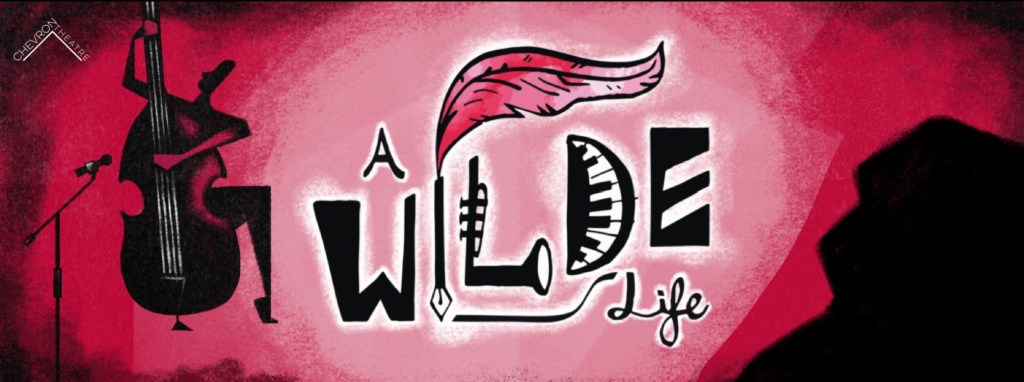
    Ultimately, the great effect of Wilde’s characterisation is that the creators emphasise the importance of expression within queer identity—that there must remain a necessary distinction between liberation and assimilation. In capturing Wilde’s commitment to excess the writers are showing the audience the value of audacity, in demanding what you are owed. Art for art’s sake is radical because it is a commitment to the self, beyond utility or influence. We must commit to the beauty of an image—our own image—without its interrogation. With magnificent dexterity, much of Wilde’s philosophy bleeds through the show: here Aestheticism, the commitment to beauty alone, fits snugly alongside domestic drama, and some truly excellent musical numbers. This is a phenomenal achievement that the entire team should be incredibly proud of. Lydia Duval’s work with marketing is also a distinct feat, capturing the wit of the show and helping to broaden its access via social media. The gorgeous illustrations for the posters further emphasise the professional nature of the production. Created by Parker, the broad-edged black and red lines help to establish the dark, rich tone. The cast and crew of “A Wilde Life” have captured the tragicomedy of the world’s first modern celebrity with all of the vigour and vim it might ever be possible to summon, culminating in the single best show I have seen all year.

     ***

    My final thoughts linger on that first act of construction, of being called to act out this history. And the miracle of it, leaving each audience member wondering at that same possibility, whether they might be called to live out a story—of beauty or anguish, of tragedy and humour?

    After all, “It is the spectator, and not life, that art really mirrors.”

    “C’est moi!”—no Oscar: c’est nous! It’s us!

    Either way, you’re in for a Wilde ride…

    [Tickets available on FIXR: Search for ‘A Wilde Life’]

  • Open Theatre’s ‘The Velvet Veins’: In a World of Binaries You Are What You Wear

    Open Theatre’s ‘The Velvet Veins’: In a World of Binaries You Are What You Wear

    Austin Keane, Year 2 

    All images by Joe Fenna.

    “In the beginning…”—and so we begin, met with the incipit from Genesis 1:1 that informs creation. A bold start, I must admit, but one that this production delivers on.

    Written by Harry Daisley—the Worsley Times’ very own, if we may dare to point out—and assistant directed by Alicia Edwards and Sam Adlam, “The Velvet Veins” (Open Theatre) ran from the 17th -19th of March in the Pyramid theatre. Producers Ellery Turgoose, Sam Cooke and Ellie Gelber ensured the space was utterly transformed: pastel-coloured lanterns swelled the air above the stage, falling and rising as you passed your eye across the room; a desk and a throne were only vaguely conspicuous aside a cell; two drapes hung from back wall, spiderwebbed with black illustrations, designed by Rosie Margree. Lines bisected and overlapped—torsos, snails, almost-human things, were deformed and spun in ink, to later significance. Here nothing has true borders; nothing is clear, except, perhaps, for one thing: in the beginning, it seems, there was fashion. 

    The play straddled comedy and drama with impressive consistency, examining the relationship between two siblings: the Empress (Marta Vittoria Fiorini) and the Chancellor (Beth Crossley), and the way their lives accommodate for the kidnapping of  (the fabulous) Lord Leonard Ludwig Bazaar (Erin Cooke) from the power of one to the other. We soon establish the rules: vegans and drag and gays are exports from the Empress’ domain, and that there exists a cultural distance between the two kingdoms, mapped snugly to the geographical and emotional estrangement of the siblings. Further, there are some laws of nature (that is to say culture) that cannot be broken: avocadoes, as ever, remain universal.

    The play’s focus on dualities—and their contradictions—was most clearly demonstrated in the nuanced performances of Fiorini and Crossley as our two sovereigns: they navigate each other’s stories and contexts deftly, carefully sidestepping the suggestion that they are victims of a certain creation and preferring to opt for rivalry instead. Crossley’s performance especially showed remarkable development as the play progressed, sweetly contrasting the increasing fever of Ludwig’s will to escape with subtle venom and unsubtle rage. Meanwhile, Cooke’s Ludwig managed to act as the Chancellor’s twisted mirror, a constant contradiction to further both their characterisation whilst retaining a whole image herself. They carried the weight of the emotional context for the first act in this way, simmering perfectly together; they challenged each other in inches with the hope of unravelling miles.

    The Duchess’ performance was something else entirely—dropping my pen halfway through the first act, my hand itched to pick it up. I looked down to find it shook for a moment, and made the sensible decision to wait until the Empress had stopped talking. Fiorini was brilliantly expressive, entertaining a shrill control of language and a caustic, fluid motion to make even the slightest interaction deliciously entertaining. These courtroom scenes were further ornamented with the help of two aides, Alicia Edwards as Quintus and Isla Delfy as Helene. Each vying to be more tolerably-unconvincingly demure in a competition for the Empresses’ affection, they bicker and chide with an almost Wildean musicality. If, especially with the opening sequences, the plot meanders a little, sometimes too pleased with the hectic loveliness of its minor characters—it is convincing enough to be enjoyed, even at the expense of the wider narrative. 

    Later on we met the painfully earnest Mr Alexander (Barney Milton), refreshingly unaffected, and commendably so, in the face of his company, the brilliant Kurt and Burt (played by Maisy Dodd and Ruby Sparks respectively). Their dynamic presence on screen was a perfect antidote to the increasing misery being summoned by both siblings. Selene, played by Iris Webster, we glimpse little of and then much, providing us a nice sense of expansiveness within this ecosystem—we come to know her as first a spectator, much as we are, then a tired lover, then an agent within the actual operation on stage. She is possessed by her own desires and impulses, and we watch her compel the others to do the same, challenging their ideas of conduct, and of taste—much to the Empress’ disapproval.

    Designed by Rose Margee, the detail pertaining to each costume was immense. With everything from a ruff to flares, still nothing was amiss. Opulence and hedonism could be spied in each swath of the Empress’ fabric, and the close attention paid to everyone else’s outfits, though less singularly dramatic, was no less effective. It cultivated a very material reality to our characters as well as emphasising the role of presentation and the power of appearance within the wider play. We critique them for the same reasons that the kingdoms they speak of critique them. Selene’s honesty about her clothes—predominantly woollen—and her literal hand in their creation challenge the authenticity of both our leaders, even the Empress who is well served by her appearance and wider performance.

    With each narrative revolution the actors change places, much as a bead of water twists and cleaves itself down the knife; lights flicker off and we are transported again to a place of unreality, where our opening sequence unfolded. This is the real jewel at the heart of the show. An in-between space where monologues can unravel without the fetter of reality. It happens only a few times but consistently to powerful effect, conjuring stillness without awkwardness. I felt my blood for a moment, roiling inside me—the lights dimmed as if to wick the noise that swelled the room. My veins flickered, hummed. The hanging art lingers, always behind them, starched, still.

    The central conceit of the play is delightful, silly within the realms of this world. Dramatic irony is employed exquisitely to full effect, as we laugh at them figuring it out. It’s thrilling and feverish and well done. The script holds for the most part in this same fashion (badum-chhh), wavering only slighting with regards to pacing in the second act and some of the dynamics—obscured and not—between a few of the characters.

    For example,  I wanted to hear more of Timon (Samantha Cass), who in the final act was possessed with a vulnerability and fierceness that we have come to suspect Timon is troubled by. Cass’s sensitivity is an unutilised force elsewhere, visible only at the periphery of their scenes. The other  was the romance between Mr Alexander and Selene. It comes a little too easily, or obviously, his passivity welded to her directness; a moment or two of stuttering contact and they perceive the other with the sly understanding of new feeling. Selena’s “I belong to nobody” sounding a little pained by virtue of how quickly we might be expected to forget it. Of course, love is not possession. I mean more that it felt a little incongruous: they are drawn together like magnets, with little emotional interest, even if it is sweet enough, and funny, to watch. (They are both—undeniably— very skilled at making us laugh.) 

    This incongruity was made even more obvious by their centring in place of Ludwig and the Chancellor, whose dynamic was arguably both more complex and interesting. On this point special notice should be given to Callie O’Brien, the sound designer. The majesty of a royal court was conjured effortlessly with a springing up of strings, and later on the atmosphere was transformed again with the song “Yes Sir, I Can Boogie.” It’s this that the Chancellor and Ludwig danced with each other to. Their bodies seemed softer under a new shifting light, turgid with warmth—the illustrations behind them coming alive, guttering in and out of focus, some vivid, some wild, all for the first time possessed with inertia. Some classic homoerotic tension hovered in the air, unwritten but unimpeachable, much to the barely-stifled pleasure of the giggling audience. (Significantly, I include myself among them on this matter.) For their subtext to be made vernacular, however, their silent conflict rewarded, would have been more hard-won and more satisfying. I know this is too simple: mutual isolation is no basis for a relationship; nor is kidnapping!. But to name the broken thing would clarify to us its power, and not muddy why exactly it is that they can’t be together—not a certain love but a certain pride; for a man obsessed with dress, a certain mask of pretending. Then the love may dare to speak its name, after all.

    In the closing scenes there are several stunning moments of actualisation: the Chancellor wears his art as his own, revealed earlier to be those same drapes, a sardonic elegance employed as violence so now the Empress can see the truth of her cruelty. We watch as Timon leaves, abandoning the pursuit of love as transformation, and Mr Alexander claims his forename (though it will remain unrecorded here) being recreated under his new love. But best of all is the ultimate monologue—where Ludwig leaves, abandoning both siblings. He violates the rubric that had been established, releasing himself from his choice of two in search of another, of the Other; to a place “where clocks strike thirteen,” to a place where he may know even better what it is that he has now just for the first time understood—the force of his will, his existence in all its potentiality—and leaping, there—within his “velvet veins.” It expressed perfectly the tensions that had been amassing throughout the play, and the necessary release from them, whatever the cost.

    *

    Our clothes afford us agency in expression; we can reinvent, accommodate certain aesthetic exports to substantiate ourselves, our feelings even. We wear them in the hope that they imbue us with something greater than ourselves. Or to be even more dangerous: that we might approximate our true measure in them and demonstrate this, without affectation. It is, it seems, a creation story after all, compelling us—as both Timon and Ludwig do in the end—to think about what it is that we might do; to eat the apple or not; whether we might leave a garden dictated to us—choose to—and forge a place where our creation is our own.

    An excellent team of actors and crew brought to life a genuinely compelling and thoughtful script. If what the Chancellor extols to us is true, and “art never sleeps” then, with this production as evidence, the cast and crew of The Velvet Veins may be—for a while yet—content in their insomnia.

  • Theatre Groups’ ‘Things I Know to be True’: An Ambitious Take on Love in its Many Forms

    Theatre Groups’ ‘Things I Know to be True’: An Ambitious Take on Love in its Many Forms

    Harry Daisley, Year 1

    All images by Abby Swain.

    My dad was in Leeds for the weekend on a work trip when I got a message asking whether I would be interested in reviewing Theatre Group’s production of ‘Things I Know to be True’ by Andrew Bovell. I punched in a text asking if he wanted to take a break from the antics of work and watch a bit of theatre. Now, for context, my father is not one to typically enjoy theatre. In fact, it has become quite a common occurrence that he falls asleep during shows. He would much rather get absorbed into a James Bond-esque thriller boxset or a Netflix true crime documentary but that evening he took a chance on director Jamie Walker’s take on ‘Things I Know to be True,’ and it did not disappoint.

    Bovell’s play takes an intimate look at a grown up family in crisis, where four children Pip, Rosie, Mark and Ben and their parents Bob and Fran uncover their own secrets and flaws piece by piece. Each has their own unique struggles that redefine the family dynamic, one member at a time. And when tragedy strikes, the family unit is forced to wrestle  and come to terms with the things they know to be true. 

    The play begins with an introduction to Rosie Price played effortlessly by Niamh Walter, who is planning to return home after a gap year in Europe. Immediately, the production appears smooth and professional. Each move, sentence and emotion seems choreographed and considered, assuring the audience that they are in for a slick performance. Niamh captures the whimsical nature of Rosie beautifully and keeps the audience hanging onto each line despite the length of the monologue. This is complemented by Walker’s directorial style which shines from the word go. Simple yet effective physical theatre components, similar to those used in Frantic Assembly’s take on the same show, give Rosie’s lines weight and a sense of journey, immersing the audience into the drama that is to unfold. 

    We are later introduced to the family as a whole and enjoy impressive performances from the cast. From her entrance, Meg Ferguson’s portrayal of Fran is striking, capturing the layered nature of the character, including her role and motives as a mother, wife and friend to the characters around her. The level of detail and precision in her character helped to bring the plot to life. Characters seemed to orbit Fran’s large persona to the extent that Ferguson’s portrayal became the beating heart of the play, only making the play’s final moments all the more tragic. Ferguson’s performance was accompanied by a delightful performance by Josh Murphy as Bob. The married couple were convincing and delivered tender performances throughout, adding to the realism of the family dynamic being observed. 

    No description available.

    Exemplar performances continued with Erin Carney’s depiction of Pip. Carney transmitted Pip’s desire for freedom and passion over simplicity and regret remarkably. This coupled with daring choices made by directors Walker and Poole made Pip’s performance all the more vivid. A particularly distinct moment was the heart breaking reading of Pip’s letter to her mother. Here, Pip sheds light on her mother’s unorthodox parenting style and the mark this left on her psyche. Both Carney and Ferguson stunned the theatre into silence with their sombre characterisation. These subtle moments, peppered throughout the fast paced script were certainly highlights. If anything, I would have liked to have seen more of these instants of stillness to give time for the audience to digest the progressive crumbling of the family at hand. 

    The cast certainly rose to Bovell’s challenging script, tackling difficult themes such as drug abuse through Ben’s (Seb De Pury) narrative and Mark’s (Evan Harris) wish to live as a woman. Both actors delivered such plot points with maturity and skill, injecting the production with a much needed sense of intimacy. 

    But what really elevated Walker’s vision and the skill of the actors was the design. The team (Dec Kelly, Hannah Rooney, Liv Taylor-Goy and Annie King-Ferguson) turned the play into a fully realised production. The stage was beautifully set to resemble a suburban home, complete with a rose garden and kitchen, elegantly abstracted by hanging wire bulbs that descending onto the stage. It gave a strong, sleek impression on audience members as they entered the theatre. Kelly’s lighting design aided moments of intense emotion while the existing score by Nils Frahm used kept scenes fresh and dynamic. In short, the production was excellently crafted for a student production, taking all the best bits from Frantic Assembly’s version of the play. 

    In essence, Theatre Group’s ‘Things I Know to be True’ truly was a triumph. The mature acting coupled with skilled directing and seamless production design led to the striking telling of an expertly written script. The team should be very proud of their accomplishments. 

  • Theatre Group’s ‘Nothing’: A Hilariously Gritty Insight into the Ins and Outs of Human Existence

    Theatre Group’s ‘Nothing’: A Hilariously Gritty Insight into the Ins and Outs of Human Existence

    Harry Daisley, Year 1

    All images by Abby Swain.

    Amongst the business of our daily lives, the chaos, the pressure, the hilarity and all that comes between, it may seem difficult to stop, find a moment and ask yourself the simple question, why? Lulu Racska’s ‘Nothing’, gives audiences that time to pause and ask that very question through a series of gritty monologues that directors Sophie Apthorp and Jess Payne have seamlessly overlayed. The product was a striking production, that showcased the exceptional talents of Leeds’s student theatre community.

     A person holding a bouquet of flowers

Description automatically generated

    It is difficult to summarise the plot of Rascka’s ‘Nothing’ into a brief paragraph. The play has no clear narrative, and rather takes the form a series of monologues delivered by disparate characters that occasionally touch on similar themes, including nihilism, existentialism and trauma. However, what they do have in common is poignancy. While the monologues are written in a witty, colloquial style that appears subjectively conversational, they all contain this intrinsic darkness buried under the surface that grabs attention and asks all the right questions. Racska’s fearless writing amounts to a production that is both raw and intimate and hugely stimulating for audiences. 

    Such intimacy was underpinned by the talents of the cast. Each delivered highly captivating and compelling performances that elevated Racska’s writing. Take Charlotte McKenna’s portrayal of ‘Porn Girl’, a woman torn apart by her filthy obsession with pornography. McKenna’s performance is hilarious, using all the right physicality to accompany her punchlines, all of which landed with oomph. What is more is that McKenna took audiences on a journey—a skill that is not easy when it comes to lengthy monologues. While the monologue was superficially about one woman’s odd obsession with pornography, McKenna tapped into the nuanced areas of Racska’s script, adding depth to her character. The monologue tells of this woman feeling disconnected from the world and those around her and McKenna elevated such theme through her sullen delivery towards the end of her speech. While audiences laughed along, McKenna successfully drove home touching messages about the importance of in person relationships and the extent to which they make us who we are. 

    A person sitting in a chair reading a book

Description automatically generated with medium confidence

    Exemplar performances continued with Lucy Lawrence and Alice Waller’s depiction of ‘Stalker’ and ‘Vandal’ respectively. Like ‘Porn Girls’ narrative, the monologues were humorous in nature with alluring dark undertones. Lawrence’s portrayal of ‘Stalker’ tells audiences of a young girl’s first-hand reaction to a violent attack on a bus who was thrilled at the idea of something significant happening in her life. The characterisation here was fantastic. Lawrence captured and transmitted all elements of the monologue with ease, amounting to an enjoyable performance. Similarly, Waller kept the laughs going with her monologue describing her characters tendency to vandalise the doorsteps of her enemies with her own faeces. Waller successfully turned this insane narrative into something with substance through her impressive use of comedic timing and pacing. In essence, the cast successfully brought to life Apthorp and Payne’s bold visions in a way that was hard-hitting, captivating and most of all, impressive. 

    Though, a special mention has to be given to Jacob Greaves’ heart breaking performance of ‘Patient’. Their nonchalant telling of a man’s childhood sexual assault left audience stunned into silence. With monologues with difficult content such as this, there is a tendency for actors to overplay emotions, leading to artificial performances. However, Greave’s avoided this with their beautifully subtle characterisation and wry delivery. Greaves’ let audiences in with their raw performance, perhaps making it the most memorable of the evening. 

    From the set to the acting, ‘Nothing’ was slick and well-done. The production team (Apthorp, Payne, Lexi Prosser, Grace Elcock and Arthur Bell) demonstrated that there really is no limit to where student theatre can go. Their bold directorial and production elements coupled with the compelling acting brought a refreshing, whirlwind of a play to Banham Theatre and I wish I could witness it all over again.

  • Is This Going to Hurt? Reflections on Watching ‘This Is Going To Hurt’ as a Medical Student

    Is This Going to Hurt? Reflections on Watching ‘This Is Going To Hurt’ as a Medical Student

    Alice Barber, Intercalating

    TW: bullying, suicide

    Earlier this year a series was released based on the book by ex-doctor Adam Kay—This is Going to Hurt (BBC. 2022). Although I’m sure most people have heard of this series by now, the series follows Adam, a trainee obstetrics and gynaecology doctor, as well as younger trainee Shruti as they work on a busy London labour ward (this will contain some spoilers so don’t read on if you haven’t watched yet).

    Whilst it was a widely popular show which has had exceptional reviews for its realistic portrayal of the medical profession (Mangan, L. 2022), I think it is important to reflect on some of the more troubling revelations from the show, as well as the impacts that this could have for the many many students and prospective medical students who watched the show alongside the nation. 

    Issues that it raises

    There were many issues raised both directly in the series, and in conversations started by the programme. I will try to address three of the issues—whilst these are not necessarily the most important, they are the issues which made me think the most personally. 

    Firstly, an issue which was clear from the offset was the ridiculous amount of hours Adam worked, and the effect that this had on his ability to have a personal life. In multiple episodes he was seen being called back into work after going home for the evening, having to leave important personal events in order to do so. He was also seen falling asleep multiple times in the car due to being so exhausted from the hours he worked. Whilst policies have changed since 2006 when the series was set, it is still frequently the case that doctors work long hours, and often have inflexible rotas that mean they struggle to attend important life events—sometimes even their own weddings! (BMA. 2016) Also, although doctors are now required to work no more than an average of 48 hours a week (BMA. 2022), this is still significantly more than what is usually considered full time (35 hours) (UNISON. 2022), and leaves the possibility for longer weeks since it is a yearly average. There is still much that is needed to change with working patterns for doctors, and This Is Going to Hurt highlighted the importance of this.

    Another issue raised was that of workplace bullying, and belittling of juniors, in the medical profession. On multiple occasions we see Shruti, the younger junior doctor, being belittled and in some situations bullied by senior staff. A picture was painted of an NHS where juniors should be worried about approaching their seniors rather than comfortable approaching them with their worries. Whilst this is a systemic issue which again, I think has improved since the series was set, most medical students or juniors will still have seen this on the wards in some form. Stemming from what I believe is a sometimes toxic hierarchy and the culture of competition in medical training, the issue of seniors intimidating their juniors still desperately needs addressing. 

    The final issue I will address is that of doctor’s mental health, and the rapidly increasing precedence of mental illness amongst doctors and medical students. A BMA report on 2019 found that 40% of doctors who responded were suffering from a mental illness, with 90% saying their work contributed to this. 80% were also at risk of burnout—with junior doctors most at risk (BMA. 2019). This is a massive problem which has only been amplified by the covid-19 pandemic. This Is Going to Hurt highlighted this problem with the suicide of Shruti—a moment which I think will stick in the memory of everyone who watched it. What amplifies the distress of this is Shruti’s suicide is not a one of case—doctors are known to be at a much higher risk of suicide, with female doctors being at 2.5-4 times the risk of the general population (Gerada, C. 2018). This issue needs urgently addressing to reduce the risk for doctors and medical students. Not only does there need to be better support for doctors, there also needs to be a drastic change in working conditions for doctors to protect their mental health.

    Impact on medical students and prospective medical students

    Whilst I am glad that This Is Going To Hurt raised these important issues and highlighted the desperate need for change, I also think it is key to acknowledge the impact that seeing these issues played out on national TV could have on medical students and prospective medical students. Medical students are not oblivious to the challenges that a medical career poses, but we are also not immune to worrying about the future and how we will handle the challenges. Prospective medical students are also not immune to being put off of a career in medicine by only seeing negative portrayals of medicine. 

    Seeing these challenges dramatised and publicised nationally also amplifies the potential to negatively impact the mindset and worries of medical students and prospective medical students. In order to counteract this negative impact, I therefore think it is so important to also highlight how things are changing and people, like the BMA, are fighting for conditions to be better in the future. It is key that the positives of a career in medicine are publicised just as widely so students can see the full picture. 

    What should we do now?

    The issues shown in This Is Going to Hurt are big issues ingrained in the medical profession. Whilst they are going to take time and effort to change, we need to start discussions to make this happen. These discussions need to happen not only to make change, but also so that students can see that there are not only negatives to a career in medicine, and that there are people who are fighting for change.

    In addition to discussions, there are also many campaigns currently fighting for change in working conditions for doctors and medical professionals, such as the Doctors Vote fighting for pay restoration for junior doctors (Doctors Vote. 2022). It is also important that medical students are involved in these discussions and campaigns, not only so that we can be involved in making change for our future careers, but also so we can see that despite the challenges, there is positive change happening that we can contribute to. If, like me, watching This Is Going To Hurt made you want to make positive change in the medical profession, make sure to get involved in organisations such as the BMA, or your medical school council,  so you can be involved in making change happen to try to ensure our experiences are different to those of Adam and Shruti. 

    Support Resources:

    References

    BBC. 2022. This Is Going To Hurt. [Online]. [Accessed 29th March 2022]. Available from: https://www.bbc.co.uk/iplayer/episode/p0b6k6kx/this-is-going-to-hurt-series-1-episode-1

    BMA. 2016. Twitter: ‘Junior drs are missing their own weddings despite months of notice b/c of poor employment practice’ #junioraction. [Online]. [Accessed 29th March 2022]. Available from: https://twitter.com/thebma/status/686482329636855809 

    BMA. 2019. Caring for the mental health of the medical workforce. [Online]. [Accessed 29th March 2022]. Available from: https://www.bma.org.uk/media/1365/bma-caring-for-the-mental-health-survey-oct-2019.pdf 

    BMA. 2022. Doctors and the European Working Time Directive. [Online]. [Accessed 29th March 2022]. Available from: https://www.bma.org.uk/pay-and-contracts/working-hours/european-working-time-directive-ewtd/doctors-and-the-european-working-time-directive 

    Doctors Vote. 2022. A new era for junior doctor representation. [Online]. [Accessed 29th March 2022]. Available from: https://www.doctorsvote.org 

    Gerada, C. 2018. Doctors and Suicide. British Journal of General Practice. 68(669), pp168-169. 

    Mangan, L. 2022. This Is Going To Hurt review – Ben Whishaw stars in a realism-packed adaptation. [Online]. [Accessed 29th March 2022]. Available from: https://www.theguardian.com/tv-and-radio/2022/feb/08/this-is-going-to-hurt-review-ben-whishaw-stars-in-a-realism-packed-adaptation 

    UNISON. 2022. Part Time Working. [Online]. [Accessed 29th March 2022]. Available from: https://www.unison.org.uk/get-help/knowledge/working-patterns/part-time-working/