Category: Lifestyle

  • Mastering the Duke Elder Undergraduate Examination: A Practical Guide

    Mastering the Duke Elder Undergraduate Examination: A Practical Guide

    Dr. Ronan Aziz, FY2 Doctor

    Ophthalmology combines the best of medicine and surgery, offering great work-life balance and interesting pathology. It’s no wonder the specialty is incredibly competitive, with ratios of applicants to places often exceeding 10:1. As someone who’s been through the process, I want to share my insights about the Duke Elder Undergraduate Examination. Despite recent scoring changes, it still offers 0.5-1 points for your application, points that could make all the difference.

    The Examination at a Glance

    The Duke Elder is your opportunity to demonstrate ophthalmology knowledge while still in medical school. It’s run by the Royal College of Ophthalmologists and is a 2-hour online examination featuring 90 MCQs. 

    Key Information:

    – Annual examination in September

    – Open to medical students worldwide

    – £50 fee (waivers available for widening participation)

    – Apply through your medical school by May

    – Can be attempted multiple times during medical school

    – Coming within the top 60% get 0.5 points, top 20% gets you 1 point 

    Overview of Content

    The exam goes well beyond medical school ophthalmology requirements. People typically spend 2-3 months revising for the exam, although you could probably learn the content with 1 month of solid revision. 

    Here’s what you need to know:

    Basic Sciences (30-35%)

    The foundation of the exam covers ocular physiology, optics and refraction principles, and basic pharmacology. The visual pathway features heavily: know it well.

    Clinical Knowledge (35-40%)

    You’ll need to understand common eye conditions, ocular emergencies, and systemic diseases affecting the eye. Pediatric ophthalmology and retinal pathology are key areas. Image interpretation is essential.

    Anatomy and More (25-30%)

    Detailed ocular anatomy, neuroanatomy, and embryology make up this section. Public health aspects and basic genetics also appear regularly.

    What I used to Prepare for the Exam 

    Question Banks

    EyeDocs (£60/6 months)

    Think of this as the PassMedicine for ophthalmology. The questions closely match the exam style, and the image bank is excellent. Yes, it’s expensive and the interface looks dated, but it’s worth it for exam preparation for practice as challenging as the real exam. 

    PrepDukeElder (£60/year)

    A newer platform with more questions and better notes. The modern interface makes studying more pleasant, and it’s great for learning the content. Questions are more fact-based than in the real exam, but it’s excellent for building knowledge. 

    Courses

    Moorfields Annual Duke Elder Course

    This one-day Zoom course is taught by ophthalmologists who know the exam inside out. It’s perfect for MCQ technique and last-minute preparation, though less useful for learning basic concepts.

    Local ophthalmology society teaching sessions

    Tons of ophthalmology societies across the country every year run Duke Elder courses. Best way to keep an eye out for these is searching for the societies on Facebook and Instagram. 

    OpthNotes (£40 one-time fee)

    Created by successful ophthalmology trainees, this resource offers beautifully handwritten notes and video lectures. It’s particularly valuable if you’re planning to take the exam multiple times during medical school.

    Other Resources

    – YouTube videos for learning more visual concepts like squints

    – “180 MCQs in Duke Elder” for extra question practice

    – The Duke Elder Exam of Ophthalmology: A Comprehensive Guide for Success – has all the high yield notes you need for the exam and some sample exam questions but no images

    Conclusion

    Taking on the Duke Elder examination requires significant dedication; there’s no way around it. The depth and breadth of knowledge required goes well beyond your medical school curriculum, and you’ll need to invest substantial time and effort into preparation. 

    Beyond the valuable portfolio points, which are increasingly hard to come by, succeeding in the Duke Elder opens doors. It demonstrates serious commitment to ophthalmology, making it easier to secure electives and research opportunities in the field. .

    Dr. Rohan Aziz. FY2 Doctor, Ophthalmology. Calderdale Royal Infirmary. University of Leeds Medical School Graduate.

    Email : khawaja.aziz@cht.nhs.uk 

    Resources Link 

    Royal College of Ophthalmologists Duke Elder Examination

    https://www.rcophth.ac.uk/examinations/duke-elder-examination/

    ## Main Study Resources

    EyeDocs Question Bank

    https://www.eyedocs.co.uk

    PrepDukeElder Platform

    https://prepdukeeler.com

    OpthNotes Resources

    https://opthnotes.com

    Moorfields Eye Hospital Duke Elder Course

    https://checkout.moorfields.nhs.uk/product?catalog=Duke-Elder

  • Alternative To Intercalation

    Alternative To Intercalation

    William Hedley, Fourth Year Medicine

    Medicine has always been demanding, not only once qualified, and surveys of medical students’ mental health show that it’s not getting any easier. Barrages of emails often include the University’s attempts to support us with wellbeing newsletters, though the ultimate responsibility for our wellbeing is our own. Knowing this doesn’t reduce the pressure, the workload, or the burnout, nor will it give you a few more hours of sleep, or stop the commute to Halifax wrecking your weekday social life. Instead, these things end up feeling like intrinsic sacrifices, for an (at this point) unpaid job. Given just how tempting that all sounds, maybe it’s time to reconsider main-lining 5 straight years of it. 

    A Talibe runs through a Daara in Saint Louis, Senegal. I’d gone to volunteer with another organisation, but ended up doing some first aid, and lots of scabies treatment, with another.

    My proposed, prophylactic silver bullet is to simply leave medicine, temporarily. For some of you that might seem like a dream, right now; the other half of Worsley Times readers might completely disagree.  Either way, it’s less drastic than it might initially seem. Intercalation is an optional part of almost every Medicine course, giving the opportunity to study for another year, and improve experiences of research or other, specialist parts of medicine. Socially, it offers a slower pace for a more enjoyable university experience (read: the chance to make it to every Wednesday in Popworld), or even to live in another city. These advantages are undeniable, but so too are the extra student loans, extra year of NHS bursary instead of student finance, and the reality that the degree you obtain will now have no impact on your foundation role or location. 

    Children gather around a screen at a DVD rent-and-watch shop. The Betsileo people that historically predominate these highlands famously honour ‘Famadihana’, wherein relatives’ bodies are exhumed, redressed and celebrated every 5 or-so years. 
    (Ambolavao, Madagascar).

    So, the alternative: a sabbatical/temporary leave/gap yah. A year to do what you want to do, in the real world, beyond the security and/or confines of university. Having emailed my heads of year with a letter explaining why I wanted the time, a progress committee accepted,  and gave me that free year: no mandatory reflections, no assessors, and no presentation or justification of it all once I got back.  I met amazing people, learned languages, got Giardia, and looking back, had probably the best year of my life. Though not my focus, I did do some medical things in different places, and I could also make a good case for it being the year in which I developed most as a medical student, but this would undermine my point. At the risk of moralising, or simply sounding like a bit of a knob, life is not only about becoming the best doctor possible.

    Walking the runway at the University of Buenos Aires Fashion Students’ End of Year Show. 

    Also, money. That you should have, or save up, all the money to support yourself in a year away from uni, and facilitate whatever you want to do, is not an expectation of the university’s progress committee. Working to save the money that you’re then going to use to realise your plans is a completely valid way to spend time in that year. Similarly, volunteering and organisations like Workaway give you the chance to trade time and work to live for free, seeing what life’s really like in almost any given place. Finances will never be the same for everyone, but this year was objectively less expensive than a year in Leeds, making all a potential option even for those who are limited by money. Of course, for some people this might still not be a possibility, and going straight into 5th year will always be right and/or necessary for some people. 

    Learning to freedive after watching The Deepest Breath (Taganga,Colombia)

    Having come back and caught up with friends who had intercalated or gone straight through, at least initially it seems that everyone has had good years. The 5th years are itching to get it all over with, and the intercalators are proud of what they accomplished; maybe my year would’ve been better here? It’s said that all our choices are half chance, and taking a year away from it all isn’t a guarantee of anything, but it is an option. 

    On the road to Rio Carnival in Ubatuba, Brazil.
    The way down from sunrise at Pic St Louis (Fort Dauphin, Madagascar).
    After a morning of planting chillies and collecting mangoes, we headed into the village for the calm before the wedding-storm (Niaguis, Senegal).
    Friends on the border with Bolivia (Iruya, Argentina).

  • Reflections on Medical School: University of Leeds

    Reflections on Medical School: University of Leeds

    Shruti Chawla, Fifth Year Medicine

    The Worsley Times has weaved in and out of my time at Medical School and has provided a platform for creative release, based on either current life events or things that I’ve found myself drawn to during lectures in medicine and my intercalation.  

    It seems proper to attempt a final publication with some reflections through my time at Leeds (this is if I pass the MLA).  

    If there’s one thing Leeds has certainly provided, it’s variety. From Introduction to Medical Sciences (IMS) in Year 1, to Intermediate Life Support in Year 5, the random one-morning-a-week placement, on bus filled with laughter, to the 6am wakeups just to de-ice the car before General Surgery in Calderdale, it’s been quite the ride.  

    I remember that first day in first year, milling around the APL just prior to the “Welcome to Leeds” lecture, with hope and fear in my eyes (a mixture I’m still familiar with). I felt like I’d finally made it. Having smashed my A-levels as the ‘big fish in the little pond’, I was suddenly surrounded by peers who were county level hockey players, did their work experience in Mexico or had already started pre-reading and creating Anki decks. Although I must say I grew to love most people in the cohort, so don’t take this personally! 

    Those IMS lectures felt like a rush. Whilst all my non-medic pals were out on a Tuesday, I knew I had a 9am and exams (IMS tests) already, which perhaps I took too seriously.  

    Medic Freshers and MUMS was the perfect initiation into what “work hard, play hard” meant at medical school. When my Medic Dad had to hand me over black-out to my actual father, I knew I had done it all correctly. Bobby’s on Mondays and Mischief on Wednesdays carried us through that first year and when we had the MedSoc Ball, none of us knew that it would potentially be the final day of freedom before lockdown, although we may have had a slight inkling, there are photos of me in a ball dress at Wetherspoons.  

    I think I spent the summer quizzing three nights a week over zoom and running for the mere hour allocated per day.  

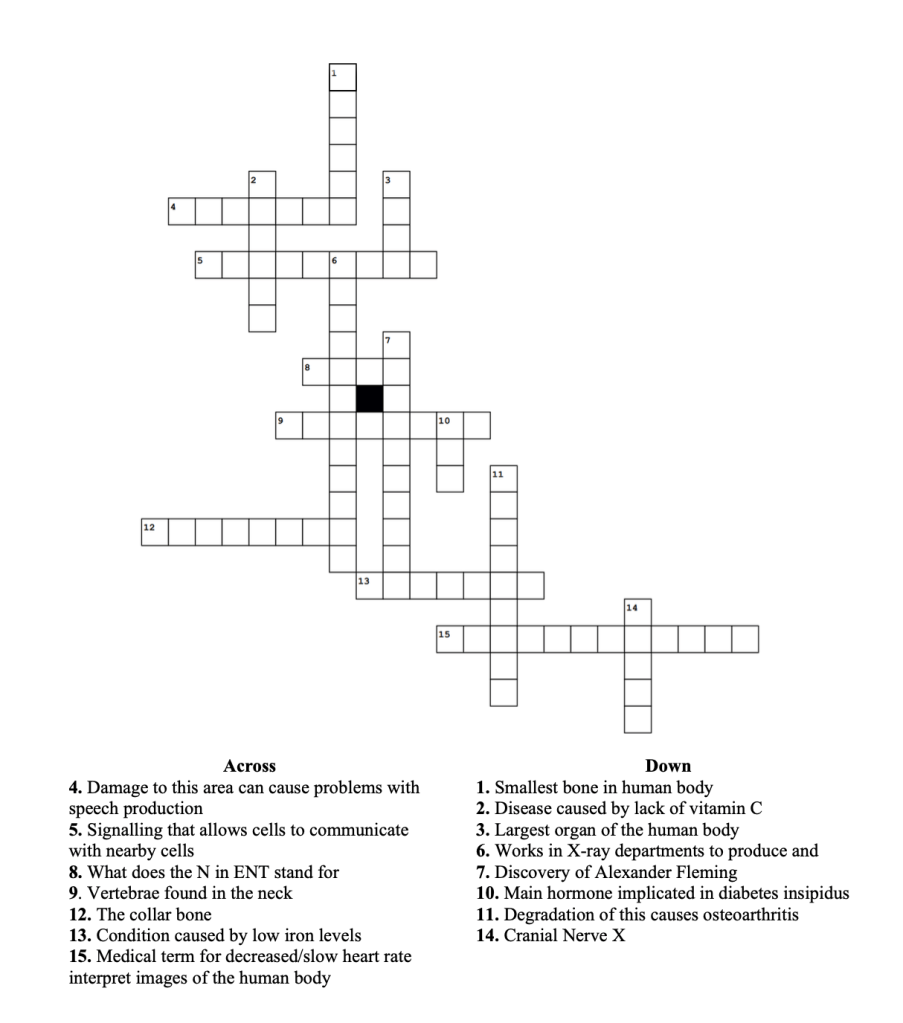
    Second year in my ‘big girl house’ with my lovely housemates was clouded by relentless online lectures, those odd Essential Medical Sciences crosswords and social distancing. The phrase ‘household bubble’ sent shivers rippling through Hyde Park and we would eagerly await the gossip on which house had a disciplinary from the Medical School for throwing that weekend’s house party. I think the dorsal column made me cry at least six times and I had to stifle those tears in case the proctoring software reported me for collusion during our finals for the year.  

    When things opened up again – coinciding with third year, it felt almost metaphorical. Third year represented a slight shift in the pecking order. I now went to placement almost ‘full time’. Non medic peers suddenly had even fewer contact hours and the burden of the dissertation (my time would come the following year) but we were responsible young student doctors, ready to take the world by storm through intricately structured histories (don’t forget allergies) and the most empathetic ‘ICE’ that would bring an OSCE examiner to tears.  

    The house scrub wash was the most important time of the evening, and we would each bring our stories of placement to discuss over dinner. This is what we had all been looking forward to, this was medicine.  

    This was medicine. Except for the fact that I missed 65% of the bloods I took, once forgot to twist my stethoscope ‘on’ so I panicked about no air entry and used so much hand sanitiser in my OSCE that my hands have never been the same since.  

    Halfway graduation gave us the opportunity to celebrate, and it was a chance to have a big pre-intercalation hurrah before we all went our separate ways. I distinctly remember being told one of my best friend’s was in tears because she’d miss me, and I was leaving her. I kindly reminded her that FaceTime existed, and she could visit. But perhaps that’s the definition of “true love” I needed to learn!  

    Intercalation was a seismic shift. The reduction in contact hours meant that there was a lot of self-motivation needed to work through endless essays, although my Pret subscription really did the heavy lifting here. Eleven months in the capital was a chance for a personal rebrand which led to daily dilemmas on a return to medical school. Intercalation, whilst not currently counting for much training wise, is a chance to be yourself for a while, without the ‘student doctor’ label hanging over your head. It was a chance to participate in some new extra-curriculars, meet new people and give me a bit more clarity over what I may want working life to look like. Refer to a previous article written a couple of years ago for the details.  

    Personally, fourth year represented the biggest balancing act of medical school so far and should be awarded the prize of being the most influential year.  

    Physically, I was rejuvenated, having slept for 8 hours a night for a lot of my intercalated degree. Yet emotionally, I wasn’t sure I was built to be back on placement, which was stricter and now included back-to-back Paediatrics and Gynae/Obstetric hell. The content was detailed (but interesting) and brand new for the most part and I spun the plates of intense part-time employment, maintaining a social life and personal relationships whilst also making it to Trib3 three times a week. However, it was completely possible and made me realise that maybe, just maybe, I could do this medic thing.  

    After the horror of fourth year exams, a reward was most certainly due, which for many comes in the form of the elective. Mine, disappointedly didn’t involve twirling on a beachside in the Philippines, but instead was at a government hospital in Mumbai where I worked with cancer patients and genetic counsellors. Harrowing to say the least, but an incredible opportunity with the peace of running back to a lovely hotel room and get that bit of relaxation in. However, tactically, once back in the UK, I interspersed my primary care elective with weekend trips over Europe, drinking every fine variety of wine I could find.  

    So, this brings me to now, a mere couple of weeks before finals, I’m (pretty) ready for the job. Granted none of us know where we’re going and what we’re doing but I think I can speak for most of my cohort when I say there is growing excitement for the next chapter that looms.  

    Medical school is more than just a university course, which is quite the cliche, I’m aware.  

    However, no one can deny you are constantly juggling professional responsibility (unpaid), trying to get paid with various side jobs, maintaining a social life and inevitably going through some personal upheaval at various points.  

    The one thing I stand by, is that the people that I have been surrounded with, have been incredible and these years have left us with a little tie that I shall always look back on with fondness.  

    That is the end of my half thoughtful, extremely cliched but very honest account of my time at Leeds. 

  • LUU Musical Theatre’s ‘Into The Woods’ — Funny is the Root of All Evil

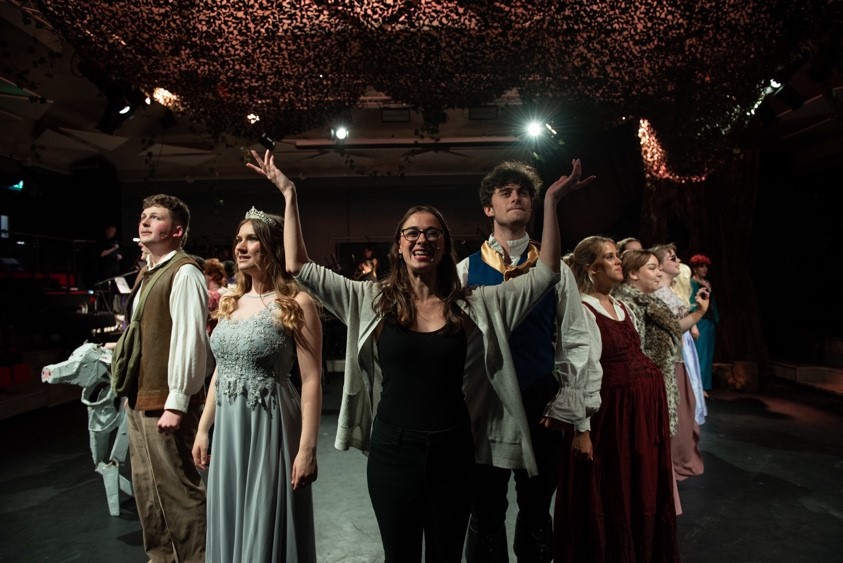
    LUU Musical Theatre’s ‘Into The Woods’ — Funny is the Root of All Evil

    Austin Keane, Year 3. Photography courtesy of Abby Swain.

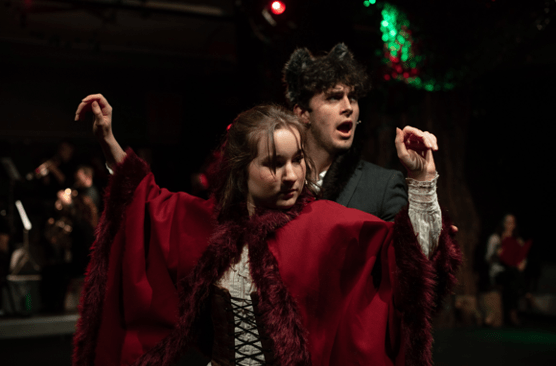
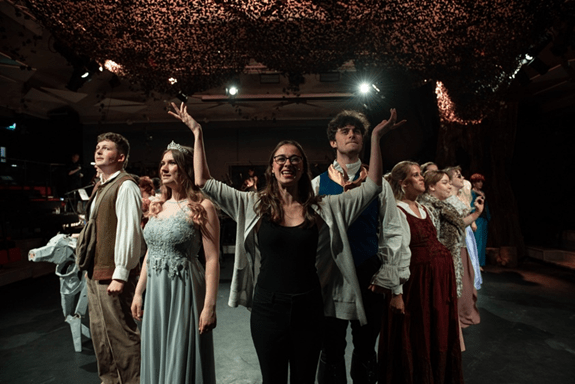
    “Nice… is different than good,” Little Red warns us having escaped the Wolf. We all know one—a production that saunters and jaunts and, after only a little biting, falls dead before the first half. A joy to find then, that this production is both: nice and good.

    ‘Into The Woods,’ a second-semester show from ‘LUU Musical Theatre Society,’ is a great musical (if not only in the giant sense) and is plagued by not one but two giants. Sondheim’s lexical deftness exists as a brilliant, terrible force of its own throughout the show, present most perhaps in the minds of the performers on stage. However, under Evey Jermy and Erin Gazeley’s direction, this giant already stands as formidable.

    Buoyed by a live orchestra that brilliantly performs the score, and with musical and creative direction from Jenna Bowman and Lucy Yellow respectively, the polyphonic narrative remains near weightless, turning on the slightest breath. The efforts of producers Ben Nuttall and Jennie Bodger and production manager Kate Matthews are self-evident: on a beautifully crafted set—a single great tree in the far corner; a sweep of leaves across the ceiling—the story plays out with verve and humour. Green light filters the air; birds tweet out; the strings tun-up. Everyone is having fun.

    All this, before we even consider the performances.

    *

    Precocity, as with many of the affects of childhood, is a brittle thing. That said, Whiteaway’s Little Red invites scrutiny in her performance of childhood—much as children themselves do—and does not break. An audience must pay attention to her, and be quite without embarrassment. Set nicely against the wide-eyed Toby Bowen as Jack—his ‘Giants In The Sky’ touching in its gulping picture of naïveté—they both convey innocence before the fall and manage to capture fully the spirits of their characters. Further, in listening to Little Red we understand that she may wear the Wolf—but is she truly ever to become it? Or, as with the furry thing itself, as the blade glittering in her hand reminds us, it might come straight off. Whiteaway is funny here, but darkly, unconsciously—it is the first warning of what is to come.

    The Baker and The Baker’s Wife especially surprised me. To my mind, the dullest of the characters—that is until the second half—they have no small task: to make interesting and novel the construction of a nuclear family. However, the sweet seriousness of ‘It Takes Two’ and the undeniable strength of both performances from Harry Toye and Talia Goss meant that there was a clear freshness and illumination in their conflict. The domestic plot between them is convincing and confidently engaging.

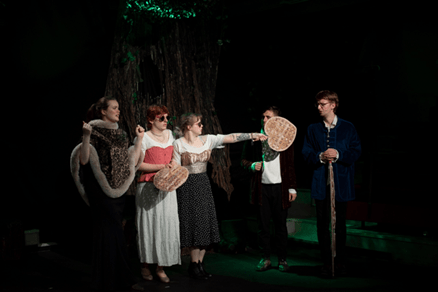
    Florinda and Lucinda, played by Cam Griffiths and Bethan Green respectively, work in perfect dyssynchrony to terrorise and amuse. Not a second of time is wasted—screaming and stalking the stage, sweet as rot, both know just how funny their performances are. Held steady by Victoria Norman as the Stepmother, together they have the air of Macbethean witches sans prophetic wisdom. They are dreadful—brilliantly, dreadful.

    Ellen Corbett gives a strong performance as Cinderella, navigating (on) the steps of the place with physical and musical deftness. Corbett’s dedication to the performance is especially notable; again, what could otherwise easily be flat, worn thin with the repetition of telling—a girl, a prince, a shoe—hums with energy. Andie Curno gives an energetic performance as the Witch and manages to make the conceit of the play, suspiciously algebraic, more digestible without losing the glitter of the language that communicates it.

    Henry Marshall is cast well as the Wolf with his leering manner, both vile and cunning. He makes an appearance again as one of two Princes, the other (belonging to Rapunzel) played by Alex Howe. Thanks to their efforts ‘Agony’ remains as funny as ever; the syncopated movements of Howe and Marshall are perfectly clumsy and inventive. They propel much of the comedy for the first act: one must take himself too seriously; the other is barely able to suspend disbelief at this as a possibility. Between them is conjured a charm that glitters as much as it gutters.

    However, It is more difficult to appreciate the emotional relevance they bring to scenes (or are intended to) as the show progresses, through no fault of their own. This is an emotional incongruence that proves more distracting in the second half. You can spy the force of the tale—that immutable construct of the plot—push the Princes, the Baker, and the Witch, faces still ruddy with laughter, confusion, and dread, into quieter contexts, demanding more restraint. However, with a running time that already grazes three hours the need for brevity in between songs is understandable and the effect minor—after all, the show should accelerate, and not much is left behind. 

    In ‘No One Is Alone’ the emotional element works much better again. Confusion is given a more appropriate space to occupy—here, at least, can exist tenderness. Similarly, Curno’s Witch also benefits from the second act’s emotional intensity. The anger of their performance works much better when worn with pain, and not just the latent memory of it.

    Special attention should be brought to two particular performers. The first is the Narrator, played by Jenna Bowman, who thrills with a cool charm. Then quickly, even the sudden spoiling of this ease is made delightful: there is an impressive chill in the room as they attempt to sacrifice the Narrator. The metaphysics of the thing remains light and engaging, surprising even, but not overwrought. The other is Talia Goss, who in ‘Moments In The Woods’ exhibits a display of vocal control and emotion that makes what is challenging appear easy or obvious. This performance confirms Goss as the core of the show’s successful and elegant rendering. 

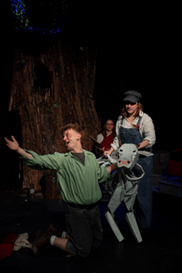
    Sweeping performances aside, there remain many small scenes that can stand in isolation. Milky White, beautifully constructed and convincingly skeletal, was brought to life by Amelia Perry. In death, Perry lets the puppet drop and watches it for a moment, deadpan, before relaxing and leaving the stage. Sublime. Then we have Cinderella’s birds, painfully funny and wonderfully conceived; Jack’s mother, played by Emma Wilcox, bridling his youth with stern, slight motions; Ellery Turgoose’s struggle as Granny, and the charming rendering of her escape. 

    Other gems: Lucy Davey’s warbling as Rapunzel is as beautiful and ridiculous as it should be; the Mysterious Man’s intrusions, courtesy of Matteo Ferrari, stand both jarring and hilarious; Harry Daisley’s Harp, as his head is thrown back in paroxysmal delight at his own fabulousness. All of this is further supported by a variety of detailed costumes, each carefully drawn up by Eva Lafontan. And the Round is used well too: the great rope of Rapunzel’s hair; a bare glimpse of the Wolf stalking the aisle. 

    Another thing I noticed was the volume of cast members and their movement on stage. The physical force of eighteen voices in unison was employed well and with restraint. Considering this, the use of a Chevron (more than once!) is inevitable—and forgivable. The overall effect was powerful enough to make me consider that if the audience was allowed to break into song—they would! 

    *

    Ultimately, the characters are instructed into reflection: to stop wishing and wanting alone, and to question whether their story is important. All change is attended with the thrill of suffering—and they have suffered terribly, all. It’s a big ask of the audience, but in the end, we’re glad that we’re uncomfortable, that we don’t exactly like them; that we might pity the giants, tall and terrible though they are. Here then is proof, that in capable hands giants can stay great, as well as troubling, can be not just big and terrible but

    —“Awesome, scary / Wonderful giants in the sky!

  • ‘A Hedgehog’s Dilemma’ Review: Absolutely No Dilemma in Going to See This Production

    ‘A Hedgehog’s Dilemma’ Review: Absolutely No Dilemma in Going to See This Production

    Cicely LoBreglio

    Pictures by Abby Swain.

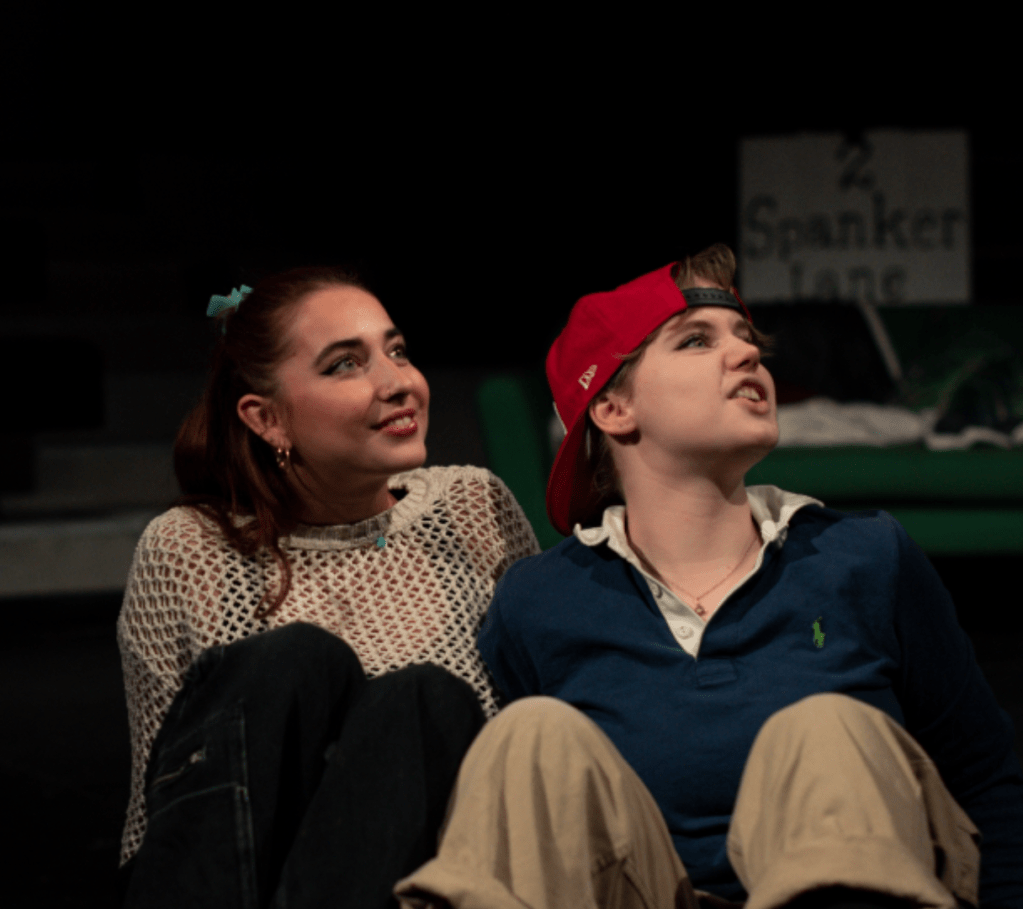
    Both the playwriting and directorial debut of Zak Muggleton-Gellas, Open Theatre’s ‘A Hedgehog’s Dilemma’ explores the convoluted cast dynamics during the run-up to a university’s student musical production. Opening with a monologue referencing philosopher Arthur Schopenhauer’s eponymous ‘hedgehog’s dilemma’ about human intimacy, the play quickly picks up and sees characters Jemima, John and Oliver deliberate on who they should cast in the musical that they are directing and producing. The play then waltzes between scenes of play rehearsal and characters’ gossiping about one another (“she’s not even from London!”). While specifically relating to the world of musical theatre, Muggleton-Gellas has managed to effectively capture the very universal nature of the often-catty behaviour of the 20-something students to which any audience member can relate, without relying on over-determined characterisations. This play is just as much about the universality of modern human behaviour as it is about the competitive nature of musical theatre.

    One of the highlights of the play is undoubtedly the “park bench” improvisation scene, whereby scenarios previously submitted by the audience (via QR code) are acted out until—both cast member and character simultaneously looking nervous—director John calls enough. This touch makes the production feel fittingly interactive, especially in view of the way that the space is utilised. Taking place in the Leeds University Union’s Pyramid Stage, it is abundantly clear that this play was intended from its conception to be performed in the round. The limited props and straightforward costuming also only add to the authentic feel of the piece.

    The play also finds strength in its messy but organic representation of queerness. One director, John is gay and the other, Oliver, is bisexual. The biphobia that the latter experiences from his own girlfriend is indicative of the age-old stereotypes that are constantly levelled against bisexual-identifying people. Character Archie (Austin Keane) also has a crush on the director and straight-presenting Elizabeth (Eleanor Haslam) has a one-night stand with character Max (Jenna Bowman) , who then turns out to be quite misogynistic (“liking girls is not the same thing as being a feminist”, Oliver points out to giggles from the audience). These nuances aid the play in exemplifying the obvious: that queerness can be funny without being the butt of the joke.

    Whether or not you are a fan of musical theatre, this play has something for everyone: characters absent-mindedly singing High School Musical, drunk dancing, a zoom therapy session, misattributing quotes to Barbra Streisand, and even a reference to last year’s season of Love Island (guaranteed to resonate with almost any young audience). Any awkward pauses or stumbled lines only add to the organic nature of the play’s drama. The casting is especially strong, with standout performances from Will Grimes, who plays director John, and Ruby Dean, who plays producer Jemima. At times it does feel hard to synthesise Schopenhauer’s theory with the rest of the narrative—at most it is a cute but slightly unnecessary framing device. Ultimately, however, this play is strongest at its level of conception: Muggleton’s original take on the mise an abyme is not just enjoyable but gives the audience considerable insight into the world of the theatre. Unsure if you should see it? Think “yes, and…”.

  • Swallowing The Whale Review

    Swallowing The Whale Review

    India Thomas, Year 1

    Photo credits: Abby Swain.

    Wow. Just wow. I was invited to watch ‘Swallowing the Whale’ and I jumped at the chance; every play I’ve seen performed by Open Theatre has been incredible. And this play didn’t disappoint: a spectacular exploration of sexuality, raw emotion, and adolescent strife.

    Andie Curno was the genius behind ‘Swallowing the Whale’, as both the writer and director. Their writing was poetic, dreamy and filled with passion. They told the story of Marlowe, April and Levi’s adolescent trials and tribulations. Curno’s writing was filled with metaphors and you’d be forgiven for thinking parts of the script were stolen from a Romantic poet (yes, the description is that good). The whole production team was outstanding with Ginny Davis as assistant director, Ellery Turgoose as producer, Amy Cregor as assistant producer, Grace Marsh as shadow director and Shannah Wu as shadow producer. Everything from the props to the stage-style, to the characterisation was perfected and the work done to execute this masterpiece was evident.

    Marlowe, our protagonist, is a two-person role played by the wonderful Hannah Whiteway and the brilliant Cam Griffiths. They alternate between speaking, and acting the role of Marlowe, beautifully illustrating the dichotomy between one’s internal and external persona. Lucy Yellow played April, Marlowe’s best friend, and Billy West played Levi – April’s love interest.

    The casting was perfect, and I very quickly connected with Marlowe, despite being played by two actors. Griffiths’ and Whiteway’s acting styles complimented each other’s well and the use of similar costumes made them easy to identify. Marlowe’s gender and their relationship with April is unclear, which only helps to illustrate their strife in understanding themselves and those around them. As a queer person myself I thought the LGBTQ+ representation was refreshing and well-executed. Many playwrights fall into the trap of crafting the token queer character entirely around their queerness, but Curno’s portrayal of Marlowe was beautifully three-dimensional.

    West’s portrayal of Levi was excellent; whilst I wanted to hate Levi, for tearing April away from Marlowe, his characterisation was endearing and I just couldn’t. Whilst the acting was of a high calibre and flawless throughout, I’d argue Yellow was the true star of the show. April was such a fun carefree character, despite her traumatic history, who I loved in the first act but began to hate as she met Levi and tore Marlowe’s life down before him. Her acting was so entrancing and I felt myself both fall in love with April, but equally despise her, much in the way Marlowe finds themselves conflicted.

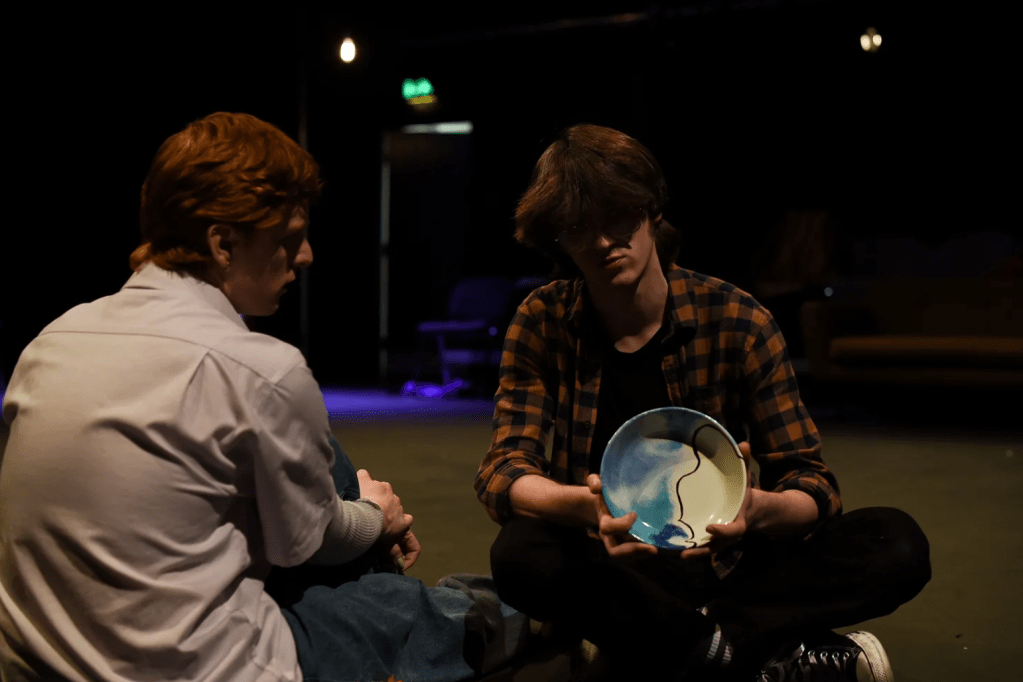
    The use of props was great, with many symbols: the lollipop, the wine bottle, the cigarette end; the paper mache whale strung from the ceiling. Each of the props were so well thought out and represented each shared memory that April and Marlowe held. At one point, the lollypops are strewn angrily across the stage and the image of disarray and Marlowe’s feeling of being torn apart was so perfectly portrayed. There was also a scene where a river made of silky blue material is trailed across the stage, and Curno’s descriptive imagery alongside the blue material perfectly conjured up Marlowe’s memories in such a magical way. Rather cleverly, small cupboards were dotted at the corners of the stage which both established the homely setting of the play but also served to store props, creating seamless transitions.

    If I wanted to pick holes, sometimes some of the sight lines were compromised due to the in-the-round style stage, but it didn’t impair our understanding and because we were sat on bean bags on the floor (note to self: invest in a beanbag) it was easy to shuffle or lean to see better.

    Overall, the show was impeccable and I would pay to watch this in the West End, where all the talent here could be spotlighted

  • In Good ‘Company’ – well yes!

    In Good ‘Company’ – well yes!

    Zak Muggleton-Gellas, Year 3

    On the 9th, 10th and 11th of March, LUU Musical Theatre society, in collaboration with Backstage society, performed the highly-anticipated Sondheim musical, Company. From start to finish, this production was bursting with talent, and definitely ‘could drive a person crazy’ out of sheer amazement. 

    Company follows main character Bobby (played by Ajay Sahota) as he struggles to face his life of being a bachelor on his 35th birthday, surrounded by all of his married friends. The story follows his escapades with various girlfriends, as well as him visiting each of the married couples individually. He has not met his ‘perfect’ match, and tugs with his necessity to settle down. This is all whilst the audience are forced to critique each of these married couple’s difficulties, as their issues seep through the cracks of the perfect image they try to present to Bobby.   

    First and foremost, I’d like to say that the cast are some of the most talented performers ever to grace the Riley Smith theatre stage. Their acting, singing and dancing was nothing short of professional level, and the cast and production team should be infinitely applauded for this spectacular show. Ajay Sahota’s (playing Bobby) mesmerising tone, and expert comedic timing allowed for a cohesive and captivating show. His betrayal of Bobby was as realistic as feasibly possible, touching on every emotion needed to conquer such a physically and emotionally demanding role. Not only this, but his performance of ‘Being Alive’ became instantly iconic, accompanied by his incredible voice. Erwan Fayolle and Phoebe Coldron (playing Joanne and Larry) managed to portray an incredibly realistic chemistry between two characters in a marriage full of friction, but also deep affection and care for one another, and that is absolutely down to their expert acting abilities. In particular, Coldron’s vocal prowess swept the audience off their feet, especially as she nailed the iconic ending to ‘the Ladies Who Lunch,’ sustaining high notes on pitch, and with incredible technique. Freya MacTavish and Matteo Ferrari (playing Amy and Paul) as well as Sophie Tolson (playing Choir Girl) took on the infamous musical theatre classic, ‘Not Getting Married Today.’ All three of them sang with perfect diction and pitch, making the number an absolute showstopper, and spectacle to watch on stage. MacTavish also managed to portray the delusional bride with ease, as her acting excelled all expectations, as well as hitting every single word on the incredible verses. Harry Toye and Caitlin Etheridge (playing Sarah and Harry) began the show and set the bar high right from the start, as the two of them demonstrated incredible chemistry and talent. Toye’s smooth voice sailed through ‘Sorry-grateful,’ tugging on the audience’s heartstrings from the very first verse. Etheridge’s acting blew the audience away: she was captivating, hilarious, vibrant and showed off even more of her talent with her vocal solos later in the show. Mia Crockhart (playing Jenny) similarly taught the audience a masterclass in comedic acting, before hitting pitch-perfect soprano notes with crystal-clear vibrato. Her performance was only elevated by her perfect chemistry with Toby Bowen (playing David) as his controlling personality demonstrated a darker side to the story. It is not easy to convince the audience that the character is not inherently evil when acting in ways that make you feel empathetic for his partner, but Bowen managed to make the audience empathise as his character was imperfectly human. Emma Wilcox and Josh King (playing Susan and Peter) were memorable and important parts of the story, as their relationship showed the complexities of marriage, as their emotional connection extended beyond their divorce. They were funny, compelling, and brought life to every scene they were in. Last, and certainly not least, Lily Payton, Dalia Kay and Talia Goss (playing April, Marta and Kathy respectively) were invaluable members of the cast. ‘You could drive a person crazy’ was incredibly vocally complex, and a joy to watch. Especially with Goss managing to demonstrate perfect breath control, as she hit incredibly high notes with ease, and maintaining (a testament to all three) very complex choreography. Payton’s shining moment, in ‘Barcelona’ showed off that she is not only a standout dancer, but also a beautiful singer and actor. The audience got to understand that the character is more complex than presented by Bobby, as he himself comes to this realisation, and Payton made us feel emotionally connected to April. Kay’s performance of ‘Another Hundred People’ could only be described as perfection. The almost six minute song requires an actor with perfected vocal technique, breath support and a physical agility, and Kay has all three. For long moments, she had to keep the audience interested with her alone on stage, and she excelled at this challenge. 

    Co-direction from Imogen Banfield and Ellen Corbett clearly elevated the show to an even higher level. Banfield’s intimacy workshops helped the cast to convince the audience of these couple’s relationships, and was invaluable in creating this incredible show. Corbett’s choreography was nothing short of incredible, with every ensemble number seeing the entire ‘Company’ shine in ways that only Corbett and Banfield’s expert direction could have led to. Not only the direction was amazing, but also Jennie Bodger’s production (assisted by Emma Wilcox). The costumes were faultless, with a particular highlight to the four black dresses worn for a portion of the show. Corbett’s use of white sheets and Bodger’s use of the black dresses lead to such a gorgeous sequence of dance, with the dancers also raising the bar. As the singing was so flawless, musical director (MD) Alex Boulton, and assistant MD Sean Lomas, accompanied by vocal coaching by Freya MacTavish, deserve a huge amount of praise, as they tackle such a complex score as is famous for Sondheim. 

    Throughout the show, the set, sound, lights and music accompanied this talented cast expertly. This is entirely testament to the entire backstage team, with Backstage Society having a rightfully incredible reputation within the university. Their talent is as much the reason for the show’s success, as the incredible cast and production team. This is also testament to the band, for their ongoing commitment to musical theatre, as they continue to possess talent that should always attract a large amount of admiration. Company was no exception. 

    I look forward to attending the next show by this incredibly talented society, and I am sure that Company will be another lasting success story.

  • Open Theatre’s ‘Liar, Liar’: In a World of Liars, Be a Scuba Diver

    Open Theatre’s ‘Liar, Liar’: In a World of Liars, Be a Scuba Diver

    Holly Dobbing, Year 3; Photo credits: Hannah Riley

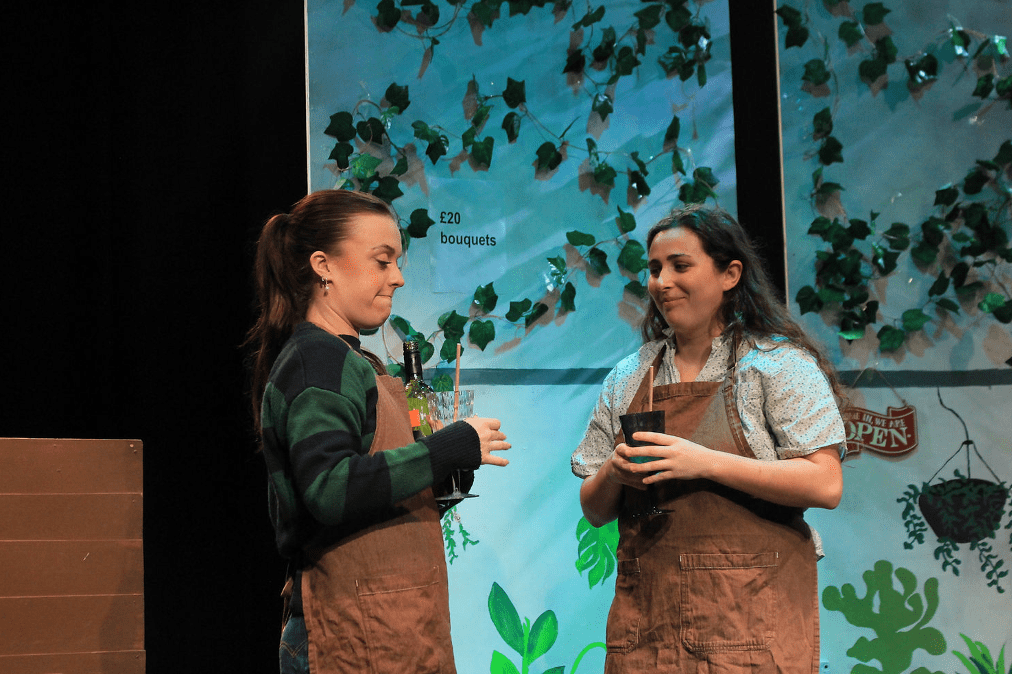
    Written by Kate Newell, Open Theatre’s ‘Liar, Liar’ illustrated a witty insight into our motivations for lying and how to live outside of society’s expectations. The play followed Mona, a compulsive liar who was a bit of a mess, albeit a witty and hilarious one. She was navigating her 20s and figuring out her identity and how to be comfortable being herself, and letting go of her pathological urge to lie… including telling everyone she was a scuba diver. 

    The set was beautiful. Waiting for the play to begin, we were immediately transported into a floral, green environment – one that I can’t help but feel juxtaposes Mona’s life so completely with its authenticity and naturalness. The set was glowing under pink and green lights—again it looked beautiful. I was already excited. Another thing I particularly enjoyed was the awkward elevator music and Wii music between scenes. It certainly established the funny, satirical aspect of the play from the get-go. 

    The play opened with a standing bed and a tranquil, sleepy tone. Mona began discussing her ‘favourite part of the day…’ until she was rudely interrupted by a noise we all dread to our core… her alarm. We followed Mona to work, where she was chastised by her boss, flirted with by Jim, the token creepy colleague, and repeatedly patronised by Christina, the pristine ‘pick-me’ girl. She met a psychic who told her she would isolate herself through her lies, and she hit a new rock bottom after quitting her awful job. We joined her in various awkward encounters and a cringe-worthy date, before she finally found a new job in a florist with Harri. Harri marked a real change in Mona, as they were able to see through her lies and encourage her to be truthful. Mona began to make changes, telling the truth and being honest in situations she would have lied in previously. After an awkward kiss and a heartfelt conversation, Harri and Mona agreed to remain friends and they accompanied Mona to her birthday dinner with her family. Mona blew out her candles and the curtain fell. 

    Grace Conway gave Mona a naturally hilarious flare. I loved Mona as a character from the get-go and I really felt I got to know her quickly. The still images and moments when she broke the 4th wall were brilliantly hilarious and so tactfully done. Something I think Conway was particularly skilled in was creating such a funny character with a slight edge, immediately giving me the impression that whilst she seemed so happy, she was sad deep down. 

    Emily Moores was fantastic as Harri, alongside other minor roles. She was able to create a really authentic and believable character who seemed to be genuinely interested in Mona’s wellbeing. Harri is able to coax the truth out of Mona and uncovers a real side to her that they and the audience haven’t seen yet. 

    I really enjoyed watching Mona and Harri’s relationship develop on stage. We finally got to see a more awkward, vulnerable side to Mona and that grounded her as a well-rounded, developed character. I loved that Newell included the stand-up bed a second time, and not only was it just as hilarious the second time around, but also it highlighted the huge change we’d already witnessed in Mona. This made Mona’s heartbreak even more painful to witness because we’d been on the journey with her as she tried to improve herself. I really felt her pain and I liked that Newell chose to have a more subdued storyline rather than a big happy ending as soon as Mona became more honest. 

    Niko Burns gave a fantastic performance as the ‘Hippy Psychic’, warning Mona with cryptic advice (and a tip off from creepy colleague Jim) that her lies will isolate her until no one truly knows who she is, not even herself. She had a strange, zen aura, but with snippets of aggression that made for a hilarious scene. However, I thought Burns particularly shined as Lucy, Mona’s friend from university who carried an air of condescension so thick, I’m surprised she could still breathe. I was incredibly impressed that Burns was able to perform such unique characters so seemingly effortlessly. 

    Lydia Baggaley absolutely shone as Rachel – an influencer and model who is equally as self-obsessed and dishonest as Mona. I particularly enjoyed the complete mockery of celebrities and social media through Rachel’s satirical ­­self-importance and reference to current influences, such as Molly-Mae’s ‘we all have the same 24 hours in day’ comment. Baggaley illustrated her ability to play ­­­such a hyperbolic character whilst still having a sense of sincerity and not taking us too far out of the naturalism of the play. Newell clearly demonstrated her brilliant comical mind in this scene – it was absolutely brilliant! Alisha Walton was like a chameleon, playing various smaller roles as Jim, Mona’s colleague, Mona’s brother, and other minor parts. I thought she was funny and gave a really convincing male impression. Although, I felt at times, the multiple characters she played were fairly similar, so a more exaggerated costume change may have made following her different roles more clear. 

    A picture containing floor, person, dancer

Description automatically generated

    In fact, I felt the main challenge this production had was that if the audience was expected to follow the different characters that Mona interacts with, they needed to be distinct enough to know immediately that they are in fact different characters. I think to some extent, this was really well done through costume changes and the actors’ abilities to transform through a variety of personalities and personas, however, like I mentioned with some of Walton’s characters, this wasn’t always flawless. I think that this was a credit to the actors to be able to showcase such a huge variety, but occasionally it did take a couple of seconds for me to decipher if I was meeting the same character or a new one. 

    I did note that as the play ended, it felt quite abrupt, and I found myself unsure if it was just a particularly long scene change or if the play really had ended. Unfortunately, it felt as though Mona’s character arc was cut slightly short and I didn’t experience her full learning and growing as person that I was initially expecting. I felt like things may become even worse before Mona realised she desperately needed to change, but instead she did just simply become more honest. Part of me enjoys the unexpected ending as it gives a more realistic and relatable story – not all endings are happy or fully finished. I think it also speaks for Mona’s imperfectness. However, I was left wanting a bit more of her big life change and it felt a little underwhelming after such an otherwise brilliant show. 

    And I would just like to finish with a huge congratulations to the production team who worked behind the scenes to make the play such a success – Ellie Mullins, Caroline Rauch, Kate Matthews, Misia Kozanecka, Sara Roche and Anna Duffell. 

  • Mind The Gap

    Mind The Gap

    Abigail Ngwang, Year 3

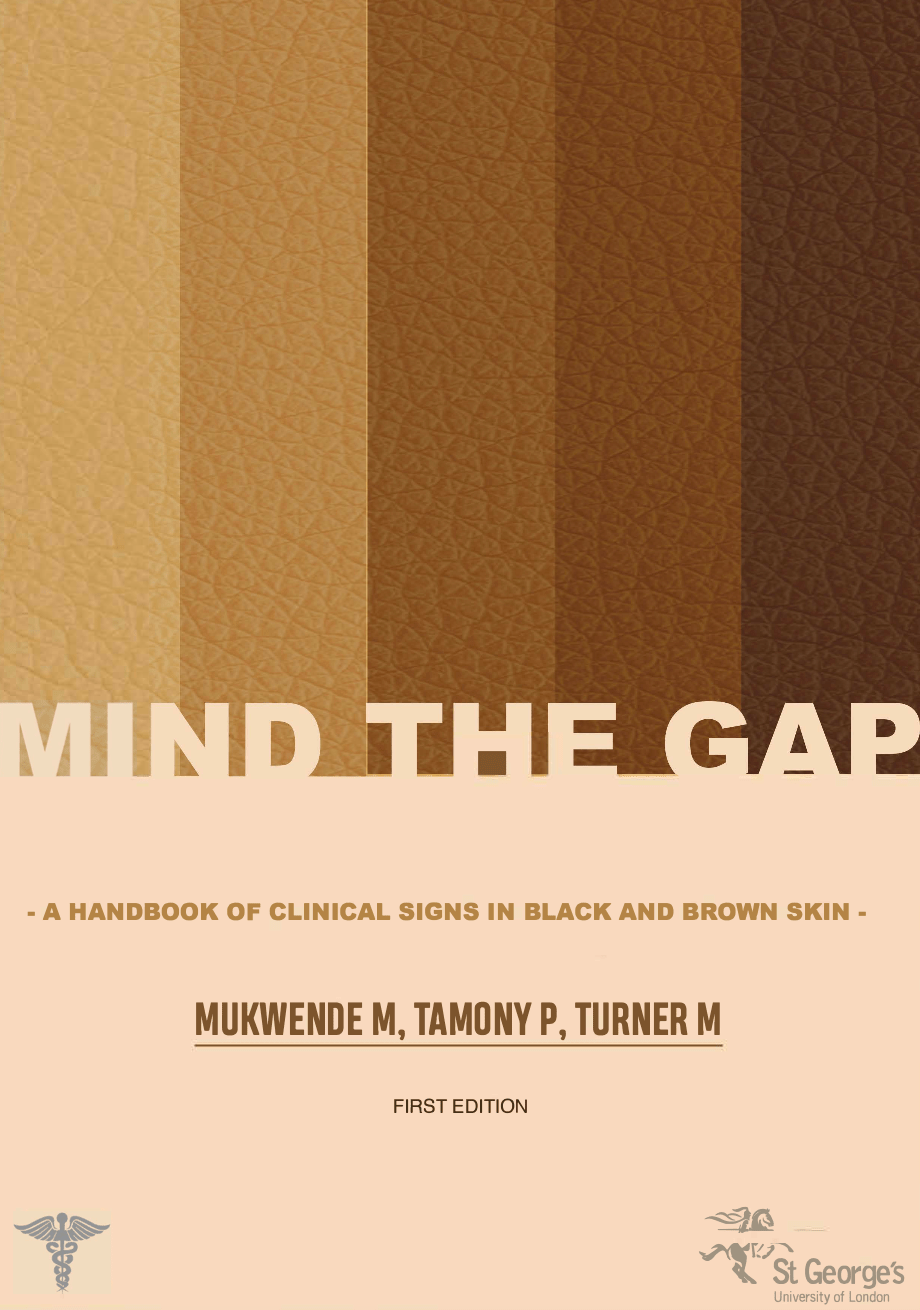
    “Mind the gap” by Malone Mukwende is a comprehensive guide to the signs and symptoms of a range of medical conditions on different skin tones. The purpose of the book is to bring awareness to the lack of literature displaying medical conditions on black and brown skin. It also aims to fill in the gaps within public understanding of the presentation of medical conditions, and within University curriculums that often do not appropriately equip healthcare students with the tools to effectively treat diverse populations.

    Mind the gap thoroughly covers twenty-four different conditions. The handbook displays images of the clinical signs of conditions on a range of skin tones and then proceeds to describe the condition and how to identify it, therefore mitigating gaps in medical education. Educational voids can create a snowballing effect, in which conditions may be misdiagnosed or entirely missed, leading to delay or absence in treatment, resulting in higher mortality and morbidity rates amongst people with darker skin.

    The necessity of this handbook is highlighted by the analysis of images in popular medical textbooks. Gray’s anatomy, one of the world’s most famous medical textbooks, has little skin tone diversity. Within the 2015 version of the popular textbook, 88.1% of the images had light skin tone, whilst dark skin tones had a disproportionately low representation of 5% when compared to the racial demographics of the global communities that it serves (Louie and Wilkes, 2018). This chronic underrepresentation of dark skin tones is not confined to Grays, it is seen across a host of medical textbooks, lecture slides, and other resources that current and future healthcare professionals study.

    To highlight the clinical significance of this handbook, the American Cancer Society found that the five-year melanoma survival rate is 24% lower in black patients when compared to their white counterparts (American Cancer Society, 2023). Although these statistics are the culmination of multiple factors, gaps in medical education cannot be excluded. A 2016 study conducted in the UK may provide some insight into the magnitude of this gap in education. The study displayed a significant disparity in the abilities of GPs to diagnose various skin conditions on light and dark skin. On average clinicians were 36.5% more likely to misdiagnose melanoma (Lyman, Mills, and Shipman, 2017).

    The book displays racial health biases on a global stage and has been downloaded over 250,000 times, across more than 100 countries. It has gained recognition from celebrities such as Angelina Jolie, who also recognises the need for the diversification of medical education and the medical workforce to mitigate racial health inequalities.

    As a visionary who is transforming medicine, Malone’s endeavours go beyond this handbook. He is currently creating an application called Hutano, which will serve as a diverse online community in which people can share the experience and challenges of living with skin conditions. In addition, Malone is creating a YouTube channel, another tool in his mission to remove racial biases from medicine.

    Overall, a fantastic resource with the potential for exponential impact.

    ***

    This book review is also part of the monthly book reviews done by the StudentFairhealth society.  If you’re interested in discussing similar books on health inequalities or interested in helping to reduce health inequity in our community join and follow our society on instagram at ‘fairhealth_leeds’ and join our future events!

    References:

    1. American Cancer Society (1930) ‘Cancer Facts & Figures 2023’. https://www.cancer.org/content/dam/cancer-org/research/cancer-facts-and-statistics/annual-cancer-facts-and-figures/2023/2023-cancer-facts-and-figures.pdf.

    2. Lyman, M., Mills, J.O. and Shipman, A.R. (2017) ‘A dermatological questionnaire for general practitioners in England with a focus on melanoma; misdiagnosis in black patients compared to white patients’, Journal of the European Academy of Dermatology and Venereology: JEADV, 31(4), pp. 625–628. Available at: https://doi.org/10.1111/jdv.13949.3. Louie, P. and Wilkes, R. (2018) ‘Representations of race and skin tone in medical textbook imagery’, Social Science & Medicine, 202, pp. 38–42. Available at: https://doi.org/10.1016/j.socscimed.2018.02.023.