Category: Current Affairs

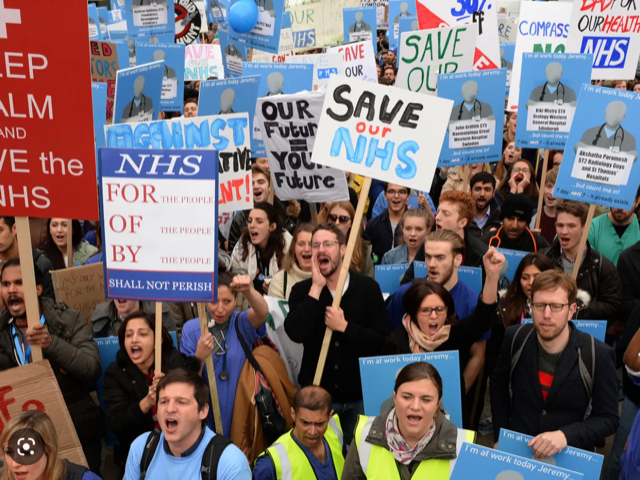
  • Exactly Why the Junior Doctors Are Striking, And What We Can Do To Help

    Exactly Why the Junior Doctors Are Striking, And What We Can Do To Help

    Ahmad Zargar, Year 2

    I am only a second year but as deputy student representative to Leeds for the medical student committee of the BMA, I have heard my fair share of the complaints that I will soon share as I progress through the years of medical school. A prominent topic of discussion among the committee has been preparation for the anticipated strikes. The climate surrounding junior doctors’ working environment and their pay is worrying and quite frankly the numbers speak for themselves; the BMA has calculated that doctors have had a 26% pay cut in real terms in comparison to 2008 (BMA, 2022). 

    Chart, line chart

Description automatically generated

    Figure 1: Real decline of pay awards for junior doctors in England (BMA, 2022)

    According to the BMA’s Junior Doctor committee (JDC) the government has not responded to the BMA’s request to even meet to discuss the issue at hand. 

    The JDC co-chairs responded strongly as they announced the start of a ballot to strike;

    “A junior doctor is not worth more than a quarter less today than they were in 2008.”

    This comes just before the Royal College of Nurses had announced that nurses intend to strike later this year, something doctors have expressed support for. Through a combination of this and the JDC’s decision to strike the situation within the NHS becomes evident. Thus, signifying that the issue doesn’t just stop at pay. If the government do not want to invest in skilled individuals, without whom the service would cease to exist, what does that say about the NHS’ resources as a whole? It suggests a reluctance to fund the NHS properly, which is especially apparent from the inside and ultimately culminated in its workforce having to take action. The years of underfunding has presented as a holistic issue. This is proven by the BMA’s council chair’s response to the RCN’s decision to strike; “Along with other frontline healthcare workers, nurses have borne the brunt of an understaffed and under-resourced health service… healthcare staff are too often unable to provide patients with the safe care they need.” (BMA, 2022a)

    Chart, histogram

Description automatically generated

    Figure 2- (British Medical Association, 2022)

    Some of the shocking statistics coming out of the last year (Patterson, 2021) and (Palmer,2022):

    • Numbers of doctors leaving the NHS pension scheme – 50,000.
    • Numbers of doctors retiring early – trebled since 2008.
    • Current shortfall in medical workforce – 50,000.
    • Percentage of nurses actively planning to leave – 19%
    • Percentage of nurses thinking of leaving – 38%
    • Number of unfilled nursing roles – 47,000
    • Number of staff leaving in the year up to September 2021 – 140,000
    • Number of patients currently waiting for treatment – 7.1 million
    • Number of people waiting over a year for treatment – 400,000 (308x pre-COVID)

    (British Medical Association, 2022)

    Chart, line chart

Description automatically generated

    Figure 3 -Annual selected NHS staff leaver rates (Palmer and Rolewicz, 2022)

    The ballot to strike for junior doctors will open on 9th January 2023, with ample time being given to allow for them to save up and prepare. In the meantime, the BMA are watching the government’s response to the RCN’s vote to strike as it is likely to have a similar response to doctors. 

    Steve Barclay, the current Health Secretary responded, “We also need to recognise that these are economically challenging times. We need a strong economy in order to pay for a strong healthcare system” alongside refuting the demands of the RCN’s desired pay rise as unaffordable. This comes in the same year where the government has pledged to increase annual military spending by £48 billion (Sabbagh, 2022). Looking back to the junior doctor strikes in 2016, the government were nonetheless reluctant to respond to strike action and public support of the strikes fell throughout its duration, despite being strong initially. It eventually took more than two years to negotiate a deal – the same one in dispute contemporarily. 

    The increased risk of patients dying preventable deaths with a lack of junior doctor presence is extremely high, raising an ethical dilemma and the question of who is to blame in these situations. What must ask ourselves, what if these unfortunate patients were to be one of our loved ones? However, it is easy to forget that there are two parties at the negotiation table, with the lack of government intervention making them equally worthy of blame. As the JDC proclaim “Strike action is always a last resort. No doctor wants to take industrial action, and this is, of course, still wholly avoidable if the Government commits to full pay restoration.”

    In the meantime, the co-chairs of the JDC have met with the GP committee and consultant committee who plan to meet with representatives from the Department of Health and Social care. 12,000 junior doctors have joined local WhatsApp strike groups. The BMA has pushed out guidance to doctors facing particular difficulties striking such as Visas being at risk or a lack of funding. A liaison with the RCN has been planned regionally and pizza and pay events are taking place. 

    What can we do to help? As the BMA reps we are already in contact with the Yorkshire Junior Doctor Committee and are at their service for whatever they require. We will also be informed by them of any change to our studies and future work. A Leeds strike support group chat has been made and if you would like to be added to it, contact us using the details below. The next step is the ballot, where at least 50% of members must vote with at least 40% of those must vote in favour to strike for it to be successful. Therefore, we must raise awareness where we can. A tip would be to follow @doctorsvote on Instagram as they are a useful source for medical students regarding this issue.

    If you would like to help in taking action or require help in general, contact the BMA reps on Instagram @bma_uol or email me at um21aaz@leeds.ac.uk 

    References

    BMA 2022a. BMA expresses solidarity with nursing colleagues as RCN announces strike ballot – BMA media centre – BMA. The British Medical Association is the trade union and professional body for doctors in the UK. [Online]. [Accessed 29 November 2022]. Available from: https://www.bma.org.uk/bma-media-centre/bma-expresses-solidarity-with-nursing-colleagues-as-rcn-announces-strike-ballot.

    BMA 2022b. The Real Terms (RPI) pay detriment Experienced by junior Doctors in England since 2008/09 [Online]. [Accessed 26 November 2022]. Available from: https://www.bma.org.uk/media/6134/bma-ia-pay-restoration-methodology-13-september-2022.pdf.

    British Medical Association 2022. NHS backlog data analysis. The British Medical Association is the trade union and professional body for doctors in the UK. [Online]. Available from: https://www.bma.org.uk/advice-and-support/nhs-delivery-and-workforce/pressures/nhs-backlog-data-analysis.

    Palmer, B. and Rolewicz, L. 2022. The long goodbye? Exploring rates of staff leaving the NHS and social care. The Nuffield Trust. [Online]. Available from: https://www.nuffieldtrust.org.uk/resource/the-long-goodbye-exploring-rates-of-staff-leaving-the-nhs-and-social-care.

    Patterson, C. 2021. Pensions inequity fuels doctor retention decline. The British Medical Association is the trade union and professional body for doctors in the UK. [Online]. Available from: https://www.bma.org.uk/news-and-opinion/pensions-inequity-fuels-doctor-retention-decline.Sabbagh, D. 2022. UK defence spending to double to £100bn by 2030, says minister. the Guardian. [Online]. Available from: https://www.theguardian.com/politics/2022/sep/25/uk-defence-spending-to-double-to-100m-by-2030-says-minister.
  • Is it Ethical to Withdraw Artificial Nutrition and Hydration from Patients with Persistent Disorders of Consciousness?

    Is it Ethical to Withdraw Artificial Nutrition and Hydration from Patients with Persistent Disorders of Consciousness?

    Holly Dobbing, Year 3

    A persistent disorder of consciousness (PDOC) is a disorder of consciousness that lasts for more than 4 weeks after a sudden brain injury (n.d., 2020). But what is a disorder of consciousness you may ask? Well, that depends on how you define consciousness. And that’s a whole essay in itself. For this article, I will be considering consciousness as being both aware and awake. So, using that, a disorder of consciousness is a disorder that impacts either awareness, wakefulness, or both. This includes comas, vegetative states (VS and minimally conscious states (MCS) (n.d., 2020). A VS is wakefulness with absent awareness, whereas a MCS is wakefulness with minimal awareness. In contrast to both, a coma is absent wakefulness and absent awareness. 

    Diagnoses of PDOCs are made over time and are based on careful clinical evaluation and observation of the patients’ behaviours by trained professionals using validated structured assessment tools (n.d., 2020). Friends and families also play a huge role. It is absolutely critical to be confident in these diagnoses as they have an immense impact on how the patient is treated going forward. 

    Due to the extent of impairment of their cognitive function, patients in PDOCs require artificial nutrition and hydration (AHAN via a percutaneous endoscopic gastrostomy (PEG) tube – a tube directly through the skin into the stomach (Quiñones-Ossa et al., 2021). Through this, doctors can feed the patient, give them water and administer medications because they’re unable to swallow substances orally (Quiñones-Ossa et al., 2021). Because insertion of a PEG tube requires medical intervention, AHAN is therefore considered a treatment, not a human right like normal food and water in hospital (Quiñones-Ossa et al., 2021). This means that in the circumstances of a patient with a PDOC, AHAN can be withdrawn like any other medical treatment. 

    Currently in the UK, as long as two expert doctors and the family are in agreement, AHAN can legally be withdrawn (n.d., 2020). If the family don’t agree with the doctors, or the family don’t agree with each other, the case goes to court, whether or not withdrawal of treatment is in the patient’s best interests is decided by a judge (n.d., 2020). 

    But who should have the right to determine best interests? Often, patients’ families play a huge role in deciding what the patient would have wanted, but sometimes it’s not that simple. In some cases, family members disagree about the best interests of the patient, and also families are unable separate what the patient may have wanted from their need to keep them ‘alive’. It is likely that patients who do emerge from PDOCs will be profoundly disabled (Quiñones-Ossa et al., 2021), and it is important for families to also consider this. In saying this, I also believe that the decision should not solely be down to the families because it is a huge burden and emotional strain to have to decide whether a loved one should be kept alive or not. Therefore, I think doctors play a crucial role in guiding these decisions supporting families during these difficult discussions. 

    Another consideration is that withdrawal of treatment will cause death, so really, isn’t this just euthanasia with a different name? Actually, there is a subtle difference. The NHS defines euthanasia as ‘the active and deliberate ending of a person’s life to relieve suffering’, suggesting a more active act in bringing about death (NHS, 2020). In the UK, euthanasia is illegal in all circumstances (NHS, 2020). In contrast, withdrawal of treatment is simply stopping treatment because it’s no longer beneficial, not with the intention of causing death. It’s a very slight difference, but it’s one that allows doctors to give patients this peace without actively causing their death. 

    As doctors, we also have a responsibility of benevolence, or in other words, to preserve life, restore health and relieve suffering. Similarly, the ethical pillar of non-maleficence links to our responsibility to avoid harm. So how can we possibly justify essentially starving a patient of food and water? Is this not a barbaric way to bring about a patient’s death? In some ways, starving a patient of nutrition and hydration seems like a cruel and slow suffering, although I can understand that it feels less like killing a patient than injecting them with a lethal dose of a drug that will end their life. Research shows that patients in PDOCs are unlikely to experience pain and after withdrawal of treatment, analgesia is still given to keep the patient settled so as carers, we hope this means they don’t suffer (n.d., 2020). Still, without definitive proof, this seems somewhat inhumane, and I can’t help but feel a quicker, painless option could be kinder. 

    And finally, is it fair to prolong life with minimal evidence of recovery? In a world where hospital beds are scarce, shouldn’t we prioritise patients with a higher chance of recovery? I think in some ways this is a really valid argument because patients who are in PDOCs secondary to hypoxic brain injury for more than 3 months or traumatic brain injury for more than 12 months are highly unlikely to recover (n.d., 2020). Still, as an optimistic person, I can completely appreciate that families will need more than ‘highly unlikely to wake up’ before they accept that the treatment is futile.  

    In my opinion withdrawal of AHAN is ethical when repeated assessments have indicated little chance of recovery because we can limit the patient and, possibly more so, the family’s suffering. I also think that, given the lack of definitive knowledge about the patients’ consciousness and experiences whilst in a PDOC, we can’t rule out that this is a state worse than death and, in that case, we must not prolong it if there are no signs of improvement. Furthermore, I think that with the huge strain the NHS is under currently, it is difficult to justify keeping patients alive in PDOCs for years upon years with no hopes of emergence. For these reasons I do support withdrawal of AHAN, although I think that more could be done to support families in making this awful decision.  

    References

    N.D. 2020. Prolonged disorders of consciousness following sudden onset brain injury: national clinical guidelines.

    NHS. 2020. Euthanasia and assisted suicide [Online]. Available: https://www.nhs.uk/conditions/euthanasia-and-assisted-suicide/ [Accessed 30th November 2022].QUIÑONES-OSSA, G. A., DURANGO-ESPINOSA, Y. A., JANJUA, T., MOSCOTE-SALAZAR, L. R. & AGRAWAL, A. 2021. Persistent vegetative state: an overview. Egyptian Journal of Neurosurgery, 36, 9.

  • Let’s Talk About Money – And the Cost of Funding a Medicine Degree

    Let’s Talk About Money – And the Cost of Funding a Medicine Degree

    Katie Webb, Year 3

    **Please note the information in this article mainly relates to studying an undergraduate medicine course (5/6 years) as a first degree. Funding situations vary for graduate entry medicine, graduates enrolled on undergraduate courses and international students. Funding amounts may also vary year to year.**

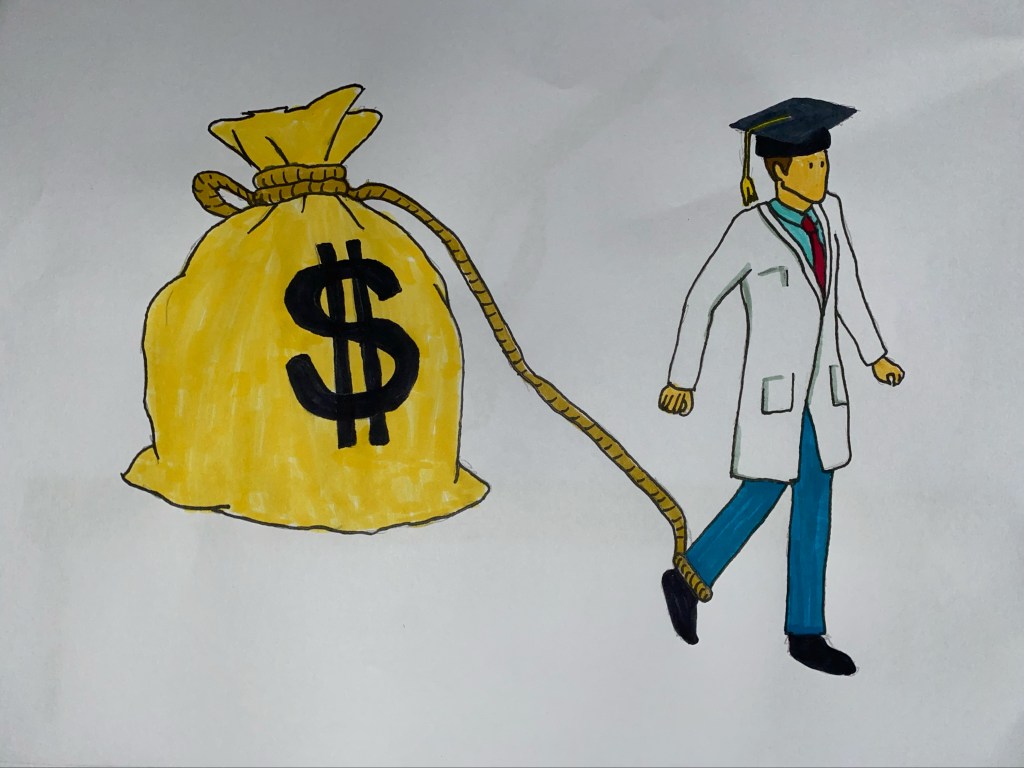
    If you search ‘applying for medicine’ into google, countless webpages appear, full of information from mastering admission tests to surviving interviews. However, few provide in-depth information regarding funding the degree, with many completely omitting any information about it at all. Consequently, many medical students are (unpleasantly) surprised when they learn about it at university.

    Let’s start with the basics. Most UK students on a recognised degree course are eligible for a tuition fee loan of up to £9250 per year, which covers the cost of tuition fees (UCAS, 2022). Students can also apply for a maintenance loan. For students living away from their parents, and outside London, the first £4524 is non-means tested, with a maximum amount available of £9706 for students, with the exact amount usually dependent upon their ‘family residual income’ (Gov.UK, 2022). 

    Money Saving Expert Martin Lewis has produced a good myth-busting guide to university loans (Lewis & Clare, 2022). The two key takeaways are that there is an unspoken expectation for many parents to chip in and that the loan operates more like a graduate tax. 

    Receiving maintenance and tuition fees as described above is what happens to the vast majority of UK university students, regardless of course. However, as medicine is longer than the typical university course, this only applies to medical students in their first four years of their undergraduate course. In their fifth year, and sixth if they intercalate, they instead become eligible for an NHS bursary. In short, this usually consists of the NHS paying the tuition fees in full, a non-means tested bursary of £1,000 and a means-tested bursary of up to £2643 if living outside London. Students can also get a reduced maintenance loan from Student Finance of £1,975 (or slightly more if living in London) . If the course is longer than 30 weeks, an additional £84 per week can be claimed (NHS , 2022). Therefore, for typical 40 week year the maximum a student outside London can receive is £6,458. This maximum requires a total family residual income of less than £24,279, so many students will receive considerably less.

    If you compare this to the Student Finance maximum maintenance loan of £9706 (Gov.UK, 2022) that students outside of London can access in their first four years it becomes clear that there is a dramatic reduction in funding in the final year or two. How is this gap plugged? Essentially it’s up to the individual to make up the shortfall, but many students are left the immense challenge of balancing placement and revising for finals with increasing their hours at part time jobs, maxing out on credit cards, overdrafts and personal bank loans. 

    In spring 2022, the #LiveableNHSbursary campaign started on twitter. Students highlighted the immense financial strain they were under and urged the government to engage with it. The Doctors Association UK (Welch, 2022) and the BMA (BMA, 2022) both supported this campaign, with national newspapers also giving it some attention (Maddocks, 2022). Students called for medical and dental students to have access to the non means-tested £5000 grant from the NHS Learning Support Fund, which is given to students on most other healthcare courses (NHS, no date). They also called for the full Student Finance loans to be available throughout the five or six years (Hewitt, 2022). 

    In response the University of Nottingham extended a central university bursary to final year medical students (University of Nottingham, no date). Yet for students at most universities, the situation remains much unchanged and the stress of funding studying medicine remains burdensome. With the cost of living crisis worsening, the BMA’s recent student finance survey made for grim reading. While the study has its limitations, the fact that 60% of respondents said they would be cutting back on essentials, and 4% were having to use a food bank (BMA, 2022) is certainly worrying.

    Let’s hope universities, the governmental and the NHS act soon. For if they don’t, medicine risks once again becoming the preserve of the rich.

    References

    BMA. (2022, 04 28). BMA backs campaign for a liveable NHS bursary. Retrieved 08 30, 2022, from https://www.bma.org.uk/bma-media-centre/bma-backs-campaign-for-a-liveable-nhs-bursary

    BMA. (2022, 07 28). Medical student survey. Retrieved 08 30, 2022, from https://www.bma.org.uk/media/6069/bma-student-survey-2022.pdf

    Gov.UK. (2022). Student finance for undergraduates. Retrieved 08 30, 2022, from https://www.gov.uk/student-finance/new-fulltime-students

    Hewitt, L. (2022, 05 04). ‘People would rather take a loan and be able to eat’: Medical Students launch the #LiveableNHSBursary campaign. Retrieved 08 30, 2022, from The Mancunion: https://mancunion.com/2022/05/04/medical-students-launch-the-liveablenhsbursary-campaign/

    Lewis, M., & Clare, C. (2022). Student loans: the truth about uni fees, loans and grants. Retrieved 08 30, 2022, from Money Saving Expert: https://www.moneysavingexpert.com/students/student-loans-tuition-fees-changes/

    Maddocks, E. (2022, 05 07). Final year medical students ‘can’t afford to pay rent’. Retrieved 08 30, 2022, from BBC: https://www.bbc.co.uk/news/uk-england-61302377

    NHS . (2022, 03). NHS Bursary funding for medical and dental students 2022/23. Retrieved 08 30, 2022, from https://www.nhsbsa.nhs.uk/sites/default/files/2022-03/NHS%20Bursary%20Funding%20for%20Medical%20and%20Dental%20Students%202022-23%20%28V3.1%29%20%28Digital%29%2003.2022.pdf

    NHS. (no date). Learning Support Fund. Retrieved 08 30, 2022, from NHS Business Services Authority: https://www.nhsbsa.nhs.uk/nhs-learning-support-fund-lsf

    UCAS. (2022). Undergraduate Tuition Fees and Student Loans. Retrieved 08 30, 2022, from https://www.ucas.com/finance/undergraduate-tuition-fees-and-student-loans#how-much-are-tuition-fees

    University of Nottingham. (no date). Core Bursary Assesment Procedure. Retrieved 08 30, 2022, from https://www.nottingham.ac.uk/studentservices/support/financialsupport/bursariesandscholarships/core-bursary-assessment-procedure.aspx

    Welch, E. (2022, 05 19). Invite your MP to our emergency briefing. Retrieved 08 30, 2022, from https://www.dauk.org/news/2022/05/19/invite-your-mp-to-our-emergency-briefing/

  • Crypto Currencies in Medicine? You’ve Got to Bitcoin-Kidding Me

    Crypto Currencies in Medicine? You’ve Got to Bitcoin-Kidding Me

    Brad Elmer, 2nd year Accounting & Finance

    Is crypto currency a form of gambling? Or does it actually have the potential for real world use? Although many people believe it is some sort of Ponzi scheme, there are many convincing use cases for the technology being developed by the companies behind the face of a crypto currency. Some of the new uses for this technology are already identified in parts of Africa as legal tender due to current inflation rates and the devaluation of their local currencies. In the medical sector, crypto currencies are becoming quite attractive due to the way this technology stores and encrypts all its data.

    In 2009, Bitcoin was created by an anonymous developer known as Satoshi Nakamoto (Investopedia, 2022). This currency and its blockchain technology have gone on to inspire a multitude of new ideas and uses all around the world. The idea behind Bitcoin is that it is a purely peer-to-peer electronic monetary system that excludes controlling third parties such as banks (Investopedia, 2022). Bitcoin is built on blockchain technology. Essentially, this comprises blocks of data that are held in a chain, hence its name. It is a shared database that encrypts the data of a transaction, in blocks of 256-bit hexadecimal numbers. Once each block has been filled with information, a new block is created, adding to the chain. Every block on the network is then stored on every node (computer) within the network, meaning that if one block is altered on one node, every other node on the network will cross-reference this and eliminate the altered node from the network. This prevents any tampering as every single block on the millions of nodes would need to be altered to make this adjustment. Once a block is filled, it goes to be validated by miners within the network (Investopedia, 2022). Miners work from millions of nodes that join the system from all around the world, solving complex equations that allow the storage of data onto a block simultaneously (Investopedia, 2022). Miners are rewarded for solving these equations by receiving fractions of a Bitcoin (CoinMarketCap, 2021).

    So, how can this help from a medical perspective? Well, there is already a real-world case of a crypto currency called VeChain being used in a hospital in Cyprus (Carter, 2020). The Mediterranean Hospital of Cyprus, which is the country’s largest private healthcare centre, started using the blockchain technology in 2020 to store all of its COVID-19 vaccination records (Bourgi, 2021). This is advantageous because all of the information stored on the blockchain is completely secure and isn’t exposed to cybercriminals. Due to the blockchain’s peer-to-peer system, it is very efficient in delivery of test results, diagnostics, and the secure exchange of information between parties. In 2016, a report was released that showed a loss of $30 million in the USA because of healthcare data fraud (Carter, 2020). Millions of records are breached every year in the healthcare sector due to insufficient cyber security across the world (Carter, 2020). Even in England, the NHS systems have been shown to be vulnerable to attacks (National Health Executive, 2018). An example of this was the WannaCry cyber-attack in 2017 that caused over 80 hospital trusts to be disrupted and put on hold after a malware shut down all their computers (National Health Executive, 2018). This could have been prevented had there been a more efficiently ran database, where the NHS systems and records were stored in an encrypted environment.  

    So, are there valid uses for these different blockchain technologies, commonly known as crypto currencies in the medical world? And are we going to start seeing these more regularly used by the companies we all know so well? Well, we can’t predict the future, but I think there is potential for this up-and-coming technology to be used more accessibly in the world we live in, and that it will, one day, have a big impact on our daily lives whether it be in the medical industry or as future currencies in different countries. 

    References:

    Investopedia (2022) What Is Bitcoin? How to Mine, Buy, and Use It [Online]. Investopedia. Available from: <https://www.investopedia.com/terms/b/bitcoin.asp&gt; [Accessed 7 November 2022].

    Carter, K. (2020) VeChain Has Introduced Blockchain-Based Healthcare Data Management Platform at Cyprus Hospital [Online]. Habr. Available from: <https://habr.com/en/post/510754/&gt; [Accessed 7 November 2022].

    Bourgi, S. (2021) COVID-19 Vaccination Records Stored on VeChain as Use Cases Grow [Online]. Cointelegraph. Available from: <https://cointelegraph.com/news/covid-19-vaccination-records-stored-on-vechain-as-use-cases-grow&gt; [Accessed 7 November 2022].

    Investopedia (2022) What Is Bitcoin? How to Mine, Buy, and Use It [Online]. Investopedia. Available from: <https://www.investopedia.com/terms/b/bitcoin.asp&gt; [Accessed 7 November 2022].

    National Health Executive (2018) WannaCry Cyber-Attack Cost the NHS £92m after 19,000 Appointments Were Cancelled | National Health Executive [Online]. National Health Executive. Available from: <https://www.nationalhealthexecutive.com/articles/wannacry-cyber-attack-cost-nhs-ps92m-after-19000-appointments-were-cancelled&gt; [Accessed 7 November 2022].

    CoinMarketCap (2021) Mining Rewards [Online]. CoinMarketCap Alexandria. Available from: <https://coinmarketcap.com/alexandria/glossary/mining-rewards&gt; [Accessed 7 November 2022].

  • What Did Operation Ark Tell Us About Our Attitude to Animals?

    What Did Operation Ark Tell Us About Our Attitude to Animals?

    Katie Webb, Year 2

    On the 15th August 2021, Kabul fell to the Taliban (Brader 2021). The speed of their takeover shocked most western governments and left them scrambling to evacuate thousands of citizens, diplomatic staff and Afghans. (Faulkner 2021) Amidst the chaos, the news story of ex-marine and animal sanctuary owner Paul ‘Pen’ Farthing’s mission to evacuate his staff and animals out of Kabul, dubbed “Operation Ark,” cut through with the British public and fiercely divided opinion. Farthing successfully crowd-funded for a chartered plane but needed authorisation from the British government to be given a landing slot in Kabul. Eventually it was granted and Farthing and his 94 dogs and 68 cats were evacuated (Jackson 2021) but not before his mission had become a fiercely partisan topic and raised questions over our love of animals.

    Farthing’s supporters claimed he was a “hero” for trying to save his animals and argued that the spare seats on plane could be used to evacuate more Afghans at risk of Taliban reprisals (Adams, 2021). Critics claimed his mission would prioritise pets at the expense of people, encapsulated in an Afghan interpreter’s question to MP Tom Tugendhat asking “why is my five year old worth less than your dog?” (Peat, 2021).

    Personally, I felt the arguments supporting Farthing’s mission failed to appreciate the context of the situation. Capacity in physical aircrafts was not the limiting factor in the evacuation. Civil servants battling against the clock to make life and death decisions, as they hurriedly tried to sort through the vast volume of assistance pleas, and the far from unlimited resources of the dedicated armed forces to process people at Kabul airport were (NATO, 2021). Farthing’s continued requests to the Ministry of Defence and his angry and demanding supporters wasted valuable time and resources. This time and resources could almost certainly have been better spent. A whistle-blower reported that at any given time approximately 5000 emails of people asking to be evacuated were left unread and only 5% of the 75,000-150,000 people asking for assistance were given any help (Land and Lee, 2021). The idea of diverting time and resources away from people in grave risk of death or torture at the hands of the Taliban, and towards evacuating dogs and cats instead, was truly sickening to me.

    However, what was striking was that much of the population fiercely disagreed with me. Accepting the premise that Operation Ark took time and resources away from people, it would be logical to assume those that supported it did so due to their belief in the sanctity of life of animals. In short, they believed that these animal’s lives were worth just as much as people’s. In fact, a YouGov poll seemingly confirmed much of this, with less than half the people polled believing that human lives were worth more than animals (YouGov, 2021). However, current levels of vegetarianism and veganism in the U.K. (Wunsch, 2022), not to mention the levels of pharmaceutical and cosmetic animal testing, suggest that a large proportion of the population does not believe strongly enough in these principles to act upon them (or is completely fine with cannibalism and human-testing which seems the least likely of the two!) 

    It is sadly very possible that racism played a role here, with people more inclined to abandon predominantly brown Afghans, in order to save animals, than they would have been had white Europeans been involved. Yet it is unlikely that this provides a full explanation, as this story of people prioritising animals is not a new one, nor is it an isolated event.

    In 1824, in a coffee shop in London, the RSPCA was founded as what is thought to be the world’s first animal welfare charity (RSPCA, no date). Yet it took 60 years later for a similar charity aimed at protecting children – the NSPCC – to form (Dibb, 2010). It would be misleading to suggest that there weren’t other charities looking out for children at the turn of the 19th century but it is still somewhat surprising that there was the appetite to protect animals when children faced treacherous conditions in factories, extreme poverty and corporal punishment (Platt, 2003).

    Just last year a donkey sanctuary in Devon’s income amounted to £37 million (Charity Commission for England and Wales, no date) and Battersea Dogs’ and Cats’ home took in £53 million (Charity Commission for England and Wales, no date). Both had higher incomes than Refuge, the largest women’s domestic violence charity, which received £34 million (Refuge, 2021). While all three are worthy charities, it highlights how people dig deeply into their wallets when animals are involved.

    It would be an oversimplification not to mention the benefits that animals provide people with. The mental health benefit of having a four legged friend love you unconditionally is easy to grasp. It would also be erroneous to suggest that wanting to support both animals and people are two mutually exclusive concepts – they most certainly are not. The range and scope of human generosity is absolutely something that should be celebrated, as is the mutual benefit that animals and people can bring to each other. 

    However, it’s also worth acknowledging that there will be certain times – which the evacuation of Kabul demonstrated – when it is not possible to help both people and animals; there will be times when we have to choose. So it’s worth becoming comfortable with whatever that decision may be before we’re faced with a similar situation.

    References

    Adams, T., (2021) ‘Interview, Pen Farthing: “Animals in a cargo hold never got in the way of people getting on a flight”’ The Guardian, 06/12/21. Available at: https://www.theguardian.com/world/2021/dec/06/pen-farthing-animals-afghanistan-evacuation-nowzad-faces-of-year (Accessed: 20/04/22).

    Brader, C., (2021). ‘Timeline of Taliban offensive in Afghanistan,’ House of Lords Library. Available at https://lordslibrary.parliament.uk/timeline-of-taliban-offensive-in-afghanistan/ (Accessed: 27/04/2022).

    Charity Commission for England and Wales, (no date.) ‘Battersea Dogs’ and Cats’ Home, charity number 206394’. Available at: https://register-of-charities.charitycommission.gov.uk/charity-search/-/charity-details/206394/charity-overview (Accessed: 28/04/22). 

    Charity Commission for England and Wales, (no date.) ‘The Donkey Sactuary, charity number: 264818’. Available at: https://register-of-charities.charitycommission.gov.uk/charity-details/?subid=0&regid=264818 (Accessed 28/04/22). 

    Dibb, R., (2010.) ‘National Society for the Prevention of cRuelty to Children (NSPCC).’ Available at: https://link.springer.com/referenceworkentry/10.1007/978-0-387-93996-4_851 (Accessed: 28/04/22). 

    Faulkner, D., (2021). ‘Afghanistan: UK troops sent to get Britons out as Taliban advances,’ BBC News, 13/08/21. Available at: https://www.bbc.co.uk/news/uk-58195286 (Accessed: 20/04/22).

    Jackson, S., (2021). ‘Afganistan: Pen Farthing “on his way home with his dogs and cats” after charter plane picks them up from Kabul,’ Sky News 29/08/21. Available at https://news.sky.com/story/afghanistan-charter-plane-arrives-in-kabul-to-collect-pen-farthing-and-his-animals-12393262 (Accessed: 20/04/22).

    Land, J., Lee, J., (2021) ‘Afghanistan: Foreign Office chaotic during Kabul evacuation – whistleblower.’ BBC News 07/12/21. Available at: https://www.bbc.co.uk/news/uk-59549868 (Accessed: 22/04/22)

    NATO (2021) ‘Press conference by NATO secretary General Jens Stoltenberg following the extraordinary meeting on NATO Ministers of Foreign Affairs.’ [Press conference} Available at: https://www.nato.int/cps/en/natohq/opinions_186088.htm (Accessed: 22/04/22).

    Peat, J., (2021) ‘Watch: Tom Tugendhat reacts to news of animal rescue from Afghanistan.’ The London Economic, 28/08/21. Available at: https://www.thelondoneconomic.com/news/watch-tom-tugendhat-reacts-to-news-of-animal-rescue-from-afghanistan-287948/ (Accessed: 21/04/22)

    Platt, L., (2003). ‘Putting childhood poverty on the agenda: the relationship between research and policy in Britain 1800-1950’. Available at: https://www.younglives.org.uk/publications/putting-childhood-poverty-agenda-relationship-between-research-and-policy-britain-1800 (Accessed 28/04/22).

    Refuge, (2021). ‘Annual report and financial statements’. Available at: https://www.refuge.org.uk/wp-content/uploads/2021/11/Annual-Report-nosig-Refuge.pdf (Accessed: 29/04/22).

    RSPCA, (no date.) ‘Our history.’ Available at: https://www.rspca.org.uk/whatwedo/whoweare/history (Accessed: 28/04/22.) 

    Wunsch, NG., (2022) ‘Veganism and vegetarianism in the United Kingdom – statistics & facts’. Available at: https://www.statista.com/topics/7297/veganism-in-the-united-kingdom/ (Accessed: 29/04/22).
    YouGov, (2021.) ‘Do you think human lives are worth more, less, or the same as animal lives?’ Available at https://yougov.co.uk/topics/philosophy/survey-results/daily/2021/08/27/efc5e/1?utm_source=twitter&utm_medium=website_article&utm_campaign=daily_agenda_27_Aug_2021_animal_lives (Accessed: 27/04/22.)

  • Florals? For Spring? Ground-breaking: Your Spring Fashion Edit

    Florals? For Spring? Ground-breaking: Your Spring Fashion Edit

    Adrienne Ives, Year 2 Dentistry

    A Note from the Writer—Before reading, you should note that the following article contains too many references to the 2006 cinematic masterpiece that is ‘The Devil Wears Prada’. Starring Anne Hathaway and the ever-iconic Meryl Streep, I highly suggest that you go and watch it. That is all.

    Now, you might have read the title of this piece and thought, ”Really? A fashion article in a healthcare magazine? This is not the hard-hitting scientific journalism I signed up for“. And dear reader, in many ways you are absolutely right. However, as healthcare students our wardrobes typically consist of scrubs, scrubs, and wait for it! More scrubs! All of which come in varying shades of blue, red, and green that are bound to be four sizes too big and feel akin to wearing bedsheets. Whilst wearing what are essentially pyjamas every day is both comfortable and practical, (with the added bonus of looking like you just stepped off the set of Greys’ Anatomy, except with less relationship drama and more bodily fluids), they are hardly the most flattering outfit ever. We all know that working in a healthcare profession demands these strict dress codes for a reason, but what about when we’re not in the clinical setting? Armed with a copy of the latest Vogue Spring-Summer 22’  and channelling my inner Miranda Priestley, I present to you a roundup of some of the season’s latest looks. Everyone, gird your loins!

    The Micro-Mini

    Image may contain Clothing Apparel Human Person Sleeve Footwear Shoe Animal and Bird

    No hideous skirt conventions to be found here, as mini-skirts are all the rage in what seems to be a continuation of the Y2K trend that has appeared in recent seasons. Paired with a tailored, oversized blazer and co-ordinating crop top for the perfect look, this classic piece is going nowhere. Whether you opt to wear it low on the hips for a more relaxed style or prefer a high waisted fit, you are sure to wow. And just when you thought they couldn’t get any shorter, latest runways have seen Miucci Prada take the kitchen scissors to the hemlines of his new Miu Miu collection; when asked if he was worried about possible censure of his new line he simply replied: “Strange is not strange anymore.”

    Comfy Chic

    Leaf green Vanessa cotton-jersey sweatshirt | FRANKIE SHOP ...

    The 2020 pandemic culture brought us many things: whipped coffee and Tik-Tok dances; begrudgingly leaving the house for our daily walks. Fashion has not been spared from its effects, with a post-pandemic world demanding an idiosyncratic mix of creative styles. And so the sporty chic look was born, with athleisure and loungewear taking centre stage. The uniform of off-duty models, matching jogger and sweater sets in every colour never fail to give that coveted I have my life together look. Or so we think. Style with minimalistic jewellery in gold or silver, your favourite chunky trainers, and a sleek bun for the ultimate ‘cool girl’ style. Champions of this look that we love are Jacquemus and The Frankie Shop, with Bershka and Zara perfect for those on a budget or whose student loan is yet to hit their account. 

    The Co-ordination Contingent

    Image may contain Clothing Apparel Imaan Hammam Human Person Dress Coat and Overcoat

    The phrase ‘co-ordinating sets’ can make images of 1940s secretaries sitting in an office, all dutifully typing away at their dictation, spring to mind. However, nowadays they are less secretary chic and much more á la Parisienne. Combine these elegant suits with an oversized coat or jumper and long boots to give an edgier look, your favourite shoulder bag effortlessly slung over your shoulder. Cute matching shorts and cropped tops with platform flip flops are perfect for summer, whereas thicker skirts/trousers and jackets are more apt for the blistering winds and freezing temperatures that typically arrive with British Springtime. Et voila.

    Heavenly Hues and Bold Brights

    All white on the Italian Riviera... yes, please! | Fashion ...

    Italian summers, brunch on the French Riviera, and midday walks in the Jardin des Plantes. Crisp white shirts and immaculate dresses all fall squarely into this aesthetic. Fresh and delicate, white and cream tones are perfect for the summer heat, especially for fans of the cottage core and light academia style, and you can never go wrong with denim shorts and a linen shirt several sizes too big draped over your shoulders. Or even more fun for those of us that prefer a more vibrant look, why not block colours? Ice cream shades and sorbet colours of orange, pink and green are all in this spring. For the best of both worlds, pair a neutral outfit with a bold toned accessory or vice-versa. Cerulean, perhaps? 

    Modern Retro

    Ruched Shirt

    They do say that fashion trends reappear years after they were originally in style, and whilst I sincerely hope that galaxy print and high heel sneakers never make a comeback, (really, it’s for the best),  more and more features of 60s and 70s fashion are being spotted amongst this year’s collections. We all know that flared bottoms are a cult favourite, with black and denim the favoured shades. Babydoll dresses, (do I hear cute?) crocheted cardigans and Mary Jane’s are all making their return. And who better than Danish designer Ganni to channel this retro cool vibe.

    So, this Spring it’s all about fun and vibrant colours, from minimalist neutrals to funky vintage—there’s a little something for everyone. Next issue I’ll be covering Men’s fashion with likewise discernment. À bientôt!

  • Conversion Therapy: Why Medical Students Need to Stand With Their Trans Patients

    Conversion Therapy: Why Medical Students Need to Stand With Their Trans Patients

    Amy Wilson, Year 2

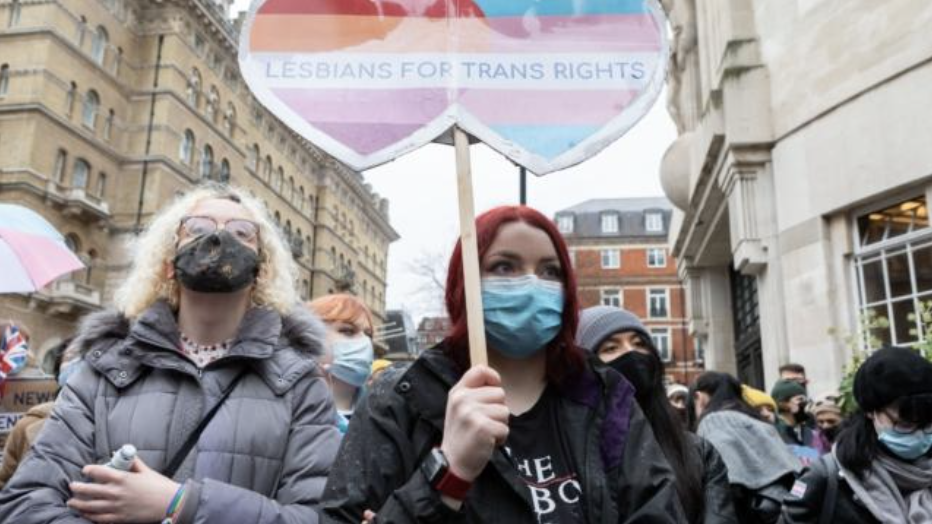
    Stone, G. (2022) – Image of the protests following the ban’s announcement

    The Government’s decision not to ban conversion therapy for transgender people just days after this year’s Trans Day of Visibility has shown why, now more than ever, we need to be educated on issues that will affect our trans friends, family, colleagues and patients.

    Conversion therapy, also known as cure therapy or reparative therapy, refers to any form of treatment or psychotherapy that aims to change or suppress an individual’s sexual orientation or gender identity (Stonewall 2022). The Trevor Project, a charity that focuses on LGBTQ+ mental health and suicide prevention, states that conversion therapists use “a variety of shaming, emotionally traumatic or physically painful stimuli to make their victims associate those stimuli with their LGBTQ identities” (Young, S. and Ng, K. 2022). It can take place in a variety of contexts, such through religious, cultural or healthcare groups (Ban Conversion Therapy 2022).

    It is not an uncommon occurrence. Alarmingly, 7% of LGBT people have been offered or undergone conversion therapy, jumping to 10% of asexual people and 13% of trans people (Ban Conversion Therapy 2022). In healthcare settings, 1 in 20 LGBT people have been pressured to question or change their identities when accessing services (Stonewall 2022).

    As a practice, it has been widely condemned. In the UK, all major counselling groups alongside the NHS have signed a Memorandum of Understanding decrying it (Stonewall 2022). This is due to its numerous negative impacts, such as increased depression, suicidality, self-hatred and social isolation (GOV.UK 2022). As practitioners of evidence-based medicine, the lack of credible support for it is key as we consider the Government’s failure to ban conversion therapy for trans people.

    Initially, the government said it would drop plans for the ban for all LGBTQ+ people, announcing that ministers would explore non-legislative routes (Milton, J. 2022). It then announced that the ban would go ahead for LGB people, but not their trans counterparts. This led to enormous backlash, with LGBTQ+ organisations and The Memorandum of Understanding Coalition Against Conversion Therapy (MOU), whose members include NHS England, the BMA and several major counselling and psychotherapy bodies, openly criticizing the motion (Parry, J. and Moss, L. 2022). Both the Welsh and Scottish governments have been investigating routes for banning transgender conversion therapy (Milton, J. 2022).

    The ban will impact the trans community in multiple ways, but particularly within medicine. The BMA Media Office (2022) pointed out that “services for trans individuals in the NHS are already insufficient; the waiting list for young people to access gender identity development services can be two years or more”. They later went on to say that without the protection of the conversion therapy ban, trans and nonbinary people will likely face increased amounts of isolation and social prejudice.

    This is on top of current prejudices within medicine. According to Stonewall and YouGov (2018), two-thirds of trans people in their study had avoided treatment out of fear of prejudice, likely due to 20% of them having witness discriminatory or negative remarks regarding LGBTQ+ people.

    Trans people are not just being discriminated against in the UK. With Florida’s “Don’t Say Gay” Bill, LGBTQ+ people could be forcibly outed and discriminated against within schools in the state (Woodward, A. 2022). Additionally, trans people in Ukraine are being prevented from crossing borders due to the gender markers on their passport being perceived as incorrect, leading to fears of being trapped in a country with no anti-discrimination laws and in danger of Russia’s transphobic policies (Tondo, L. 2022).

    Trans and nonbinary people are being discriminated against in the UK and beyond. As medical students with a responsibility to our patients, I urge all cisgender students to take the steps to educate themselves and include this community in your work. It may only seem like small steps but doing whatever we can matters now more than ever. 

    Further Resources:

    • Ban Conversion Therapy – The best starting place for further resources on the ban and instructions how to write to your MP. See references for link.
    • GLADD – The Association of LGBTQ+ doctors and dentists, with plenty of resources on being an ally and how to take care of yourself as a queer doctor. Available at: https://gladd.co.uk/
    • Future Learn’s Transgender Healthcare course – provides information on trans issues and how to provide good care for trans patients. Available at: https://www.futurelearn.com/courses/transgender-in-healthcare 

    References

    Ban Conversion Therapy (2022). “Home”. Banconversiontherapy.com [Online]. Available from: https://www.banconversiontherapy.com/. [Accessed 03/03/2022].

    BMA Media Office (2022). “Ban on ‘conversion therapy’ must extend to every member of the LGBTQ+ community, says BMA”. BMA.org.uk [Online]. Available from: https://www.bma.org.uk/bma-media-centre/ban-on-conversion-therapy-must-extend-to-every-member-of-the-lgbtqplus-community-says-bma. [Accessed 07/04/2022]. 

    GOV.UK (2022). “Conversion therapy: an evidence assessment and qualitative study”. www.gov.uk [Online]. Available from: https://www.gov.uk/government/publications/conversion-therapy-an-evidence-assessment-and-qualitative-study/conversion-therapy-an-evidence-assessment-and-qualitative-study. [Accessed 07/04/2022].

    Milton, J. (2022). “Trans conversion therapy must end without delay”. Pinknews.co.uk [Online]. Available from: https://www.pinknews.co.uk/2022/04/06/conversion-therapy-ban-uk-medical-assocation/. [Accessed 07/04/2022].

    Parry, J. and Moss, L. (2022). “Mental health groups call for trans conversion therapy ban”. BBC News [Online]. Available from: https://www.bbc.co.uk/news/uk-61018404. [Accessed 07/04/2022].

    Stone, G. (2022). “After the Government’s conversion therapy U-turn, trans people need LGB allies more than ever”. I News [Online]. Available from: https://inews.co.uk/opinion/governments-conversion-therapy-u-turn-trans-people-need-lgb-allies-1552968. [Accessed 07/04/2022].

    Stonewall (2022). “Conversion Therapy”. Stonewall.org.uk [Online]. Available from: https://www.stonewall.org.uk/campaign-groups/conversion-therapy. [Accessed 07/04/2022].

    Stonewall and YouGov (2018). “LGBT In Britain Health Report”. Stonewall.org.uk [Online]. Available from: https://www.stonewall.org.uk/system/files/lgbt_in_britain_health.pdf. [Accessed 07/04/2021].

    Tondo, L. (2022). “I will not be held prisoner”. The Guardian [Online]. Available from: https://www.theguardian.com/global-development/2022/mar/22/i-will-not-be-held-prisoner-the-trans-women-turned-back-at-ukraines-borders/. [Accessed: 07/04/2022].

    Woodward, A. (2022). “What is Florida’s ‘Don’t Say Gay’ Bill?”. The Independent. [Online]. Available from: https://www.independent.co.uk/news/world/americas/us-politics/dont-say-gay-bill-florida-ron-desantis-b2048570.html. [Accessed 07/04/2022].Young, S. and Ng, K. (2022).

    “Conversion therapy: what is it and has it been banned in Britain?”. The Independent [Online]. Available from: https://www.independent.co.uk/life-style/what-is-conversion-therapy-ban-lgbt-b2048823.html. [Accessed: 07/04/2022].

  • Animals in Mental Health Treatments

    Animals in Mental Health Treatments

    Imogen Jones, Year 2

    Mental health disorders can be chronically disabling for many people, with around 14% of the global burden of disease attributed to neuropsychiatric disorders (Prince et al., 2007). Many conditions such as depression and anxiety have been linked to an increased risk of developing many diseases, as well as increased incidences of both intentional and accidental injury (Prince et al., 2007). Since the start of the COVID-19 pandemic the prevalence of mental health disorders in many societies has significantly risen and strain on NHS mental health resources has increased as a result. This study aims to assess the prospective success of emotional support animals as a means of ongoing help for individuals living with different mental health conditions.

    The Problem of Mental Health & COVID-19

    During the COVID-19 pandemic we saw a rise in the prevalence of mental health conditions, with anxiety and depression being the most common. Through the first month of the April 2020 lockdown the population prevalence of clinically significant levels of mental distress rose from 18.9% to 27.3%, showing an almost 50% increase (Pierce et al., 2020). This rise in mental health disorders has put strain on the NHS, with waiting lists for therapists and psychologists reaching around six months. 

    Mental health disorders can cause many health risks beyond the psychological toll they have on patients. With risk of injury, illness and other health conditions rising in individuals suffering from mental health conditions it is important that measures are put in place to assist people struggling with mental health disorders in the long term (Prince et al., 2007). These long-term measures may include many types of therapy as well as drugs such as antidepressants. However, these drugs can have many side effects and are not a viable option for all individuals.

    The Effect of Animals on Mental Health Outcomes

    Animals have been used in the treatment of mental health disorders since the late 18th century in England (Shubert, 2012). Since then, animals have been used as tools in therapy sessions, schools, offices and many other places to help individuals lower anxiety and improve mental health outcomes. In one study by Barker et al. (2003), patients who were being treated with electroconvulsive therapy (ECT) took part in a trial to see the effects of animal assisted therapy (AAT). During the study, half the patients were assigned 15 minutes of AAT before their ECT treatment while the other half spent 15 minutes with magazines before treatment. The patients were tested to discover their fear and anxiety levels and found that ‘AAT reduced fear by 37% and anxiety by 18%’ (Barker et al., 2003). This study suggests that the presence of an animal, even only for 15 minutes, can help reduce anxiety levels significantly.

    Another study by Wołyńczyk-Gmaj et al. (2021) involved patients suffering with anxiety disorders. During the study, half of the patients spent 15-20 minutes walking with a dog and researcher outside, while the other half walked with only the researcher. The research found the group who walked with the dogs reported lower anxiety and fear levels as well as resting heart rate being reduced. 

    Current Laws Surrounding Assistance Animals

    In the UK, current laws give leniency to service dogs such as guide dogs, allowing them entry to different shops and social areas, as well as preventing individuals such as landlords from rejecting potential tenants. However, as emotional support animals are not recognised as assistance animals, this can lead to many problems for owners who rely on these animals in everyday life. It is important to note that for emotional support animals to be recognised as assistance animals there would need to be clear guidelines on the qualifications to require one, as well as levels of training that the animal will need. It would also be important to know that the patient has the ability to care for the assistance animal fully.

    Overall, the evidence of current research suggests that animals such as dogs can be extremely successful in improving mental health outcomes, especially for individuals suffering from depression and anxiety. This indicates that the inclusion of emotional support animals as assistance animals could be successful in improving the lives of many patients suffering with different mental health conditions. However, before this inclusion can be made, standards would need to be created with regards to the training of animals and eligibility of individuals.

    References

    Barker, S.B., Pandurangi, A.K. and Best, A.M. 2003. Effects of Animal-Assisted Therapy on Patients’ Anxiety, Fear, and Depression Before ECT. The Journal of ECT. 19(1), pp.38-44.

    Pierce, M., Hope, H., Ford, T., Hatch, S., Hotopf, M., John, A., Kontopantelis, E., Webb, R., Wessely, S., McManus, S. and Abel, K.M. 2020. Mental health before and during the COVID-19 pandemic: a longitudinal probability sample survey of the UK population. The Lancet Psychiatry. 7(10), pp.883-892.

    Prince, M., Patel, V., Saxena, S., Maj, M., Maselko, J., Phillips, M.R. and Rahman, A. 2007. No health without mental health. The Lancet. 370(9590), pp.859-877.

    Shubert, J. 2012. Dogs and human health/mental health: from the pleasure of their company to the benefits of their assistance. U.S. Army Medical Department Journal. p21+.

    Wołyńczyk-Gmaj, D., Ziółkowska, A., Rogala, P., Ścigała, D., Bryła, L., Gmaj, B. and Wojnar, M. 2021. Can Dog-Assisted Intervention Decrease Anxiety Level and Autonomic Agitation in Patients with Anxiety Disorders? Journal of Clinical Medicine. 10(21), p5171.

  • Why Should Healthcare Students Care About the Humanities?

    Why Should Healthcare Students Care About the Humanities?

    Alice Barber, Intercalating

    What are the humanities?

    When a lot of people—especially scientists like medical students—think of the humanities, it can often conjure thoughts of ‘fluffy’ subjects with no solid foundation. But, according to the British Academy, the humanities are as far from this as you can get – they are the study of the human societies that we live in, past and present (MacCulloch, D. 2018). As this suggests, it  includes a diversity of subjects—from history and politics to literature and ethics. The nature of the humanities is never-ending—not only are there many different human societies, but they evolve at such a rapid rate that they are not the same from one decade to the next. The humanities have much to offer and it is important for healthcare students to engage with them. 

    How can the humanities help us as medical students?

    Let’s look at how the humanities can benefit us personally. It is widely recognised that it is important for well-being to have interests outside of medicine (Mind, 2022). Whilst there are many different hobbies to consider, the humanities present a wide range of opportunities that are accessible to everyone. They provide us with outlets for the stress of our studies and allow us to focus on something that isn’t upcoming exams or what we saw on placement that day. 

    Other than just being a hobby, the humanities can help us to be better and more effective medical students and clinicians. In an emerging field known as bibliotherapy, reading fiction has been shown to greatly improve mental health and navigation of the uncertainties of life (Dovey, C. 2015). If reading can help us to develop emotional resilience as future doctors it should be an invaluable tool during our medical school careers and beyond. As well as personal development, fiction can help us develop skills key to being a doctor. For example, reading fiction has also been shown to help people to develop greater empathy (Dovey, C. 2015).  

    There are other areas of humanities that are essential to being informed about the world of medicine. It is imperative that we learn about the history of medicine, and its many failings, so that we can learn from the past. An example of this is the history of how women have been historically failed by medicine, which is discussed in great detail in the book ‘Unwell Women’ by Dr Elinor Cleghorn (Cleghorn, E. 2021). It is important that we are aware of the failings our predecessors and learn from them. 

    So, not only can the humanities help us to rest from the busy world of medicine, but they can also equip us with knowledge that makes us better clinicians and maintain our well-being whilst doing this. 

    How can the humanities help patients?

    Evidence has also shown that the humanities can present powerful ways to treat and support patients (Stuckey, H. L. & Nobel, J. 2010). The ways in which the humanities can benefit medical students by improving their mental health can also benefit patients. 

    In addition to the mental benefits, research has shown that engagement in humanities, especially music, can have physical benefits for patients (Hirsch, S., & Meckes, D. 2000). Music therapy has been shown to not only reduce anxiety levels in cancer patients, but also to reduce pain levels and increase immunity (Hirsch, S., & Meckes, D. 2000). Alongside music, expressive writing has been shown to have benefits for both mental and physical health, in particular immunity and the cardiovascular system (Esterling, B. A. et al. 1999).

    This creates a strong argument for health care students learning how to include humanities in patient care. As health care students we are studying to be able to provide the best care for our future patients, as the evidence has begun to show the vast benefit of the humanities, we should be willing to engage in learning about these avenues of treatment. 

    How can medical students get involved in humanities?

    Getting involved in the humanities doesn’t just have to be along the lines of what we learnt at school—like geography and religious studies (although these can be interesting to learn about!). Engaging in the humanities can be done via joining a book club, creative writing, crafting, learning a language, listening to new genres of music, learning about the history of the medicine we study every day. 

    There are ways that we can get involved in humanities in structured ways, such as intercalating in a medical humanities subject, or joining a language course. There are also more informal methods, such as setting time aside to read in the evenings or learning a new craft. Whichever way you choose, you can’t go wrong—the humanities are of great importance to medical students and are invaluable in medical practice.

    Resources:

    References

    Cleghorn, E. 2021. Unwell Women. London, UK: Weidenfeld & Nicolson. 

    Dovey, C. 2015. Can reading make you happier? [Online]. [Accessed 27th Feb 2022]. Available from: https://www.newyorker.com/culture/cultural-comment/can-reading-make-you-happier

    Esterling, B. A., L’Abate, L., Murray, E. J., & Pennebaker, J. W. 1999. Empirical foundations for writing in prevention and psychotherapy: mental and physical health outcomes. Clinical psychology review. 19(1), pp79–96. https://doi.org/10.1016/s0272-7358(98)00015-4

    Hirsch, S., & Meckes, D. 2000. Treatment of the whole person: incorporating emergent perspectives in collaborative medicine, empowerment, and music therapy. J Psychosoc Oncol. 18(2), pp65–77.

    MacCulloch, D. 2018. What are the humanities? The British Academy. [Online]. [Accessed 27th January 2022]. Available from: https://www.thebritishacademy.ac.uk/blog/what-are-humanities/

    Mind. 2022. Five ways to wellbeing. [Online]. [Accessed 26th Feb 2022]. Available from: https://www.mind.org.uk/workplace/mental-health-at-work/taking-care-of-yourself/five-ways-to-wellbeing/Stuckey, H. L., & Nobel, J. 2010. The connection between art, healing, and public health: a review of current literature. American journal of public health. 100(2), pp254–263. https://doi.org/10.2105/AJPH.2008.156497

  • Words, Weapons and Why: The Forgotten Legacy of AIDS Ignorance

    Words, Weapons and Why: The Forgotten Legacy of AIDS Ignorance

    Austin Keane, Year 2

    Language codifies how we navigate the world. It is essential in capturing this experience in a communicable and authentic way, but can only do so under certain conditions: those of respect, inclusivity and continual acknowledgement of the limitations of a single perspective. I want to understand the impact language has had on those living with HIV/AIDS, and how it affects both the self-perception of their condition and how they interact within different contexts.

    —History of Language: Us Versus Them

    Language possesses the essential quality of malleability: as public consciousness changes, so too must the words that we use. However, the ‘public’ consists not only of people for whom HIV has no actual daily reality, but also the diverse and fluxing populations of people living with HIV. Hence, it is important that language used is appropriate and accurate to the latter. As Crimp writes, AIDS possesses no reality separate from that of the routines that allow one to conceive of it; cultural and political manifestations of AIDS operate and are sustained by this linguistic framework (1987, p107). This exemplifies the importance of acknowledging the need to actively challenge and examine the power language has, and thereby achieving a greater control over this process. Historically, this is the means through which people have been able to mobilise and affect meaningful change. (Dilmitis, S. et al., 2012). 

    A key example of when this has not occurred is an article, concurrent with much of the initial journalism on the burgeoning epidemic, with the headline: “New Homosexual Disorder Worries Health Officials.” (Altman, L. K., 1982) This article also refers to ‘GRID’ – meaning gay-related immunodeficiency – a term that persisted and precipitated the notion of a gay cancer, plaguing queer men even after its usage decreased with the adoption of AIDS in 1982 when evidence showed it wasn’t gay specific; HIV itself was not so-named until 1986 (Kher, U., 2003). These emphasise the distinction between the homosexual and the reader, and, just as convincingly, that between the affected homosexual and the unaffected. In another article, Altman (1981) even purports that no danger is posed to ‘nonhomosexuals.’ 

    Specific and calculated language produced this polarisation, delineating HIV (without evidence) as something that remains separate and belonging solely to homosexuals. Ultimately, this further stigmatises the condition as it is now underscored by the cultural taboo surrounding homosexuality. This, in conjunction with the inflated perception of the other and its unique attachment to HIV, justified limited action from both governments and the public – regardless of the evolving medical understanding (Platt and Platt, 2013): they were the majority, ergo they were, according to the language they employed, safe. 

    It is arguable that, due to confusion and the changing narrative landscape, doctors did not know how to write about the emerging epidemic. Altman himself acknowledges this difficulty today, and has apologised (Peters, J. W., 2018). This, however, does not negate the impact this language has had, either then or since its implementation. Further, this protective distance is observed routinely by, as with GRID, naming the offensive other; more recently, this practice can be seen with Trump’s use of “Chinese virus” in lieu of coronavirus (Gearan, A., 2020); Sontag reiterates this in her observation of how syphilis was, to the English, the French pox whereas the Florentines called it the Naples sickness, and so on (1991, p133). These observations would suggest that, culturally, language in this way serves division, and that it was not just a by-product of AIDS ignorance. 

    —Stigma, and The How of Health Literacy

    Health literacy describes the extent to which a person can receive, comprehend, evaluate and share standard information regarding health, as well as means of access to services to permit them the correct course of action (AUCD, 2010). It has been observed in those with low literacy that social stigma is a significant independent predictor of poor medication adherence (Waite et al., 2008). Stigma is an inherently social construction, and I would argue one that is promoted through the specific language used to define HIV/AIDS and the contexts in which it is discussed. The idea of language as a tool that shapes societal behaviour is attractive – it is a convincing metaphor that can be extrapolated to describe what happens to tools, however unintentionally, when mishandled: they become weapons. Indeed, Watson et al support this view in their description of how the use of language validates patterns of stigmatising behaviour and thought: the cultural connotations of disclosure are both negative and imply deception; ‘infected’, especially in relation to people, mirrors ideas of contamination and corruption, promoting antonyms like ‘clean’ on queer dating apps (Watson et al., 2019). Therefore, this stigma may have a real impact on both physical health and the management of illness because of the way these attitudes, promoted by specific words, affect patients following diagnosis.

    Furthermore, dialogues themselves are complex: the specificity of the language used, the structure, the associated context (Roter D. L., 2011). Each of these may further complicate the interaction between patient and caregiver. In fact, Singleton and Krause (2009) suggest that language and culture can both act as a basis for the acquisition of health literacy. Stigma therefore adds another dimension to navigate an understanding, since one’s inclusion within their respective culture is limited — such language isolates, perpetuating a distance that dehumanises and blames, rather than clarifies. A key understanding noted by Mogobe et al (2016) contends that two things determine ease of acquisition: the patient’s ability to utilise available resources and the means by which healthcare providers communicate information. Stigma has been linked with impairing both — medication adherence, again, is a clear example of this (Waite et al., 2008).

    Arresting Understanding 

    Language may also work to prevent accurate understanding. Words give form to the otherwise intangible, so can be used to achieve greater respect and awareness of the experience of those living with HIV, or to inhibit (and sometimes oppose) any growth. Ideas are often sensationalistic, employing hyperbolic imagery that is more easily digested, more memorable to the general public – not pertaining to any medical, empirically-justified reality. As an example, the notion of ‘full blown’ AIDS has never been medically defined yet it remains a popularised term in contemporary use (Watson et al, 2019). Such ideas persist in the public consciousness and may overwrite the less accessible or less interesting clinical actuality of HIV. This prioritises ease of understanding over legitimacy, or alternatively the consumability and marketability of an idea that may serve to fuel biases. Sontag continues, suggesting that this reinforces the sense of fatalism already in existence and aids a notion that there is an inevitable evolution into the ‘full blown’ and therefore death. This idea obscures the fact this is no longer true. (1991, pp115-116)

    It could be suggested that this is a justifiable, harmless error in understanding, even that it would be unfair to expect a layperson to challenge all that they have internalised. But this does not just occur in relation to medical facts of HIV, and this pattern of holding a false idea above reality is something repeatedly seen and not without negative consequences. This is shown in discussions surrounding people who are diagnosed with HIV, and the associated prejudice. It isn’t that attitudes of judgement and responsibility are proportional, or equally applied in relation to illness; only a specific group of people are perceived as being responsible and vulnerable, even though this isn’t accurate. Sontag conveys a similar idea in that AIDS was conceived as only affecting the already stigmatised — intravenous drug users, the homeless, Black, queer (1991, p113). Looking at English women with HIV you can see how their resulting displacement from the narrative ultimately harmed their health — they reported more problems and symptoms across all areas, especially anxiety and depression (Brown et al., 2019).

    These interpretations have served not those living with HIV, but those separated from it. Language has shaped cultural conceptions of who HIV should affect, even impacting the health of those who contravene this standard; it complicates the way patients navigate their own outcomes; it can promote fear, compounding this notion of the other to increase the extent of their foreignness. It has hurt people.

    ***

    In the only surviving recording of Virginia Woolf’s voice (for a BBC broadcast in 1942) she speaks on the subject of craftsmanship: words, she said, “have been out and about, on people’s lips, in their houses, in the streets, in the fields, for so many centuries. And that is one of the chief difficulties in writing them today—”

    From this, we can understand the power of language as a tool to shape culture, in fact, to be indistinct in this relationship: it cannot be extricated from understanding. We are compelled to evaluate who this culture/language serves and why, and a key way of doing this is through remembering and examining the contexts in which it originated — those of prejudice and fear. It is then that we will be able to better parse the history of AIDS and even examine this complicated legacy in a meaningful, positive way. 

    I’ll finish by considering the final part of Woolf’s quote from above; she explains why exactly writing words is so challenging.

    “—that they are so stored with meanings, with memories”

    And it’s our job to save them, to preserve them; to derive from them a ‘full blown’ understanding, if you like. 

    References

    Association of University Centers on Disabilities. 2010. Patient and Affordable Care Act of 2010, Title V [Online]. 28 May. [06/01/2021]. Available from: https://www.aucd.org

    Altman, L K. 1982. New Homosexual Disorder Worries Health Officials. New York Times. [Online]. 11 May. [06/01/2021]. Available from: https://www.nytimes.com

    Brown A, Rawson S, Kelly C, Nash S, Kall M, Enayat Q, Croxford S, Delpech V. 2019. Women and HIV in the UK: October 2019. [Online]. Public Health England, London. [06/01/2021]. Available from: https://assets.publishing.service.gov.uk

    Crimp, D. 2014. AIDS: Cultural Analysis/Cultural Activism. In: Jones, A. Sexuality. London: Whitechapel, p107.

    Dilmitis, S., Edwards, O., Hull, B., Margolese, S., Mason, N., Namiba, A., Nyambe, M., Paxton, S., Petretti, S., Ross, G. V., Welbourn, A., & Zakowics, A. 2012. Language, identity and HIV: why do we keep talking about the responsible and responsive use of language? Language matters. Journal of the International AIDS Society15(2). [no pagination].

    Gearan, A. 2020. Trump takes direct aim at China as known U.S. infections double and criticism mounts. The Washington Post. [Online]. 20 Mar. [04/01/2021]. Available from: https://www.washingtonpost.com

    Kher, U. 2003. A Name For The Plague. Time. [Online]. 31 Mar. [06/01/2021]. Available from: http://content.time.com

    Mogobe, K et al., 2016 D., Shaibu, S., Matshediso, E., Sabone, M., Ntsayagae, E., Nicholas, P. K., Portillo, C. J., Corless, I. B., Rose, C. D., Johnson, M. O., Webel, A., Cuca, Y., Rivero-Méndez, M., Solís Báez, S. S., Nokes, K., Reyes, D., Kemppainen, J., Reid, P., Sanzero Eller, L., Lindgren, T., Wantland, D. 2016. Language and Culture in Health Literacy for People Living with HIV: Perspectives of Health Care Providers and Professional Care Team Members. AIDS research and treatment. [no pagination]. 

    Peters, J W. 2018. Revisiting ‘Rare Cancer Seen in 41 Homosexuals. New York Times. [Online]. 27 April. [06/01/2021]. Available from: https://www.nytimes.com

    Platt, M. B., & Platt, M. O. 2013. From GRID to gridlock: the relationship between scientific biomedical breakthroughs and HIV/AIDS policy in the US Congress. Journal of the International AIDS Society16(1). [no pagination].

    Popova, M. 2016. On Craftsmanship: The Only Surviving Recording of Virginia Woolf’s Voice, 1937. The Marginalian [Online]. [06/01/2022]. Available from: https://www.themarginalian.org/2013/04/29/craftsmanship-virginia-woolf-speaks-1937/

    Roter D. L. 2011. Oral literacy demand of healthcare communication: challenges and solutions. Nursing Outlook. 59(2), pp79–84. 

    Singleton K., Krause E. 2009. Understanding cultural & linguistic barriers to health literacy. The Online Journal Issues in Nursing. 14(3), pp 6-9.

    Sontag, S. 1991. Illness as Metaphor and AIDS and its Metaphors. London: Penguin Group

    Waite, K. R., Paasche-Orlow, M., Rintamaki, L. S., Davis, T. C., & Wolf, M. S. 2008. Literacy, social stigma, and HIV medication adherence. Journal of general internal medicine23(9), pp1367–1372. 

    Watson, S, Namiba A, Lynn V. NHIVNA Best Practice The language of HIV: a guide for nurses [Online] University of South Florida, USA. [06/01/2021]. Available from: https://www.nhivna.org