Author: Worsley Times

  • Diary of a Work Experience Student

    Diary of a Work Experience Student

    Zak Muggleton-Gellas, Year 2

    TRIGGER WARNING: GRAPHIC DESCRIPTIONS AHEAD

    Following my obs and gynae diary from earlier this year, I thought I would include a diary of my Year 10 work experience that I wrote in the same style. Sometimes I look back and cringe at some of the things I wrote, but it is definitely (most probably) charming in its naivety. 

    Wednesday 10/07/19 General Surgery Work Experience Diary: 

    My naïve, optimistic mindset wondered into the hospital at 9am, unaware of the day filled with bodily fluids, organ screening and tool handling ahead. Considering I wasn’t entirely clear on what urology consisted of at the start of the day, walking into a theatre with a man  on the table (with a clear absence of clothing beneath the waist) with his legs at his sides and a tube stuck up a hole, you can say I was pretty stunned. If you’re thinking of that hole, that would be wrong. It is a smaller one, connected to the bladder. Ouch. 

    My morning was filled with fluids, both red and clear, flowing into plastic containers on the floor whilst watching a screen with a HD video showing the inside of the man’s bladder. On the first one, tubes were inserted into the kidneys (through holes in the bladder) to take samples, whilst x-ray shots were being taken. This should have been my primary concern, but it was rather the lead-filled body cover that was weighing me down like a paperweight. Don’t come at me, it was heavy…. I promise. 

    The student surgeon did ask me questions, but my common response was ‘errrrrr’ before she explained it to me, especially when it was anything to do with physics. Specifically with the dipolar and monopolar circuits and energies whist she burnt away at a man’s prostate with a tiny crescent-shaped loop. But physics aside, I could explain that the smell of burning flesh is a specific one. A bit like marmite. Except marmite is bearable and doesn’t make you want to gag. 

    The most traumatising experience was watching a patient gag as his anaesthetic wore off and the tube was being extracted from his throat. The catching of eye contact is really not advised; he looked like a new-born that could only see blurry shapes and images. 

    The afternoon was different: there were less fluids but my squeamishness was definitely still being tested. Fortunately, I am apparently not as bad as I thought, as it is common to have fainted, but I was still anxious to see what could test me. Throughout the day a consistent stream of doctors told me not to go into medicine (“you pay to do the job… it’s less than minimum wage”) which was thrilling when I had already made my decision at sixteen. Regardless, a lovely surgeon told me that she is fulfilled and happy what she does, and that compared to her non-medic friends, she feels like she is the most confident in her pathway of life. How reassuring. 

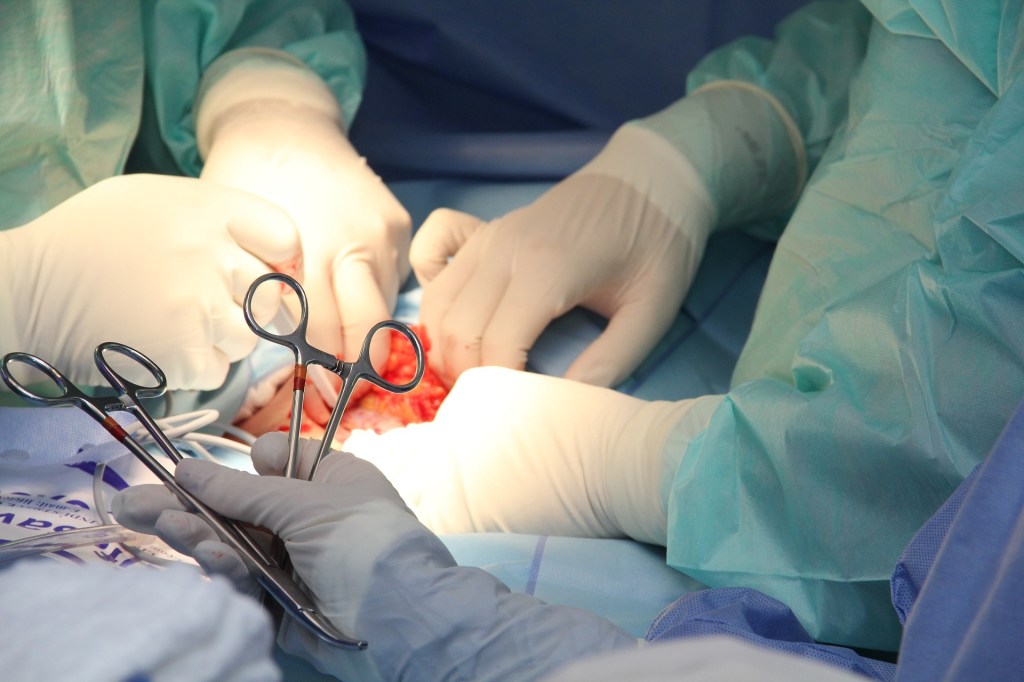
    In the afternoon I saw a hernia removal, (not keyhole but burning to create an opening in the stomach), gall bladder removal (keyhole where they jabbed in ‘high tech litter pickers’) and a right temporal artery biopsy. The biopsy was the most intense because I stood next to him and held the clamps whilst the patients face was literally open, and they were still conscious. More of a doctor asking me questions and the responses being ‘errrr’ and ‘ahhhh, wow.’

    I learnt about which stitches dissolve in what environments and how to sew the stitching. I think we can all agree to be grateful I didn’t give it a go. 

  • Do Worms Really Know They Are Worms?

    Do Worms Really Know They Are Worms?

    Holly Dobbing, Year 2

    I’m going to start with a short but so incredibly huge question: what is consciousness? There are a thousand answers to that question. In fact, when you google it, you get almost four MILLION results (go on, try it). But it’s a concept that means something different to each of us. Am I conscious when I’m walking to the shop? Yes. Am I still conscious when I am daydreaming about being on a beach instead of walking to Aldi? Still yes, but probably significantly less so. How about when I’m sleeping? Or in that weird phase of half-asleep-half-awake? Where does consciousness start? Where does it end? What exactly is it that makes us conscious? Are other animals conscious? Are worms? Who determines who is conscious and who is not? I would argue it’s entirely subjective. Perhaps it isn’t. Who knows?

    So now that I’ve successfully tied your brain into knots, let’s take it back to basics. The Oxford English Dictionary defines consciousness as, “the state of being aware of and responsive to one’s surroundings,” and “a person’s awareness or perception of something.” 

    Let’s start by looking at that first definition. Essentially, this means two things: 1. to be conscious you need to be awake; and 2. to be conscious you need to find some sort of meaning in your surroundings. Which links nicely to the second definition which implies that consciousness comprises our every thought and feeling. It’s the warm feeling you get in your heart when you have a bite of chocolate. It’s the joy you feel when you’re laughing with your friends. It’s the love you have for your partner. The pain you feel when you hit your elbow. And the bitter knowledge that eventually we’re all going to die. (Sorry!) To summarise, consciousness is not only being awake, but being alert and responsive to the things around you. 

    But what about when you’re awake but not responsive? Or responsive, but not awake? These anomalies are simply referred to as ‘altered-states of consciousness’ and can be induced by brain injury, drugs, alcohol and even extreme tiredness (Srinivasan, 2015). Seems like a bit of a cop-out really, but it does illustrate how consciousness isn’t a black and white concept – it exists on a spectrum that we all move along in our daily lives. 

    Another thing to consider is whether or not consciousness is limited just to humans. In other words, do worms really know that they are worms? According to National Geographic, animals are conscious beings that can feel and perceive events around them, and make judgements and decisions based on what they have witnessed (Worrall, 2015). The article (which you can read for yourself via the URL in the references below the article) also states that animals are capable of empathy and if watched closely, often have personalities (Worrall, 2015). Think of your own pets if you have them, they play and have fun, they act scared when there is a present danger and they can learn behaviours if you train them. Surely that equates to consciousness. To some people, yes. To others, no. Some scientists argue that just because animals can react to stimulation doesn’t mean that they are conscious (Worrall, 2015) – much like receptors in our skin react to heat without being conscious themselves. Furthermore, it’s completely unethical to experiment on animals to test their level of consciousness, therefore there is no proof either way. Part of me thinks it is easier for people to assume that animals aren’t conscious so that it’s easier for them to justify awful acts – testing drugs, slaughtering animals for meat, battery-farming. 

    This calls into question yet another key idea: if humans and animals can be conscious, can artificial intelligence somehow be conscious too? Is consciousness something that can be taught? Maybe it could be – there aren’t many human traits that aren’t teachable. But maybe it’s really an innate property. You either are conscious or you aren’t. It’s thought that consciousness arises in the cerebral cortex (Sohn, 2019) so perhaps you need a cerebral cortex to be conscious. What if we built a cerebral cortex? Imagine we can replicate the intricate neural pathways that bring about consciousness. Does that in itself induce consciousness? 

    Consciousness is a bit of an enigma to the scientific community. It’s a word that means something different to different people and most people don’t totally know how to explain it. I’m aware that I’ve asked a lot of questions in this article, and given you significantly less answers, but I’ll ask just one more: what does consciousness mean to you? 

    References

    SOHN, E. 2019. Decoding the neuroscience of consciousness. Nature [Online]. Available from: https://www.nature.com/articles/d41586-019-02207-1 [Accessed 24th February 2022].

    SRINIVASAN, T. M. 2015. Healing altered states of consciousness. International journal of yoga, 8, 87-88.

    WORRALL, S. 2015. Yes, Animals Think And Feel. Here’s How We Know. . National Geographic [Online]. Available from: https://www.nationalgeographic.com/animals/article/150714-animal-dog-thinking-feelings-brain-science [Accessed 24th February 2022].

  • Let’s Talk Menopause

    Let’s Talk Menopause

    Shruti Chawla, Year 3

    As Medical Students, our understanding of Women’s Health is rather sparse. We have a few lectures on menstruation, ovulation, and anatomy in first year and then this is titrated down until our GOSH placement in fourth year. It is clear, this is not enough to cover to the scope of menopause. 

    Let’s start with the basics: What is the Menopause?

    Is it: 

    “The beginning of the end”

    “PMS on steroids”

    “The loss of youth” 

     Or can we start to see this change for what it really is: a biological endpoint of menstruation, usually between the ages of 45-55, which comes with a myriad of changes that cannot be categorised in a simple list and not something medication can be thrown at. 

    I was able to learn the true extent of these changes, their effects on people and the general perception of menopause when I attended a talk hosted by Isabel Morgan (3rd year at Leeds) in December. We were joined by three wonderful women who were kind enough to share their experience of the menopause, from the initial diagnosis to its continuing effects. 

    The NHS website lists the common symptoms of menopause to be: “hot flushes, night sweats, vaginal dryness, difficulty sleeping, low mood and libido”. It states that symptoms can begin years before your periods stop “peri-menopause” and can last up to 4 years post this date. The menopause itself is only a day in theory (one year after your last period). 

    The symptoms listed above sound rather unpleasant on paper, but the true story is only revealed when hearing women putting them into the context of busy lives. Lives which are usually spent working, spending time with family and socialising, but now burdened with uncontrollable changes that unfortunately are still considered a social taboo. 

    Anxiety was a pivotal symptom which was described by one of the women. Stress at work seemed to spiral. It went from something that could be handled with a slight reduction in workload, to a process that became confusing, overwhelming, and tedious. After this became unbearable, upon discussion with the GP, menopause wasn’t even considered as an option, anti-depressants were the prescription of “choice”, but the anxiety didn’t stop.  It felt like being passed from pillar to post until a clinician finally suggested the menopause. 

    A similar story (Advocacy Focus) comes describes facing “tremendous joint pain” alongside a low mood. Again, the story follows the same pattern. The low mood was treated with anti-depressants and the patient told to join a “return to hockey” team to improve her social life despite the joint pain. 

    Whilst we can understand these presentations are not classic cases, do we really know so little as to not even consider the menopause in our differentials? Should we really discount physical symptoms when we have a presentation of low mood?

    The truth is Menopause presents itself in many manifestations: 

    1. Perimenopause: the transitional period before the menopause. Whilst this may seem milder condition, it still presents with menopause like symptoms which can last for years and be debilitating. 
    2. Menopause after hysterectomy: with a radical ovarian removal, women can experience menopause immediately post op, with the symptoms lasting for years post this. (This is also known as surgical menopause)
    3. Medical Menopause: permanent damage to both ovaries – e.g through chemo or radiotherapy. 
    4. Temporary (whilst this may not fit within the natural definition, it can still exhibit similar symptoms): GnRH treatment in conditions like endometriosis. 

    As future healthcare professionals, it is imperative for us to understand the various ways in which this change can present. Currently, research via a Channel 4 documentary (“The Menopause Doctor”) shows that 15% of women questioned (5187 British women in their 40s and 50s) waited approximately 6 years to receive a diagnosis. Only 33% of women received HRT (hormone replacement therapy) and a further 27% antidepressants – which are not the recommended treatment within NICE guidelines. It now falls on us as the next generation to turn these statistics around. 

    So, what can we do as students to further our understanding of menopause? (Here is a short excerpt from Bee Macpherson who plays a huge role in Menopause support at the University)

    “Firstly, it’s important to recognise the menopause as an occupational health issue. The menopause is not (just) a women’s issue and at the University of Leeds we have been working to raise awareness of the menopause as a health and wellbeing issue, the potential impact on personal and professional life and to change culture so conversations about the menopause are normalised and not taboo. Initiatives include monthly ‘menopause for thought’ cafes, a facilitated safe space where everyone is welcome, irrespective of age or gender to have a cup of tea and chat about the menopause, no issue is off limits!

    The cafes moved to Teams in March 2020, we hope to host a mix of online and in campus cafes going forward. We also have information for students accessed via this link:

    https://students.leeds.ac.uk/info/100002/togetherall_resources_and_self_help/1258/recommended_resources_and_self_help”

    I hope this article provides the encouragement for us all to talk menopause more freely and confidently. 

    References

    Davina McCall: Sex, Myths and the Menopause. Channel 4. 12/15/2021

    Macpherson, B. 2021. Menopause. [online] [Accessed 25 January 2022] Available from: https://wsh.leeds.ac.uk/health-wellbeing/doc/menopause

    Unknown. 2019. Advocacy Focus. World Menopause Day – Our Stories. [online] [Accessed 28 January 2022] Available from: https://www.advocacyfocus.org.uk/news/world-menopause-day-our-stories

  • What’s On in March?

    What’s On in March?

    Holly Dobbing, Year 2

    Now we’re in March. Spring is around the corner and pancakes are on the table. The Easter holidays are creeping closer. But what can you do to fill the time between now and then?

    LAMMPS

    LAMMPS musical theatre society have their showcase of The Lightning Thief this March. The shows are running 7:30pm to 11:00pm Wednesday 16th, Thursday 17th, Friday 18th and Saturday 19th of March.

    Get your tickets below for £7 each and check out their instagram @leedsammps for more information.

    Christian Medical Fellowship

    This month CMF have an event on the 2nd of March called ‘Ethical Dilemmas with Dr Golda’. They are also hosting a ‘family dinner’ event on the 16th of March and an Easter special event on the 31st. For more information check out their instagram page, @cmf.leeds.

    LUU Open Theatre Soc

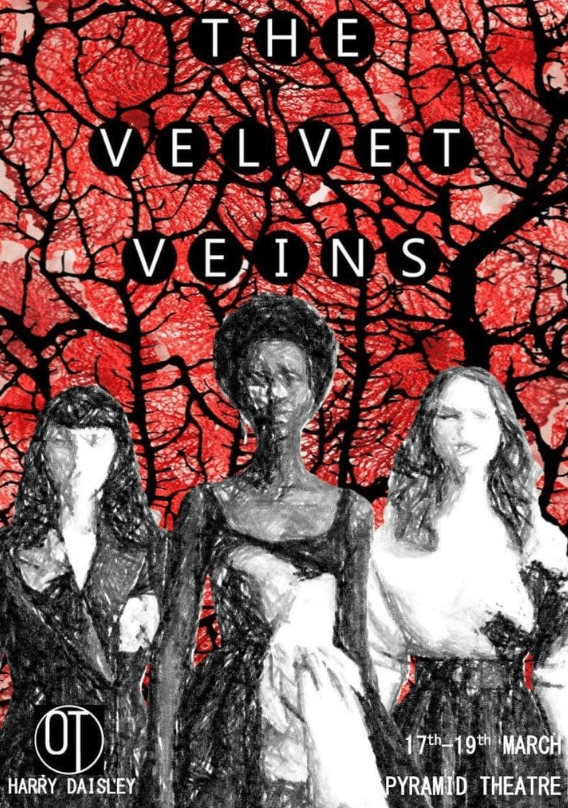
    One of our very own The Worsley Times writers has been directing an original play with the Open Theatre Society which is showing in the Pyramid Theatre from 17th to 19th of March.

    Politics meets pop-culture in ‘The Velvet Veins’, an original, melodramatic comedy written by Harry Daisley. The play is set in the midst of a bitter feud between two royal siblings known as ‘The Empress’ and ‘The Chancellor’, in a nation divided by binary social extremes. Sick of living in his sister’s regal shadow, The Chancellor has his sister’s elite fashion designer, ‘Ludwig’ kidnapped with intentions of being reinvented by his craft. Ludwig is cautious at first but begins to find pieces of himself within the rejected sibling, establishing an unlikely yet blossoming relationship that defies the divide between them. Meanwhile, the Empress, distraught by Ludwig’s absence, gathers together a search party, led by effervescent ex-fashion student ‘Selene’ and dubious police official ‘Mr Alexander’. Throughout the play, Ludwig is presented with a fateful choice: return home to the familiar opulence of The Empress’ palace or take a chance on the Chancellor who has opened his eyes to a new way of living…

    For more information check out @opentheatresoc on Instagram and get tickets via the link.

  • Seven Yoga Positions For You To Try Over Seven Days

    Seven Yoga Positions For You To Try Over Seven Days

    Zak Muggleton-Gellas, Year 2

    To compensate for the busy and stressful student lifestyle, a relaxing outlet is vital to upkeep mental and physical health. In fairness, eating ice cream and watching Netflix is a well-known and successful way to unwind, but I have found practicing yoga to be invaluable, especially a more own-body weight strength style.. 

    But is there only one type of yoga? Where all members sit cross-legged and hum? I, too, initially believed this to be true, but in reality there are 11 ‘strands’ of yoga practice, and all have their respective benefits. 

    The 11 Strands of Yoga Practice

    1. Vinyasa – Most athletic yoga style that coordinates a series of poses in combination with specific breathing.

    2. Hatha – All other strands of yoga that involve a main physical component that is not vinyasa.

    3. Iyengar – Focuses on detailed and precise movements that involve perfecting specific poses down to every minute detail.

    4. Kundalini – Spiritual and physical duality that releases energy said to be trapped, with chanting, mantra and meditation .

    5. Ashtanga – translates to ‘eight limb path,’ and is a specific series of movements that each member completes at their own pace.

    6. Bikram – Sequence of set poses in a room set to 40.5 degrees and 40% humidity, also known as ‘hot’ yoga.

    7. Yin – Slow-paced yoga with seated poses for long periods of time, known to help find inner peace.

    8. Restorative – Focused on relaxing the body and cleansing the mind after a long day. 

    9. Prenatal – For pregnant women to include pelvic floor work, breathing and bonding with the baby. 

    10. Anusara – A more modern form of hatha, focusing on the mind-body-heart connection to let one’s heart open to the world. 

    11. Jivamukti – Vinyasa-flow-style yoga that includes Hinduism as a core influence, and looking after the planet.

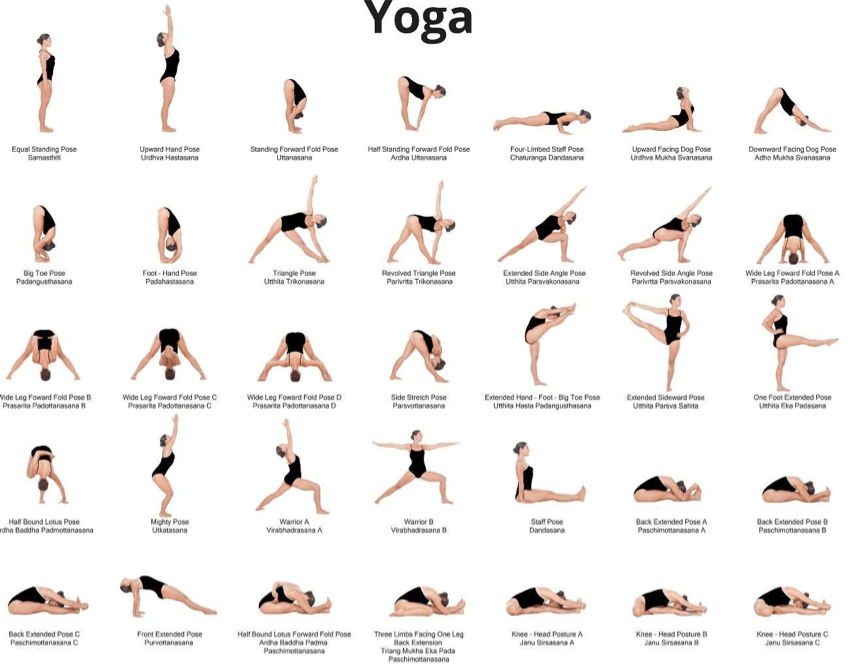
    So, now onto the seven yoga positions for you to try, and I truly wanted to make sure I found awkward and weird poses. Put on some meditative music and maybe a candle and try these out! : 

    1. Happy Baby Pose (Ananda Balasana)

    Babies Do Yoga: Yo Re Mi for Child Development — Yo Re Mi

    2. One Arm Leg Pose (Phalakasana Eka Pada Eka Hastra)

    Plank with opposite arm and leg lift • Bodybuilding Wizard

    3. King Dancer Pose (Natarajasana)

    Dancer's Pose - Ekhart Yoga

    4. Bow Pose (Dhanurasana)

    Bow Pose - Dhanurasana - The Yoga Collective How To Do Bow Pose

    5. Tree Pose (Vrikshasana) 

    Vrksasana - Tree Pose — Yoga Alignment Guide

    6. Bridge Pose (Chakrasana) 

    Bridge Pose – Benefits, Procedure and Contraindications - The Indian Med

    7. Shoulder Stand Pose (Savangasana) 

    Unsupported Shoulder Stand Pose (Niralamba Sarvangasana) - Yoga Pose

    References

    10 Weird-Looking Yoga Poses

    https://www.mindbodygreen.com/articles/the-11-major-types-of-yoga-explained-simply

  • ‘Hi Dear, Someone at Work Said the Lateral Flow Tests Cause Head Cancer?’

    ‘Hi Dear, Someone at Work Said the Lateral Flow Tests Cause Head Cancer?’

    Zak Muggleton-Gellas, Year 2

    According to recent governmental guidelines, and compliant with the University of Leeds guidelines, LFTs play an integral role in COVID-19 spread prevention. But, contrastingly, as suggested on social media, LFTs can have carcinogenic effects. From a personal standpoint, this ideology was presented as an innocent message from a family member, and this article was born from the research that was carried out to obtain an informed and unbiased response. Anti-vaccinators and COVID-deniers are topical communities in the current climate and therefore are used as ammunition against the governmental guidelines to protect against covid. Statements such as these, to members not included within the scientific community, can be scare-mongering and potentially lead to unnecessary exposure to the virus. One could additionally theorise that it can cause the scientific community to become neglectful, as individuals who support the government become resistant to research any opposing claims, and the NHS are under scrutiny. There is a duty to research these claims, specifically after the thalidomide crisis (Kim, 2011). 

    Ethylene oxide has been used for over 60 years, in the hospital environment, as a device to sterilise medical equipment (Mendes et al, 2008). It is a colourless, odourless gas that is used in various cosmetic products. This includes being noted on the back of LFTs for sterilisation of the equipment used (BCPP, 2021). A Facebook user posted a video stating that, due to this sterilisation, the cotton buds used in the test kits cause encephalitis, endocrine dysfunction (neuroendocrine tumours), leukaemia, breast cancer and lymphoma (Reuters Fact Check, 2021). While there is significant evidence that ethylene oxide is a carcinogen (Vincent et al, 2019), and there has been increased breast cancer incidence in female factory workers producing the chemical as well as hospitals (BCPP, 2021), the presence of the gas in the sterilisation process does not pose a harmful risk of cancer to LFT users. Specifically, there is no found evidence that it can lead to brain – it can be interpreted the comment did not refer to other parts of the head – cancer. 

    As a basis, sterilised devices undergo preconditioning and humidification, gas introduction, exposure, evacuation, and air washes (Reuters Fact Check, 2021), with several chemicals to wash that include hydrogen peroxide, chloride dioxide, ethylene oxide (FDA, 2021). The objective of the evacuation and air washing section of the process is to remove the harmful chemicals, such as ethylene oxide, from the equipment, before use. In addition, the amount of ethylene oxide decreases to below measurable levels after 3 weeks and is monitored to be below dangerous levels by the International Standard Organisation (ISO). As well as this, the low risk of exposure can be categorised by the limited contact (about 20 seconds per test) and the contact only being the throat and nasal passage (GovUK, 2021). Users can therefore be reassured that it would take 40 year of testing, two times every week (or 4,160 tests with no deviation from that schedule) to be placed into a high-risk category for ethylene oxide exposure. 

    Overall, as supported by a freedom of information request answered by the government (GovUK, 2021), the claim stating that they will cause cancer is factually incorrect, and that this harmful claim is not to be taken into the NHS’ consideration when advising others on how to test for covid. They will continue to be an accessible method of testing, as we work globally to find guidelines that decrease the cases in our population. 

    References

    Kim JH, Scialli AR. Thalidomide: the tragedy of birth defects and the effective treatment of disease. 2011. [Online]. [Available at: https://pubmed.ncbi.nlm.nih.gov/21507989/].

    Cunha Mendes GC, da Silva Brandão TR, Miranda Silva CL. Ethylene oxide potential toxicity. 2008. [Online]. [Available at: https://pubmed.ncbi.nlm.nih.gov/18452382/].

    BCPPL. Ethylene Oxide. 2021. [Online]. [Available at: https://www.bcpp.org/resource/ethylene-oxide/].

    Reuters Fact Check. Fact Check-Lateral flow tests do not cause cancer; ethylene oxide sterilisation is a widely-used process that is regulated by international safety standards. 2021. [Online]. [Available at: https://www.reuters.com/article/factcheck-ethylene-oxide-idUSL1N2LO1YM]

    Vincent MJ, Kozal JS, Thompson WJ, Maier A, Dotson GS, Best EA, Mundt KA. Ethylene Oxide: Cancer Evidence Integration and Dose-Response Implications. Dose Response. 2019. [Online]. [Available at: https://pubmed.ncbi.nlm.nih.gov/31853235/ ].

    FDA. 2021. Ethylene Oxide Sterilisation for Medical Devices. [Online]. [Available at: https://www.fda.gov/medical-devices/general-hospital-devices-and-supplies/ethylene-oxide-sterilization-medical-devices].

    GOVUK. Freedom of Information request about the safety of ethylene oxide (EO) and its use to sterilize the swabs used in lateral flow tests (FOI-21-294). 2021. [Online]. [Available at: https://www.gov.uk/government/publications/freedom-of-information-responses-from-the-mhra-week-commencing-19-april/freedom-of-information-request-about-the-safety-of-ethylene-oxide-eo-and-its-use-to-sterilize-the-swabs-used-in-lateral-flow-tests-foi-21-294]

  • Pandemic Diaries: Surviving One Year of Medical School in a Different Country

    Pandemic Diaries: Surviving One Year of Medical School in a Different Country

    Several Akkaya, Year 2

    Last year, after an unexpected series of events which we are all familiar with, I had to stay home during the whole academic year. The only problem was that my home is 4089 kilometres from the university. 

    I was born and raised in Samsun, a city at the Black Sea region of Turkey. Samsun is famous for its historic role in the Turkish War of Independence and its beautiful coast that is frequently used by freighters, ships and fishing boats. For me, the main beauty of the city comes from the fact that my whole family lives there. 

    I moved to Istanbul in 2015 for high school at Robert College of Istanbul, one of the best in Turkey, and I was a residential student for three years. I was only fourteen and my parents counted down the days to each holiday to see me when I came back to visit them. From then till today, I’ve been flying and spending lots of time in airports. 

    An even more exciting adventure began when I was accepted by the medical school at the University of Leeds. I knew I was going to travel even more and be away from my parents for even longer. What I didn’t know, like everyone else on this planet, was that we were going to be hit by this pandemic hard enough that we wouldn’t be able to leave our houses, let alone move to university. Consequently, my travel plans were postponed when the university told all of us that lectures and tutorials were going to be online. This was when I started my journey of studying medical school online alone at home while my doctor parents were trying save people’s lives from the virus. 

    There is definitely something unique about starting medical school during a pandemic. Before the pandemic, I had to do my medical school interview online while the doctors interviewing me were at their offices, working at the hospital that same day.  My interviewer was a paediatric neurologist who wore a facemask all throughout the interview. It was hard to see his reactions. Meanwhile, I was home in a warm and sunny Samsun. I was sweating hard from excitement while thinking how fortunate it was that they wouldn’t realize because I was miles away from them. Thankfully, the interview went well and I am here today. However, I didn’t know at the time that the whole academic year was going to be online just like my interview. 

    In Turkey, my mother is a GP and my father is a neurologist, but during the pandemic both of them were given extra duties which put even more pressure on them. My mother worked with Turkey’s Ministry of Health, directing healthcare staff to visit Covid-19 patients at their homes, checking their symptoms and providing medication when needed during their quarantine period. My father worked as a deputy chief physician at their hospital, maintaining good quality health services despite the staff absences. Because of the great amount of responsibility they both had, they worked on their phones or went to the hospital after their shifts. Basically, there was a lot of stress inside the house and I spent all day doing our online lectures on my computer alone in my room. In Turkey, from March to June 2020 there was a curfew for people under 20 due to the increased number of cases, which meant that I wasn’t allowed to leave the house except one Friday morning in every few weeks. Luckily, because my parents were healthcare workers and were exempt from the curfew rules, they would take me out for a walk or a drive around the city after they come home from work. 

    In our IDEALS sessions; my tutor would ask me about how things were going in Turkey. We would discuss curfews and compare the number of cases in Turkey against those in England. But, regardless of what country we spent those hard months in, my classmates and I have been through a challenging time and we can’t even say that those times are over yet. Although it’s February 2022, the number of cases haven’t dropped to a negligible level yet. Unlike some other courses or universities, most of our lectures are still going online except for few group work tutorials, anatomy practical sessions, and of course the primary and secondary care placements. This style of teaching leaves us to do most of the learning by ourselves. Hopefully everything will be back to normal again someday. Regardless of when that is, we have a long and adventurous story to tell our children and patients when we become doctors. 

  • Huberman Lab Podcast Review

    Huberman Lab Podcast Review

    Paula Szlendak, Year 2

    How much does an average person know about the physiology of the human brain? Probably very little. What if we asked an ‘ordinary Joe’ if they possess tools to positively shift their cognitive and emotional abilities (without the use of psychoactive substances, that is)? Except for some meditation and mindfulness fanatics, there would probably be few such persons among the public. Dr. Andrew Huberman’s mission is to change that status quo.

    This professor of neurobiology and ophthalmology from Stanford University School of Medicine is the creator of Huberman Lab podcast – one of the wittiest, most fascinating and fact-dense podcasts I’ve ever come across. The show discusses neuroscience in relation to human behaviours, perception and health, with a focus on understanding an underlying mechanism and what can be done to optimise that function. Huberman is like a combination of a cool uncle and badass scientist, whose passion for all things brain-related is truly infectious. In each of his solo-episodes he tackles a neurobiological mystery (emotions, stress, motivation, creativity) and explains the physiological basis of it in a simple and accessible way. Huberman Lab also hosts other scientists keen to share their expertise. 

    Providing a bit more background about the author himself, Andrew Huberman is a respected researcher who for more than 20 years has consistently published in prestigious peer-reviewed journals, such as Nature, Current Biology and Neuron. He has particular interests in neural regeneration, neuroplasticity and optimal performance in states of stress, fear and focus. Being a member of several National Institutes of Health review panels, he regularly consults for health policies.

    What is remarkable about the Huberman Lab podcast is that it aims to not only educate its listeners, but more importantly equip them with real tools to actively change the way they think and feel. Of course, you probably won’t gain superhuman abilities of brain-control after listening to one episode. However, Huberman’s podcast can provide you with basic understanding of the most complex creation in the universe – the brain, and even (to some extent) help you control the way your brain works. Pretty cool, right?

    To give an idea of what to expect from the podcast, here’s a summary of one of the recent episodes ‘The Science of Making and Breaking Habits’, which might be just the advice we need to stick to those New Year’s resolutions for longer than a month. This episode discusses the science of habit formation/elimination and in particular the neuroplasticity that underlies it.  Habit formation relies very much so on the brain states at specific times of day and our ability to overcome a ‘friction’ associated with certain tasks. There is also a link between habit consolidation and how long we implement an action for – hence, the famous 21-day habit challenge. Huberman introduces an interesting take on strengthening existing habits called “task bracketing”, which is meant to rewire neural circuits in the basal ganglia. Understanding these processes could prove useful for building better habits for work, school, fitness and even relationships.

    We often feel like our mental states are out of our control, like we can’t really do much about the motivation levels, attention span or emotional states we experience daily.  I personally find that educating myself about neuroscience and easy behavioural tools helps me feel more in-tune with myself and in-control of my ‘monkey brain’. We can all benefit from getting to know our brains – and as a result, ourselves – a little bit better.  

  • Nomadism is Under Threat: One Government Bill Could Criminalise and Evict Thousands

    Nomadism is Under Threat: One Government Bill Could Criminalise and Evict Thousands

    Katie Webb, Year 2

    The Police, Crime, Sentencing and Courts Bill was introduced to parliament on 9th March 2021 (UK Parliament, 2022). Following the police involvement at the Sarah Everard Vigil days later, it entered the wider public’s consciousness, helped by the #killthebill social media campaign. The illiberal attempts to curtail protest have been widely reported and faced criticism from The Times (Hamilton. S, 2021) to the Guardian (2021). But why aren’t we talking about its impact on Gypsy, Traveller and Roma communities more? After all, it’s only going to criminalise their way of life.

    The government is trying to clamp down on so-called “unauthorised encampments,” where people are occupying land against the wishes of the landowner. The bill does this by making trespassing a criminal offence instead of a civil one. Police will have the power to arrest trespassing adults and confiscate their vehicles, which may well be their home. If someone is found guilty, sentences can be up to three months imprisonment and a £2500 fine (Police, Crime, Sentencing and Courts Bill, 2021).

    Gypsies, Travellers and Roma refer to many diverse groups of people, each with distinct cultural heritage, traditions and way of life. Despite rich cultural history, centuries of oppression have contributed to their underrepresentation in history books. At present, there are an estimated 100,000 to 300,000 people who identify as Gypsy, Traveller or Roma (The Traveller Movement, no date). Many groups are considered ethnic minorities (Women and Equalities Committee, 2019) and many traditionally endorsed a nomadic way of life, although the proportion living in static caravan sites – as well as houses – has grown considerably (ONS, 2014). Now, a nomadic way of life is completely under threat.

    The bitter irony of this bill is that it will criminalise unauthorised encampments despite a chronic shortage of spaces on authorised traveller sites. The charity Friends, Family and Travellers revealed in January 2021 that there were 1696 households on waiting lists for pitches, yet only 101 pitches available (Friends, Families & Travellers, 2021). Additionally, research from 2020 showed that only 8 out of 68 local authorities in the South East of England had identified enough land to accommodate the Gypsies, Travellers and Roma in their local area (Nuttal et al., 2020). In short, many people accused of trespassing do so simply because they have nowhere else to go. 

    This lack of traveller sites is recognised as a key issue by the police. In consultations between the police and the Home Office, 93.7% of police forces identified better site provision as the solution to unauthorised encampments, and only 21.7% of respondents supported criminalising them (Gilmore et al., 2020). Yet instead of substantially increasing funding for new sites, or bringing back a statutory obligation to provide sites (as there was in the now-repealed Caravan Sites Act of 1968), the government has decided to press ahead with criminalising unauthorised encampments.

    The wording of the bill is truly frightening. The government is broadly trying to create it an offense to reside on someone else’s land, with a vehicle, not leave when requested and cause harm in the form of offensive behaviour, disruption or damage. However, the wording of the bill encompasses so much more. Someone doesn’t have to have actually resided on the land to be included in the bill, but just be “intending to reside,” and nor do they need to cause actual harm but merely generate a concern that “significant damage or significant disruption . . . is likely to be caused.” Someone doesn’t have to have actually done anything, but simply be deemed to be intending to, in order to be committing a criminal offense. This criminalisation of intent should scare all of us. Yes, giving police powers to act proactively can be considered a good thing in certain limited circumstances. Yet is it a good idea when these powers will likely be mainly used against a group of people who face so much conscious and unconscious prejudice? The definition of offensive behaviour, amongst other things, includes “insulting” behaviour and signs, which will inevitably rely upon the police and landowners subjective experience of this. Is it wise to have a law – which will likely be used against a historically persecuted group – have such subjective terms left open to the interpretation of the police, who like most people will suffer implicit biases?

    If a police officer “reasonably suspects” an offense has occurred (remember that someone might not have actually done anything, but be deemed to be intending to) they can seize any “relevant property”. This includes vehicles, wherever they are located. This will, in all likelihood, be Gypsies, Travellers and Roma homes. The disproportionality of this proposal is staggering. To take away someone’s home, if they are accused of something that was only recently a civil crime. To take away someone’s home without providing a viable legal alternative. To take away someone’s home for something that has a shorter maximum custodial sentence than shoplifting. If the government proposed taking away someone’s home for almost any other minor crimes, be it petty theft, possession of drugs, drunk and disorderly conduct, and quite possibly for far more serious crimes, there would be uproar over the sheer unfairness of it. What I’m really saying is, if this was happening to almost any other group of people, we wouldn’t stand for it. So why are we?

    At the time of writing, a recent defeat of Priti Patel’s particularly draconian amendments regarding protest of the Police, Crime, Sentencing and Courts Bill in the Lords has delayed the bill, but it is still expected that the bulk of it (including the parts about unauthorised encampments) will eventually pass into law. Yes, there is some hope for future legal challenges, likely under Article 8 and Article 14 of the European Convention on Human Rights, or at least judicial guidance over the subjective terms of the bill. But this is by no means a guarantee, and it almost doesn’t bear thinking about how many people will be made homeless, traditions abandoned and families heartbroken before this happens. Yet we must bear to think about it, as it is soon to be the lived experience of many. 

    As this appallingly oppressive and tragically incommensurate bill turns from a nightmare to reality, it is worth remembering the French philosopher Albert Camus’ words: “democracy is not the law of the majority but the protection of the minority.”

    References

    Caravan Sites Act 1968 c. 52. Available at: https://www.legislation.gov.uk/ukpga/1968/52/pdfs/ukpga_19680052_en.pdf (Accessed 25/01/2022/)

    Friends, Families & Travellers (2021). ‘New research shows huge unmet need for pitches on Traveller sites in England’. Available at https://www.gypsy-traveller.org/planning/new-research-shows-huge-unmet-need-for-pitches-on-traveller-sites-in-england/ (Accessed: 25/01/2022).

    Gilmore, V., Kirkby, A. and Dolling, B. (2020). ‘Police renew calls for more Gypsy and Traveller sites in opposition to the criminalisation of unauthorised encampments’. Available at: https://www.gypsy-traveller.org/wp-content/uploads/2020/10/Full-Report-Police-repeat-calls-for-more-sites-not-powers-FINAL.pdf (Accessed 25/01/2022).

    Hamilton, S. (2021). ‘Police crime bill “is harmful to democracy,”’ The Times, 05/07/21. Available at  https://www.thetimes.co.uk/article/policing-bill-is-harmful-to-democracy-ft9dg6r3x (Accessed: 06/01/2022).

    Nuttal, E., Gilmore, V. and Buck, T., (2020). ‘No place to stop: Research on the five year supply of deliverable Gypsy and Traveller sites in the South East of England’. Available at https://www.gypsy-traveller.org/wp-content/uploads/2020/02/Research-on-the-five-year-supply-of-deliverable-Gypsy-and-Traveller-sites-in-the-South-East-of-England.pdf (Accessed 25/01/2022).

    Office for National Statistics. (2014). ‘’2011 Census analysis: What does the 2011 Census tell us about the characteristics of Gypsy or Irish travellers in England and Wales?’. Available at  https://www.ons.gov.uk/peoplepopulationandcommunity/culturalidentity/ethnicity/articles/whatdoesthe2011censustellusaboutthecharacteristicsofgypsyoririshtravellersinenglandandwales/2014-01-21 (Accessed: 25/01/2022).

    Police, Crime, Sentencing and Courts Bill (2021). Parliament: House of Commons. Bill no. 268 (2019-2021). Available at https://bills.parliament.uk/publications/44739/documents/1259 (Accessed: 06/01/2021).

    The Guardian. (2021). ‘The Guardian view on the police bill: a fight for the right to protest,’ The Guardian, 19/12/2021. Available at https://www.theguardian.com/commentisfree/2021/dec/19/the-guardian-view-on-the-police-bill-a-fight-for-the-right-to-protest (Accessed: 06/01/2022).The Traveller Movement. No date. ‘Gypsy Roma and Traveller History and Culture’. Available at: https://travellermovement.org.uk/gypsy-roma-and-traveller-history-and-culture/ (Accessed: 25/01/2022).
  • She’s Just Not Going to Cut It: Women in Surgery

    She’s Just Not Going to Cut It: Women in Surgery

    Holly Dobbing, Year 2

    For decades, women have made up over half of the world’s medical students. However surgery still remains extremely male dominated (Singh et al., 2020). Women are less likely than men to enter and complete surgical training, and even fewer are seen in roles of leadership. This may be due to a plethora of reasons and may differ from hospital to hospital and doctor to doctor, but many studies have concluded that this issue lies not with encouraging women into the specialty, but in making the specialty a more equal, understanding place in which women would want to work.  

    Medical careers as a whole were designed with only men in mind. In 900AD, the first medical school in Europe was founded to train solely men in the art of healing (Nelson, 2015). These training programmes didn’t consider or account for women because women couldn’t even attend university, so maternity leave and having time off to raise children were distant, far-fetched ideas. Because of this, surgical careers have little flexibility in the way of taking time out or working less than full-time. This also means that women are somewhat forced into lower paid career paths because male doctors are likely to have been practicing longer. 

    Women are also deterred from surgical careers because they are significantly more likely to experience misogynistic attitudes and discrimination from patients and colleagues throughout their training and career (Singh et al., 2020). In fact, a study by Harvard medical students found that women are far more likely than men to be verbally discouraged towards surgical careers exclusively because of their gender (Giantini Larsen et al., 2019). This ingrained misogyny also breeds further problems. For example, women are judged more harshly than men when applying for surgical positions (Singh et al., 2020), and in an independent review of the gender pay gap in medicine, the DHSC (Department of Health and Social Care) found that currently in the UK, women doctors earn 18.9% less an hour than men (BMA, 2020). IT IS 2022! Not only are these statistics completely shocking and are likely to discourage women from advancing in a career that they would otherwise excel in, but they are absolutely, unquestionably, unequivocally, totally and utterly unacceptable. Women SHOULD NOT be limited in their career progression or earnings simply because they are women.

    But why is it we allow medicine to continue like this? Is it the old, traditional white male doctors who turn a blind eye? Is it the fact that the majority of people who run the NHS are not even medically qualified? Is it just that we are so used to misogyny that we hardly even pay attention? I don’t know. But what I do know is that it NEEDS to change. It is absolutely imperative that hospitals take a tougher stance on misogynistic behaviour to address and tackle this issue head on. Sexism and gender discrimination should be taken incredibly seriously with a zero-tolerance policy to empower women to speak up if this happens. Plus, surgical training and careers should be more flexible with a better work-life balance and shorter, more accommodating hours to give women the freedom they need to live the life they desire alongside the specialty they are committed to. Women are a vital and necessary part of our NHS and should be treated with understanding, inclusivity and equality throughout their careers. 

    Now I know these changes may seem completely unreasonable and frankly unrealistic given the state of the NHS, and you may be thinking ‘and what exactly is ranting about it on The Worsley Times going to do?’, but this is where change can start. We are tomorrow’s doctors and dentists and nurses, and soon we will have the platform to be able to call out and stand up for what is right. 

    References

    BMA 2020. BMA commentary on Mend the Gap: The Independent Review into Gender Pay Gaps in Medicine in England.

    GIANTINI LARSEN, A. M., PORIES, S., PARANGI, S. & ROBERTSON, F. C. 2019. Barriers to Pursing a Career in Surgery: An Institutional Survey of Harvard Medical School Students. Annals of Surgery, Publish Ahead of Print.

    NELSON, H. 2015. The History of Medicine and Public Health [Online]. Available: https://mrhnelson.wordpress.com/2015/03/02/medical-training-medieval-style/ [Accessed 11 April 2021].

    SINGH, C., LOSETH, C. & SHOQIRAT, N. 2020. Women in surgery: a systematic review of 25 years. BMJ Leader, leader-2019-000199.