Author: Worsley Times

  • Placement Top Tips from LTHT Undergraduate Hub

    Placement Top Tips from LTHT Undergraduate Hub

    Hi everyone, 

    We’re excited to be featured in this issue of the Worsley times!

    My name is Polly and I’m one of a team of Clinical Teaching Fellows based in the Undergraduate Hub at St James’ Hospital. 

    Hopefully you’ll get to meet us on your placements within Leeds, but even if you’re not on placement with us we have lots of resources available to help on our Padlet and Instagram!

    I wanted to start this off with our top tips for placement. Whether you’re a 3rd year who’s just worked out how to use the shuttle bus, or a 5th year who knows all the best staff rooms to get a coffee from, placement can sometimes be a difficult learning environment.

    Making the most out of your placements

    • Go to placement and turn up on time- find out the structure of the day for the ward staff
    • Set targets for what you want to get out of each placement
    • Set yourself targets for the day
    • Practice, practice, practice – histories, examinations, skills etc. 
    • Use the whole range of allied health professionals you will come across

    How to engage on a ward round

    • Introduce yourself
    • Ask questions!
    • Present to a senior- pick a patient and read up prior to ward round
    • Practice documenting the ward round (even if it’s just on a piece of scrap paper!)
    • Practice making your own jobs list – at the end compare with the junior doctors. 
    • Have a go at prioritising them- which need doing first?
    • Identify patients you could practise taking a history or examination on

    The ward round has finished, and the junior doctors are very busy. What could you do?

    • Ask the junior doctors if you could shadow them 
    • Take a history from a patient and present this
    • Practice examinations- use those patients you identified on ward round. How many clinical signs you can find in one patient
    • Shadow other MDT members- find out how everyone contributes to patient care.
    • Ask how you can help

    We hope this is helpful.

    You can find us on Instagram @hub_ltht for Hub Hints, MCQs and videos.

    We also have our Hub Padlet: https://padlet.com/mededleeds/undergraduate_hub This has loads of learning resources for your year group as well as booking links for our SDP room!

  • So You Want to Be a Gymnast? Not After This Article!

    So You Want to Be a Gymnast? Not After This Article!

    Zak Muggleton, Year 3 

    Maybe you’ve seen it on social media? Maybe you’ve seen it whilst switching through channels when the Olympic are on every four years? Or maybe you’ve even seen it performed by street performers, watching them twist and turn as they fly above cement? Undeniably, gymnastics is an enthralling sport to watch, and, as you may know if you’ve taken part in the sport, it’s for the adrenaline junkie, bound to put a smile on your face! 

    But there is a bleaker side to gymnastics. It is dangerous. Very dangerous. If it were not for the extensive conditioning that the gymnasts face for hours a week, and meticulous coaching, their bodies would simply not be able to cope with the strain put upon them. As a former gymnast, I recall how it took up a large majority of my childhood, and has had huge implications on my life nowadays. Unfortunately, I live with chronic back pain. This is due to coaches inadequately warming us up before starting to practice backbends and high-flying backflips. Nowadays, whilst in university, not being able to take part in gymnastics has a huge psychological impact on me. Especially since it was my entire life, doing it 40+ hours a week as a child. It was my identity. Therefore, I was interested to research the injuries that take place in elite gymnastics. I want to look at this topic not only from a medical perspective, but appreciating the psychological effect on the gymnasts, who have to say goodbye to everything they know from their childhoods. 

    It is part of college culture in America to have gymnastics teams that compete in competitions, a bit like supporting your university football team. This is of huge benefit to those gymnasts that have achieved level 10 (the highest level you can achieve before you qualify for elite) as they get a full scholarship to their chosen college, and get to continue the sport they love. Reiterating again that many gymnasts grow up with the sport, therefore making it such a major part of their lives, continuing it into college. Live injury updates, including their college team, name, timeline of injury and detail of injury, are put onto College Gym News to update fans and to keep the records current (College Gym News, 2022). This has been used in this article to try and establish the most common types of injuries, but this is by no means a big enough study to conclusively state which injury is the most common, as fact. At the time of research, there were 90 recorded injuries. Of theses, there were 10 ACL (anterior cruciate ligament) tears, 16 Achilles’ tendon tears (the ligament connecting the gastrocnemius and the calcaneus, known as the heel), 15 boots (defined as any foot or ankle injury requiring a boot to be worn), 7 knee injuries (not an ACL injury), 8 crutches, 5 retirements (injuries so severe that it requires a gymnast to leave the sport), 5 unknown and 1 arm in a cast, occurring due to a Colles’ fracture (a distal radius fracture). 

    It could be concluded that the limbs are most likely to be affected by gymnastics injuries, with lower limb injuries coming out on top. This sample is a demonstration that it is unlikely for gymnastics to cause a fatality/injury to one’s trunk. However, the most dangerous injuries are to the head and neck, causing potentially death or disability, but all precautions are taken to prevent this. Safety equipment is always used and difficulty of skills is slowly progressed to prevent someone being unable to complete the skill safely. As there is no reference to head injuries within this list, these precautions could be the reason for that. 

    Overlin et al conducted a study that has updated the world on artistic gymnastic injuries, and as you can see by figure 1, there is a list of common gymnastic injuries by location (Overlin et al, 2011). Here are descriptions of some of the conditions: 

    • Lisfranc injury (injury of foot with one or more metatarsal bones displaced from tarsus, torn Lisfranc ligaments with widened space between metatarsal bone) [Wikipedia, 2022]
    • Os trigonum fracture (Fracture of accessory bone at the posterolateral aspect of the talus) [Royal Orthopaedic hospital, 2022]
    • Distal fibula physeal fracture (Fracture of the fibula near the talus bone) [Royal Children’s Hospital Melbourne, 2022]
    • OCD (osteochondral defect) of the talar dome (injures cartilage and underlying bone of the talus in the joint) [Zanon et al, 2014]
    • Posterior tibial tenosynovitis (inflammation of the covering around the tendon, the tibialis posterior tendon) [Whitney K, 2021]
    • Osgood-Schlatter disease (pain and swelling below the knee, at the tibial tuberosity) [Johns Hopkins Medicine, 2022] 
    • Gymnast’s Wrist (distal radial epiphysis – overgrowth injury of the growth plate of the radius – it can lead to premature closure of the radial growth plate causing the radius to be shorter than the ulna) [Children’s Hospital of Chicago, 2022]
    • TFCC tear (connects the ulnar and radius distally) [Handcare, 2018]
    • Grip lock fracture (fracture of distal radius and ulna, when finger and wrist come into contact, and occurs when the grip attaches to the bar upon rotation, it requires up to one year recovery) [Tabila E, 2007]
    • Medial Epicondyle Apophysitis (pitcher’s elbow – medial epicondyle inflammation around a growth point, leading to an inability to perform certain actions without pain) [Columbia, 2022]
    • Rotator cuff impingement (muscles between the bursa and the humerus that gets stuck between the acromion and the humerus) [Webmd, 2020]
    • Labral tears (injury to tissue holing the ball and sockets together, sharp catching like pain in the shoulder) [OrthoNorCal, 2020]
    • Spondylosis (term used to describe degenerative conditions of the spine) [DeWitt, 2016]
    • Spondylolisthesis (vertebra slips out of position) [NHS, 2022]
    • Facet syndrome (arthritis-like condition of the spine that can be a significant source of back and neck pain. It is caused by degenerative changes to the joints between the spine bones. The cartilage inside the facet joint can break down and become inflamed, triggering pain signals in nearby nerve endings) [Mayfield, 2022]
    • Scheuermann disease ( some spine grow in a triangle rather than a cylinder causing varying speeds of growth during growth spurt) [McAfee, 2015]
    • Discogenic back pain (a form of low back pain, caused by chemically or mechanically damaged intervertebral discs) [Physiopedia, 2022]
    • Sacroiliitis ( an inflammation of one or both of your sacroiliac joints) [Mayo Clinic, 2021]
    • Turf toe (sprain to main joint of the big toe by hyperextension) [webmd, 2022]

    In your future practice, if you ever have a gymnast coming into your GP, you could, theoretically, look back over this list! As you can seen, a large number of ailments affect gymnasts. But it’s not only just damage to their bodies as adults in the sport; it is evident that a lot of gymnasts hurt themselves in the process of developing whilst learning gymnastics. I only feel lucky I didn’t experience more of these injuries!

    References

    College Gym News., Injury Updates., 2022., [Online]., Available at:  Injury Updates – College Gym News (Accessed: 20/07/22) 

    Overlin, A. Chima, B. Erickson, S., Update on Artistic Gymnastics., 2011., [Online]., Available at:  Update on Artistic Gymnastics : Current Sports Medicine Reports (lww.com) (Accessed: 24/11/22) 

    Wikipedia., 2022., Lisfranc Injury., [Online]. Available at : https://en.wikipedia.org/wiki/Lisfranc_injury#:~:text=A%20Lisfranc%20injury%2C%20also%20known,are%20displaced%20from%20the%20tarsus (Accessed: 24/11/22) 

    WebMD., Turf Toe: Symptoms, Causes and Treatments., 2022., [Online]., Available at: https://www.webmd.com/fitness-exercise/turf-toe-symptoms-causes-and-treatments (Accessed: 24/11/22)

    Royal Orthopaedic hospital., Posterior Impingement Surgery (os trigonum)., 2022., [Online]., Available at:  file (roh.nhs.uk) (Accessed: 24/11/22)

    Royal Children’s Hospital Mebourne., Distal tibia and-or fibula physeal fractures – Emergency Department., 2022., [Online]., Available at:  https://www.rch.org.au/clinicalguide/guideline_index/fractures/ankle_emergency/#:~:text=Distal%20tibial%20physeal%20fractures%20are,transitional%20fractures%20can%20also%20occur (Accessed: 24/11/22)

    Zanon G, Di Vico G, Marullo M., Osteochrondritis Dissecans of the Talus., 2014., [Online]., Available at:  https://www.ncbi.nlm.nih.gov/pmc/articles/PMC4295677/ (Accessed: 24/11/22)

    Whitney K., Tibialis Posterior Tendinosis and Tibialis Posterior Tenosynovitis., 2021., [Online]., Available at:  https://www.msdmanuals.com/en-gb/home/bone,-joint,-and-muscle-disorders/foot-problems/tibialis-posterior-tendinosis-and-tibialis-posterior-tenosynovitis#:~:text=Tibialis%20posterior%20tenosynovitis%20is%20inflammation,are%20felt%20around%20the%20ankle (Accessed: 24/11/22)

    Johns Hopkins., Osgood-Schlatters Disease., 2021., [Online]., Available at:  https://www.hopkinsmedicine.org/health/conditions-and-diseases/osgoodschlatter-disease#:~:text=Osgood%2DSchlatter%20disease%20is%20a%20condition%20that%20causes%20pain%20and,which%20stretches%20over%20the%20kneecap (Accessed: 24/11/22)

    Children’s Hospital of Chicago., Gymnast’s Wrist (Distal Radial Epiphysitis)., 2022., [Online]., Available at:  https://www.luriechildrens.org/en/specialties-conditions/gymnast-wrist-distal-radial-epiphysitis/ (Accessed: 24/11/22)

    The Hand Society., TFCC Tear: Causes and Symptoms., 2018., [Online]., Available at:  TFCC Tear: Causes and Symptoms | The Hand Society (assh.org) (Accessed: 24/11/22)

    Tabila E. Grip Lock: A unique Mechanism of Injury in Gymnastics. 2007., [Online]., Available at:  [Online at Human Kinetics Journals] (Accessed: 24/11/22)

    Columbia University., Medial Epicondyle Apophysitis / Little League Elbow (Pediatric)., [Online]., Available at:  Medial Epicondyle Apophysitis / Little League Elbow (Pediatric) | ColumbiaDoctors – New York (Accessed: 24/11/22)

    WebMd., Rotator Cuff Impingement., 2020., [Online]., Available at:  https://www.webmd.com/pain-management/rotator-cuff-impingement#:~:text=A%20rotator%20cuff%20impingement%20is,move%20and%20lift%20your%20arms (Accessed: 24/11/22)

    OrthoNorCal., Labral Tears of the Shoulder., 2020., [Online]., Available at:  https://www.orthonorcal.com/labral-tears-of-the-shoulder-orthopedic-specialists-los-gatos-morgan-hill.html (Accessed: 24/11/22) 

    DeWitt., Spondylosis: What It Actually Means., 2016., [Online]., Available at:  Spondylosis: What It Actually Means (spine-health.com) (Accessed: 24/11/22)

    NHS., Spondylolisthesis., 2022., [Online]., Available at:  Spondylolisthesis – NHS (www.nhs.uk) (Accessed: 24/11/22)

    Orlando M., Facet Joint Syndrome/ Arthritis., 2018., [Online]., Available at:  Facet Joint Syndrome, Facet arthropathy Mayfield Brain & Spine Cincinnati, Ohio (mayfieldclinic.com) (Accessed: 24/11/22)

    McAfee P., Scheuermann’s Disease of the Thoracic and Lumbar Spine., 2015., [Online]., Available at:  Scheuermann’s Disease of the Thoracic and Lumbar Spine (spine-health.com) (Accessed: 24/11/22)

    Physiopedia., Lumbar Discogenic Pain., 2022., [Online]., Available at:  https://www.physio-pedia.com/Lumbar_Discogenic_Pain#:~:text=Discogenic%20pain%20is%20a%20form,in%20deterioration%20due%20to%20ageing (Accessed: 24/11/22)

    Mayoclinic., Sacroilitis., 2021., [Online]., Available at:  https://www.mayoclinic.org/diseases-conditions/sacroiliitis/symptoms-causes/syc-20350747 (Accessed: 24/11/22)

  • Open Theatre’s ‘Solomon and Atlanta’: Love as a Living Ghost

    Open Theatre’s ‘Solomon and Atlanta’: Love as a Living Ghost

    Austin Keane, Year 3

    Photo Credit: Saffy Wehren & Abby Swain

    In 1987, Fran Lebowitz wrote about the impact of AIDS on the artistic community and her most affecting and oft forgotten point was this—if an audience doesn’t understand the impact of removing queer people from culture then we must consider the fact that soon everyone who does understand what that means will be dead. What remains then is double fold in its creative demand—both legacy and resurrection. With the ‘Open Theatre’s’ Solomon and Atlanta I might argue both have been achieved.

    Written by Harry Daisley and directed alongside Izzy Bates, ‘Solomon and Atlanta’ is a carefully crafted story of love set during the AIDS crisis, and told across a decade. Not so much an anatomy of desire as the anatomy of memory, conjuring itself again and again, demanding to be told. The set marks itself as one of quality thanks to Saffy Wehren and Phoebe Sanders, charming the audience before a single word is spoken onstage. Red letters hang from the ceiling, prickling the skylight. Already, for the men in this story, their words watch them—calling to mind Chris Kraus’s maxim: every letter is a love letter—they twist as we breathe. The picture frames are empty, the letters pressed neatly shut; histories lie unrecorded or just unobserved. We, the viewer, have the sense that that is about to change. In the background there is an audio track looping the humming of voices—I’ll be your mirror made of light… This must be the endless summer—lyrics reminiscent of The Velvet Underground and Sufjan Stevens. It is a bold way to set the tone, an unembarrassed commitment to self-seriousness, and one this production proves itself equal to.

    The cast were uniformly brilliant. Matt Dangerfield as Atlanta balanced perfectly a sort of lightness conscious of its own overgrown size, becoming heavy in the altered body. In his brilliant laughter we soon begin to understand a fear of time, and memory’s error. Even still, the core of Dangerfield’s skill as a lead lies in his restraint. I could feel his energy, at once crackling in the air—then sublimate to sift vividly beneath his skin, giving a powerful sense of inertia to the quieter scenes. Sharing in this dance is Maddy Swindells, her obvious comfort as Atlanta’s confidante so convincing that it’s painful to witness. She shows a clear versatility between her two roles as Tracy and Betty, switching from the anticipation of tenderness to disillusionment with glittering ease; that her face can conform so easily to a quiet rictus of marital despair without seeming ridiculous is the best and most obvious example of this.

    Leading us through this memory is Evan Harris, the storyteller. Their gleeful narration buoys us comfortably across time, managing to convey a dignity earned by that same journey. As a narrative vehicle this is useful; as a character on stage they are singularly powerful. To have the discordant voices of Harris and Dangerfield ring out together is deeply moving: words are spoken over and over; love is re-enacted. (There are always two voices in us, after all.) In a memory, Daisley reminds us, everything begins and ends with the same breath. 

    The play is well over half gone before Morgan King makes their appearance as the eponymous Solomon. They are slow and awkward, nodding as if by reflex but also in disbelief at Atlanta’s presence. King manages to play a conflicted man without giving an uneven performance—Solomon is altered, made foreign by time, but is not completely without that fragment of beauty that Atlanta remembers. He has nursed it all these years. I was worried that Solomon would appear to us as perfect, a paradigm of male beauty and achillean desire—and therefore bloodless, unlovely—but King circumvents this with tenderness. 

    A picture containing person, person

Description automatically generated

    At this point Solomon is insufficient and necessarily so: we are allowed to see the single remaining shard that Atlanta can—and mourn it. Their love has already been well characterised. This depiction is helped by an incredibly effective use of staging with a screen and projector-lighting. Here intimacy does not surrender itself to the screen but is emboldened by it. Their desire, the action of it, is definite, obvious, yet obscured. The audience cannot look behind the screen any more than the lovers could have chosen to exist beyond it. It’s a clever trick to offer us further perspective that’s visually stunning as well.

    I did note that as the play progresses, the pacing becomes less even. Initially, scenes are brimming with feeling, exploring characters in a domesticity that is both convincing and engaging. But this fades as Atlanta makes his journey to see Solomon, setting their encounter as the single moment of tension. That this meeting is in actuality so brief, having been made so necessary, causes there to be a slight disconnect between the character’s experiences and the audience’s emotional perception of them. The other difficulty was with the use of Evan’s onstage presence. What is a cunning tool is at times over utilised. Atlanta’s feeling is translated so instantaneously that we barely have time to perceive it: Dangerfield is so immediately understood by the audience through this communication that at times we cannot read him at all, only form our impressions over him, rather than let him conduct them to us. 

    For me going in, the main challenge this production had was that if the audience is expected to believe that Solomon and Atlanta have lost something, we need to be convinced of them having found it in the first place—and this was done undeniably well, especially considering the play’s running time. Still, as I’ve mentioned, you never really touch Solomon—though neither can Atlanta. Thankfully we are not patronised—or worse, bored—with an exploration of Solomon’s religious guilt. Avoiding the pedagogy that too often creeps into narratives that speak to injustice firmly establishes the plays consciousness as a commitment to story and to character, as opposed to being a longform educational leaflet. It’s this, as with many things, that Daisley gets right. (I will ignore the fact that green remains my favourite colour.) 

    *

    Lebovitz understood that if artists disappear, so does their art, and the spirit in which that art can be created and celebrated. Here then is a group of people who have summoned that same spirit back into existence—you can feel their dedication to the story, evident in every colour and sequence—and so demand that it is once again witnessed. It was a pleasure to watch, and to consider. 

    We cannot rectify a history such as this–that would be to overwrite it. We should not. But when a group of people call us to remember its passing, and make us witness once more its form in decline—this story of the death of a culture—we are left with more than a funeral rite. The audience stir in the final sequence with a clear directive: to fill a frame with its picture; to remember the hidden screen, and where it still stands today, and why; to rend open the scarlet letter…

    and even to write one.

    Yorkshire MESMAC is advertised alongside this production. They are one of the oldest and largest sexual health organisations in the country, offering services to various communities across Yorkshire, including men who have sex with men, people of colour and other marginalised races, people misusing drugs, sex workers and LGBT+ young people and adults. You can find out more from them or access their services here: https://www.mesmac.co.uk/about-us/who-we-are

    References

    Lebowitz, F. 1987. THE IMPACT OF AIDS ON THE ARTISTIC COMMUNITY. The New York Times [Online]. [27/11/22]. Available from: https://www.nytimes.com/1987/09/13/arts/the-impact-of-aids-on-the-artistic-community.html

  • Should Doctors Prescribe Yoga?

    Should Doctors Prescribe Yoga?

    Paula Szlendak, Year 3

    Yoga originates from India and has existed for over 5,000 years. When it was established in modern Western society, it became an incredibly popular wellness activity, and has continued to increase in popularity over the recent years. Many devoted practitioners (including myself) believe in its great benefits for both physical and mental well-being. It’s something you feel intuitively when you’re immersed in the world of yoga, meditation and mindfulness—that you’re doing something good for both your body and your spirit. 

    However, as a medical student, I’ve developed a habit of seeking evidence. So I asked myself a question: Is there any science behind those claims that yoga is “healthy”? Should we recommend yoga to patients? Is it just another commercially-successful trend that western medicine should steer clear of?

    Here’s a list of potential health benefits, which are commonly associated with yoga practice, and the science behind them:

    1. Stress relief 

    Many studies suggest that yoga practice has a positive effect on stress. This is especially relevant, as the modern lifestyle puts more and more pressure on people’s health, both physical and mental. According to the American Psychological Association, 84% of American adults report feeling the adverse effects of prolonged stress, which can lead to chronic diseases and reduced quality of life. It has been proven in numerous studies that yoga has an effective role in reducing stress and improving overall mood. Participants reported increased feelings of relaxation, especially when yoga was combined with meditation and breath work techniques.

    1. Reduced anxiety and depression symptoms

    There is extensive evidence suggesting that yoga may improve symptoms of anxiety and depression. The Anxiety & Depression Association of America lists yoga as one of the four complementary and integrative health practices (alongside meditation, relaxation techniques and acupuncture), which may be used in treatment of these conditions. Most of the reviewed literature found yoga interventions to be effective in treatment of depression symptoms, however the results of studies vary based on sample characteristics, styles of yoga used and duration of intervention. One specific type of yoga, “Yoga nidra”, which is a guided “body scan” meditation, has been linked with especially strong evidence in reduction of anxiety symptoms. 

    1. Improved flexibility, balance and physical fitness

    As we age, our overall mobility and flexibility decreases, due to loss of collagen and elastin. There is evidence, that yoga as a health intervention improves both physical mobility and flexibility, as well as health related quality of life in older adults (mean age of 60 years). Yoga proved more effective than walking or chair aerobics in increasing physical function, especially in those aged 65 or older. It has been recommended in national and global physical activity guidelines. Research suggests that yoga can also help improve balance, which could be beneficial, especially for the age group mentioned above, which is at biggest risk of falls. There is even some papers describing positive effect of yoga on balance in patients following brain injuries, however more studies with larger sample sizes are needed before a definite conclusion can be drawn.

    1. Improved sleep

    As already discussed, yoga can help relieve stress and improve mood. This has proved beneficial for people who struggle with insomnia—problems with falling and/or staying asleep. A national survey conducted in the United States in 2012 found that more than 85% of people who practice yoga reported reduced stress before bedtime, and 55% of these people reported improved quality of sleep. The benefits for sleep are mostly linked to the meditative properties of the practice, which allows to calm the mind in preparation for sleep.

    Looking at the above evidence, it seems like prescribing yoga as a supporting tool for managing stress, poor mental health, mobility or sleep could be beneficial. Lifestyle practices, such as yoga, can be a great tool, not only for treating, but also preventing adverse conditions. That being said, it really comes down to personal experience and preference whether we find something helpful or not. I personally see yoga as incredibly beneficial, and would encourage everyone to give it a try—even if your doctor has never mentioned it!

    References

    Ferreira-Vorkapic C, Borba-Pinheiro CJ, Marchioro M, Santana D. The Impact of Yoga Nidra and Seated Meditation on the Mental Health of College Professors. Int J Yoga. 2018 Sep-Dec;11(3):215-223. doi: 10.4103/ijoy.IJOY_57_17. PMID: 30233115; PMCID: PMC6134749.

    Goldsby TL, Goldsby ME, McWalters M, Mills PJ. Effects of Singing Bowl Sound Meditation on Mood, Tension, and Well-being: An Observational Study. J Evid Based Complementary Altern Med. 2017 Jul;22(3):401-406. doi: 10.1177/2156587216668109. Epub 2016 Sep 30. PMID: 27694559; PMCID: PMC5871151.

    Jeter PE, Nkodo AF, Moonaz SH, Dagnelie G. A systematic review of yoga for balance in a healthy population. J Altern Complement Med. 2014 Apr;20(4):221-32. doi: 10.1089/acm.2013.0378. Epub 2014 Feb 11. PMID: 24517304; PMCID: PMC3995122.

    Miller, K. K., Burris, R., Nuest, H., Mason, A., Schmid, A. A., Hanna, C., & Barringer, M. (2020). Post-Rehabilitation Adapted-Yoga at the YMCA for Adults with Acquired Brain Injury: A Feasibility and Pilot Study. Journal of Yoga and Physiotherapy, 7.

    Shohani M, Badfar G, Nasirkandy MP, Kaikhavani S, Rahmati S, Modmeli Y, Soleymani A, Azami M. The Effect of Yoga on Stress, Anxiety, and Depression in Women. Int J Prev Med. 2018 Feb 21;9:21. doi: 10.4103/ijpvm.IJPVM_242_16. PMID: 29541436; PMCID: PMC5843960.

    Sivaramakrishnan D, Fitzsimons C, Kelly P, Ludwig K, Mutrie N, Saunders DH, Baker G. The effects of yoga compared to active and inactive controls on physical function and health related quality of life in older adults- systematic review and meta-analysis of randomised controlled trials. Int J Behav Nutr Phys Act. 2019 Apr 5;16(1):33. doi: 10.1186/s12966-019-0789-2. PMID: 30953508; PMCID: PMC6451238.

    Stussman BJ, Black LI, Barnes PM, Clarke TC, Nahin RL. Wellness-related use of common complementary health approaches among adults: United States, 2012. National health statistics reports; no 85. Hyattsville, MD: National Center for Health Statistics. 2015. [402KB PDF]

    Youkhana S, Dean CM, Wolff M, Sherrington C, Tiedemann A. Yoga-based exercise improves balance and mobility in people aged 60 and over: a systematic review and meta-analysis. Age Ageing. 2016 Jan;45(1):21-9. doi: 10.1093/ageing/afv175. Epub 2015 Dec 25. PMID: 26707903.

  • A Purpose a Day Keeps the Doctor Away

    A Purpose a Day Keeps the Doctor Away

    Zak Muggleton, Year 3

    Following a recent diagnosis of type two diabetes, your doctor will advise you to exercise more and to change your diet—it may be time to make a lifestyle change. When diagnosed with alcohol fatty liver disease, your doctor will advise you to stop drinking alcohol—a necessary lifestyle change. Or you’ve been diagnosed with COPD, and your doctor will advise you to stop smoking—A lifestyle change. So what if you were diagnosed with an risk of mortality, starting right at this moment? There is new evidence to suggest that searching for ‘purpose in life’ is the lifestyle change you may need. 

    Shiba K et al have recently conducted a study that thinks a lower risk of mortality to those with a ‘purpose’ in life (Shiba K et al, 2022). So how can one define themselves as having ‘purpose?’ Perhaps this study begins to answer the age-old question—what is the meaning of life? To suggest that I can objectively answer this question would be absurd—especially as there is no such thing as objective truth, in my opinion—but a sense of ‘purpose’ could be a foundational reason that humans live.  

    If one is devoid of any ‘purpose,’ due to having nothing meaningful to live for at all, then they are ‘disengaged.’ They may wake up alone, stay in their house all day, go for a short walk around the neighbourhood and then go to bed, alone. Bridget Jones in the lonely years, if you will. The rest of the population are split into three categories. They include the dabblers (those who never commit to specific purposeful activities and struggle to articulate why they are partaking in them), the dreamers (being able to dream about something purposeful and being able to articulate why, but never taking action)—yes, if you live your life dreaming of being a professional footballer and never become one, you still have purpose, however much others may oppose—and finally the group most are envious of, the purposeful (those who partake in a genuinely meaningful activity, and can articulate why they devote their time to it).  

    It is also proven that, especially with the addition of this new eight year-long cohort study, there are numerous benefits to having a ‘purpose.’ These include increased optimism, hope, resilience, joy, physical health, effectiveness as a colleague in the workplace, belonging, satisfaction and finally income. (Scottsdale Community College, 2019) These features have been championed by society for many years as the ideal position to be in, especially for an adult. In my opinion, being able to obtain a few of these qualities will mean that someone is successful, but to have an even better quality of life I would argue that ‘purpose’ is an integral factor. 

    Shiba K et al’s study followed over 13,000 adults, around age 50, for 8 years. Each participant had to self-reflect on whether they thought they had purpose (which is entirely subjective, and a possible flaw in the study) and they were then observed for 8 years afterward, to calculate how many people died and why. Data was also analysed to determine whether race/ethnicity and gender have an effect. Ultimately It was determined to not have an effect. Interestingly, however, there was a minimally stronger correlation in women, and this is theorized to be because ‘due to social norms, men have more of an unwillingness to seek medical help than women.’ But it is possible this could be due to confirmation bias. Overall, however, those with ‘purpose’ seemed to use preventative health services more than those who did not, which makes sense as to why they would live longer with earlier intervention. Early trials seem to suggest that group cognitive behavioural therapy (CBT) and volunteering can increase people’s ‘purpose,’ but this has not been confirmed by any comprehensive research. 

    To conclude, this is an intriguing, developing area of psychology that is not thoroughly researched yet but definitely has the potential to drastically improve the lives of those who most need it. Because after all, if all you need to do is dream, then anyone in the world is capable of finding their ‘purpose,’ they just need to be given the opportunity to. 

    References

    Shiba, K et al. (2022). “Purpose in life and 8-year mortality by gender and race/ethnicity among older adults in the U.S.” Preventative Medicine,.  Volume 164.

    Scottsdale Community College. (2019). “Why Having a Sense of Purpose is Important.” Accessible by [https://www.scottsdalecc.edu/news/2019/why-having-sense-purpose-important#:~:text=Think%20about%20this%3A%20When%20you,Better%20physical%20health]. [Accessed on 23/11/22].

  • Next Generation Cancer Treatment Using Lasers and Nanotechnology

    Next Generation Cancer Treatment Using Lasers and Nanotechnology

    Imogen Jones, Year 3

    Medical physicist Dr Hadiyah-Nicole Green has developed a revolutionary new cancer treatment that targets a variety of solid tumours with minimal effect on healthy tissues. With 1 in 2 people developing cancer in their lifetime, this ground-breaking research could be life-changing for millions of people worldwide.

    Dr Green earned her doctoral degree in physics from the University of Alabama at Birmingham. During her early career, Green was a caregiver to her aunt and uncle, both diagnosed with cancer. The loss of her aunt and witnessing her uncle’s suffering during his treatment inspired Green’s future research into a better, less painful approach to cancer treatment.

    Green’s idea for applying lasers to cancer research began during an internship at NASA. From there, Green joined a laboratory to investigate these ideas further. The Research resulted in the production of a method to insert gold nanoparticles directly into cancerous cells, without affecting healthy cells around them. These nanoparticles can then be targeted by laser radiation, heating the nanoparticles and subsequently killing the cell. This treatment, named Laser-Activated Nano Therapy (LANT), should have little to no effect on the healthy cells around the cancer, leading to minimal side effects.

    Since this development Green was able to begin early trials on mice, which have so far been highly successful. During mice trials, Dr Green’s technique was able to entirely eliminate the cancerous tumour in just 15 days after only one 10-minute treatment. Pictured below are the results of her experiment.

    Graphical user interface, text, application

Description automatically generated

    The LANT treatment is now ready to enter human trials. However, Dr Green is determined to keep this treatment affordable and accessible to all. As a result, the funding for human trials is being raised through her non-profit organisation, The Ora Lee Smith foundation, without large pharmaceutical company funding. 

    The goal of Dr Green’s research and foundation is to provide an affordable and accessible treatment for cancer. The LANT treatment she developed can be administered as an outpatient procedure with minimal side effects that could revolutionise cancer treatment for many solid tumours, including chemo-resistant or inoperable ones.

  • Let’s Talk About Money – And the Cost of Funding a Medicine Degree

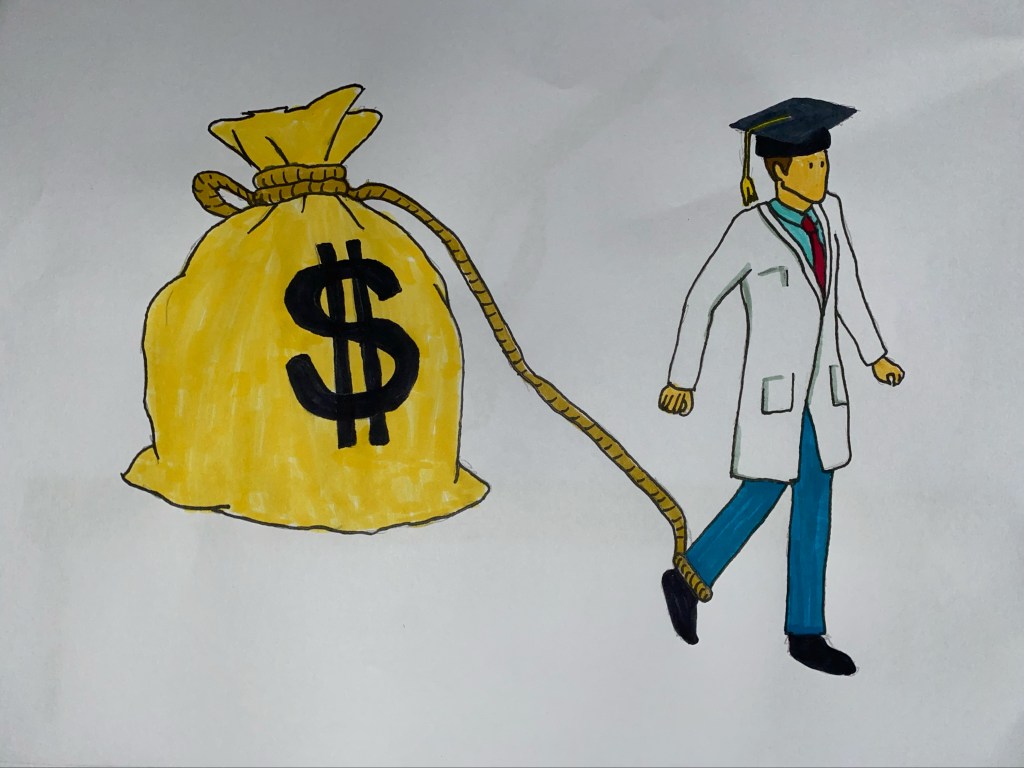
    Let’s Talk About Money – And the Cost of Funding a Medicine Degree

    Katie Webb, Year 3

    **Please note the information in this article mainly relates to studying an undergraduate medicine course (5/6 years) as a first degree. Funding situations vary for graduate entry medicine, graduates enrolled on undergraduate courses and international students. Funding amounts may also vary year to year.**

    If you search ‘applying for medicine’ into google, countless webpages appear, full of information from mastering admission tests to surviving interviews. However, few provide in-depth information regarding funding the degree, with many completely omitting any information about it at all. Consequently, many medical students are (unpleasantly) surprised when they learn about it at university.

    Let’s start with the basics. Most UK students on a recognised degree course are eligible for a tuition fee loan of up to £9250 per year, which covers the cost of tuition fees (UCAS, 2022). Students can also apply for a maintenance loan. For students living away from their parents, and outside London, the first £4524 is non-means tested, with a maximum amount available of £9706 for students, with the exact amount usually dependent upon their ‘family residual income’ (Gov.UK, 2022). 

    Money Saving Expert Martin Lewis has produced a good myth-busting guide to university loans (Lewis & Clare, 2022). The two key takeaways are that there is an unspoken expectation for many parents to chip in and that the loan operates more like a graduate tax. 

    Receiving maintenance and tuition fees as described above is what happens to the vast majority of UK university students, regardless of course. However, as medicine is longer than the typical university course, this only applies to medical students in their first four years of their undergraduate course. In their fifth year, and sixth if they intercalate, they instead become eligible for an NHS bursary. In short, this usually consists of the NHS paying the tuition fees in full, a non-means tested bursary of £1,000 and a means-tested bursary of up to £2643 if living outside London. Students can also get a reduced maintenance loan from Student Finance of £1,975 (or slightly more if living in London) . If the course is longer than 30 weeks, an additional £84 per week can be claimed (NHS , 2022). Therefore, for typical 40 week year the maximum a student outside London can receive is £6,458. This maximum requires a total family residual income of less than £24,279, so many students will receive considerably less.

    If you compare this to the Student Finance maximum maintenance loan of £9706 (Gov.UK, 2022) that students outside of London can access in their first four years it becomes clear that there is a dramatic reduction in funding in the final year or two. How is this gap plugged? Essentially it’s up to the individual to make up the shortfall, but many students are left the immense challenge of balancing placement and revising for finals with increasing their hours at part time jobs, maxing out on credit cards, overdrafts and personal bank loans. 

    In spring 2022, the #LiveableNHSbursary campaign started on twitter. Students highlighted the immense financial strain they were under and urged the government to engage with it. The Doctors Association UK (Welch, 2022) and the BMA (BMA, 2022) both supported this campaign, with national newspapers also giving it some attention (Maddocks, 2022). Students called for medical and dental students to have access to the non means-tested £5000 grant from the NHS Learning Support Fund, which is given to students on most other healthcare courses (NHS, no date). They also called for the full Student Finance loans to be available throughout the five or six years (Hewitt, 2022). 

    In response the University of Nottingham extended a central university bursary to final year medical students (University of Nottingham, no date). Yet for students at most universities, the situation remains much unchanged and the stress of funding studying medicine remains burdensome. With the cost of living crisis worsening, the BMA’s recent student finance survey made for grim reading. While the study has its limitations, the fact that 60% of respondents said they would be cutting back on essentials, and 4% were having to use a food bank (BMA, 2022) is certainly worrying.

    Let’s hope universities, the governmental and the NHS act soon. For if they don’t, medicine risks once again becoming the preserve of the rich.

    References

    BMA. (2022, 04 28). BMA backs campaign for a liveable NHS bursary. Retrieved 08 30, 2022, from https://www.bma.org.uk/bma-media-centre/bma-backs-campaign-for-a-liveable-nhs-bursary

    BMA. (2022, 07 28). Medical student survey. Retrieved 08 30, 2022, from https://www.bma.org.uk/media/6069/bma-student-survey-2022.pdf

    Gov.UK. (2022). Student finance for undergraduates. Retrieved 08 30, 2022, from https://www.gov.uk/student-finance/new-fulltime-students

    Hewitt, L. (2022, 05 04). ‘People would rather take a loan and be able to eat’: Medical Students launch the #LiveableNHSBursary campaign. Retrieved 08 30, 2022, from The Mancunion: https://mancunion.com/2022/05/04/medical-students-launch-the-liveablenhsbursary-campaign/

    Lewis, M., & Clare, C. (2022). Student loans: the truth about uni fees, loans and grants. Retrieved 08 30, 2022, from Money Saving Expert: https://www.moneysavingexpert.com/students/student-loans-tuition-fees-changes/

    Maddocks, E. (2022, 05 07). Final year medical students ‘can’t afford to pay rent’. Retrieved 08 30, 2022, from BBC: https://www.bbc.co.uk/news/uk-england-61302377

    NHS . (2022, 03). NHS Bursary funding for medical and dental students 2022/23. Retrieved 08 30, 2022, from https://www.nhsbsa.nhs.uk/sites/default/files/2022-03/NHS%20Bursary%20Funding%20for%20Medical%20and%20Dental%20Students%202022-23%20%28V3.1%29%20%28Digital%29%2003.2022.pdf

    NHS. (no date). Learning Support Fund. Retrieved 08 30, 2022, from NHS Business Services Authority: https://www.nhsbsa.nhs.uk/nhs-learning-support-fund-lsf

    UCAS. (2022). Undergraduate Tuition Fees and Student Loans. Retrieved 08 30, 2022, from https://www.ucas.com/finance/undergraduate-tuition-fees-and-student-loans#how-much-are-tuition-fees

    University of Nottingham. (no date). Core Bursary Assesment Procedure. Retrieved 08 30, 2022, from https://www.nottingham.ac.uk/studentservices/support/financialsupport/bursariesandscholarships/core-bursary-assessment-procedure.aspx

    Welch, E. (2022, 05 19). Invite your MP to our emergency briefing. Retrieved 08 30, 2022, from https://www.dauk.org/news/2022/05/19/invite-your-mp-to-our-emergency-briefing/

  • Jerusalem by Theatre Group Review

    Jerusalem by Theatre Group Review

    Imogen Jones and Zak Muggleton

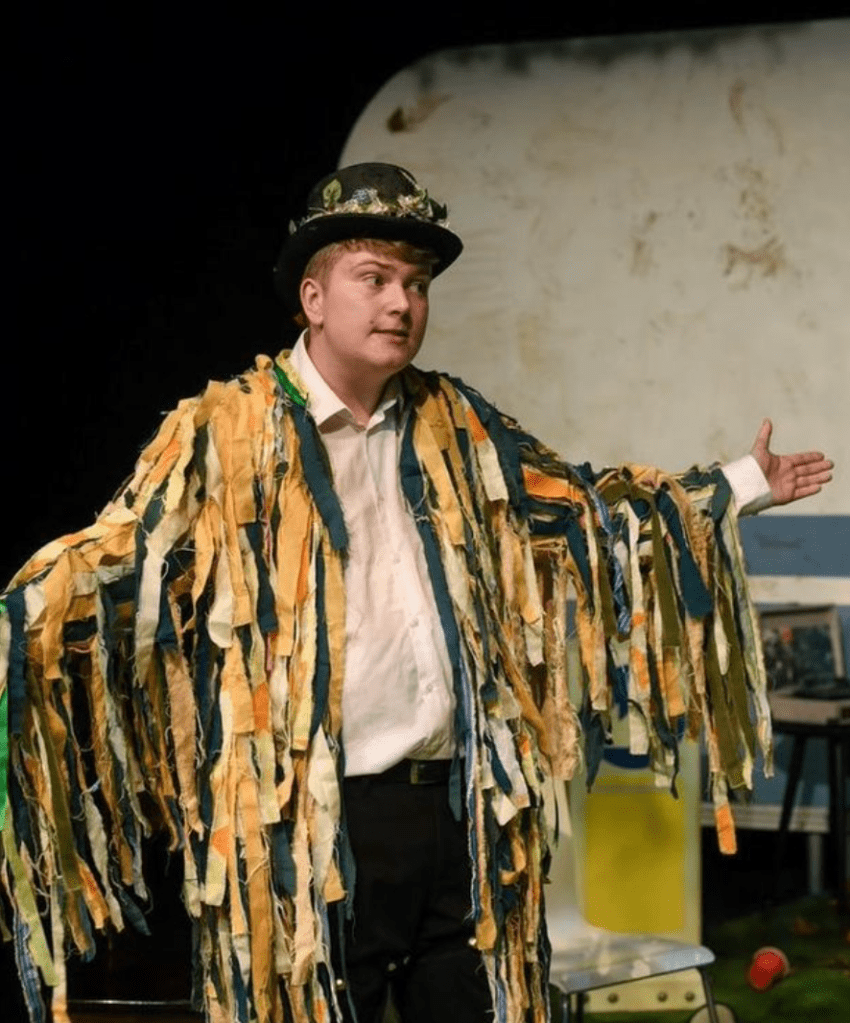
    On 4th November 2022, the ‘Theatre Group Society’ performed ‘Jerusalem’ in the proscenium arch theatre, ‘stage@leeds.’ We walked into a smoke-filled room—not one for the asthmatics we would say—into a dimly lit, minimalistic set. The opening scenery put forth a site that most students would recognise on a Sunday morning, after the night before, representing the chaos of the play to follow. Butterworth’s play transports the audience into ‘Rooster’s Wood,’ in Wiltshire; the play centres around a dingy caravan site, separated from the regular hustle and bustle of Flintock, the local village. Butterworth’s lead character ‘Johnny “Rooster” Byron’ is said to be based, by locals in Wilshire, on a retired builder named Micky Lay, who lived in a caravan in Pewsley. Upon opening in the West End, Mark Rylance (the actor playing Rooster in the original cast) met Lay, basing his character on him. Eventually, Rylance gifted his Tony to Lay before Lay died from a heart attack, waiting for his local pub to open. Tom Grice’s interpretation of Rooster Byron would also, in our opinion, have risked his life waiting for his local pub to open!

    The play begins on St. George’s Day, on the morning of the local village fair, suggested to contain the infamous ‘Donkey Drop’ game (research at your own will), ‘Coconut Shy’ and more. The play centres around Johnny “Rooster” Byron, whose entire character is an analogy for the Pied Piper, luring teenagers away from the village with alcohol and drugs rather than a magical instrument. It is almost glorified for this older man to be looking after them. It is clear that Rooster thinks he is protecting them from the rest of the world. The almost 3-hour long play blurs the line between moral and immoral, and it is at times hard to understand where the playwright’s morals lie, but this is a common feature of naturalistic theatre. The council, throughout the play, want to evict him from his site, whilst he receives threats from Troy Whitworth (played by Rory O’Dwyer) about the disappearance of his daughter (played by Hannah Whiteway) – this storyline seemed to be inconclusive for the most part. On top of this, his son Marky (played by Lauren Robinson) wants to be taken to the fair, but his son is not his priority, as a group of teenagers badger him for their share of his drink and alcohol. 

    For the most part, the play was easy to follow. The first act was light-hearted, extremely comedic and had an underlying tension that the cast did so well to portray. However, In the second act, the pace seemed to drag a little and the storylines became a little harder to follow, especially since there were such a large number of characters. This was not down to the actors or the directing, and the shift in tone from the first to the second act (comedic to serious) was negotiated wonderfully by the talented cast. What is so brilliant about the characters in the play, is the way in which the arcs seem to reflect the naivety of the characters. In the first act, only the adult characters, except for the Professor (played by Ben Greenwood) who reflected the more child-like nature of an elderly person, had any sort of bite. All of the younger characters radiated positive energy, and seemed to have almost no character progression, staying young and naïve until the end. Bridging the gap between adult and child was Ginger (played by Jess Payne) who had the energy of a younger person, but it was made clear that he was quite a lot older than the rest of the teenagers. It seemed as though he was a reflection of a young Johnny Byron, and the frustration that Rooster displays towards Ginger reflected that one cannot stay young and reckless forever, and that Rooster did not want Ginger to make the same mistakes he did. 

    What is there to say about these actors other than singing their praises? Every single member of the cast hit the mark, with no one looking out of place when put up against the rest. This is a testament to their abundance of talent, and the skill of the production team to cast everyone into the roles they knew they would excel. In a 14-person cast, it would have been very easy for some to be overshadowed, but everyone seemed to shine at different moments throughout the play, with not one member seeming out of their depth. Due to the absence of mics, they ran the risk of actors not being able to be heard, but the projection was more than enough to be heard from the back row. 

    The first honourable mention must go to Tom Grice, whose take on Rooster Byron was mesmerising, from his accent to his walk, with not a single detail missed. Not only did he reflect the immaturity of the character at the start of the play, but he also transitioned perfectly into the angrier, sadder version of Byron we see towards the end. This range of emotions is a lot to demand from one actor, and he did a tremendous job. The play began with Phaedra, the lost daughter, singing to the audience before we transitioned into the dance. Hannah Whiteway’s portrayal of Phaedra was wonderful, with her movements entirely convincing the audience of her youth, as she tugged on her dress and tiptoed around the stage. We thought this was an impressive detail, and her singing was beautiful. The village dance in the first act, choreographed to reflect the culture of the countryside village, was a joy to watch and incredibly clean, so well done to the directors. By far, Lee and Davey (played by Angus Bell and Malachy O’Callaghan) were the most successful in getting their jokes to land, but by no means saying the rest of the cast were not funny also. Their accents were on point, and it was a joy every time they had a line. O’Callaghan had us in stitches before he even finished his lines, and there were a few lines that couldn’t be heard over the premature laughter! Furthermore, it must be mentioned that Bell’s reactions to the other characters, whilst they were speaking, were exquisite. Also, to Jess Payne for her betrayal of Ginger, who managed to sustain a high level of energy throughout, being in character 24/7, with her animated reactions matching the character’s exuberance. Other honourable mentions go to Lexi Prosser and Siobhan Ward playing the council workers, who brought refreshing light-hearted comedy to the play and Tamsyn Rodliffe playing Pea, having the best Wilshire accent we have heard outside of Avon itself! 

    Yellow, Matthews and Vaughn directed the play well and there were a few exemplary moments that we noticed, and many more besides! The rhythmic movements at the beginning, in time with the music, seemed so polished and grabbed the audience’s attention from the get-go, so bravo to the choreographer! Another moment we noticed was the final sequence, in which Byron and the play faced their conclusion. Testament to the wonderful actor also, the scene felt well-paced, and it was clever how earlier moments of the play contributed to this scene, for example with the Byron drum. We can only imagine the directors being instrumental in helping him achieve the emotion he needed to perform this segment. Moreover, a random screenshot of the play sees the characters sitting in a chevron, with a moment of stillness whilst they listened to Byron. We just liked the spacing in this moment, and it reflected the methodical instruction the directors must have had, about where the actors should be sitting throughout the play. 

    Although the play reflected no specific time period, Walsh and Burge’s (the producers) costuming remained consistent between the characters. The clothing was mainly blocked colours, with little additions (such as ripped tights) to bring in some individualism. We were also incredibly impressed by Wesley’s (played by Charlie Crozier) outfit throughout—must not have been easy to find! Also, the blood involved looked so real, it could have had us fooled! The set and lights remained mainly static throughout the show, but this was not necessarily a downside, as most of the play was set in one place. However, the tree was incredibly well constructed and really emphasised to the audience that they were in the woods. Also, the strobe lighting during the fight scene made the audience feel incredibly tense. 

    Overall, the play was a joy to watch, and brought Wilshire into the north! Massive congratulations to all the cast and crew, and we cannot wait to see what TGLeeds have in store next. 

    References

    Wikipedia., 2022., Jerusalem (Play)., [Online]., [Accessible at:https://en.wikipedia.org/wiki/Jerusalem_(play) ],. [Accessed on 6/11/22].

  • Crypto Currencies in Medicine? You’ve Got to Bitcoin-Kidding Me

    Crypto Currencies in Medicine? You’ve Got to Bitcoin-Kidding Me

    Brad Elmer, 2nd year Accounting & Finance

    Is crypto currency a form of gambling? Or does it actually have the potential for real world use? Although many people believe it is some sort of Ponzi scheme, there are many convincing use cases for the technology being developed by the companies behind the face of a crypto currency. Some of the new uses for this technology are already identified in parts of Africa as legal tender due to current inflation rates and the devaluation of their local currencies. In the medical sector, crypto currencies are becoming quite attractive due to the way this technology stores and encrypts all its data.

    In 2009, Bitcoin was created by an anonymous developer known as Satoshi Nakamoto (Investopedia, 2022). This currency and its blockchain technology have gone on to inspire a multitude of new ideas and uses all around the world. The idea behind Bitcoin is that it is a purely peer-to-peer electronic monetary system that excludes controlling third parties such as banks (Investopedia, 2022). Bitcoin is built on blockchain technology. Essentially, this comprises blocks of data that are held in a chain, hence its name. It is a shared database that encrypts the data of a transaction, in blocks of 256-bit hexadecimal numbers. Once each block has been filled with information, a new block is created, adding to the chain. Every block on the network is then stored on every node (computer) within the network, meaning that if one block is altered on one node, every other node on the network will cross-reference this and eliminate the altered node from the network. This prevents any tampering as every single block on the millions of nodes would need to be altered to make this adjustment. Once a block is filled, it goes to be validated by miners within the network (Investopedia, 2022). Miners work from millions of nodes that join the system from all around the world, solving complex equations that allow the storage of data onto a block simultaneously (Investopedia, 2022). Miners are rewarded for solving these equations by receiving fractions of a Bitcoin (CoinMarketCap, 2021).

    So, how can this help from a medical perspective? Well, there is already a real-world case of a crypto currency called VeChain being used in a hospital in Cyprus (Carter, 2020). The Mediterranean Hospital of Cyprus, which is the country’s largest private healthcare centre, started using the blockchain technology in 2020 to store all of its COVID-19 vaccination records (Bourgi, 2021). This is advantageous because all of the information stored on the blockchain is completely secure and isn’t exposed to cybercriminals. Due to the blockchain’s peer-to-peer system, it is very efficient in delivery of test results, diagnostics, and the secure exchange of information between parties. In 2016, a report was released that showed a loss of $30 million in the USA because of healthcare data fraud (Carter, 2020). Millions of records are breached every year in the healthcare sector due to insufficient cyber security across the world (Carter, 2020). Even in England, the NHS systems have been shown to be vulnerable to attacks (National Health Executive, 2018). An example of this was the WannaCry cyber-attack in 2017 that caused over 80 hospital trusts to be disrupted and put on hold after a malware shut down all their computers (National Health Executive, 2018). This could have been prevented had there been a more efficiently ran database, where the NHS systems and records were stored in an encrypted environment.  

    So, are there valid uses for these different blockchain technologies, commonly known as crypto currencies in the medical world? And are we going to start seeing these more regularly used by the companies we all know so well? Well, we can’t predict the future, but I think there is potential for this up-and-coming technology to be used more accessibly in the world we live in, and that it will, one day, have a big impact on our daily lives whether it be in the medical industry or as future currencies in different countries. 

    References:

    Investopedia (2022) What Is Bitcoin? How to Mine, Buy, and Use It [Online]. Investopedia. Available from: <https://www.investopedia.com/terms/b/bitcoin.asp&gt; [Accessed 7 November 2022].

    Carter, K. (2020) VeChain Has Introduced Blockchain-Based Healthcare Data Management Platform at Cyprus Hospital [Online]. Habr. Available from: <https://habr.com/en/post/510754/&gt; [Accessed 7 November 2022].

    Bourgi, S. (2021) COVID-19 Vaccination Records Stored on VeChain as Use Cases Grow [Online]. Cointelegraph. Available from: <https://cointelegraph.com/news/covid-19-vaccination-records-stored-on-vechain-as-use-cases-grow&gt; [Accessed 7 November 2022].

    Investopedia (2022) What Is Bitcoin? How to Mine, Buy, and Use It [Online]. Investopedia. Available from: <https://www.investopedia.com/terms/b/bitcoin.asp&gt; [Accessed 7 November 2022].

    National Health Executive (2018) WannaCry Cyber-Attack Cost the NHS £92m after 19,000 Appointments Were Cancelled | National Health Executive [Online]. National Health Executive. Available from: <https://www.nationalhealthexecutive.com/articles/wannacry-cyber-attack-cost-nhs-ps92m-after-19000-appointments-were-cancelled&gt; [Accessed 7 November 2022].

    CoinMarketCap (2021) Mining Rewards [Online]. CoinMarketCap Alexandria. Available from: <https://coinmarketcap.com/alexandria/glossary/mining-rewards&gt; [Accessed 7 November 2022].

  • Calm Down, It’s All in Your Head

    Calm Down, It’s All in Your Head

    Holly Dobbing, Year 3

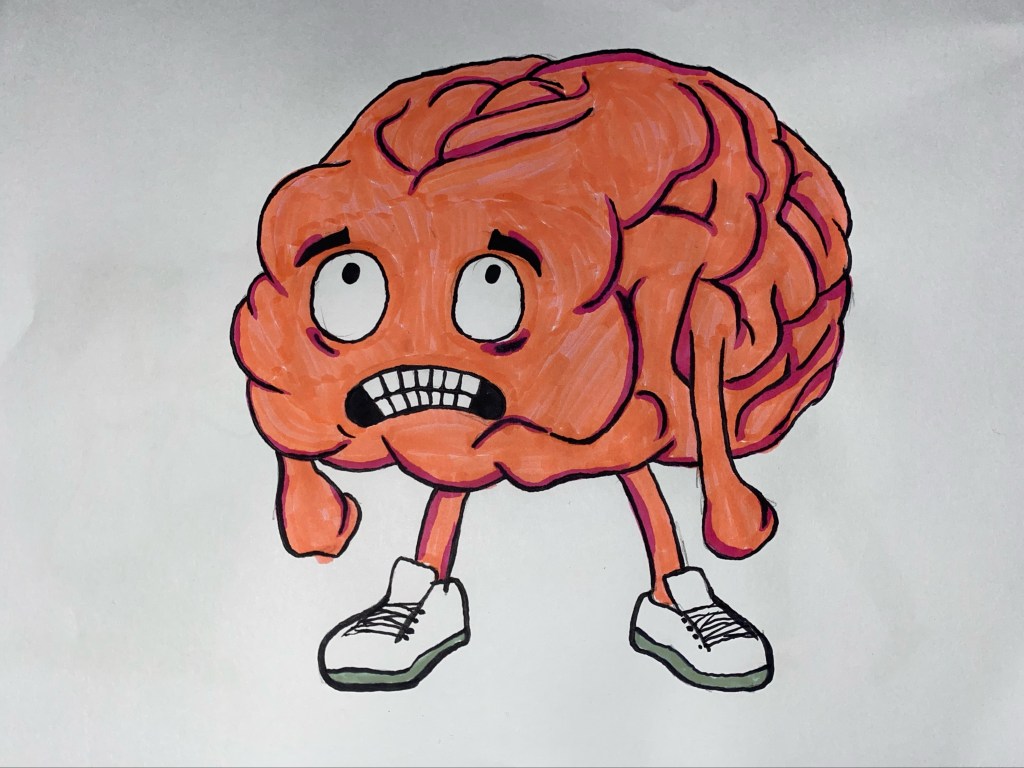
    Anxiety. We’ve all felt it. Or I’m sure we all have, unless you’re a cold-hearted, no-feeling, psychopathic Patrick Bateman. In that case, good for you. I envy you. Anxiety is such an awful feeling: your heart is pounding, your skin is tingling, you’re sweaty and jittery and you just can’t get your breath. It’s all-consuming. It’s not like a broken arm where the pain is confined to one limb because it’s everywhere – your heart, your lungs. Even your brain feels scrambled. It feels overwhelming and inescapable, but it’s just a feeling, right? It’s all in our heads… right?

    In some ways—yes—anxiety is all in your head. But not in the way you think. Anxiety actually changes the biochemistry of your brain (Stoneridge, 2021). When you feel anxious, your body is in ‘fight or flight’ mode – your body is preparing to cope with whatever is making you anxious – so your central nervous system is flooded with adrenaline and cortisol (NIMH, 2022). In a scary situation, these hormones are really helpful. Adrenaline boosts your heart rate, blood pressure and energy supplies (2021), and cortisol is responsible for increasing the supply of glucose to the brain (2021). This ensures the body can deal with the scary situation and subsequently return to its resting, calm state. However, in anxiety, this ‘calm’ state seems infeasible. It’s impossible to grasp, like trying to grab onto a cloud. This means the stress hormones continue to precipitate a cycle of stress hormone release until the brain is swimming in cortisol and adrenaline and you just feel completely overwhelmed (Stoneridge, 2021). 

    Anxiety can also change the proportions of the structures in your brain – your amygdala may grow larger if you regularly experience anxiety (Stoneridge, 2021). The amygdala is the part of the brain that copes with emotion and mood (Swanson and Petrovich, 1998). It sends signals to the hypothalamus when it senses a threat which triggers our fight or flight response and starts the stress hormone cycle I mentioned earlier (Swanson and Petrovich, 1998). When you’re anxious, your amygdala is larger and hypersensitive, making it easier to trigger the high stress state we associate with anxiety (Stoneridge, 2021) – this means people with anxiety may ‘overreact’ to situations or become triggered when others don’t. 

    The connections between the amygdala and prefrontal cortex are also weaker in those with anxiety so when the amygdala reacts to a threat, the logical, rational prefrontal cortex doesn’t respond the way it does in non-anxious brains (Stoneridge, 2021). Normally the prefrontal cortex rationalises threats, but when we’re anxious and the connection is weaker, we lose our problem-solving brain and become more erratic (Stoneridge, 2021).

    Anxiety can also cause your hippocampus to shrink (2021). This makes it more difficult to store and remember memories – especially happy ones (Stoneridge, 2021). In other words, anxiety is making it harder to hold on to your happy memories, so you’re more likely to remember failures, sad moments, and danger. Yet again, anxiety precipitating more anxiety. 

    So yes. Anxiety is all in your head. But that doesn’t make it ‘made up’ or invalid in any way whatsoever. Mental health conditions are health conditions and need to be treated with just as much respect and sincerity as any other health condition. Anxiety is and will always be hard to manage, especially on top of university and our busy student lives. This said I hope understanding more about how anxiety physically affects your brain helps to keep things in proportion when you do inevitably experience those scary feelings. They are scary but they are also real and valid and legitimate, and you are not alone!

    Useful links if you suffer with anxiety:

    References:

    2021. Chronic stress puts your health at risk [Online]. Mayo Clinic. Available: https://www.mayoclinic.org/healthy-lifestyle/stress-management/in-depth/stress/art-20046037#:~:text=Adrenaline%20increases%20your%20heart%20rate,of%20substances%20that%20repair%20tissues. [Accessed 25th October 2022].

    NIMH. 2022. Anxiety Disorders [Online]. Available: https://www.nimh.nih.gov/health/topics/anxiety-disorders [Accessed 25th October 2022].

    STONERIDGE. 2021. How Does Anxiety Affect the Brain [Online]. Available: https://stoneridgecenters.com/how-does-anxiety-affect-the-brain/#:~:text=When%20you%27re%20anxious%2C%20your,brain%20to%20hold%20onto%20memories. [Accessed 25th October 2022].SWANSON, L. W. & PETROVICH, G. D. 1998. What is the amygdala? Trends in Neurosciences, 21, 323-331.