The Worsley Times has weaved in and out of my time at Medical School and has provided a platform for creative release, based on either current life events or things that I’ve found myself drawn to during lectures in medicine and my intercalation.
It seems proper to attempt a final publication with some reflections through my time at Leeds (this is if I pass the MLA).
If there’s one thing Leeds has certainly provided, it’s variety. From Introduction to Medical Sciences (IMS) in Year 1, to Intermediate Life Support in Year 5, the random one-morning-a-week placement, on bus filled with laughter, to the 6am wakeups just to de-ice the car before General Surgery in Calderdale, it’s been quite the ride.
I remember that first day in first year, milling around the APL just prior to the “Welcome to Leeds” lecture, with hope and fear in my eyes (a mixture I’m still familiar with). I felt like I’d finally made it. Having smashed my A-levels as the ‘big fish in the little pond’, I was suddenly surrounded by peers who were county level hockey players, did their work experience in Mexico or had already started pre-reading and creating Anki decks. Although I must say I grew to love most people in the cohort, so don’t take this personally!
Those IMS lectures felt like a rush. Whilst all my non-medic pals were out on a Tuesday, I knew I had a 9am and exams (IMS tests) already, which perhaps I took too seriously.
Medic Freshers and MUMS was the perfect initiation into what “work hard, play hard” meant at medical school. When my Medic Dad had to hand me over black-out to my actual father, I knew I had done it all correctly. Bobby’s on Mondays and Mischief on Wednesdays carried us through that first year and when we had the MedSoc Ball, none of us knew that it would potentially be the final day of freedom before lockdown, although we may have had a slight inkling, there are photos of me in a ball dress at Wetherspoons.
I think I spent the summer quizzing three nights a week over zoom and running for the mere hour allocated per day.
Second year in my ‘big girl house’ with my lovely housemates was clouded by relentless online lectures, those odd Essential Medical Sciences crosswords and social distancing. The phrase ‘household bubble’ sent shivers rippling through Hyde Park and we would eagerly await the gossip on which house had a disciplinary from the Medical School for throwing that weekend’s house party. I think the dorsal column made me cry at least six times and I had to stifle those tears in case the proctoring software reported me for collusion during our finals for the year.
When things opened up again – coinciding with third year, it felt almost metaphorical. Third year represented a slight shift in the pecking order. I now went to placement almost ‘full time’. Non medic peers suddenly had even fewer contact hours and the burden of the dissertation (my time would come the following year) but we were responsible young student doctors, ready to take the world by storm through intricately structured histories (don’t forget allergies) and the most empathetic ‘ICE’ that would bring an OSCE examiner to tears.
The house scrub wash was the most important time of the evening, and we would each bring our stories of placement to discuss over dinner. This is what we had all been looking forward to, this was medicine.
This was medicine. Except for the fact that I missed 65% of the bloods I took, once forgot to twist my stethoscope ‘on’ so I panicked about no air entry and used so much hand sanitiser in my OSCE that my hands have never been the same since.
Halfway graduation gave us the opportunity to celebrate, and it was a chance to have a big pre-intercalation hurrah before we all went our separate ways. I distinctly remember being told one of my best friend’s was in tears because she’d miss me, and I was leaving her. I kindly reminded her that FaceTime existed, and she could visit. But perhaps that’s the definition of “true love” I needed to learn!
Intercalation was a seismic shift. The reduction in contact hours meant that there was a lot of self-motivation needed to work through endless essays, although my Pret subscription really did the heavy lifting here. Eleven months in the capital was a chance for a personal rebrand which led to daily dilemmas on a return to medical school. Intercalation, whilst not currently counting for much training wise, is a chance to be yourself for a while, without the ‘student doctor’ label hanging over your head. It was a chance to participate in some new extra-curriculars, meet new people and give me a bit more clarity over what I may want working life to look like. Refer to a previous article written a couple of years ago for the details.
Personally, fourth year represented the biggest balancing act of medical school so far and should be awarded the prize of being the most influential year.
Physically, I was rejuvenated, having slept for 8 hours a night for a lot of my intercalated degree. Yet emotionally, I wasn’t sure I was built to be back on placement, which was stricter and now included back-to-back Paediatrics and Gynae/Obstetric hell. The content was detailed (but interesting) and brand new for the most part and I spun the plates of intense part-time employment, maintaining a social life and personal relationships whilst also making it to Trib3 three times a week. However, it was completely possible and made me realise that maybe, just maybe, I could do this medic thing.
After the horror of fourth year exams, a reward was most certainly due, which for many comes in the form of the elective. Mine, disappointedly didn’t involve twirling on a beachside in the Philippines, but instead was at a government hospital in Mumbai where I worked with cancer patients and genetic counsellors. Harrowing to say the least, but an incredible opportunity with the peace of running back to a lovely hotel room and get that bit of relaxation in. However, tactically, once back in the UK, I interspersed my primary care elective with weekend trips over Europe, drinking every fine variety of wine I could find.
So, this brings me to now, a mere couple of weeks before finals, I’m (pretty) ready for the job. Granted none of us know where we’re going and what we’re doing but I think I can speak for most of my cohort when I say there is growing excitement for the next chapter that looms.
Medical school is more than just a university course, which is quite the cliche, I’m aware.
However, no one can deny you are constantly juggling professional responsibility (unpaid), trying to get paid with various side jobs, maintaining a social life and inevitably going through some personal upheaval at various points.
The one thing I stand by, is that the people that I have been surrounded with, have been incredible and these years have left us with a little tie that I shall always look back on with fondness.
That is the end of my half thoughtful, extremely cliched but very honest account of my time at Leeds.
Austin Keane, Year 3. Photography courtesy of Abby Swain.
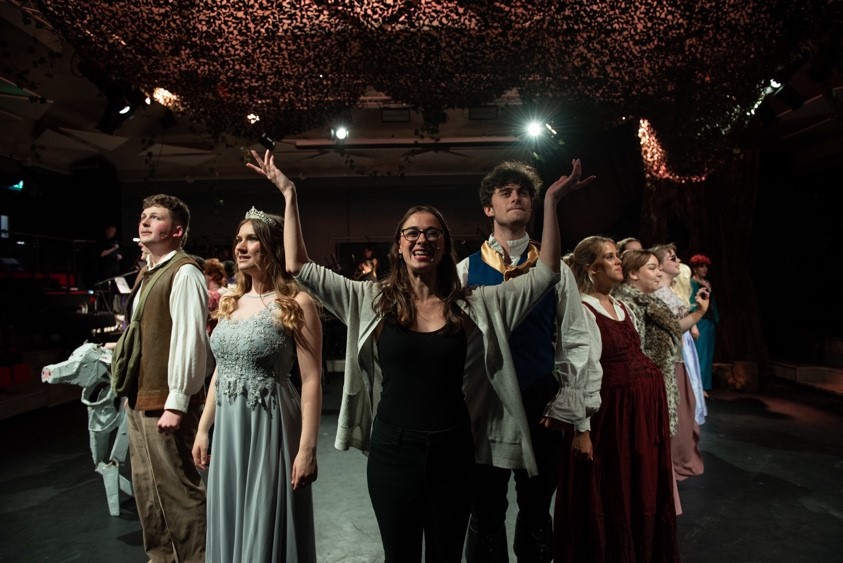
“Nice… is different than good,” Little Red warns us having escaped the Wolf. We all know one—a production that saunters and jaunts and, after only a little biting, falls dead before the first half. A joy to find then, that this production is both: nice and good.
‘Into The Woods,’ a second-semester show from ‘LUU Musical Theatre Society,’ is a great musical (if not only in the giant sense) and is plagued by not one but two giants. Sondheim’s lexical deftness exists as a brilliant, terrible force of its own throughout the show, present most perhaps in the minds of the performers on stage. However, under Evey Jermy and Erin Gazeley’s direction, this giant already stands as formidable.
Buoyed by a live orchestra that brilliantly performs the score, and with musical and creative direction from Jenna Bowman and Lucy Yellow respectively, the polyphonic narrative remains near weightless, turning on the slightest breath. The efforts of producers Ben Nuttall and Jennie Bodger and production manager Kate Matthews are self-evident: on a beautifully crafted set—a single great tree in the far corner; a sweep of leaves across the ceiling—the story plays out with verve and humour. Green light filters the air; birds tweet out; the strings tun-up. Everyone is having fun.
All this, before we even consider the performances.
*
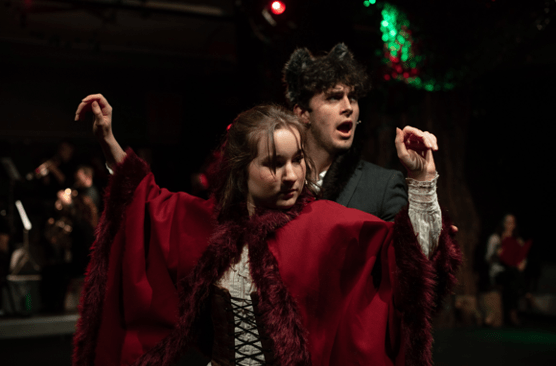
Precocity, as with many of the affects of childhood, is a brittle thing. That said, Whiteaway’s Little Red invites scrutiny in her performance of childhood—much as children themselves do—and does not break. An audience must pay attention to her, and be quite without embarrassment. Set nicely against the wide-eyed Toby Bowen as Jack—his ‘Giants In The Sky’ touching in its gulping picture of naïveté—they both convey innocence before the fall and manage to capture fully the spirits of their characters. Further, in listening to Little Red we understand that she may wear the Wolf—but is she truly ever to become it? Or, as with the furry thing itself, as the blade glittering in her hand reminds us, it might come straight off. Whiteaway is funny here, but darkly, unconsciously—it is the first warning of what is to come.
The Baker and The Baker’s Wife especially surprised me. To my mind, the dullest of the characters—that is until the second half—they have no small task: to make interesting and novel the construction of a nuclear family. However, the sweet seriousness of ‘It Takes Two’ and the undeniable strength of both performances from Harry Toye and Talia Goss meant that there was a clear freshness and illumination in their conflict. The domestic plot between them is convincing and confidently engaging.
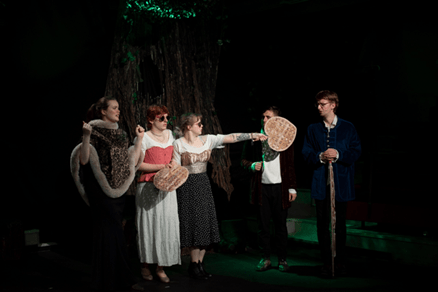
Florinda and Lucinda, played by Cam Griffiths and Bethan Green respectively, work in perfect dyssynchrony to terrorise and amuse. Not a second of time is wasted—screaming and stalking the stage, sweet as rot, both know just how funny their performances are. Held steady by Victoria Norman as the Stepmother, together they have the air of Macbethean witches sans prophetic wisdom. They are dreadful—brilliantly, dreadful.
Ellen Corbett gives a strong performance as Cinderella, navigating (on) the steps of the place with physical and musical deftness. Corbett’s dedication to the performance is especially notable; again, what could otherwise easily be flat, worn thin with the repetition of telling—a girl, a prince, a shoe—hums with energy. Andie Curno gives an energetic performance as the Witch and manages to make the conceit of the play, suspiciously algebraic, more digestible without losing the glitter of the language that communicates it.
Henry Marshall is cast well as the Wolf with his leering manner, both vile and cunning. He makes an appearance again as one of two Princes, the other (belonging to Rapunzel) played by Alex Howe. Thanks to their efforts ‘Agony’ remains as funny as ever; the syncopated movements of Howe and Marshall are perfectly clumsy and inventive. They propel much of the comedy for the first act: one must take himself too seriously; the other is barely able to suspend disbelief at this as a possibility. Between them is conjured a charm that glitters as much as it gutters.
However, It is more difficult to appreciate the emotional relevance they bring to scenes (or are intended to) as the show progresses, through no fault of their own. This is an emotional incongruence that proves more distracting in the second half. You can spy the force of the tale—that immutable construct of the plot—push the Princes, the Baker, and the Witch, faces still ruddy with laughter, confusion, and dread, into quieter contexts, demanding more restraint. However, with a running time that already grazes three hours the need for brevity in between songs is understandable and the effect minor—after all, the show should accelerate, and not much is left behind.
In ‘No One Is Alone’ the emotional element works much better again. Confusion is given a more appropriate space to occupy—here, at least, can exist tenderness. Similarly, Curno’s Witch also benefits from the second act’s emotional intensity. The anger of their performance works much better when worn with pain, and not just the latent memory of it.
Special attention should be brought to two particular performers. The first is the Narrator, played by Jenna Bowman, who thrills with a cool charm. Then quickly, even the sudden spoiling of this ease is made delightful: there is an impressive chill in the room as they attempt to sacrifice the Narrator. The metaphysics of the thing remains light and engaging, surprising even, but not overwrought. The other is Talia Goss, who in ‘Moments In The Woods’ exhibits a display of vocal control and emotion that makes what is challenging appear easy or obvious. This performance confirms Goss as the core of the show’s successful and elegant rendering.
Sweeping performances aside, there remain many small scenes that can stand in isolation. Milky White, beautifully constructed and convincingly skeletal, was brought to life by Amelia Perry. In death, Perry lets the puppet drop and watches it for a moment, deadpan, before relaxing and leaving the stage. Sublime. Then we have Cinderella’s birds, painfully funny and wonderfully conceived; Jack’s mother, played by Emma Wilcox, bridling his youth with stern, slight motions; Ellery Turgoose’s struggle as Granny, and the charming rendering of her escape.
Other gems: Lucy Davey’s warbling as Rapunzel is as beautiful and ridiculous as it should be; the Mysterious Man’s intrusions, courtesy of Matteo Ferrari, stand both jarring and hilarious; Harry Daisley’s Harp, as his head is thrown back in paroxysmal delight at his own fabulousness. All of this is further supported by a variety of detailed costumes, each carefully drawn up by Eva Lafontan. And the Round is used well too: the great rope of Rapunzel’s hair; a bare glimpse of the Wolf stalking the aisle.
Another thing I noticed was the volume of cast members and their movement on stage. The physical force of eighteen voices in unison was employed well and with restraint. Considering this, the use of a Chevron (more than once!) is inevitable—and forgivable. The overall effect was powerful enough to make me consider that if the audience was allowed to break into song—they would!
*
Ultimately, the characters are instructed into reflection: to stop wishing and wanting alone, and to question whether their story is important. All change is attended with the thrill of suffering—and they have suffered terribly, all. It’s a big ask of the audience, but in the end, we’re glad that we’re uncomfortable, that we don’t exactly like them; that we might pity the giants, tall and terrible though they are. Here then is proof, that in capable hands giants can stay great, as well as troubling, can be not just big and terrible but
Understanding the complex relationship between Multiple Sclerosis and Epstein Barr Virus
Rishabh Suvarna, Year 1
The nervous system is one of the most complex systems in the human body, but in order to function as efficiently as it does, it relies on a tightly bound network of connective tissue called the neuroglia, comprising at least 50% of the brain tissue (Verkhratsky et al., 2019). One of these neuroglial cells are the microglia, acting as the brain’s own innate immune defence cells, attacking pathogens that have managed to infiltrate the blood brain barrier (Purves et al., 2001). However, when these neuroglial cells are compromised, this can lead to a plethora of problems. One of them is Multiple Sclerosis, promoting neuroinflammation, oligodendrocyte apoptosis (i.e. programmed cell death of other neuroglia) and demyelination. This occurs as they present antigens through MHC (Major Histocompatibility Complex) I/II, to Th1 and Th17 lymphocytes circulating the brain, all of which have been extensively investigated in fibrous lesions caused by Multiple Sclerosis (Luo et al., 2017).
Multiple Sclerosis (MS) is a neurodegenerative disease affecting the central nervous system, involving an autoimmune attack mediated by phagocytic microglial cells on the axons of nerves, permanently scarring the myelin sheath of numerous neurons. It is the leading cause of non-traumatic disability in young adults, with symptoms first presenting at ages 20-40. This leads to progressive neuronal dysfunction, causing neurological deficits in the autonomic and sensorimotor divisions of the nervous system and thus leading to problems with sight, muscle-coordination, balance, speech and cognitive function (Ghasemi et al., 2017). This is summarised by Figure I.
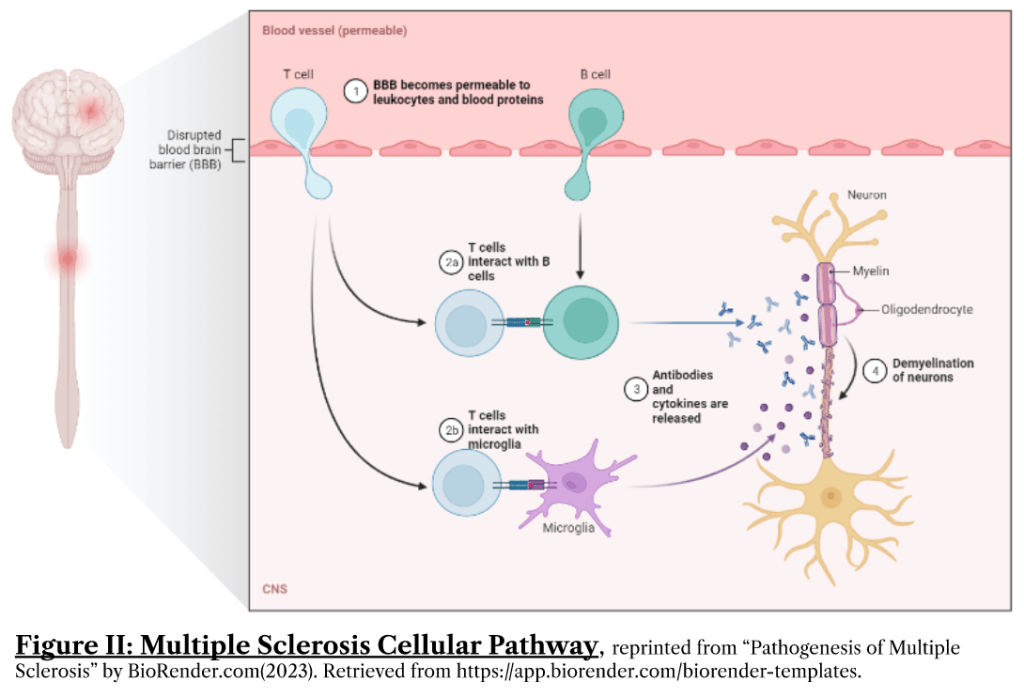
The release of chemical messengers such as cytokines (e.g. Interleukin-1, Interleukin-6, TNF-α), nitrous oxide and other reactive oxidative species (ROS) results in oligodendrocyte death, and astrogliosis (hyper-proliferation of astrocytes in an effort to isolate axonal damage) that halts remyelination and results in irreversible glial scars commonly seen in MS patients (Correale and Farez, 2015). Consequently, permanent demyelination occurs as axons lose their fatty myelin sheath that provides electrical insulation from the external environment and thus means electrical signals travel much more slowly, seen in Figure II.
MS is known to affect females more than males, common in most autoimmune conditions (Harbo et al., 2013). Apart from this, it is also known that low vitamin D levels, trauma, smoking, obesity, early adulthood and mononucleosis (otherwise known as “glandular fever”, caused by Epstein Barr Virus) are strongly associated with development of MS (Reich et al., 2018).
Despite this, scientists have not been able to pinpoint specific environmental/genetic causes. This was the case until very recently, where epidemiological analysis may have just lead to another breakthrough in the field of clinical neuroscience, being the causative link between Epstein Barr Virus (EBV) infection and MS development that was established by Dr Kjetil Bjornevik and his colleagues at the department of Public Health in Harvard University.
Before proceeding, we first need to understand what was already known about the pathophysiology of EBV infections. EBV infection is acquired before ages 5-8 in LEDCs but is delayed till adolescence/adulthood in MEDCs. Primary infection before 5 years is mostly asymptomatic, with only those acquiring it in adolescence developing infectious mononucleosis. EBV triggers mononucleosis or glandular fever by infiltrating lymphocytes, resulting in an atypical, hyper-production of CD8+ T lymphocytes and Natural Killer (NK) cells, causing them to appear more like monocytes instead of typical lymphocytes (hence the name).
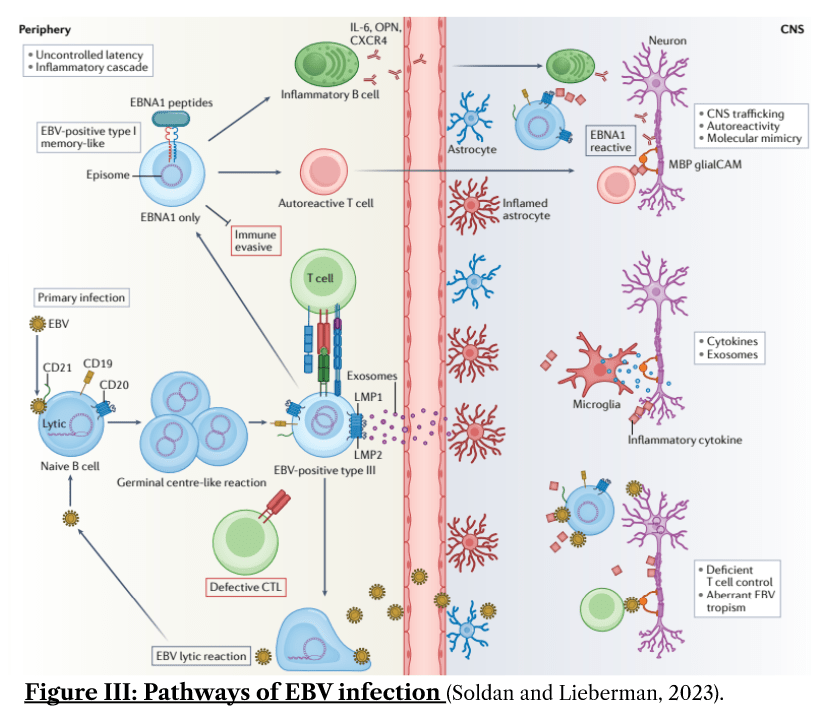
The molecular pathway of mononucleosis is as follows: EBV particles enter squamous epithelial cells lining the airway, reproducing within them using the cell’s internal machinery and then crossing the mucosal epithelial barrier via transcytosis to infect local infiltrating B lymphocytes through gp350 and CD21 proteins found on its surface. Following this, they are shown to reprogramme germinal centres, occurring through a multitude of mechanisms, some of which include: inhibition of MHC Class II synthesis and interleukin-2 (IL-2), Interferon Gamma (IFN-γ) which are needed for CD4+ Helper T activation. It also upregulates TNF, lymphotoxin-α, PDL1 thereby disrupting both innate and adaptive immune responses oncogenically. These pathways are summarised by Figure III (Soldan and Lieberman, 2023).
The net effect of this is that it impairs the maturation process of B lymphocytes, allowing for numerous B lymphocytes to be produced and thus functioning as reservoirs for EBV copies, with the capability to reactivate in the oropharynx (Thompson and Kurzrock, 2004) and occasionally in the meninges of the brain (Hassani et al., 2018), leading to neurodegenerative disease.
Structural studies have also suggested MS development to occur via molecular mimicry, whereby components of the neuron possess structurally similar epitopes (parts of the antigen that bind to antibodies) to that produced as a response to infection, leading to autoimmune responses in the brain. Lang’s work highlighted the structural similarities that are present between EBV peptides and Myelin Basic Protein (Lang et al., 2002), an intrinsically disordered protein that constitutes approximately 30% of total CNS myelin and is a common CSF marker used in supporting neurodegenerative diagnoses including MS (Martinsen and Kursula, 2022). Crystallography revealed that the conformation of MHC parts in the TCR-α region was highly conserved, with the same TCR-peptide contacts. This is believed to exist because this helps to increase the number of epitopes that are available for antigen presentation to a single cross-reactive TCR, improving infection control by allowing for polyclonal antibodies. However, when a specific loci of the MHC class II receptor is expressed (HLA-DR2), this can lead to MS susceptibility and relapses, notably when coinciding with infections of the upper airway (Sibley et al., 1985). Thus, this can possibly lead to activation of autoreactive CD8+ Cytotoxic T lymphocytes, proven via past molecular mimicry studies on mouse models that examine CD8+ dependent autoimmune diseases affecting the heart and eyes (Chandran and Hutt-Fletcher, 2007).
Inspite of the above and the fact that EBV infects 90% of adults worldwide (Wong et al., 2022), only a small proportion of the infected population later develop MS as most EBV infections are not disease-causing, so understanding cofactors and aberrations in the normal infection process is vital to treatment/prevention of MS. In addition, the virus is not always found in MS lesions (Peferoen et al., 2010), so identification of MS genotypes and cofactors associated with EBV is all the more challenging.
However, this might have all been changed by the Harvard neuroscientists. Published in Science in January 2022, the longitudinal study featured seroepidemiological data from active, racially-diverse US military recruits across the past 2 decades with 955 recruits developing MS (Bjornevik et al., 2022). This was identified by making use of the blood samples that were routinely collected by the US Department of Defense Serum Repository (DoDSR) for HIV testing. Using these samples, they were then tested for the presence of antibodies for EBV peptides, as a marker of EBV infection and these were then matched on every characteristic (age, sex, race, ethnicity, branch of military service and collection of blood sample dates) against 2 randomly selected participants without MS, ensuring that everyone was still alive and actively carrying out military service during diagnosis to avoid confounding factors. The risk of MS was found to increase 32 fold if infected by EBV only and not viruses with similar mechanisms of infiltration such as Cytomegalovirus, with MS symptoms appearing after a median time of 7.5 years between the last seronegative sample and first seropositive sample.
This discovery was made by illustrating that EBV seroconversion (i.e. the process of producing specific antibodies against EBV) increased serum levels of neurofilament light chain (NFL), a neuron-specific cytoskeletal protein often used as a sensitive diagnostic marker for MS (Ning and Wang, 2022). It is a structural scaffolding protein that is needed to promote radial growth, stability and maintain the diameter of the axon during the transmission of action potentials. During axonal damage, excessive neurofilaments flood the cerebrospinal fluid and serum, with more severe levels of MS progression associated with higher serum NFL levels according to Expanded Disability Status Scales (Thebault et al., 2020). The study found that NFL levels increased significantly 6 years prior to onset of MS and post-EBV infection, implying that it might be an accurate biomarker of the time of initiation of MS, which has always been difficult to pinpoint clinically.
Using VirScan for virome-wide screening, the scientists were able to identify a significantly higher anti-EBV antibody response in MS cases, with negligible changes in antibody response to the other 110,000 common viral peptides when comparing between healthy/MS patients, showing that MS development was not merely due to opportunistic viral infections.
In addition, 97% seroconversion was observed in people that developed MS, showing that a substantial amount of people that acquired MS later were EBV positive earlier and this relation seems to be unique. This is because MS risk was surprisingly lower with Cytomegalovirus (CMV) positive than CMV negative patients, which suggests that the immune response to CMV ameliorates the adverse effects of EBV.
All these staggering statistics illustrate that EBV infection precedes MS development, providing strong evidence that it is a likely cause of MS whilst also highlighting techniques that could be standardised for the diagnosis of MS such as serum NFL testing. It also suggests that directly targeting EBV through EBV-specific T-cell therapy may thus be more fruitful than anti-CD20 monoclonal antibodies that are usually prescribed as effective treatment for MS, as it averts the risks of intravenous admission and risks of greater/more severe opportunistic infections with depleted memory B cells as drawbacks of anti-CD20 therapies.
Thus, this highlights the need for rigorous epidemiological and biochemical studies as presented here. By understanding the principal factors of the inflammation leading to irreversible MS, we are better able to identify key therapeutic targets for MS patients and enhance their quality of life through more successful treatment plans.
References
Bjornevik, K., Cortese, M., Healy, B.C., Kuhle, J., Mina, M.J., Leng, Y., Elledge, S.J., Niebuhr, D.W., Scher, A.I., Munger, K.L. and Ascherio, A. 2022. Longitudinal analysis reveals high prevalence of Epstein-Barr virus associated with multiple sclerosis. Science. 375(6578), pp.296–301.
Chandran, B. and Hutt-Fletcher, L. 2007. Gammaherpesviruses entry and early events during infection In: A. Arvin, G. Campadelli-Fiume, E. Mocarski, P. S. Moore, B. Roizman, R. Whitley and K. Yamanishi, eds. Human Herpesviruses: Biology, Therapy, and Immunoprophylaxis [Online]. Cambridge: Cambridge University Press. [Accessed 1 April 2023]. Available from: http://www.ncbi.nlm.nih.gov/books/NBK47405/.
Correale, J. and Farez, M.F. 2015. The Role of Astrocytes in Multiple Sclerosis Progression. Frontiers in Neurology. 6, p.180.
Ghasemi, N., Razavi, S. and Nikzad, E. 2017. Multiple Sclerosis: Pathogenesis, Symptoms, Diagnoses and Cell-Based Therapy. Cell Journal (Yakhteh). 19(1), pp.1–10.
Harbo, H.F., Gold, R. and Tintoré, M. 2013. Sex and gender issues in multiple sclerosis. Therapeutic Advances in Neurological Disorders. 6(4), pp.237–248.
Hassani, A., Corboy, J.R., Al-Salam, S. and Khan, G. 2018. Epstein-Barr virus is present in the brain of most cases of multiple sclerosis and may engage more than just B cells. PloS One. 13(2), p.e0192109.
Lang, H.L.E., Jacobsen, H., Ikemizu, S., Andersson, C., Harlos, K., Madsen, L., Hjorth, P., Sondergaard, L., Svejgaard, A., Wucherpfennig, K., Stuart, D.I., Bell, J.I., Jones, E.Y. and Fugger, L. 2002. A functional and structural basis for TCR cross-reactivity in multiple sclerosis. Nature Immunology. 3(10), pp.940–943.
Luo, C., Jian, C., Liao, Y., Huang, Q., Wu, Yuejuan, Liu, X., Zou, D. and Wu, Yuan 2017. The role of microglia in multiple sclerosis. Neuropsychiatric Disease and Treatment. 13, pp.1661–1667.
Martinsen, V. and Kursula, P. 2022. Multiple sclerosis and myelin basic protein: insights into protein disorder and disease. Amino Acids. 54(1), pp.99–109.
Ning, L. and Wang, B. 2022. Neurofilament light chain in blood as a diagnostic and predictive biomarker for multiple sclerosis: A systematic review and meta-analysis. PLOS ONE. 17(9), p.e0274565.
Peferoen, L.A.N., Lamers, F., Lodder, L.N.R., Gerritsen, W.H., Huitinga, I., Melief, J., Giovannoni, G., Meier, U., Hintzen, R.Q., Verjans, G.M.G.M., Van Nierop, G.P., Vos, W., Peferoen-Baert, R.M.B., Middeldorp, J.M., Van Der Valk, P. and Amor, S. 2010. Epstein Barr virus is not a characteristic feature in the central nervous system in established multiple sclerosis. Brain. 133(5), pp.e137–e137.
Purves, D., Augustine, G.J., Fitzpatrick, D., Katz, L.C., LaMantia, A.-S., McNamara, J.O. and Williams, S.M. 2001. Neuroglial Cells. Neuroscience. 2nd edition.
Reich, D.S., Lucchinetti, C.F. and Calabresi, P.A. 2018. Multiple Sclerosis. The New England journal of medicine. 378(2), pp.169–180.
Sibley, W., Bamford, C. and Clark, K. 1985. CLINICAL VIRAL INFECTIONS AND MULTIPLE SCLEROSIS. The Lancet. 325(8441), pp.1313–1315.
Soldan, S.S. and Lieberman, P.M. 2023. Epstein–Barr virus and multiple sclerosis. Nature Reviews Microbiology. 21(1), pp.51–64.
Thebault, S., Abdoli, M., Fereshtehnejad, S.-M., Tessier, D., Tabard-Cossa, V. and Freedman, M.S. 2020. Serum neurofilament light chain predicts long term clinical outcomes in multiple sclerosis. Scientific Reports. 10(1), p.10381.
Thompson, M.P. and Kurzrock, R. 2004. Epstein-Barr virus and cancer. Clinical Cancer Research: An Official Journal of the American Association for Cancer Research. 10(3), pp.803–821.
Verkhratsky, A., Ho, M.S., Zorec, R. and Parpura, V. 2019. The Concept of Neuroglia. Advances in experimental medicine and biology. 1175, pp.1–13.Wong, Y., Meehan, M.T., Burrows, S.R., Doolan, D.L. and Miles, J.J. 2022. Estimating the global burden of Epstein–Barr virus-related cancers. Journal of Cancer Research and Clinical Oncology. 148(1), pp.31–46.
Both the playwriting and directorial debut of Zak Muggleton-Gellas, Open Theatre’s ‘A Hedgehog’s Dilemma’ explores the convoluted cast dynamics during the run-up to a university’s student musical production. Opening with a monologue referencing philosopher Arthur Schopenhauer’s eponymous ‘hedgehog’s dilemma’ about human intimacy, the play quickly picks up and sees characters Jemima, John and Oliver deliberate on who they should cast in the musical that they are directing and producing. The play then waltzes between scenes of play rehearsal and characters’ gossiping about one another (“she’s not even from London!”). While specifically relating to the world of musical theatre, Muggleton-Gellas has managed to effectively capture the very universal nature of the often-catty behaviour of the 20-something students to which any audience member can relate, without relying on over-determined characterisations. This play is just as much about the universality of modern human behaviour as it is about the competitive nature of musical theatre.
One of the highlights of the play is undoubtedly the “park bench” improvisation scene, whereby scenarios previously submitted by the audience (via QR code) are acted out until—both cast member and character simultaneously looking nervous—director John calls enough. This touch makes the production feel fittingly interactive, especially in view of the way that the space is utilised. Taking place in the Leeds University Union’s Pyramid Stage, it is abundantly clear that this play was intended from its conception to be performed in the round. The limited props and straightforward costuming also only add to the authentic feel of the piece.
The play also finds strength in its messy but organic representation of queerness. One director, John is gay and the other, Oliver, is bisexual. The biphobia that the latter experiences from his own girlfriend is indicative of the age-old stereotypes that are constantly levelled against bisexual-identifying people. Character Archie (Austin Keane) also has a crush on the director and straight-presenting Elizabeth (Eleanor Haslam) has a one-night stand with character Max (Jenna Bowman) , who then turns out to be quite misogynistic (“liking girls is not the same thing as being a feminist”, Oliver points out to giggles from the audience). These nuances aid the play in exemplifying the obvious: that queerness can be funny without being the butt of the joke.
Whether or not you are a fan of musical theatre, this play has something for everyone: characters absent-mindedly singing High School Musical, drunk dancing, a zoom therapy session, misattributing quotes to Barbra Streisand, and even a reference to last year’s season of Love Island (guaranteed to resonate with almost any young audience). Any awkward pauses or stumbled lines only add to the organic nature of the play’s drama. The casting is especially strong, with standout performances from Will Grimes, who plays director John, and Ruby Dean, who plays producer Jemima. At times it does feel hard to synthesise Schopenhauer’s theory with the rest of the narrative—at most it is a cute but slightly unnecessary framing device. Ultimately, however, this play is strongest at its level of conception: Muggleton’s original take on the mise an abyme is not just enjoyable but gives the audience considerable insight into the world of the theatre. Unsure if you should see it? Think “yes, and…”.
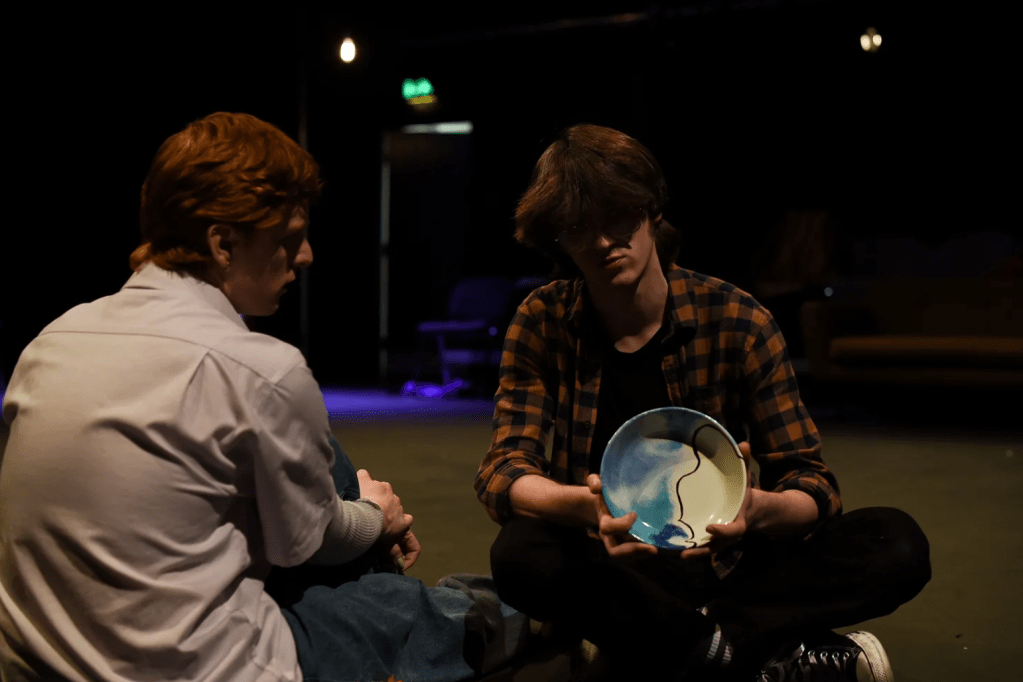
Wow. Just wow. I was invited to watch ‘Swallowing the Whale’ and I jumped at the chance; every play I’ve seen performed by Open Theatre has been incredible. And this play didn’t disappoint: a spectacular exploration of sexuality, raw emotion, and adolescent strife.
Andie Curno was the genius behind ‘Swallowing the Whale’, as both the writer and director. Their writing was poetic, dreamy and filled with passion. They told the story of Marlowe, April and Levi’s adolescent trials and tribulations. Curno’s writing was filled with metaphors and you’d be forgiven for thinking parts of the script were stolen from a Romantic poet (yes, the description is that good). The whole production team was outstanding with Ginny Davis as assistant director, Ellery Turgoose as producer, Amy Cregor as assistant producer, Grace Marsh as shadow director and Shannah Wu as shadow producer. Everything from the props to the stage-style, to the characterisation was perfected and the work done to execute this masterpiece was evident.
Marlowe, our protagonist, is a two-person role played by the wonderful Hannah Whiteway and the brilliant Cam Griffiths. They alternate between speaking, and acting the role of Marlowe, beautifully illustrating the dichotomy between one’s internal and external persona. Lucy Yellow played April, Marlowe’s best friend, and Billy West played Levi – April’s love interest.
The casting was perfect, and I very quickly connected with Marlowe, despite being played by two actors. Griffiths’ and Whiteway’s acting styles complimented each other’s well and the use of similar costumes made them easy to identify. Marlowe’s gender and their relationship with April is unclear, which only helps to illustrate their strife in understanding themselves and those around them. As a queer person myself I thought the LGBTQ+ representation was refreshing and well-executed. Many playwrights fall into the trap of crafting the token queer character entirely around their queerness, but Curno’s portrayal of Marlowe was beautifully three-dimensional.
West’s portrayal of Levi was excellent; whilst I wanted to hate Levi, for tearing April away from Marlowe, his characterisation was endearing and I just couldn’t. Whilst the acting was of a high calibre and flawless throughout, I’d argue Yellow was the true star of the show. April was such a fun carefree character, despite her traumatic history, who I loved in the first act but began to hate as she met Levi and tore Marlowe’s life down before him. Her acting was so entrancing and I felt myself both fall in love with April, but equally despise her, much in the way Marlowe finds themselves conflicted.
The use of props was great, with many symbols: the lollipop, the wine bottle, the cigarette end; the paper mache whale strung from the ceiling. Each of the props were so well thought out and represented each shared memory that April and Marlowe held. At one point, the lollypops are strewn angrily across the stage and the image of disarray and Marlowe’s feeling of being torn apart was so perfectly portrayed. There was also a scene where a river made of silky blue material is trailed across the stage, and Curno’s descriptive imagery alongside the blue material perfectly conjured up Marlowe’s memories in such a magical way. Rather cleverly, small cupboards were dotted at the corners of the stage which both established the homely setting of the play but also served to store props, creating seamless transitions.
If I wanted to pick holes, sometimes some of the sight lines were compromised due to the in-the-round style stage, but it didn’t impair our understanding and because we were sat on bean bags on the floor (note to self: invest in a beanbag) it was easy to shuffle or lean to see better.
Overall, the show was impeccable and I would pay to watch this in the West End, where all the talent here could be spotlighted
Patients with ‘long’ COVID-19 end up with a variation of symptoms, involving a large array of systems. This includes respiratory system (cough, breathlessness), cardiovascular system (chest pain, palpitations), MSK system (joint and muscle pain), ENT symptoms (permanent loss of smell/taste, tinnitus, earache), gastrointestinal system (abdominal pain, nausea), neurological system (brain fog, delirium, visual disturbance) and psychological symptoms (anxiety, PTSD, depression). This is not an extensive list (NHSInform, 2023).
Approximately 15% of all adults who caught COVID reported experiencing long COVID symptoms for some period of time, with the most being women aged 45-54 reporting long covid symptoms (Walker et al, 2021). According to some recent studies, an antibody attacking the mediator of the renin-angiotensin-aldosterone system (RAAS) may be the culprit for these symptoms.
The RAAS system is initiated, as low blood pressure is detected by the kidneys, so renin is released. Renin converts angiotensinogen into angiotensin I. Then angiotensin I travels to the lungs or the kidneys, where angiotensin converting enzyme (ACE), converts angiotensin I into angiotensin II. Angiotensin II then stimulates the adrenal cortex to release aldosterone, as well as the pituitary gland being stimulated to release antidiuretic hormone (ADH). This, in combination, leads to increased salt retention that raises blood pressure. It also leads to vasoconstriction (blood vessels becoming smaller to increase blood pressure), hypertension and cardiac hypertrophy (increase in cardiac muscle due to strain of pumping blood around the body).
In opposition, in a non-affected individual, angiotensin-converting enzyme 2 (ACE2) converts angiotensin I (AT1) into angiotensin 1-9 (AT1-9) (further converted into angiotensin 1-7 (AT1-7) by ACE) and ACE2 converts angiotensin II (AT2) into AT1-7. This AT1-7 leads to vasodilation (expansion of the vessels to decrease blood pressure) and hypotension. This system allows the RAAS system to not overwork the body, and lead to systemic effects.
In COVID, an antibody begins to attack ACE2. ACE2 is an enzyme that can be found either on the membrane of cells (membraneACE2 (mACE2)) or soluble in the body (solubleACE2 (sACE2)). These mACE2 cells are the main passageway of entry for COVID molecules into the cell, and they can be found on the intestines, kidneys, testis, gallbladder or in the heart. As these COVID molecules attach to these ACE2 molecules, the body can no longer vasodilate as effectively, and the RAAS system is allowed to work on overdrive. Therefore the immune system is not activated, and vasodilation does not occur, so damaged tissues do not get adequate blood flow, and there is a less effective delivery of oxygen and nutrients. (DAIC, 2021). Further precipitating the problem is the kallikrein-kinin system which regulates sodium channels using bradykinin, lowering blood pressure and producing reactive oxygen species. COVID has been shown to increase bradykinin levels, leading to further vasoconstriction (Beyerstedt S, 2021).
Although there are no studies confirming this link, does this lack of vasoconstriction lead to the development of long COVID? What is certain is that the suppression of ACE2 leads to harmful hypertension in these COVID patients. There is also evidence that oestrogen regulates the expression of ACE2 in the body, so potentially patients who have decreased oestrogen, for reasons such as menopause, become exponentially more at risk of long COVID due to the lack of ACE2 (American Physiological Society, 2020). This could explain why middle-aged women are seemingly most likely to be affected by long COVID.
References
Beyerstedt, S et al. (2021). “COVID-19: angiotensin-converting enzyme 2 (ACE2) expression and tissue susceptibility to SARS-CoV-2 infection.” Eur J Clin Microbiol Infect Dis 40(5).
CoV-2 receptor ACE2 in differentiated airway epithelial cells.” Lung Cellular and Molecular
Walker, A et al. (2021). “Clinical coding of long COVID in English primary care: a federated analysis of 58 million patient records in situ using OpenSAFELY.” British Journal Of General Practice 71(712).
On the 9th, 10th and 11th of March, LUU Musical Theatre society, in collaboration with Backstage society, performed the highly-anticipated Sondheim musical, Company. From start to finish, this production was bursting with talent, and definitely ‘could drive a person crazy’ out of sheer amazement.
Company follows main character Bobby (played by Ajay Sahota) as he struggles to face his life of being a bachelor on his 35th birthday, surrounded by all of his married friends. The story follows his escapades with various girlfriends, as well as him visiting each of the married couples individually. He has not met his ‘perfect’ match, and tugs with his necessity to settle down. This is all whilst the audience are forced to critique each of these married couple’s difficulties, as their issues seep through the cracks of the perfect image they try to present to Bobby.
First and foremost, I’d like to say that the cast are some of the most talented performers ever to grace the Riley Smith theatre stage. Their acting, singing and dancing was nothing short of professional level, and the cast and production team should be infinitely applauded for this spectacular show. Ajay Sahota’s (playing Bobby) mesmerising tone, and expert comedic timing allowed for a cohesive and captivating show. His betrayal of Bobby was as realistic as feasibly possible, touching on every emotion needed to conquer such a physically and emotionally demanding role. Not only this, but his performance of ‘Being Alive’ became instantly iconic, accompanied by his incredible voice. Erwan Fayolle and Phoebe Coldron (playing Joanne and Larry) managed to portray an incredibly realistic chemistry between two characters in a marriage full of friction, but also deep affection and care for one another, and that is absolutely down to their expert acting abilities. In particular, Coldron’s vocal prowess swept the audience off their feet, especially as she nailed the iconic ending to ‘the Ladies Who Lunch,’ sustaining high notes on pitch, and with incredible technique. Freya MacTavish and Matteo Ferrari (playing Amy and Paul) as well as Sophie Tolson (playing Choir Girl) took on the infamous musical theatre classic, ‘Not Getting Married Today.’ All three of them sang with perfect diction and pitch, making the number an absolute showstopper, and spectacle to watch on stage. MacTavish also managed to portray the delusional bride with ease, as her acting excelled all expectations, as well as hitting every single word on the incredible verses. Harry Toye and Caitlin Etheridge (playing Sarah and Harry) began the show and set the bar high right from the start, as the two of them demonstrated incredible chemistry and talent. Toye’s smooth voice sailed through ‘Sorry-grateful,’ tugging on the audience’s heartstrings from the very first verse. Etheridge’s acting blew the audience away: she was captivating, hilarious, vibrant and showed off even more of her talent with her vocal solos later in the show. Mia Crockhart (playing Jenny) similarly taught the audience a masterclass in comedic acting, before hitting pitch-perfect soprano notes with crystal-clear vibrato. Her performance was only elevated by her perfect chemistry with Toby Bowen (playing David) as his controlling personality demonstrated a darker side to the story. It is not easy to convince the audience that the character is not inherently evil when acting in ways that make you feel empathetic for his partner, but Bowen managed to make the audience empathise as his character was imperfectly human. Emma Wilcox and Josh King (playing Susan and Peter) were memorable and important parts of the story, as their relationship showed the complexities of marriage, as their emotional connection extended beyond their divorce. They were funny, compelling, and brought life to every scene they were in. Last, and certainly not least, Lily Payton, Dalia Kay and Talia Goss (playing April, Marta and Kathy respectively) were invaluable members of the cast. ‘You could drive a person crazy’ was incredibly vocally complex, and a joy to watch. Especially with Goss managing to demonstrate perfect breath control, as she hit incredibly high notes with ease, and maintaining (a testament to all three) very complex choreography. Payton’s shining moment, in ‘Barcelona’ showed off that she is not only a standout dancer, but also a beautiful singer and actor. The audience got to understand that the character is more complex than presented by Bobby, as he himself comes to this realisation, and Payton made us feel emotionally connected to April. Kay’s performance of ‘Another Hundred People’ could only be described as perfection. The almost six minute song requires an actor with perfected vocal technique, breath support and a physical agility, and Kay has all three. For long moments, she had to keep the audience interested with her alone on stage, and she excelled at this challenge.
Co-direction from Imogen Banfield and Ellen Corbett clearly elevated the show to an even higher level. Banfield’s intimacy workshops helped the cast to convince the audience of these couple’s relationships, and was invaluable in creating this incredible show. Corbett’s choreography was nothing short of incredible, with every ensemble number seeing the entire ‘Company’ shine in ways that only Corbett and Banfield’s expert direction could have led to. Not only the direction was amazing, but also Jennie Bodger’s production (assisted by Emma Wilcox). The costumes were faultless, with a particular highlight to the four black dresses worn for a portion of the show. Corbett’s use of white sheets and Bodger’s use of the black dresses lead to such a gorgeous sequence of dance, with the dancers also raising the bar. As the singing was so flawless, musical director (MD) Alex Boulton, and assistant MD Sean Lomas, accompanied by vocal coaching by Freya MacTavish, deserve a huge amount of praise, as they tackle such a complex score as is famous for Sondheim.
Throughout the show, the set, sound, lights and music accompanied this talented cast expertly. This is entirely testament to the entire backstage team, with Backstage Society having a rightfully incredible reputation within the university. Their talent is as much the reason for the show’s success, as the incredible cast and production team. This is also testament to the band, for their ongoing commitment to musical theatre, as they continue to possess talent that should always attract a large amount of admiration. Company was no exception.
I look forward to attending the next show by this incredibly talented society, and I am sure that Company will be another lasting success story.
Recently, I was recommended “The Hard Thing About Hard Things” by Ben Horowitz – a big guy in tech (Wikipedia is your best friend here).
After reading an interesting anecdote on pg 58 in which a consultant let a 35-year-old with heart disease walk out of his clinic, proclaiming him a “dead man”, then reading Horowitz compare this to selling his platform, I had a slight revelation.
Parallels can be drawn between being a CEO and being a medic.
Let’s start with page 20 – a section titled “euphoria and terror”, really set the mood for the rest of the book. It gave me flashbacks to the first block of placement on Kidney and Liver Transplant. The confluence of these emotions covered those six weeks of my life, euphoric when I closed a laparotomy , yet terrified when my consultant asked me what the inguinal triangle was. Euphoric when I got to assist during a HOBS crash call, yet terrified when a man screamed at me during my first cannulation.
On a more thoughtful note, Horowitz describes sacrificing his personal life on page 27. His lack of presence within his family life during crunch situations is a feeling a medic knows all too well. I think we all come into this career with our eyes wide open, yet missing birthdays, knowing that one of us will get the Christmas Day rota and having to cancel plans at very short notice is something that none of us will be doing with a smile on our face. I mean, even having a reading week during my intercalation felt like the biggest reward. I digress, there is no need for this unpleasant reminder.
A bit of a structural rant here….
Page 35 – “Needs always trump wants in mergers and acquisitions” – the same can be said for clinical commissioning.
Clinical commissioning is the process of deciding what service provisions an area gets. It’s a multifaceted process in which certain things are considered: the needs of the population (e.g the chronic condition management, population characteristics and key areas of health promotion). This means depending on your area, you may not be eligible for certain types of treatment. Adopting a more altruistic mindset, the needs of the population outweigh the wants of the certain individuals. If we discuss any ethical theory here, we may find ourselves thinking about healthcare as a negative right; there is no obligation of service provision to an individual. The recent merger of NHS Health Education and NHS Digital into NHS England was a visionary (!) change, aimed to “reduce duplication” and use national data more effectively for processes such as commissioning. This structural reshuffle is nothing but a stark reminder that our holistic approach is prevalent at a micro-level, but is reduced to numbers from a governing perspective.
Jumping to page 65 – Horowitz described a “fair” way to lay employees off. That’s a task I never want to be endowed with. Continuing with the tenuous links – there is a major comment to be made about fair treatment for employees within medicine. The word “fair” is loaded, and there’s a lot to unpack here. A major issue to highlight is the need for pay restoration for Junior Doctors. Since 2008, Jr Drs have had a 26% pay cut, yet the department of health and social care refuse to engage in this conversation, leading to the 72 hr walkout on March 13th. The 77% turnout and 98% support for the walkout comes with the aim to reform review processes so that pay can be recommended independently and fairly to safeguard both the recruitment and retention of junior doctors. The GMC estimates 4% (approximately 5000) doctors permanently leave the NHS every year – be that for private organisations – where there’s the promise of free coffee or to a completely different country. Is it the lack of flexible working, staying on call until later stages of employment or the lack of mentoring that has caused this? Food for thought.
To be transparent, I’ve only got halfway through the book, yet the excitement to write the chaotic thoughts that it brought out of me was too much not to submit and article this month.
Perhaps there’s a part two in the works?
I think if anything, this highlights that every work sector deals with the same fundamental issues, however, it seems the barriers in a government owned organisation shackle us tighter than in other fields. It’s time to look elsewhere for the answers to our problems… widen the horizons from the medic mindset and explore different models of work, whether this be from the tech sector or the trading floor.
Holly Dobbing, Year 3; Photo credits: Hannah Riley
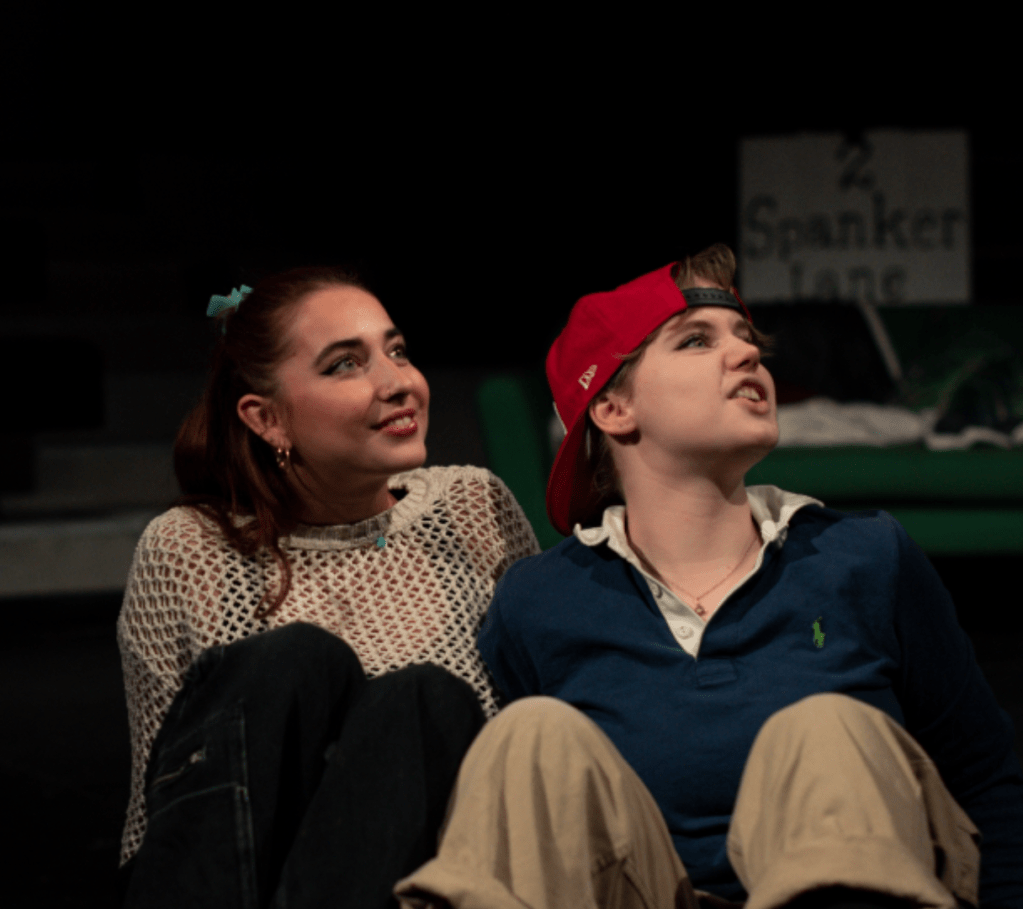
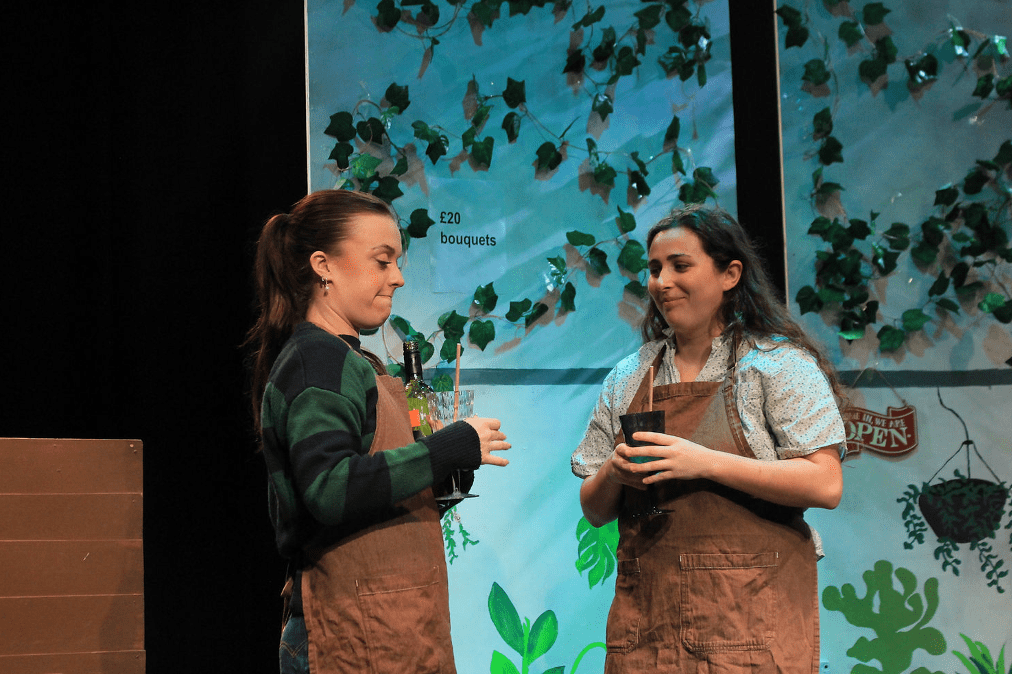
Written by Kate Newell, Open Theatre’s ‘Liar, Liar’ illustrated a witty insight into our motivations for lying and how to live outside of society’s expectations. The play followed Mona, a compulsive liar who was a bit of a mess, albeit a witty and hilarious one. She was navigating her 20s and figuring out her identity and how to be comfortable being herself, and letting go of her pathological urge to lie… including telling everyone she was a scuba diver.
The set was beautiful. Waiting for the play to begin, we were immediately transported into a floral, green environment – one that I can’t help but feel juxtaposes Mona’s life so completely with its authenticity and naturalness. The set was glowing under pink and green lights—again it looked beautiful. I was already excited. Another thing I particularly enjoyed was the awkward elevator music and Wii music between scenes. It certainly established the funny, satirical aspect of the play from the get-go.
The play opened with a standing bed and a tranquil, sleepy tone. Mona began discussing her ‘favourite part of the day…’ until she was rudely interrupted by a noise we all dread to our core… her alarm. We followed Mona to work, where she was chastised by her boss, flirted with by Jim, the token creepy colleague, and repeatedly patronised by Christina, the pristine ‘pick-me’ girl. She met a psychic who told her she would isolate herself through her lies, and she hit a new rock bottom after quitting her awful job. We joined her in various awkward encounters and a cringe-worthy date, before she finally found a new job in a florist with Harri. Harri marked a real change in Mona, as they were able to see through her lies and encourage her to be truthful. Mona began to make changes, telling the truth and being honest in situations she would have lied in previously. After an awkward kiss and a heartfelt conversation, Harri and Mona agreed to remain friends and they accompanied Mona to her birthday dinner with her family. Mona blew out her candles and the curtain fell.
Grace Conway gave Mona a naturally hilarious flare. I loved Mona as a character from the get-go and I really felt I got to know her quickly. The still images and moments when she broke the 4th wall were brilliantly hilarious and so tactfully done. Something I think Conway was particularly skilled in was creating such a funny character with a slight edge, immediately giving me the impression that whilst she seemed so happy, she was sad deep down.
Emily Moores was fantastic as Harri, alongside other minor roles. She was able to create a really authentic and believable character who seemed to be genuinely interested in Mona’s wellbeing. Harri is able to coax the truth out of Mona and uncovers a real side to her that they and the audience haven’t seen yet.
I really enjoyed watching Mona and Harri’s relationship develop on stage. We finally got to see a more awkward, vulnerable side to Mona and that grounded her as a well-rounded, developed character. I loved that Newell included the stand-up bed a second time, and not only was it just as hilarious the second time around, but also it highlighted the huge change we’d already witnessed in Mona. This made Mona’s heartbreak even more painful to witness because we’d been on the journey with her as she tried to improve herself. I really felt her pain and I liked that Newell chose to have a more subdued storyline rather than a big happy ending as soon as Mona became more honest.
Niko Burns gave a fantastic performance as the ‘Hippy Psychic’, warning Mona with cryptic advice (and a tip off from creepy colleague Jim) that her lies will isolate her until no one truly knows who she is, not even herself. She had a strange, zen aura, but with snippets of aggression that made for a hilarious scene. However, I thought Burns particularly shined as Lucy, Mona’s friend from university who carried an air of condescension so thick, I’m surprised she could still breathe. I was incredibly impressed that Burns was able to perform such unique characters so seemingly effortlessly.
Lydia Baggaley absolutely shone as Rachel – an influencer and model who is equally as self-obsessed and dishonest as Mona. I particularly enjoyed the complete mockery of celebrities and social media through Rachel’s satirical self-importance and reference to current influences, such as Molly-Mae’s ‘we all have the same 24 hours in day’ comment. Baggaley illustrated her ability to play such a hyperbolic character whilst still having a sense of sincerity and not taking us too far out of the naturalism of the play. Newell clearly demonstrated her brilliant comical mind in this scene – it was absolutely brilliant! Alisha Walton was like a chameleon, playing various smaller roles as Jim, Mona’s colleague, Mona’s brother, and other minor parts. I thought she was funny and gave a really convincing male impression. Although, I felt at times, the multiple characters she played were fairly similar, so a more exaggerated costume change may have made following her different roles more clear.
In fact, I felt the main challenge this production had was that if the audience was expected to follow the different characters that Mona interacts with, they needed to be distinct enough to know immediately that they are in fact different characters. I think to some extent, this was really well done through costume changes and the actors’ abilities to transform through a variety of personalities and personas, however, like I mentioned with some of Walton’s characters, this wasn’t always flawless. I think that this was a credit to the actors to be able to showcase such a huge variety, but occasionally it did take a couple of seconds for me to decipher if I was meeting the same character or a new one.
I did note that as the play ended, it felt quite abrupt, and I found myself unsure if it was just a particularly long scene change or if the play really had ended. Unfortunately, it felt as though Mona’s character arc was cut slightly short and I didn’t experience her full learning and growing as person that I was initially expecting. I felt like things may become even worse before Mona realised she desperately needed to change, but instead she did just simply become more honest. Part of me enjoys the unexpected ending as it gives a more realistic and relatable story – not all endings are happy or fully finished. I think it also speaks for Mona’s imperfectness. However, I was left wanting a bit more of her big life change and it felt a little underwhelming after such an otherwise brilliant show.
And I would just like to finish with a huge congratulations to the production team who worked behind the scenes to make the play such a success – Ellie Mullins, Caroline Rauch, Kate Matthews, Misia Kozanecka, Sara Roche and Anna Duffell.
A recent court decision has stated that the public have no legal right to camp on Dartmoor. What does this mean and how has it come about?
The 1985 Dartmoor Commons Act was assumed to give legal provision for people to wild camp on Dartmoor (Dartmoor Commons Act, 1985). Wild camping is camping outside of a designated campsite and is typically done by hikers on multi day hikes. The act gives the public the right of access for the purpose of “open air recreation.” It was widely accepted that wild camping would come under this.
However, Alexander Darwall, a wealthy hedge fund manager who owns 4000 acres of Dartmoor challenged this interpretation in the High Court. His lawyers argued that the access rights did not extend to people sleeping in a tent. The Dartmoor National Park Authority (DNPA) tried to defend the right to wild camp, by stating that it was not on the list of explicitly banned activities, and that plenty of other types of allowed recreation, such as star-gazing, would require the use of a tent. However, the High Court judge found in Darwall’s favour and this ruling banned wild camping across the whole of Dartmoor (Horton, 2023).
Currently the only place anyone can legally wild camp is Scotland, as the 2003 Land Reform Act guarantees this right, with guidance set out in the Scottish Outdoor Access Code (Land Reform (Scotland) Act, 2003). However, the rest of the UK does not provide the public with the same access rights. In fact, the Right to Roam campaign, an organisation advocating for greater access to nature, found that 92% of England and Wales is off limits to the public even to walk across, let alone camp (Right to Roam, no date).
Previously, Dartmoor provided a small oasis of greater access, allowing countless people to spend magical nights under the stars. The well-regarded Ten Tors Challenge, an organised event where 4000 young people summit ten tors in a 35, 45 or 55 mile route across two days, has wild camping as an integral aspect.
Following the court decision, the DNPA hastily negotiated an agreement with landowners to give the public assumed consent to camp on some of their land (DNPA, 2023). This involves the public being able to wild camp on certain (but considerably smaller) areas on Dartmoor, in exchange for a fee, likely paid by the already stretched finances of DNPA. While the DNPA deserves commendation for attempting to find a solution, it is crucial to note that a permissive agreement to wild camp, rather than the previously assumed right, and could be retracted by landowners at a later date. In short, it is far more limited than the right the public was assumed to previously have.
There was a public show of support for the right to wild camp following the ruling, with the issue gaining attention in national newspapers. The Right to Roam organised a peaceful protest walk and spiritual ceremony on Stall moor on Saturday 21st January, which was attended by approximately 3000 people (Stallard and Marshall, 2023).
The DNPA has also recently announced that they will be seeking permission to appeal the ruling, on the basis that the judge’s decision may be flawed as it was based on a very narrow definition of recreation (Horton, 2023). While the appeal may give supporters of wild camping hope, the subjective and somewhat ambiguous current bylaws highlight the need for access rights to be enshrined in national acts of parliament if we want these rights to be extended and safeguarded.
Local Leeds North MP, Alex Sobel, was an early Labour voice on the matter, promising that Labour would expand the right to roam (Sobel, 2023). This was followed up with Labour’s shadow Environment secretary, Jim McMahon to state that there needed to be “a rethink” of access to land and waterways, as “access to nature is a matter of social justice.” He went on to declare that if Labour came to office, they would pass a right to roam law, as well as enshrine the right to wild camp on Dartmoor if the DNPA’s appeal is unsuccessful (Horton, 2023).
It now feels that we are at somewhat of a crossroads. On one hand, the recent court ruling feels a regressive step that is reducing our access to nature. On the other, this may provide the anger needed to galvanise a nation to demand better access rights and change the way we think about laws of land ownership.
Sobel, A., 2023. Our National Parks should be open to all and access to Dartmoor is integral to that. Labour will expand the […]. [Twitter]. 13th January. [Accessed 28th January]. Available from: https://twitter.com/alexsobel/status/1613861455992074247 Stallard, E., and Marshall, C., 2023. Dartmoor protesters march over right to wild camp. BBC News. [Online]. 21st January. [Accessed 28/01/23]. Available from: https://www.bbc.co.uk/news/science-environment-64270310











 THE WORSLEY TIMES