Author: Worsley Times

  • Free Healthcare – An Opinion on a Long-time Debate

    Free Healthcare – An Opinion on a Long-time Debate

    Adithi Randeni, Year 2

    Considering this pandemic, healthcare is now, more than ever, in the spotlight. It is being pushed to its limits all over the world and therefore presents an opportunity to ask: is free healthcare really all that it was meant to be?

    Even with the breakthroughs that science makes on an almost daily basis, many around the world cannot afford basic healthcare – a right akin to the right to life. With pharmaceutical giants charging extortionate prices for medication, a shortage of medical professionals and budget cuts at every turn, healthcare is a facet of our lives that needs re-evaluating. 

     ‘The strategy of the free healthcare system is to ensure that every citizen, from any socio-economic background, has proper access to health services at a minimal cost or no cost at all’ (Honest Pros and Cons, 2020). Free healthcare lowers costs for individuals. It ensures those paid lower wages have equal access to health facilities. In Portugal ‘those who are not in employment, dependent family members, or retirees do not have to make [tax] contributions’ to the healthcare system (Cronin, J. 2018) (Expatica, 2020). 

    Free healthcare has its financial benefits within the industry. For one, it lowers administrative expenses. In the free market, doctors negotiate with agencies for medical supplies. This is overcome in a setting like the NHS by allowing tasks to be undertaken by one group (Honest Pros and Cons, 2020). Free healthcare also reduces long-term costs (Honest Pros and Cons, 2020). By providing the entire population with access to health services it ensures that illness is caught and treated early. This lowers the likelihood of citizens developing chronic illnesses that are expensive to treat due to the duration over which care must be provided. (Honest Pros and Cons, 2020).

    Healthcare access to all, in a very round-a-bout manner, boosts the economy. Universal healthcare ensures that fewer employees get sick and so productivity increases, allowing economic growth (Honest Pros and Cons, 2020). It also eliminates competition. Many multi-billion-dollar industries prioritise quantity over quality. By standardizing care and costs, the healthcare industry has overcome this organisational issue (Honest Pros and Cons, 2020). On the subject of standardisation, the implementation of universal healthcare ensures equal quality services across the country. 

    However, free healthcare decreases the motivation to innovate. If everything is standardised and there is less opportunity to progress, individuals are less keen to improve current procedures. This is unfavourable as improvement requires progress and progress requires innovation. Therefore research and entrepreneurial experience should be factor in any healthcare professionals’ CV (Kandie, L. 2020). 

    Free healthcare can degrade service quality as well. A larger population means more people accessing services. This causes longer waiting periods, tired staff and equipment shortages. This decreases standard of care, sometimes with fatal consequences. A study by Maphumulo et al (2019) found a ‘Decline in quality health care has caused the public to lose trust in the healthcare system in South Africa’. It also concluded that quality care requires ‘fewer errors, reduced delays in care delivery, improvement in efficiency, increased market share and lower cost[s]’ (Maphumulo, W.T., 2019).

    Additionally, free healthcare prioritizes chronic diseases. Most hospital beds are filled with patients who will require around the clock care for extended periods of time (Honest Pros and Cons, 2020). This severely limits the resources available for other procedures. This method also brings with it the less obvious risk of increasing the number of chronic patients in the population overall. For example, when elective surgeries are pushed back, the likelihood of the condition progressing and the patient deteriorating increases. This leads to increased hospital admission times and amount of care needed. 

    Universal healthcare also poses a major burden to a government’s budget. Healthcare costs account for most of the spending of most governments and whilst developed nations may be able to shoulder the burden and proceed, developing nations run the risk of entering debt. Consequently, it also causes one of two undesirable coping measures. Either funding for healthcare itself is reduced, or funding for equally vital fields such as education are cut. A key factor noted by Localiiz (2017) is that the Hong Kong healthcare system, despite all its achievements, provides ‘Limited access to patients with special needs or different backgrounds’ due to the funding difficulties. 

    Conversely, at the risk of sounding unbelievably cliché, free healthcare allows doctors to uphold their oath to save lives without discrimination (the discriminatory factor being, in this case, financial status). Universal healthcare has the potential to allow the child who would otherwise die of pneumonia to grow up and live a full and healthy life; it gives the couple who are struggling to have children the chance to start a family of their own; it enables the father diagnosed with prostate cancer to live to hold his grandchildren in his arms—regardless of how much they earn on an annual basis.

    After examining the pros and cons, we should consider the healthcare system of Sri Lanka. A report by the World Health Organisation (Perera and Perera, 2017) describes this as ‘a healthcare system in transition’. Set up to battle communicable diseases such as malaria which it has successfully eradicated since 2013 and polio since 1993, this system is credited for the country’s quick and efficient response to COVID-19. However, it is under reform to account for non-communicable diseases and it is changing to better improve care. 

    In conclusion, universal healthcare has a multitude of advantages, both moral and financial. However, its pitfalls cannot be overlooked. Therefore, the most ideal situation would be to reform and change current healthcare systems to maximize tax usage and to maximize availability. Change is possible. If one nation, such as Sri Lanka, can strive to alter a decades long initiative, then change is just as viable all around the world. 

    References

    Cronin, J. 2018 Is Free Healthcare a Possibility for International Citizens or Travelers?. Countries with Free Healthcare [Online]. [Accessed 14th Nov 2020]. Available from: https://www.internationalinsurance.com/health/countries-free-healthcare.php 

    Expatica, 2020. A Guide to Healthcare in Portugal. Expatica [Online]. Available from: https://www.expatica.com/pt/healthcare/healthcare-basics/healthcare-in-portugal-106770/ 

    Kandie, L. 2020 Advantages and Disadvantages of Free Healthcare. Briefly [Online]. [Accessed 14th Nov 2020]. Available from: https://briefly.co.za/47269-advantages-disadvantages-free-health-care.html 

    Localiiz, 2017. Opinion: The Problem with Public Healthcare in Hong Kong 11th Jan 2017 My Life in Hong Kong [Online]. [Accessed 12th Nov 2020]. Available from: https://www.localiiz.com/post/opinion-the-problem-with-public-private-healthcare-in-hong-kong 

    Maphumulo, W.T. 2019. Curationis Challenges of quality improvement in the healthcare of South Africa post-apartheid: A critical review 42(1): 1901 [Online]. [Accessed 14th Nov 2020]. Available from: doi: 10.4102/curationis.v42i1.1901 or https://www.ncbi.nlm.nih.gov/pmc/articles/PMC6556866/ 

    Perera, A. and Perera, H., 2017. Primary Healthcare Systems (PRIMASYS) Case Study From Sri Lanka. WHO [Online]. [Accessed 15th Nov 2020]. Available from: https://www.who.int/alliance-hpsr/projects/alliancehpsr_srilankaprimasys.pdf?ua=1 Racheal, 2020 11 Pros and Cons of Free Healthcare 16th March 2020. Honest Pros and Cons [Online]. [Accessed 14th Nov 2020]. Available from:  https://honestproscons.com/pros-and-cons-of-free-healthcare/

  • To Intercalate or Not To Intercalate?

    To Intercalate or Not To Intercalate?

    Alice Barber, Intercalating 

    Deciding whether to intercalate or not is a decision many medical students face at some point during their medical school journey. It is a decision which, when it comes to it, can be quite daunting and a lot more complicated than when people first start talking about it as a faraway concept at the beginning of medical school. Whilst it is an individual decision, and the right call is different for everyone, it is important to consider both the pros and cons of intercalation to make sure that you make the best decision for you.

    What are the Pros of Intercalating?

    I think that the pros of intercalating can be split into 3 different categories: time, new experiences, and career development. Looking at time first: intercalation can be extremely valuable in terms of the time it gives you, both within and outside of study. It gives you the time and opportunity to dedicate a whole year to studying something that you are very interested in, without having clinical medicine as your focus. Furthermore, most intercalation courses have a lot less contact time than medicine does. This allows you the time to pursue other interests and hobbies outside of study and gave me the chance to get involved in societies and projects that I had not previously been able to fit in alongside medical school. There is also the fact that you will have more time to be able to have a part-time job alongside studying. For me, this was extremely valuable as it meant I was able to save up funds to get me through my final two years of medical school.

    The next set of advantages is the new experiences that intercalation can give you. On the surface, it may seem like the only new experience is learning something new, but I’ve found there is so much more than that. For example, studying a humanities subject, which is based heavily around debate, has given me the chance to learn in a way I never have before, and I have met new people I probably would not have come across had I not intercalated. Also, though it may sound menial, I have loved going into different university buildings other than the medical school! Although I chose to stay in Leeds to intercalate, there is also the option to intercalate at a different medical school, which would give you the chance to see a new city for a year.

    Intercalation can also be valuable for your future career. Whilst it does help for specialty applications, I think the most career development comes from the new skills that you are able to learn throughout an intercalated year. It has given me the chance to develop skills in writing, debating and analysing that I think will benefit me immensely in my future career, and help me to be a better doctor in the long run. Intercalation also often leads to opportunities to publish work which, again, can be very useful in specialty applications. 

    What are the Cons of Intercalating?

    Although there are many pros to intercalating, before deciding it is still key to consider the potential disadvantages. The disadvantages also largely depend on each individual, which can add more complexity to the decision-making process. I think the disadvantages can be split into 2 categories: finances and adjusting back to medicine.

    Intercalation can be challenging financially. It not only means that you will have an extra year before qualifying as a doctor and being able to receive a salary, but also that you will have two years at medical school without a student loan, rather than one. There are also differences between bachelors and masters degrees: if you choose to intercalate in a masters degree programme, you will not be able to apply for a maintenance loan. Despite this, I think there are many ways that you can reduce the financial impact of intercalation. Firstly, as I have mentioned previously, intercalation allows for more time to work alongside your studies. There are also grants and scholarships available which can help you to finance your intercalation year, and I have linked some resources below. Some students also choose to move home for a year and intercalate at a university nearby to save money on rent, and whilst I am aware this is not an option for everyone, it can be useful for some. 

    One concern that I particularly had was how hard it would be to adjust back to medicine after a year intercalating. I have worried about forgetting ‘medicine’, and not adjusting back to placement quickly enough after a year out. Whilst I think it is important to consider how a year out may affect you academically, I still think that it is possible to adjust quite quickly back into medicine. There are also many ways that you can keep up your medical knowledge whilst intercalating, for example, I volunteer as a community first responder which has helped me to maintain my clinical skills. 

    Additionally, there is one point which, although not a specific disadvantage, its loss has led to a lot of medical students deciding not to intercalate. Previously, intercalation has counted for points on foundation programme applications – this is no longer the case. Whilst many have concluded from this that intercalating is no longer valuable, I think I have shown that despite this, intercalation is still valuable both personally and in terms of career development! 

    How Have I Found Intercalating So Far?

    I chose to intercalate in medical ethics at my current medical school, in between my third and fourth years, and have found it both challenging and extremely rewarding. I have learnt so much already even though I have only completed one term so far! Finally, although choosing to intercalate is a very individual decision, I cannot recommend it enough.

    Resources

    A Guide to all Intercalated Courses: https://www.intercalate.co.uk

    British Medical Association: Advice on Intercalated Degrees. https://www.bma.org.uk/advice-and-support/studying-medicine/becoming-a-doctor/intercalated-degrees

    Funding for Intercalation: https://rmbf.org/get-help/help-for-medical-students/medical-student-advice-hub/competitions-and-awards/
    Royal Medical Benevolent Fund: Intercalated Degrees in Medicine.https://rmbf.org/get-help/help-for-medical-students/medical-student-advice-hub/intercalated-degrees/

  • Who’s to Blame for the Opioid Crisis?

    Who’s to Blame for the Opioid Crisis?

    Muhammad Khizar Hayat, Year 1

    In  2017, the opioid epidemic (widespread misuse of opioids) in the USA claimed the lives of 68,400 people (Ahmad et al., 2022), more than gun violence that year. The ongoing crisis isn’t isolated to the USA, however: in Britain opioids on par with Class A drugs are easily accessible to the public. The actual effectiveness of opioids is questionable, with some people who feel completely relieved of pain and some left completely stupefied by the drugs. This poses a large question: how did this happen, and who is to blame? In this article, I will investigate the role of legislators, doctors, and pharmaceutic companies, as well as possible solutions for this problem.

    Opioids are defined as “substances used to treat moderate to severe pain”. The opioid family includes drugs such as heroin, morphine, and codeine which are derived from the opium poppy. The largest and oldest opium producers include Afghanistan, Pakistan, Burma and India. Ancient Sumerians called the plant Hul Gil or the “joy” plant, suggesting the dissociative nature of the drug. Opium was commonly used in Islamic empires as an anaesthetic during surgery and other medical treatment. Avicenna described the effects of opioids in his book The Canon of Medicine, mentioning analgesia, respiratory depression, and neuromuscular disturbances. Nowadays, opioids are available ‘over-the-counter’ in the form of co-codamol, which contains codeine mixed with paracetamol. Due to the extremely addictive nature of opioids, it is not advised  to take co-codamol for more than three days, yet there is virtually nothing stopping someone from buying more. On top of that, doctors can prescribe much more powerful drugs, such as codeine, which achieves levels of sedation akin to heroin and morphine. Fentanyl, the most powerful opioid available on prescription, is 50-100 times stronger than morphine. 

    Humans have known of the potential harmful effects of opioids since approximately 1025 CE. The question is, why has the abuse of these drugs proliferated to such a stage?

    One reason why opioid misuse has increased could be the complacency of doctors. Criticism befalls doctors, as some believe that it is easier for doctors to simply prescribe a pain-killer rather than treat the cause. Less than 10% of patients who receive opioid treatment for chronic pain find it effective, experiencing more side-effects than benefits. The analgesic, effect of opioids may be useful to treat acute pain, however in cases of overuse an inability to feel pain for long periods can be detrimental – patients could severely harm themselves without knowing. The largest risk of opioid misuse is overdose, resulting in respiratory depression and death from hypoxia. The rise in overdose rates has been correlated with increasing prescription rates, which some argue can be linked to the mass production of opioids by pharmaceutical companies. 

    According to the NHS business services Authority, 12.8% of the adult population were prescribed opioids in 2017/18. Despite this being a decrease from 2016, it is still a problem. In America, drug companies saturated the market with 76 billion oxycodone and hydrocodone tablets (codeine compounds), with only 6 companies dispensing 75% of those tablets. Opioid sales in America rose 40% between 2006 to 2012, peaking at $8.5 billion. Purdue Pharma sold $3.1 billion worth of OxyContin. In total, 76.2 billion opioids were produced in the period between 2006 and 2012 in the US. In Brighton, Colorado, a town with a population of mere 38,000, 2000 pills were ordered each day during that time. The McKesson pharmaceutical corporation filed only 16 of 1.6 million orders into Colorado as suspicious. This shows how the drug companies in America eventually flooded the streets with opioids, causing the epidemic that ravages America to this day. Similarly in Britain, GSK raked a total of £4.1 billion in operating profit from  opioid manufacturing.. 

    What is to stop these corporations from producing extreme quantities of drugs and in turn addicting more and more of the population? Why didn’t they stop dispensing drugs when they reached a certain threshold? The answer to both questions is simple: profit. Profit can drive these companies to produce more opioids, advertising them to the public, which then increases the demand, and feeds into this vicious cycle. Surely this shouldn’t be legal, which makes us want to investigate the role of the legislators in this problem.

    McKesson in America spent $2,6 million on lobbying politicians and lawmakers for their own personal gain. In the past decade, Big Pharma spent $2.5 billion on the careers and campaigns of politicians. These are some examples of how to encourage lawmakers to ignore the foul practices of drug companies. This creates large holes in the legislation which allow the volume of opioids produced to continually increase. These examples from the US are reflected in the UK market as well, with Pfizer and GSK playing large roles in the UK’s economy. 

    These large gaps in legislation probably wouldn’t exist if the drug companies didn’t bring in such large amounts of revenue for  countries, and conversely there wouldn’t be such high demand for opioids if doctors made less prescriptions. Perhaps if the pharmaceutical giants produced alternative drugs to opioids, that would aid the problem as well. 

    Evidently, there is no clear solution to the problems of doctors, drug companies and diplomats, so what can we do to help? 

    Educating people about risks associated with opioids can help them realise the problem. Many people have opioids advertised to them by their doctors or even in the public space, in countries where it is legal. If educated, patients could make more assertive decisions even if prescribed opioids, and by rejecting them—contribute to decreased demand. Education about the use of opioids poses its own problems, however. People may start taking opioids to feel cool, promoting social status; it could even be that suicide rates are effected when the prospect of a painless death is more publicised. If education is not be the best solution, what could be?

    Placebo is investigated as a possible replacement for opioids. The placebo effect can be used in place of actual drugs, as the brain believes it will work wonders. This may be effective; however, it poses the risk of being ineffective in people who are too aware of how a placebo to works. This wouldn’t work on people who use herbal remedies, as they do not believe entirely in the power of a tablet so they might reject the placebo. 

    In brief, the opioid problem is an extremely difficult one to solve, with each solution carrying associated risks. It is also extremely difficult to pin the blame for why the opioid crisis has occurred, as all segments of the authority involved are equally culpable. The future holds uncertainty for the case of opioids in Britain, but wishful thinking, paired with reflection on the events that have led us here, offer the possibility that circumstances might change. Drug companies might realise the error in their ways and cut down on the production of opioids, compelled by new legislation, in turn making doctors decrease the number of prescriptions. For the present, however, that notion seems not just wishful—but outlandish.

    References

    Ahmad, F.B. & Rossen, L.M., 2022. Products – vital statistics rapid release – provisional drug overdose data. Centers for Disease Control and Prevention. Available at: https://www.cdc.gov/nchs/nvss/vsrr/drug-overdose-data.htm [Accessed January 23, 2022]. 

  • This Is Going to Hurt – but must it?

    This Is Going to Hurt – but must it?

    Austin Keane, Year 2

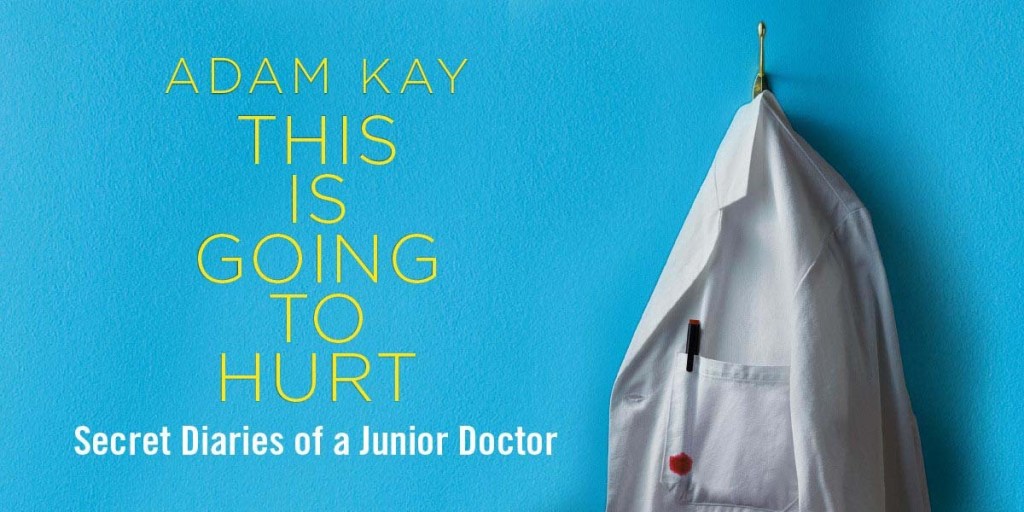
    Reading This is Going to Hurt by Adam Kay was, for me, an experience of consolidation, reasserting the ideas I thought I understood in contexts that don’t relate to me immediately but my future, and the self that exists there, waiting, expectant. 

    There’s something amorphous about the way it feels truly alive—it’s messy and vivid like the life it details; and graphic too but there’s nothing gratuitous about it, just honesty. In between the laughter you’re still aware of the grief, those unbearable moments of lightness like a blade held close in the dark: when you stop focusing on the way it shines you notice there’s the cold bite of steel, its edge against your skin, and you wonder how you ever forgot it.

    I found it sobering, especially as a medical student and someone who wants to work for the NHS as a doctor in the future. There wasn’t anything I hadn’t heard before—from the nurses I know and the doctors I’d spoken to (generally clinical with respect to their interactions in both senses of the word, to both our disappointment)—but it was still moving. The raw clarity, the lack of restraint. It’s tempting to think of the book’s structure as being one of decline, one great movement to detail a man ‘giving up.’ But I’d disagree—it says very little about him and much more about the system, that composite machine that protects us, and its faults, shown best through the reactions the medical professionals I know had to this book—a mixture of embarrassment and excitement. There was a sense that yes, of course these things are happening and yes, we just get on with it and yes, it’s about time someone put it down on paper so we can talk. 

    This demonstrates how easily he carries their voices, acting as a point of reference to facilitate authentic and necessary conversations. NHS workers are proud of the work they do and the system they’re apart of; they continue to do it without any sense of entitlement and without glamourising the work they do. They just do; they just are; and I know I forget that within a culture that rewards labour over personhood, encouraging burnout as the vehicle for success, indeed as a prerequisite for it. Having the opportunity to read a first-hand account that deals with this relationship—that indeterminate struggle between the title (earned) and the surname (given), about which it is thought ‘Dr’ will always inevitably predominate—is one of the most memorable aspects of the book for me. It has helped me to realise the value of continually exploring the narratives we construct around our professional identities: who does this serve?—what has led me to believe this is acceptable?—why is this the standard? These questions are essential not only in relation to ourselves, but to others, and all aspects of our identity, not solely the professional.

    Ultimately, I’m left with a sense of joy, of pride held in a fist tight enough to break itself; the blade is startling, yes, is uncomfortable and a reminder of something we’d sooner forget. But it casts light, will continue to, and not knowing the pressure of it, it’s weight against your chest, won’t make it shine any brighter—you will just drop it and cut yourself scrabbling around in the dark. 

    There is nothing romantic here, just the truth. I think that’s what makes all the difference to this story and will do for those to follow.

  • ‘House of Gucci’ Review: A Kaleidoscopic Tale of Love, Hate and Fashion

    ‘House of Gucci’ Review: A Kaleidoscopic Tale of Love, Hate and Fashion

    Harry Daisley, Year 1

    Patrizia Reggiani famously said, “I would rather weep in a Rolls Royce than be happy on a bicycle”. Ridley Scott’s extravagant new film, ‘House of Gucci’, warns of this destructive ethos of hers.

    The picture takes the form of a stylised, explosive and outrageously over-the-top docudrama that tells the story of the rise and fall of one of fashion’s most wealthy dynasties. It is well-crafted in all departments from costume to screenplay and skilfully executes the telling of a potentially difficult true story, amounting to a robust and enjoyable production. 

    If you are yet to see the thrill that is ‘House of Gucci’, imagine a bitter family fallout, amp up the drama and smother the disagreement with some lawsuits, tax evasion, a dash of incarceration and, of course, a sprinkle of murder—then you have the unbelievable tale of Patrizia Reggiani’s time with the Gucci fashion house. 

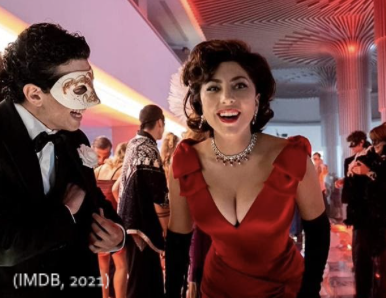
    Based on real events detailed in Sara Gay Forden’s book of the same name, this rollercoaster tale begins with the blossoming romance between Lady Gaga’s Reggiani, a newcomer from a humble background, and Adam Driver’s Maurizio Gucci, heir to the Gucci fashion house. Their controversial marriage introduces Reggiani to the Gucci world, a sphere of opulence and rivalry that ignites a spark of ambition: to take control over the family business through her husband. The film follows this dangerous spark as it is kindled into a forest fire by greed and paranoia throughout the 1970s and 80s, culminating in a murderous end. 

    The movie’s plot is thick with scandals told to us in a delightfully melodramatic style. Director Ridley Scott’s artistic choices can be described in three words: bold, heightened and operatic. This allows for the unfolding tragedy to appear truly shocking onscreen. Not one moment of the film is downplayed and every opportunity to be larger than life is seized by cast and crew alike. 

    Take the costuming, vivid yet pleasing, with Lady Gaga sporting garments that reflect turning points in the plot. Subtlety is not a word in costume designer Janty Yates’ vocabulary, who did meticulous research into Italian and American fashion in the 70s and 80s (de Teliga and Foss, 2021). The soundtrack also seamlessly adds to the amplified style of the film, using a range of Italian opera to build high drama and 70s and 80s hits, contributing to the theatricality of the plot. 

    However, it is the talent of the actors that holds this movie together. When the cast list was revealed to contain Lady Gaga, Al Pacino, Adam Driver and Jared Leto, fans and critics alike were vocal with high expectations for their performances, and they certainly did not disappoint. All actors took on kitschy yet believable Italian accents, which deepened Scott’s execution of an operatic picture and successfully incorporated Italian tropes well. While the screenplay was strong, the actors spun their lines into gold, clearly understanding Scott’s vision as well as their own. Gaga continues to impress as an allrounder, but best in show has to go to Leto with his performance as Paolo Gucci, the effervescent and idiotic cousin of the Gucci family. Leto’s skilled timing and delivery provides the much-needed comic relief that lights up the predominantly straight-faced plot and deepens audiences’ understanding of the true madness that takes place behind Gucci’s golden gates. 

    This said, having a story sprawled in madness, with larger than life performances and bold directorial choices certainly has its drawbacks. At points, needed moments of humanity and subtlety are squashed by louder instants. This makes it difficult for audiences to appreciate the characters as human beings rather than the sociopathic business people they are depicted to be for the majority of the film. While Scott captures maximalism effortlessly, minimalsim as a tool for storytelling was forgotten in the production process, amounting to a cold distancing between characters and audiences. Because of this, ‘House of Gucci’ is not going to leave you reaching for a box of tissues. Perhaps this was an intentional move of Scott’s, relating to the coldness of the tycoons. But in actuality, it results in some pacing issues throughout the film as audiences struggle to care for the characters.

    In essence, ‘House of Gucci’ embodies everything that Gucci is as a brand: loud, extravagant and attractive. It is a visual feast from beginning to end, supported by remarkable performances which raise speculation for success at the Academy Awards. It is sure to make waves during this year’s award season, making this a movie you absolutely do not want to miss, even with its flaws.

    References

    de Teliga, L. and Foss, G. 2021. Janty Yates: House of Gucci – Costume Designers Guild, I.A.T.S.E. Local 892. Costume Designers Guild. [Online]. [Accessed 11 January 2022]. Available from: https://www.costumedesignersguild.com/janty-yates-house-of-gucci/.IMDB, 2021. House of Gucci Photo Gallery. [Online] [Accessed 11 January 2022] Available from https://www.imdb.com/title/tt11214590/mediaviewer/rm649587713/

  • Overwhelmed and Gruesome: Dear Diary…

    Overwhelmed and Gruesome: Dear Diary…

    Zak Muggleton-Gellas, Year 2

    Taking after our dear friend Bridget Jones, in all her expertise, I decided to begin accounting my experiences while on placement. To look back, to laugh, or most likely cry, at what rancid-smelling adventure I might encounter. On a frightful Tuesday afternoon, as a naive, know-nothing-at-all second year, I spent a night shift in obstetrics and gynaecology. I have swapped out names for the confidentiality of those involved. 

    13:36 Hello, future reader. I am currently absorbing the laughter and stressed aura of the medical students accumulating in the APL. Diana and Bob have reminded me that I want to document this monumental event. I will try to update as much as I can.

    20:07 Just arrived, and was met by three nurses looking confusedly upon me. My heart stopped. But they soon warmed up to me, I can only assume because I looked like a deer stunned by headlights, and unlocked the door so I could enter. Everyone looked incredibly tired and overworked. I am now waiting in the room for the consultant. I didn’t realise that not knowing her last name, or where I’m going, at all, is a large problem. I’ve been showed the main social room, and am now waiting. Feeling nervous but happy to be here; at least if the consultant never comes to meet me here then I’ll bumble to reception in due course and ask. I also have a mask on to mask any bad breath after my twiglets. Win.

    20:17 What a delightful woman. Met with lovely smiles as always on O&G. Just a few delightful phrases that the consultant Holly said: ‘this is going to be carnage,’ and ‘we will either be running around or sitting on our arses.’ I luv et.

    21:31 Just finished ward round. Going to ask to be lead through a patients notes to learn a thing or too. Everyone is lovely; one of the patients remind me of every person from home. She is 36+6 (36 weeks and 6 days) currently, with covid and can’t seem to escape the hospital after weeks and weeks. Risk factors rocket with c-section early, but she’s trying her best to manipulate the doctor. Let’s see if I manage to see a birth.

    23:05 Just saw my first birth. What a whirlwind. The birth was a suction cup (called a ventouse) with an episiotomy. There were a lot of fluids, everywhere, being mopped up by towels, unsuccessfully. Upon examination you can just see the hymen, with a tube being inserted into the urethra to empty the bladder into a bag.

    After the head was delivered, and after an episiotomy with a lot of blood, the baby rotated beautifully (called restitution) so that the amniotic fluid could escape and also so that the shoulders can be delivered. No pulling occurred so no brachial plexus (nerves of the upper limb) injury. The baby’s feet were blue (which is normal) but the head was pink and perfused. The doctor put her hand underneath the neck and held the baby as it came out.

    The umbilical cord was blue (a bit like the colour I’d imagine an ice dragon to be) and the placenta was like a big veiny balloon. I felt quite emotional when the baby was delivered; very broody. The mother looked relieved, and her first words to her child were ‘wow, she’s ugly.’

    Also in practice, what you might expect a lot of blood to look like is not a lot of blood. It’s frightening. Additionally, I was told that men find it easier to get a job due to the fact there are less in the speciality, article pending. I don’t have time to dwell on this right now, though I get the sense it’s not exactly a complement. It seems too big. Self-deprecating medical student is more my style, anyway. 

    Pizza now. I even got a present from the mother! (my own mother is suspiciously silent). Wow.

    00:23 An unfortunate woman has a baby in the transverse position, with pubic symphysis pain (stretched or torn ligament) due to falling in the road, going into the splits, and landing in the most unfortunate position. I wonder if this is the moment I get to see a c-section.

    01:44 Woah. Just saw a caesarean section of a woman with a BMI of 58. The subcutaneous fat layer required two doctors to hold it back. It was much faster than I expected. The baby was covered in a nature-made Vaseline. The layers cut through were skin, subcutaneous, rectus sheath and then uterus; all with a spinal block (the lady was awake). Then came suturing and a lot of bleeding, because the tissues were not of good quality due to diabetes. We were then whisked to a room with a woman that had a baby that was becoming bradycardic (heartbeat slowing) with each contraction. I have never felt so out of place in a room; she kept screaming ‘why is there so many people in this room?’ whilst looking directly at me. This was accompanied by screams and gas refills. The cannula used was comprised of a large grey needle. So I stealthily moved over to the side of the room out of view and then snuck out as soon as I could. So up and down. Will leave at 2:30 I’m deciding.

    02:30 Waiting for my expensive Uber in the dark. Decided not to go into that delivery room again; from outside, I could still hear every step of the way. Then had a delightful gentleman asking me for a cig and then telling me ‘urine for a treat.’ I was just hoping there would be no urine coming my way. What a night. Ready for whatever comes next.

    I sincerely hope that this has been interesting.

    Here’s some abbreviations I encountered:

    • Multip → more babies
    • 37+2 → 37 weeks and 2 days
    • Not in labour → not labour until contractions or 4cm
    • Singleton → only one child
    • Cephalic → head near the birth canal
    • OBS chole → obstetric cholestasis causes a build-up of bile acids in your body, causing itching of the skin but no rash.
    • CxDil   (dilation)
    • Syntotoxin → womb muscle stimulating drug (OXYTOCIN)
    • Liq→ amniotic fluid type (clear is desired)
    • Epidural → anaesthetic
  • How Unbearable Can This Philosophical Classic Really Be?

    How Unbearable Can This Philosophical Classic Really Be?

    Zak Muggleton-Gellas, Year 2

    The Unbearable Lightness of Being is a philosophical classic, centering around the idea of weights attached to the decisions we make every day. I am not, as much as I may have proclaimed to be when I finished the last ten pages of this novel, a world-class philosopher—nor a frequent reader, as a matter of fact. Regrettably, those last ten pages were read in a state of exhaustion, scrunched up on a sweaty coach back to Leeds from London, while my eyes strained in the blue light; I felt my backside begin to stick to the leather chair. I have to suppose that this wasn’t the atmosphere Kundera imagined upon publication, almost 40 years ago!

    Set in Prague, the book centres around four main characters. There’s Tomas—a bachelor surgeon who can’t give up his life of flirting with mistresses, even as the commitment of marriage attempts to weigh him down. Then, there’s Tereza—a waitress with mummy issues who falls hopelessly in love with, and marries, Tomas (before finding unconditional love reciprocated from a puppy). Next, Subina—a mistress, commitment-phobe and artist that finds her own naked body arousing with the help of a top-hat; and finally Franz—a professor and divorcee who is promised a life of love with the rose-tinted Subina (but ends up marrying a student in over-sized glasses). These four narratives, intertwined by jealousy and infidelity, lead to a thrilling modern classic.

    If I were to use one word to describe this novel, it would have to be: turbulent. Kundera’s narrative decisions are decisive, and key events that happen to our most (or rather, least) beloved characters reflect directly the mortality of our nature. Although the characters all lead extremely dramatic lives, full of betrayal and devastation, they all end up dying in their respective environments with one key likeness: their lack of meaning, of purpose. All are childless and end up having nothing more than small bouts of passion in their lives, followed by drawn out unhappy marriages or isolation. When their times come to die, each one has nothing to show for their time on earth, apart from the occasional occupational merit. Kundera presents to us four individuals who all end up without meaning; there is no ‘weight’ to remember.

    Not only this, but there really is no character to root for. It could be argued that Tereza is the character most worthy of respect, but she spends half the book crying and smelling the sweat of other women on her husband (whom she stays with because childhood trauma has obliterated her self-esteem) and the other half of the book trying to justify his behaviour. She becomes miserable and drags her erotic adventurer (Tomas) to the countryside, after convincing herself that she is being manipulated by a secret agent trying to destroy her reputation. She even tries to convince herself that she is important enough to be the subject of a spy investigation, before her untimely end in a car accident with Tomas makes all of that panic redundant.

    As annoying as she was, at least she was a dog person (I’ve got to throw her a bone!)

    As the book ended, I was left in an existential spiral regarding my own life. I began to wonder: none of the decisions I make or emotional turmoil I face will matter in years to come, so is my main objective in life just to be as happy as possible? As Tomas flirted his way around Prague, having relations with many different women, it could have been said that he was happy, bringing that insouciance and lightness to his adventures. Maybe that’s the key: maturity is just a learnt acceptance of the inconsequentiality of our actions, and happiness is bound to levity. It is human nature to strive for meaning, and therefore we manufacture heaviness, requiring hard-work and selflessness… but does this lead to meaning, or would we all be lighter if we just became intrinsically selfish? A whole world dictated by impulsive decisions would lead to chaos, and the world would cease to function. Or, maybe, that is the world we already live in.

    Given my reasoning here may make little to no sense, I’d like to remind you I still am not a world-class philosopher and do not entirely understand what philosophical theory this book is based upon. In all honesty, the ‘philosophy of eternal return’ sounds more like a marvel Loki timeline to me. Irrespective, this book is well worth a read. Even though it may not be necessarily a page-turner, I can guarantee that you will walk away afterwards questioning your life, existence, relationships and meaning. So effectively, what a student does on a regular basis.

  • Dr Dennis and Dr Lewis’ General Practice Case Reports

    Dr Dennis and Dr Lewis’ General Practice Case Reports

    Dr Dennis and Dr Lewis have compiled a selection of case reports from their experiences as GPs. The reports also include revision tips for a variety of topics. Download via the links below:

  • Is the Human Brain Clever Enough to Understand Itself?

    Is the Human Brain Clever Enough to Understand Itself?

    Holly Dobbing, Year 2

    Your brain is capable of retrieving memories from when you were five years old, of contemplating the meaning of life, and making countless decisions every single day. But is your brain – or any brain for that matter – able to understand itself?

    The human brain contains 86 billion neurons and each of them forms thousands of connections (Voytek 2013). Think of the brain as a huge network of motorways, each with hundreds of other motorways and roundabouts all branching off and leading to more. This unfathomable complexity of the brain makes it the focus of high-level research around the world. Notably, Barak Obama’s BRAIN Initiative. The BRAIN (Brain Research through Advancing Innovative Neurotechnologies) Initiative was launched in April 2013 in an attempt to give scientists better understanding of ‘how we think and how we learn and how we remember’ (Insel, Landis et al. 2013). The aim of the project: to map the neurons in the brain,  build a dynamic picture of activity within the brain whilst completing different tasks, and establish different circuits that act in response to various stimuli (Insel, Landis et al. 2013). It was thought that this initiative would ultimately give way to better diagnosis, prevention, and treatment of brain disorders, such as Alzheimer’s disease, Parkinson’s disease, autism, and schizophrenia. Thus, hospitals could reallocate the funds previously spent on treating individuals with these brain disorders to different specialties (Obama 2013). 

    Still, we must appreciate how much we already do know about the brain. For instance, we know a lot about how the brain ages. Physiological, structural and molecular changes occur in the brain as we age, causing it to change in size, function and vasculature (Peters 2006). Ageing causes our brains to shrink in volume, particularly in the frontal cortex (Peters 2006) which is responsible for managing perceptions, behaviours, memories and goal setting (Loveday 2017). In fact, our brains  decrease in volume at approximately 5% every 10 years after the age of 40 (Svennerholm, Boström et al. 1997). However, the most identifiable change associated with ageing of the brain is the decline in memory function (Peters 2006). Memory skills such as the ability to remember names and dates, recall a list of words, or an experience from decades ago, all deteriorate with age (Foster 2006). This is perhaps due to the decrease in size of the prefrontal cortex, which plays a role in managing memories (Loveday 2017).

    We also know how the brain can regulate stress. This organ is key in acknowledging, coping with and recovering from physical and social stresses (McEwen and Gianaros 2010). Initially, a wide variety of complex brain mechanisms are utilised to determine whether an event is a real or potential threat, and these mechanisms differ depending on whether the threat is physical or psychological (Godoy, Rossignoli et al. 2018). This initiates a rapid response within the brain, that leads to activation of the immune system and suppression of the digestive systems, among other widespread changes, so that the body is prepared to deal with the stressor (Godoy, Rossignoli et al. 2018). 

    We have also gained understanding of how speech is produced and understood. Speech production and processing in the brain is extremely complex; there are multiple networks involved, with significant asymmetry between the left and right hemispheres (Scott 2019). The rostral auditory fields in the brain are key in understanding speech – playing a vital role in recognition of patterns of speech, filtering unnecessary (or background) noise away and identifying the ‘talker’, and are particularly sensitive to intonation and pitch cues (Scott 2019). It is the procedural memory, however, that is key in forming speech – using previously heard sentences as a grammatical framework to form more coherent and articulate sentences (Branan 2009).

    So, if the brain is capable of all these complex processes, is it possible for the brain to understand itself? Philosophers would argue that ‘a system can only ever understand another system that is less complex than itself’ (Loveday 2017) which establishes a paradox: the brain cannot understand itself, unless it is more complex than itself. But surely the brain is only equally as complex? Furthermore, to fully understand it, we would have to be able to test every hypothesis made about the brain to an appropriate extent. There are a few issues with this: (a) thousands of experiments would be required to prove or disprove any hypotheses sufficiently; (b) thousands of hypotheses would be required to understand the very intricate details of every function, mechanism and network in the brain; and (c) many of these experiments would require live tissue or a live participant, for example, to study how the brain reacts to different stimuli, which could prove neither possible nor ethical in all circumstances. However, it is still possible to grasp basic processes in the brain using scientific and mathematical modelling. Researchers at the University of Leicester, UK, have studied mathematical tools to aid in the analysis, simulation and modelling of behaviour in the brain (Ivan Turkin 2007). Furthermore, the analysis of brains donated by deceased volunteers gives way for additional learning about the function of the brain – even allowing scientists to decipher a map of its networks. Scientists at Yale University (USA) have been able to culture active cells from entirely dead brain tissue, potentially providing a way to restore activity to dead brain cells (Shaer 2019). This would provide a new platform to study activity within the brain in an experimental yet ethical way. 


    I believe, eventually, we will be able to understand the brain, perhaps not in its entirety, but at least the principal functions of its networks and mechanisms associated with them. Medical science is advancing rapidly each day: new drugs are being developed, and new treatment methods formed. How can we not have faith that we will one day be able to understand the very thing that makes us us – the brain?

    References

    Branan, N. (2009). “How Does the Brain Form Sentences.” Scientific American Mind.

    Foster, T. C. (2006). “Biological Markers of Age-Related Memory Deficits: Treatment of Senescent Physiology.” CNS Drugs 20(2): 153-166.

    Godoy, L. D., et al. (2018). “A Comprehensive Overview on Stress Neurobiology: Basic Concepts and Clinical Implications.” Frontiers in Behavioral Neuroscience 12(127).

    Insel, T. R., et al. (2013). “The NIH BRAIN Initiative.” Science 340(6133): 687.

    Ivan Turkin, A. G., David Fairhurst, Alexey Semyanov, Cees van Leeuwan, Inseon Song, Henk Nijmeijer, Erik Steur (2007). “Mathematical Modelling of Brain.” University of Leicester.

    Loveday, C. (2017). The Secret World of the Brain. London, SevenOaks.

    McEwen, B. S. and P. J. Gianaros (2010). “Central role of the brain in stress and adaptation: links to socioeconomic status, health, and disease.” Annals of the New York Academy of Sciences 1186: 190-222.

    Obama, B. (2013). “Remarks by the President on the BRAIN Initiative and American Innovation.” from https://obamawhitehouse.archives.gov/the-press-office/2013/04/02/remarks-president-brain-initiative-and-american-innovation.

    Peters, R. (2006). “Ageing and the brain.” Postgraduate medical journal 82(964): 84-88.

    Scott, S. K. (2019). “From speech and talkers to the social world: The neural processing of human spoken language.” Science 366(6461): 58-62.

    Shaer, M. (2019). Scientists Are Giving Dead Brains New Life. What Could Go Wrong? The New York Times Magazine.

    Svennerholm, L., et al. (1997). “Changes in weight and compositions of major membrane components of human brain during the span of adult human life of Swedes.” Acta neuropathologica 94(4): 345-352.

    Voytek, B. (2013). “Are There Really as Many Neurons in the Human Brain as Stars in the Milky Way?” Scitable by Nature Education https://www.nature.com/scitable/blog/brain-metrics/are_there_really_as_many/2020.

  • What’s On in February?

    What’s On in February?

    Holly Dobbing, Year 2

    So, it’s February. Deep in the depths of winter. It’s cold, it’s miserable, and it seems like summer is so. Far. Away. But don’t you worry, there are plenty of exciting things going on this month to thaw your frozen little heart.

    LAMMPS

    LAMMPS Musical Theatre society have their annual fundraiser at 7:30pm on the 12th of February in Function at Leeds University Union. This year it is a cabaret theme, with lots of music, fun and games. For more information you can check out their instagram @leedsammps. Don’t forget your dancing shoes!

    The Leeds medic choir – best known as The Ultrasounds – are also back rehearsing every Monday at 8pm in Room 6 at the Union. Newbies are always welcome, so if you love to sing, give it a go! Read more on their instragram page @leedsmedicchoir.

    If singing and musical theatre aren’t your thing, LAMMPS also have a dance society for medics, dentists and healthcare students. They rehearse every Thursday at 7:30pm in the Union, but you can also find them on instagram @lammpsdance.

    Christian Medical Fellowship

    On the 2nd of February you can join CMF in room 1 in the Union for ‘Bible Study: Goals as Healthcare Students’. They are also hosting a Conference Reflection and Q&A session on the 16th of February. For more information check out their instagram page, @cmf.leeds.

    Cutting Edge

    Cutting Edge, the medical surgical society, have their Diversity, Inclusivity and Careers Conference on Saturday 5th of February from 8:30am – 5:30pm. The event is online via Zoom and tickets cost £2 each. You can purchase a ticket via the link below. The event involves a morning of fascinating talks from surgeons about inclusivity, diversity, tips for medical school, and how to boost your CV. The afternoon has two workshops – a Q&A session and a CV workshop where students can get personalised feedback about their CV. CVs can be uploaded prior to the Conference via the link below. For more information, contact Cutting Edge via instagram @cuttingedgeleeds

    X-Posure Radiology Society

    X-Posure Radiology Society are hosting the Yorkshire Imaging and Interventional Radiology Symposium on Saturday 19th of February in the Worsely Building at 8:30am – 5:00pm. This year the conference focuses on Global Interventional Radiology, and has various talks and workshops throughout the day. Tickets cost £5 for an early bird ticket, or £8 for a standard ticket. You can buy tickets via the link below, and visit their instagram @xposureleeds for more information.

    Leeds Muslim Medics

    LMM is collaborating with Bengali Societies and MAA global for MAA month. On the 2nd of February they are running a Riley Smith Games Night, followed by a Pregnancy Challenge and Cake Stall in the Union and Worsley Building on the 11th of February. They have a charity dinner on the 16th and a charity quiz night on the 21st, as well as a LMM movie night on the 23rd of February. LMM are also running a programme to provide food to homeless people which happens on the last Friday of each month – this month, that is the 25th of February. Finally, on the 26th of February they are going on a charity hike. For more information, reach out on instagram at @leedsmuslimmedics.

    Leeds Islamic Society

    Leeds Islamic Society are running an educational islamic talk – open to everyone – about ‘Being the Best Muslim Before You Die by Dawahman’ on the 10th of February. They also have a Give It a Go session on the 23rd of February where they are running a quiz night.