Holly Dobbing, Year 3
Vanity. A word that often springs to mind when cosmetic procedures are considered. People assume she wanted breast implants to impress someone. People suspect he wanted a nose job to feel more attractive. People guess they wanted a face-lift to look younger.
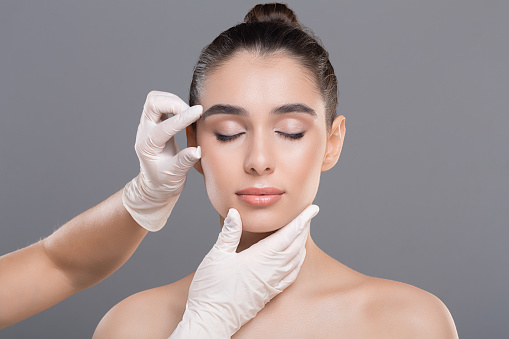
In this article I will explore the other side tocosmetic procedures. The hidden side. The side that people often fail to consider. The side where cosmetic procedures are driven not by vanity or pride or conceit, but by desperation and insecurity and fear. I propose a question: are cosmetic procedures truly cosmetic if they have such an intrinsic link to patients’ mental health and have a direct impact on their psychological well being?
Surgery to alter appearance, from nose-jobs to boob-jobs and everything in between, is still surrounded by so much stigma. I know if someone states they have had cosmetic surgery, certain ideas and stereotypes enter our minds. I believe many people continue to view cosmetic surgery with a hidden condescension towards patients who have undergone these procedures. In fact, you need to look no further than magazines and tabloids that ‘out’ celebrities who have had cosmetic surgery, as though it were some sort of shameful secret.
Let’s also consider procedures such as breast reduction surgery. Breast reduction surgery is often undertaken to help patients who are unhappy with the weight, shape or size of their breasts (NHS, 2022). Often, patients have to pay for this surgery privately because it is viewed as cosmetic if the sole purpose of surgery is to alter appearance. Rarely, the NHS fund the surgery, but only if the patient meets stringent criteria and is experiencing various other side effects due to having very large breasts, such as backache, shoulder or neck pain, or rashes and skin infections underneath the breasts (NHS, 2022). Whilst they do acknowledge mental health issues and depression due to appearance is a significant health reason to want this surgery, this alone is not enough for a referral (NHS 2022). I was also told by a GP whilst I was on placement that even if the patients meet the criteria for referral, they are often rejected anyway. According to the NHS website, breast reduction surgery costs £6,500, however this is likely far more when consultations, pre-operative assessments, medications and after-care are factored in (NHS, 2019). This is a huge financial burden to people who are potentially already struggling with their mental health due to a reduced self-image and significant insecurities. This further illustrates the systemic prejudice we take against people who want these procedures.
Another ‘cosmetic’ issue I want to discuss is that of purchasing wigs. From male-pattern baldness, to alopecia, chemotherapy and an endless list of conditions that may cause baldness, patients in England are expected to buy wigs either from the NHS or private retailers. The NHS fund wigs for a number of specific conditions, as long as a consultant dermatologist requests it, so patients can buy them for the cost of a normal prescription. However, these wigs are standard wigs, with limited choice of colours and styles, and a limited standard of quality. I appreciate with the fundamental funding problems that underpin the functioning of the NHS, we must limit the number, quality or cost contribution made for each wig, however it still feels as though we do not acknowledge that these wigs may be the only thing that helps that patient feel confident enough to still leave the house every day. Physical health and mental health should be of equal importance to us as they often have equally significant effects on the patient’s wellbeing. Allowing the systemic prejudice of aesthetics and cosmetics to impact the mental health of our patients is unacceptable.
But why do we think this way when we take such liberal views on other topics? Is it a strange cultural phenomenon? Perhaps we cling to the idea that physical beauty is something one must be born with. However, beauty is not skin deep, and nor is the impact that cosmetic procedures have on the lives of the patients remotely superficial. Evidence shows that cosmetic surgery has a significant effect on self-confidence and self-image (Motakef et al., 2014). Likely, this is because the surgery addresses deeper personal and psychological issues, rather than purely aesthetics. Therefore, if we stop viewing cosmetics as purely aesthetic procedures, and acknowledge the impact these insecurities may have on our patients’ wellbeing, we may be able to treat patients in a more holistic and understanding way. I believe cosmetic surgery is not a vain venture – it is a huge step for many people towards a happier and healthier life.
References:
Motakef, Saba M.D.; Motakef, Sahar M.A.; Chung, Michael T. M.D.; Ingargiola, Michael J. M.D.; Rodriguez-Feliz, Jose M.D.. The Cosmetic Surgery Stigma: An American Cultural Phenomenon?. Plastic and Reconstructive Surgery 134(5):p 854e-855e, November 2014. | DOI: 10.1097/PRS.0000000000000604
NHS. Breast Reduction (female). 2019. Online. Accessed https://www.nhs.uk/conditions/cosmetic-procedures/cosmetic-surgery/breast-reduction-female/ 31st January 2023.
NHS. Breast Reduction on the NHS. 2022. Online. Accessed https://www.nhs.uk/conditions/breast-reduction-on-the-nhs/ 31st January 2023.
NHS. Advice and pathway for the supply of NHS funded Wigs. 2020. Online. Accessed https://www.kirkleesccg.nhs.uk/resources/individual-funding-requests/advice-and-pathway-for-the-supply-of-nhs-funded-wigs/ 31st January 2023.
 THE WORSLEY TIMES
Leave a comment