Abigail Ngwang, Year 3
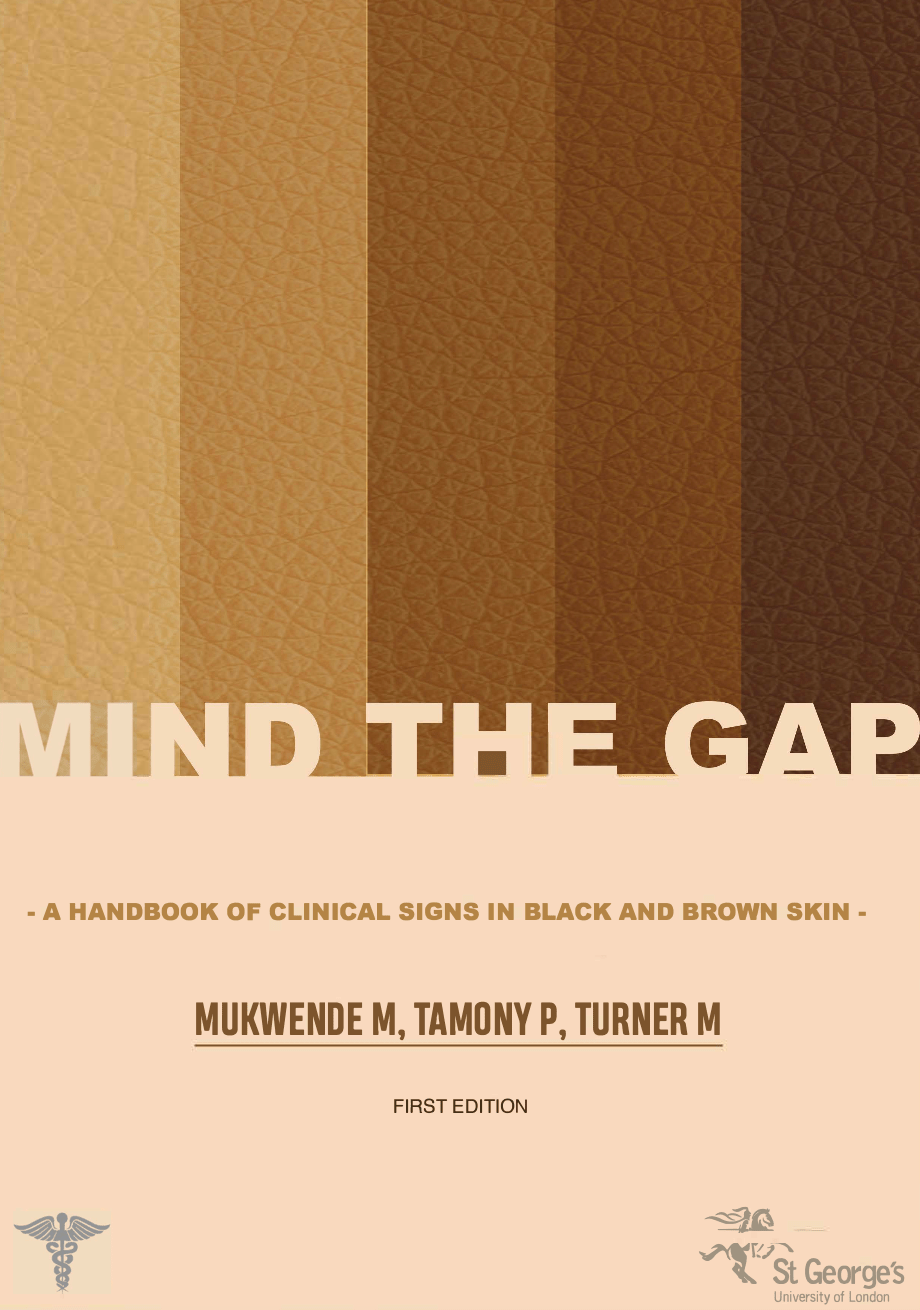
“Mind the gap” by Malone Mukwende is a comprehensive guide to the signs and symptoms of a range of medical conditions on different skin tones. The purpose of the book is to bring awareness to the lack of literature displaying medical conditions on black and brown skin. It also aims to fill in the gaps within public understanding of the presentation of medical conditions, and within University curriculums that often do not appropriately equip healthcare students with the tools to effectively treat diverse populations.
Mind the gap thoroughly covers twenty-four different conditions. The handbook displays images of the clinical signs of conditions on a range of skin tones and then proceeds to describe the condition and how to identify it, therefore mitigating gaps in medical education. Educational voids can create a snowballing effect, in which conditions may be misdiagnosed or entirely missed, leading to delay or absence in treatment, resulting in higher mortality and morbidity rates amongst people with darker skin.
The necessity of this handbook is highlighted by the analysis of images in popular medical textbooks. Gray’s anatomy, one of the world’s most famous medical textbooks, has little skin tone diversity. Within the 2015 version of the popular textbook, 88.1% of the images had light skin tone, whilst dark skin tones had a disproportionately low representation of 5% when compared to the racial demographics of the global communities that it serves (Louie and Wilkes, 2018). This chronic underrepresentation of dark skin tones is not confined to Grays, it is seen across a host of medical textbooks, lecture slides, and other resources that current and future healthcare professionals study.
To highlight the clinical significance of this handbook, the American Cancer Society found that the five-year melanoma survival rate is 24% lower in black patients when compared to their white counterparts (American Cancer Society, 2023). Although these statistics are the culmination of multiple factors, gaps in medical education cannot be excluded. A 2016 study conducted in the UK may provide some insight into the magnitude of this gap in education. The study displayed a significant disparity in the abilities of GPs to diagnose various skin conditions on light and dark skin. On average clinicians were 36.5% more likely to misdiagnose melanoma (Lyman, Mills, and Shipman, 2017).
The book displays racial health biases on a global stage and has been downloaded over 250,000 times, across more than 100 countries. It has gained recognition from celebrities such as Angelina Jolie, who also recognises the need for the diversification of medical education and the medical workforce to mitigate racial health inequalities.
As a visionary who is transforming medicine, Malone’s endeavours go beyond this handbook. He is currently creating an application called Hutano, which will serve as a diverse online community in which people can share the experience and challenges of living with skin conditions. In addition, Malone is creating a YouTube channel, another tool in his mission to remove racial biases from medicine.
Overall, a fantastic resource with the potential for exponential impact.
***
This book review is also part of the monthly book reviews done by the StudentFairhealth society. If you’re interested in discussing similar books on health inequalities or interested in helping to reduce health inequity in our community join and follow our society on instagram at ‘fairhealth_leeds’ and join our future events!
References:
1. American Cancer Society (1930) ‘Cancer Facts & Figures 2023’. https://www.cancer.org/content/dam/cancer-org/research/cancer-facts-and-statistics/annual-cancer-facts-and-figures/2023/2023-cancer-facts-and-figures.pdf.
2. Lyman, M., Mills, J.O. and Shipman, A.R. (2017) ‘A dermatological questionnaire for general practitioners in England with a focus on melanoma; misdiagnosis in black patients compared to white patients’, Journal of the European Academy of Dermatology and Venereology: JEADV, 31(4), pp. 625–628. Available at: https://doi.org/10.1111/jdv.13949.3. Louie, P. and Wilkes, R. (2018) ‘Representations of race and skin tone in medical textbook imagery’, Social Science & Medicine, 202, pp. 38–42. Available at: https://doi.org/10.1016/j.socscimed.2018.02.023.
 THE WORSLEY TIMES
Leave a comment