Jonathan Boby John (MSc. Clinical Embryology & ART)
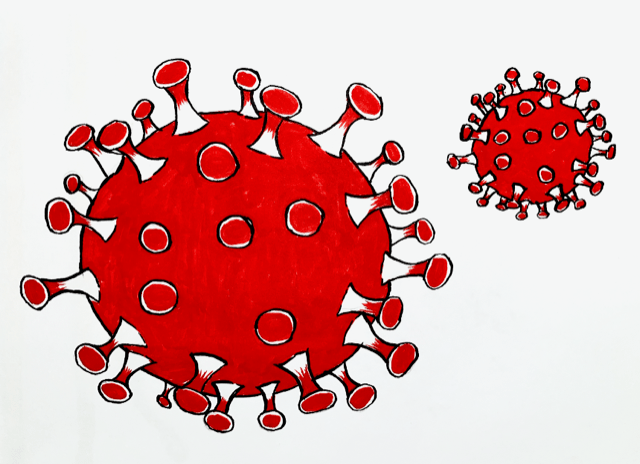
The emergence of novel coronaviruses that have caused more lethal illnesses (namely SARS, MERS and COVID-19) has led to an increase into research of coronaviruses and for identifying antiviral strategies for COVID-19 in particular. Vero cell lines are one of a number of cell lines that are being used in a large number of these studies. Examples of these studies include evaluation of existing antiviral and other drugs for improved treatment within as short a time-frame as possible.
The Vero cell line is an immortalized cell line established from kidney epithelial cells of the African green monkey. A variety of Vero sublines have been developed and can be classified into four major cell lineages. Vero gets its name from a derivation of green kidney – Verda Reno. Verotoxin, a potent E.coli toxin that is involved in severe food poisoning and can cause kidney failure, was originally so named (now known as shiga-like toxin) as it was first screened by its ability to kill vero cells. Vero cell lines are used less frequently in biological studies than the more popular HeLa cell line, in part because this is a non-human cell line. However, vero cell lineages are still widely used for screening purposes for bacterial toxins, viruses and for parasite studies. Since they are derived from normal kidney cells and not immortal cells like HeLa, Vero cells retain the attributes of normal cells, notably cell contact inhibition. So, once they reach confluence in the cell mono layer, they need to be passaged otherwise they will start to die off. In addition, Vero cells have been used in the development and validation of techniques such as super resolution microscopy. Other applications include detection of verotoxins, detection of virus in ground beef, efficacy testing, study of malaria, media testing, vaccine development, protein expression, and mycoplasma testing.
Vero cell line was initiated from the kidney of a normal adult African green monkey on March 27, 1962, by Y. Yasumura and Y. Kawakita at the Chiba University in Chiba, Japan. Vero cells are one of the most common mammalian continuous cell lines used in research. This anchorage-dependent cell line has been used extensively in virology studies, but has also been used in many other applications, including the propagation and study of intracellular bacteria (e.g., Rickettsia and parasites; Neospora), and assessment of the effects of chemicals, toxins and other substances on mammalian cells at the molecular level. In addition, Vero cells have been licensed in the United States for production of both live (rotavirus, smallpox) and inactivated (poliovirus) viral vaccines, and throughout the world Vero cells have been used for the production of a number of other viruses, including rabies virus, reovirus and Japanese encephalitis virus. The protocols outlined in this appendix detail procedures for the routine growth and maintenance of Vero cells in a research laboratory setting. There are several lines of Vero cells commercially available (i.e., Vero, Vero 76, Vero E6), but they were all ultimately derived from the same source, and the protocols in this unit can be used with any line of Vero cells.
It is often difficult to obtain robust data from the clinical cases directly given the many variables involved. For example, use of anti-viral treatments may have improved patient outcome if given at an early stage but not once complications developed further, or that the patient may have recovered regardless of being given a specific treatment. Therefore, effective research models are one
important part of helping to determine what anti-viral treatments can be seen to have a statistically relevant impact and warrant further study.
Screening for the toxin of first named “Vero toxin” after this cell line, and later called “Shiga-like toxin” due to its similarity to Shiga toxin isolated from Shigella dysenteriae. The cell bank is easy to establish and preserved and at the same time it can be continuously processed with a fast growth rate. Vero cells have stable genetic traits and a low probability of malignancy. Vero cells are sensitive to a variety of viruses and have high virus titers.
Vero cells stem from monkeys and are therefore a non-human cell line. This will in most cases affect conclusions drawn from experiments in Vero cells, especially if they are being extrapolated to humans. The production of biopharmaceuticals in Vero cells will always carry the risk of producing undesired products. Post-translational modifications such as glycosylation can vary dramatically between species and affect product properties and quality. The origin of a cell line from epithelial kidney cells should always be kept in mind, as this will affect cellular properties and outcomes. Possibility of continuously culturing a cell line also harbours potential risks, as cell lines change and adapt during long-term culture, altering their characteristics.
More current applications rely on the lack of interferon-production of Vero cells, which makes them susceptible to infection by many viruses, making them prime candidates for the production of viruses and testing the effect of antiviral drugs on viral replication. Analogously, Vero cells are frequently used for producing vaccines which often rely on viral particles or proteins. In addition to testing therapeutics, Vero cells can also be used to quantify virus concentrations as infectious doses via plaque assay. Here, culture dishes confluent with Vero cells are treated with increasingly diluted virus-containing solutions that will lyse cells and create plaques that can be counted.
 THE WORSLEY TIMES
Leave a comment