Holly Dobbing, Year 3
A persistent disorder of consciousness (PDOC) is a disorder of consciousness that lasts for more than 4 weeks after a sudden brain injury (n.d., 2020). But what is a disorder of consciousness you may ask? Well, that depends on how you define consciousness. And that’s a whole essay in itself. For this article, I will be considering consciousness as being both aware and awake. So, using that, a disorder of consciousness is a disorder that impacts either awareness, wakefulness, or both. This includes comas, vegetative states (VS and minimally conscious states (MCS) (n.d., 2020). A VS is wakefulness with absent awareness, whereas a MCS is wakefulness with minimal awareness. In contrast to both, a coma is absent wakefulness and absent awareness.
Diagnoses of PDOCs are made over time and are based on careful clinical evaluation and observation of the patients’ behaviours by trained professionals using validated structured assessment tools (n.d., 2020). Friends and families also play a huge role. It is absolutely critical to be confident in these diagnoses as they have an immense impact on how the patient is treated going forward.
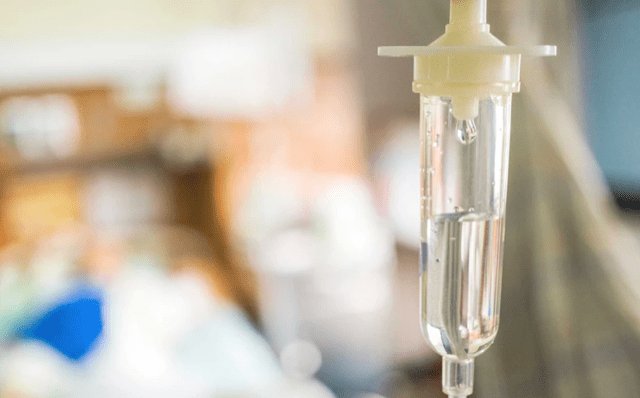
Due to the extent of impairment of their cognitive function, patients in PDOCs require artificial nutrition and hydration (AHAN via a percutaneous endoscopic gastrostomy (PEG) tube – a tube directly through the skin into the stomach (Quiñones-Ossa et al., 2021). Through this, doctors can feed the patient, give them water and administer medications because they’re unable to swallow substances orally (Quiñones-Ossa et al., 2021). Because insertion of a PEG tube requires medical intervention, AHAN is therefore considered a treatment, not a human right like normal food and water in hospital (Quiñones-Ossa et al., 2021). This means that in the circumstances of a patient with a PDOC, AHAN can be withdrawn like any other medical treatment.
Currently in the UK, as long as two expert doctors and the family are in agreement, AHAN can legally be withdrawn (n.d., 2020). If the family don’t agree with the doctors, or the family don’t agree with each other, the case goes to court, whether or not withdrawal of treatment is in the patient’s best interests is decided by a judge (n.d., 2020).
But who should have the right to determine best interests? Often, patients’ families play a huge role in deciding what the patient would have wanted, but sometimes it’s not that simple. In some cases, family members disagree about the best interests of the patient, and also families are unable separate what the patient may have wanted from their need to keep them ‘alive’. It is likely that patients who do emerge from PDOCs will be profoundly disabled (Quiñones-Ossa et al., 2021), and it is important for families to also consider this. In saying this, I also believe that the decision should not solely be down to the families because it is a huge burden and emotional strain to have to decide whether a loved one should be kept alive or not. Therefore, I think doctors play a crucial role in guiding these decisions supporting families during these difficult discussions.
Another consideration is that withdrawal of treatment will cause death, so really, isn’t this just euthanasia with a different name? Actually, there is a subtle difference. The NHS defines euthanasia as ‘the active and deliberate ending of a person’s life to relieve suffering’, suggesting a more active act in bringing about death (NHS, 2020). In the UK, euthanasia is illegal in all circumstances (NHS, 2020). In contrast, withdrawal of treatment is simply stopping treatment because it’s no longer beneficial, not with the intention of causing death. It’s a very slight difference, but it’s one that allows doctors to give patients this peace without actively causing their death.
As doctors, we also have a responsibility of benevolence, or in other words, to preserve life, restore health and relieve suffering. Similarly, the ethical pillar of non-maleficence links to our responsibility to avoid harm. So how can we possibly justify essentially starving a patient of food and water? Is this not a barbaric way to bring about a patient’s death? In some ways, starving a patient of nutrition and hydration seems like a cruel and slow suffering, although I can understand that it feels less like killing a patient than injecting them with a lethal dose of a drug that will end their life. Research shows that patients in PDOCs are unlikely to experience pain and after withdrawal of treatment, analgesia is still given to keep the patient settled so as carers, we hope this means they don’t suffer (n.d., 2020). Still, without definitive proof, this seems somewhat inhumane, and I can’t help but feel a quicker, painless option could be kinder.
And finally, is it fair to prolong life with minimal evidence of recovery? In a world where hospital beds are scarce, shouldn’t we prioritise patients with a higher chance of recovery? I think in some ways this is a really valid argument because patients who are in PDOCs secondary to hypoxic brain injury for more than 3 months or traumatic brain injury for more than 12 months are highly unlikely to recover (n.d., 2020). Still, as an optimistic person, I can completely appreciate that families will need more than ‘highly unlikely to wake up’ before they accept that the treatment is futile.
In my opinion withdrawal of AHAN is ethical when repeated assessments have indicated little chance of recovery because we can limit the patient and, possibly more so, the family’s suffering. I also think that, given the lack of definitive knowledge about the patients’ consciousness and experiences whilst in a PDOC, we can’t rule out that this is a state worse than death and, in that case, we must not prolong it if there are no signs of improvement. Furthermore, I think that with the huge strain the NHS is under currently, it is difficult to justify keeping patients alive in PDOCs for years upon years with no hopes of emergence. For these reasons I do support withdrawal of AHAN, although I think that more could be done to support families in making this awful decision.
References
N.D. 2020. Prolonged disorders of consciousness following sudden onset brain injury: national clinical guidelines.
NHS. 2020. Euthanasia and assisted suicide [Online]. Available: https://www.nhs.uk/conditions/euthanasia-and-assisted-suicide/ [Accessed 30th November 2022].QUIÑONES-OSSA, G. A., DURANGO-ESPINOSA, Y. A., JANJUA, T., MOSCOTE-SALAZAR, L. R. & AGRAWAL, A. 2021. Persistent vegetative state: an overview. Egyptian Journal of Neurosurgery, 36, 9.
 THE WORSLEY TIMES
Leave a comment