Shruti Chawla, Intercalating
TW: Sensitive topic with some personal anecdotes that some readers may find upsetting
“ Losing the love for what I do”
“Exhausting”
“Overachieved, overworked, overwhelming”
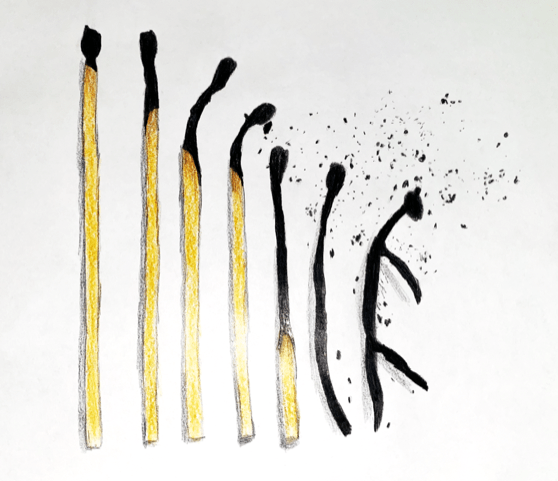
These anonymous quotes describe Burnout, not using the Maslach Burnout Inventory, but at a human level, specifically at a student level.
Approaching the end of my first intercalating term, I have taken some time to reflect on the variation in workload, skill set, and expectations compared to third year. What I realised, quite starkly, is that the trajectory I was on during third year (juggling placement, study, employment, and a social life) was ultimately going to lead to burnout.
It’s important to remember that this conclusion came from my personal reflections.
However, this ultimately led to a deeper dive into the concept of burnout, and its prevalence within medical students.
Burnout is defined as, “a state of physical and emotional exhaustion” according to mental health UK and is defined as a “workplace phenomenon”. There are three main symptoms as defined by WHO:
- Feelings of energy depletion
- Increased mental distance from one’s job or feelings negative towards one’s career
- Reduced professional productivity
Now as healthcare students, we may not be “employed”, but, especially in the clinical years, we undertake a lot more professional responsibility and engage in work patterns such as night shifts, weekend shifts. This is vastly different to our other student counterparts and can be emphasised when you continually decline that Monday night-out due to the 8:30am ward round.
Recently, I watched “super high resolution” – a highly emotive play at Soho Theatre. The play centred around Anna, a 31-year-old A&E doctor who’s at breaking point due to stress and lack of sleep. What’s poignant about this play is that ultimately, she is thrown over the edge by stress within her personal life. The underlying idea behind this, is to portray how a medical career gives us little leeway to deal with personal circumstances. Whilst many may be able to have ample time off, our duty of care to the wider public means that often our lives take the backseat.
I found this an insightful and nuanced way to approach the issue of Burnout – as the focus is on the consequences of a career in healthcare, rather than simply describing the “broken structure” of NHS that is constantly within media discourse.
Upon reflection, it’s clear that these consequences on personal life are not limited to being a Jr. Sacrificing events, conversations and hobbies is something we’re all expected to do.
So, what can be done?
Fortunately, conversations around Burnout are increasingly prevalent, removing the taboo that many previous generations of graduates have undergone. Media pieces such as “super high resolution” and “this is going to hurt” do well to inform both healthcare professionals and the public of the humans behind healthcare.
As friends and colleagues, it’s important to recognise the signs of burnout within this community.
Once recognised, it’s a good idea to make this known (in a comfortable environment) and take steps to mitigate this worsening. A gym session or a walk with a coffee is not going to cure the feeling of burnout – but it may provide some welcome relief.
Re-assess your workload; is there anything that can be moved down the priority list?
Ticking off a to-do list may be a satisfying, but it’s important to ensure that the to-do list isn’t longer than the number of lines on the page (which is easily done); just looking at that list is enough to incite worry in most of us.
Perhaps the most important point is to make sure that you don’t engage in negative self-talk. Many people talk themselves down when things aren’t going their way, it’s counter-productive and mentally harmful. We’re all doing the best we can and sometimes your best is just keeping afloat.
The purpose behind this article wasn’t to provide a sermon on how to defeat burnout. It’s just a reflection, written by a medical student for others to read and to keep the conversation going.
 THE WORSLEY TIMES
Leave a comment