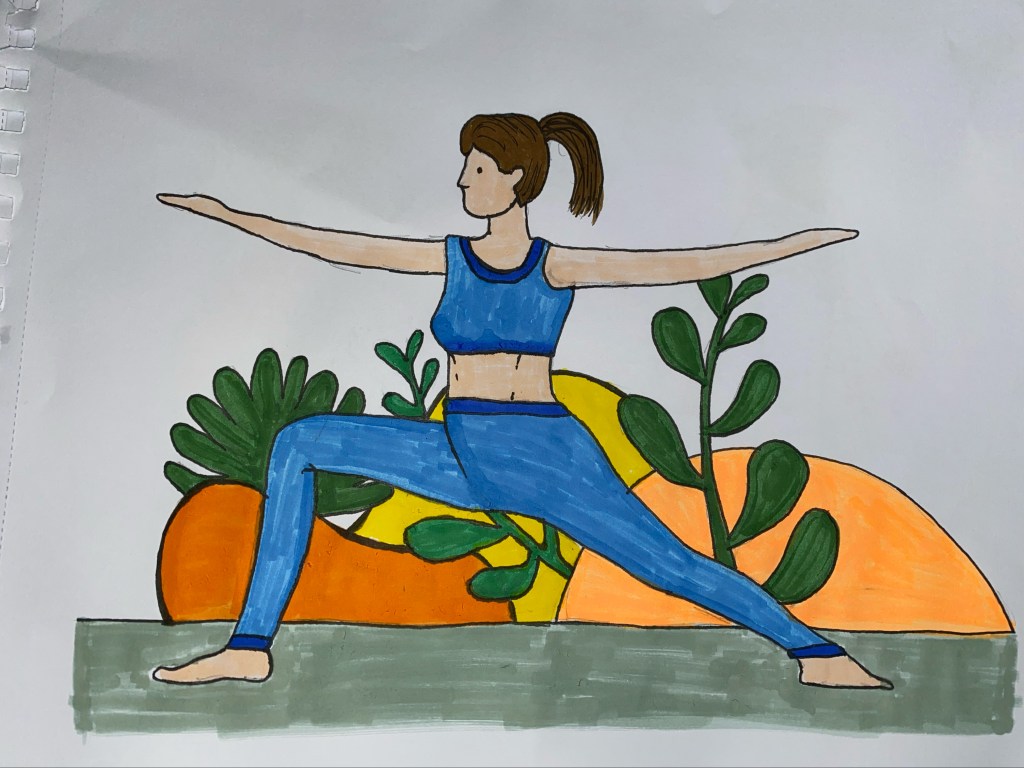
Paula Szlendak, Year 3
Yoga originates from India and has existed for over 5,000 years. When it was established in modern Western society, it became an incredibly popular wellness activity, and has continued to increase in popularity over the recent years. Many devoted practitioners (including myself) believe in its great benefits for both physical and mental well-being. It’s something you feel intuitively when you’re immersed in the world of yoga, meditation and mindfulness—that you’re doing something good for both your body and your spirit.
However, as a medical student, I’ve developed a habit of seeking evidence. So I asked myself a question: Is there any science behind those claims that yoga is “healthy”? Should we recommend yoga to patients? Is it just another commercially-successful trend that western medicine should steer clear of?
Here’s a list of potential health benefits, which are commonly associated with yoga practice, and the science behind them:
- Stress relief
Many studies suggest that yoga practice has a positive effect on stress. This is especially relevant, as the modern lifestyle puts more and more pressure on people’s health, both physical and mental. According to the American Psychological Association, 84% of American adults report feeling the adverse effects of prolonged stress, which can lead to chronic diseases and reduced quality of life. It has been proven in numerous studies that yoga has an effective role in reducing stress and improving overall mood. Participants reported increased feelings of relaxation, especially when yoga was combined with meditation and breath work techniques.
- Reduced anxiety and depression symptoms
There is extensive evidence suggesting that yoga may improve symptoms of anxiety and depression. The Anxiety & Depression Association of America lists yoga as one of the four complementary and integrative health practices (alongside meditation, relaxation techniques and acupuncture), which may be used in treatment of these conditions. Most of the reviewed literature found yoga interventions to be effective in treatment of depression symptoms, however the results of studies vary based on sample characteristics, styles of yoga used and duration of intervention. One specific type of yoga, “Yoga nidra”, which is a guided “body scan” meditation, has been linked with especially strong evidence in reduction of anxiety symptoms.
- Improved flexibility, balance and physical fitness
As we age, our overall mobility and flexibility decreases, due to loss of collagen and elastin. There is evidence, that yoga as a health intervention improves both physical mobility and flexibility, as well as health related quality of life in older adults (mean age of 60 years). Yoga proved more effective than walking or chair aerobics in increasing physical function, especially in those aged 65 or older. It has been recommended in national and global physical activity guidelines. Research suggests that yoga can also help improve balance, which could be beneficial, especially for the age group mentioned above, which is at biggest risk of falls. There is even some papers describing positive effect of yoga on balance in patients following brain injuries, however more studies with larger sample sizes are needed before a definite conclusion can be drawn.
- Improved sleep
As already discussed, yoga can help relieve stress and improve mood. This has proved beneficial for people who struggle with insomnia—problems with falling and/or staying asleep. A national survey conducted in the United States in 2012 found that more than 85% of people who practice yoga reported reduced stress before bedtime, and 55% of these people reported improved quality of sleep. The benefits for sleep are mostly linked to the meditative properties of the practice, which allows to calm the mind in preparation for sleep.
Looking at the above evidence, it seems like prescribing yoga as a supporting tool for managing stress, poor mental health, mobility or sleep could be beneficial. Lifestyle practices, such as yoga, can be a great tool, not only for treating, but also preventing adverse conditions. That being said, it really comes down to personal experience and preference whether we find something helpful or not. I personally see yoga as incredibly beneficial, and would encourage everyone to give it a try—even if your doctor has never mentioned it!
References
Ferreira-Vorkapic C, Borba-Pinheiro CJ, Marchioro M, Santana D. The Impact of Yoga Nidra and Seated Meditation on the Mental Health of College Professors. Int J Yoga. 2018 Sep-Dec;11(3):215-223. doi: 10.4103/ijoy.IJOY_57_17. PMID: 30233115; PMCID: PMC6134749.
Goldsby TL, Goldsby ME, McWalters M, Mills PJ. Effects of Singing Bowl Sound Meditation on Mood, Tension, and Well-being: An Observational Study. J Evid Based Complementary Altern Med. 2017 Jul;22(3):401-406. doi: 10.1177/2156587216668109. Epub 2016 Sep 30. PMID: 27694559; PMCID: PMC5871151.
Jeter PE, Nkodo AF, Moonaz SH, Dagnelie G. A systematic review of yoga for balance in a healthy population. J Altern Complement Med. 2014 Apr;20(4):221-32. doi: 10.1089/acm.2013.0378. Epub 2014 Feb 11. PMID: 24517304; PMCID: PMC3995122.
Miller, K. K., Burris, R., Nuest, H., Mason, A., Schmid, A. A., Hanna, C., & Barringer, M. (2020). Post-Rehabilitation Adapted-Yoga at the YMCA for Adults with Acquired Brain Injury: A Feasibility and Pilot Study. Journal of Yoga and Physiotherapy, 7.
Shohani M, Badfar G, Nasirkandy MP, Kaikhavani S, Rahmati S, Modmeli Y, Soleymani A, Azami M. The Effect of Yoga on Stress, Anxiety, and Depression in Women. Int J Prev Med. 2018 Feb 21;9:21. doi: 10.4103/ijpvm.IJPVM_242_16. PMID: 29541436; PMCID: PMC5843960.
Sivaramakrishnan D, Fitzsimons C, Kelly P, Ludwig K, Mutrie N, Saunders DH, Baker G. The effects of yoga compared to active and inactive controls on physical function and health related quality of life in older adults- systematic review and meta-analysis of randomised controlled trials. Int J Behav Nutr Phys Act. 2019 Apr 5;16(1):33. doi: 10.1186/s12966-019-0789-2. PMID: 30953508; PMCID: PMC6451238.
Stussman BJ, Black LI, Barnes PM, Clarke TC, Nahin RL. Wellness-related use of common complementary health approaches among adults: United States, 2012. National health statistics reports; no 85. Hyattsville, MD: National Center for Health Statistics. 2015. [402KB PDF]
Youkhana S, Dean CM, Wolff M, Sherrington C, Tiedemann A. Yoga-based exercise improves balance and mobility in people aged 60 and over: a systematic review and meta-analysis. Age Ageing. 2016 Jan;45(1):21-9. doi: 10.1093/ageing/afv175. Epub 2015 Dec 25. PMID: 26707903.
 THE WORSLEY TIMES
Leave a comment