Austin Keane, Year 2
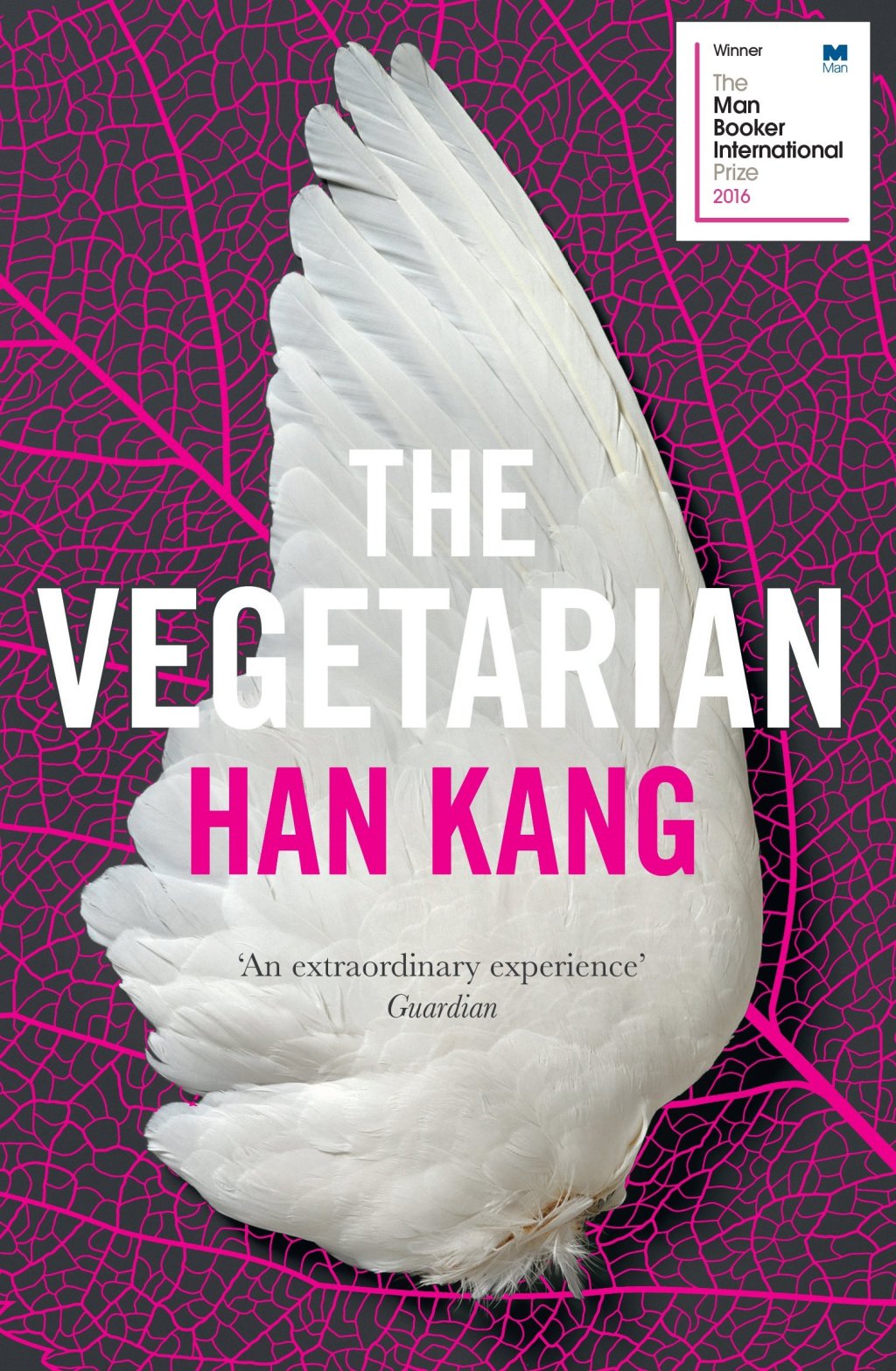
This book is practically indescribable; I read it in a single sitting and was left exhausted—the images sifted hot and wet beneath my skin. To write this then becomes an act of replication, or transposition, turning feeling from vision to verb, unwritten and hidden and written again; as if I were producing upon the table before me a mouthful of forgotten copper, piece by piece.
The narrative perspective shifts three times, examining the thoughts and actions of three individuals, but remains fixed on Yeong-hye—our Vegetarian in question—and her actions. This is Kang’s intention, allowing us to see exactly what it is she wishes to escape: the scrutiny of these individuals, their failure to see her beyond the flesh she inhabits; the image of the person she used to be, formed from their own interpretations—a wife, an object of lust, a wounded younger sister—which had until now consumed her.
But then it happens—the dream: a pair of eyes, blood in her mouth, crimson everywhere. She stops eating meat to evade this vision and thus begins the decline. This vegetarianism is not solely her rejection of meat but one of the boundaries enforced upon her, including—so we are told—those of her mind. Familial abuse, self-mutilation and a frequent impulse to nakedness can be seen as initial markers of this being more than just a picky eater. Her lack of self-consciousness surrounding her nakedness can be construed in several ways—a return to the innocence of Adam and Eve, a time before the weight of self-actualisation, or perhaps a re-articulation of the self in its redundancy—she shows us how being physically exposed is no more telling of her true nature.
And then towards the end, her outrageous claim: that she is a tree, or at least is becoming one. It’s no accident that at this stage—obsessed with the image of her roots extending into the earth, refusing to eat, only drinking water and taking in sunlight—that those around her plead her insanity. She is convinced of her becoming something ancient, beautiful, and they have finally disassembled their previous notions of her—as someone who is ordinary and controlled—and the disconnect between who she is and the woman they have known is finally exposed, always there but now undeniable in its specificity.
It comes back to the idea of her dream, what is real here and what is false? Her sister acknowledges the redundancy of this question, so perhaps then it’s only how far we’re willing to go to escape human experience, in all its subjectivity? —or indeed whether we feel we must?
It’s a book about desire and shame, about removing the understanding of herself as a sexual object—something immutably formed by the men in her life—to become something terrifying, unknowable. She extends herself into the earth, is captured in bloom, and for the first time is at peace with this new identity she forms, one free from the tainting of others’ perspectives—they believe her to be damaged beyond repair, insane—and she can finally exist, for the first time really, uninhibited. Only the liminal space is the truly unobserved.
It’s stunning in the apparent ease of its beauty, and to quote Donna Tartt, ‘Beauty is terror’ after all; and that is what we get here, a frightening depiction of the means by which one woman escapes the entrapment of her life. It’s a haunting evocation of what it is to be free, and the cost of this truth—that to exist unexamined is an imprisonment in of itself. Again I’m reminded of those eyes—in the dream which starts this madness—and I think they may be my own, the reader’s, willing her to see her own indignity, and to be liberated no matter the price. So finally, I wonder if this is Kang’s vision: if you could, if you wanted to, had to, even, would you dare to see? —your own eyes a searing warning, cast in crimson, beautiful, but terrible too.
 THE WORSLEY TIMES
Leave a comment