Zak Muggleton-Gellas, Year 2
The Unbearable Lightness of Being is a philosophical classic, centering around the idea of weights attached to the decisions we make every day. I am not, as much as I may have proclaimed to be when I finished the last ten pages of this novel, a world-class philosopher—nor a frequent reader, as a matter of fact. Regrettably, those last ten pages were read in a state of exhaustion, scrunched up on a sweaty coach back to Leeds from London, while my eyes strained in the blue light; I felt my backside begin to stick to the leather chair. I have to suppose that this wasn’t the atmosphere Kundera imagined upon publication, almost 40 years ago!
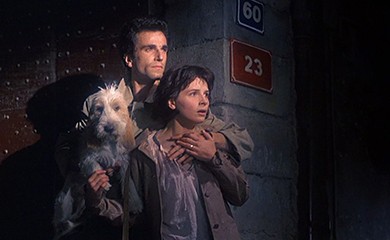
Set in Prague, the book centres around four main characters. There’s Tomas—a bachelor surgeon who can’t give up his life of flirting with mistresses, even as the commitment of marriage attempts to weigh him down. Then, there’s Tereza—a waitress with mummy issues who falls hopelessly in love with, and marries, Tomas (before finding unconditional love reciprocated from a puppy). Next, Subina—a mistress, commitment-phobe and artist that finds her own naked body arousing with the help of a top-hat; and finally Franz—a professor and divorcee who is promised a life of love with the rose-tinted Subina (but ends up marrying a student in over-sized glasses). These four narratives, intertwined by jealousy and infidelity, lead to a thrilling modern classic.
If I were to use one word to describe this novel, it would have to be: turbulent. Kundera’s narrative decisions are decisive, and key events that happen to our most (or rather, least) beloved characters reflect directly the mortality of our nature. Although the characters all lead extremely dramatic lives, full of betrayal and devastation, they all end up dying in their respective environments with one key likeness: their lack of meaning, of purpose. All are childless and end up having nothing more than small bouts of passion in their lives, followed by drawn out unhappy marriages or isolation. When their times come to die, each one has nothing to show for their time on earth, apart from the occasional occupational merit. Kundera presents to us four individuals who all end up without meaning; there is no ‘weight’ to remember.
Not only this, but there really is no character to root for. It could be argued that Tereza is the character most worthy of respect, but she spends half the book crying and smelling the sweat of other women on her husband (whom she stays with because childhood trauma has obliterated her self-esteem) and the other half of the book trying to justify his behaviour. She becomes miserable and drags her erotic adventurer (Tomas) to the countryside, after convincing herself that she is being manipulated by a secret agent trying to destroy her reputation. She even tries to convince herself that she is important enough to be the subject of a spy investigation, before her untimely end in a car accident with Tomas makes all of that panic redundant.
As annoying as she was, at least she was a dog person (I’ve got to throw her a bone!)
As the book ended, I was left in an existential spiral regarding my own life. I began to wonder: none of the decisions I make or emotional turmoil I face will matter in years to come, so is my main objective in life just to be as happy as possible? As Tomas flirted his way around Prague, having relations with many different women, it could have been said that he was happy, bringing that insouciance and lightness to his adventures. Maybe that’s the key: maturity is just a learnt acceptance of the inconsequentiality of our actions, and happiness is bound to levity. It is human nature to strive for meaning, and therefore we manufacture heaviness, requiring hard-work and selflessness… but does this lead to meaning, or would we all be lighter if we just became intrinsically selfish? A whole world dictated by impulsive decisions would lead to chaos, and the world would cease to function. Or, maybe, that is the world we already live in.
Given my reasoning here may make little to no sense, I’d like to remind you I still am not a world-class philosopher and do not entirely understand what philosophical theory this book is based upon. In all honesty, the ‘philosophy of eternal return’ sounds more like a marvel Loki timeline to me. Irrespective, this book is well worth a read. Even though it may not be necessarily a page-turner, I can guarantee that you will walk away afterwards questioning your life, existence, relationships and meaning. So effectively, what a student does on a regular basis.
 THE WORSLEY TIMES
Leave a comment